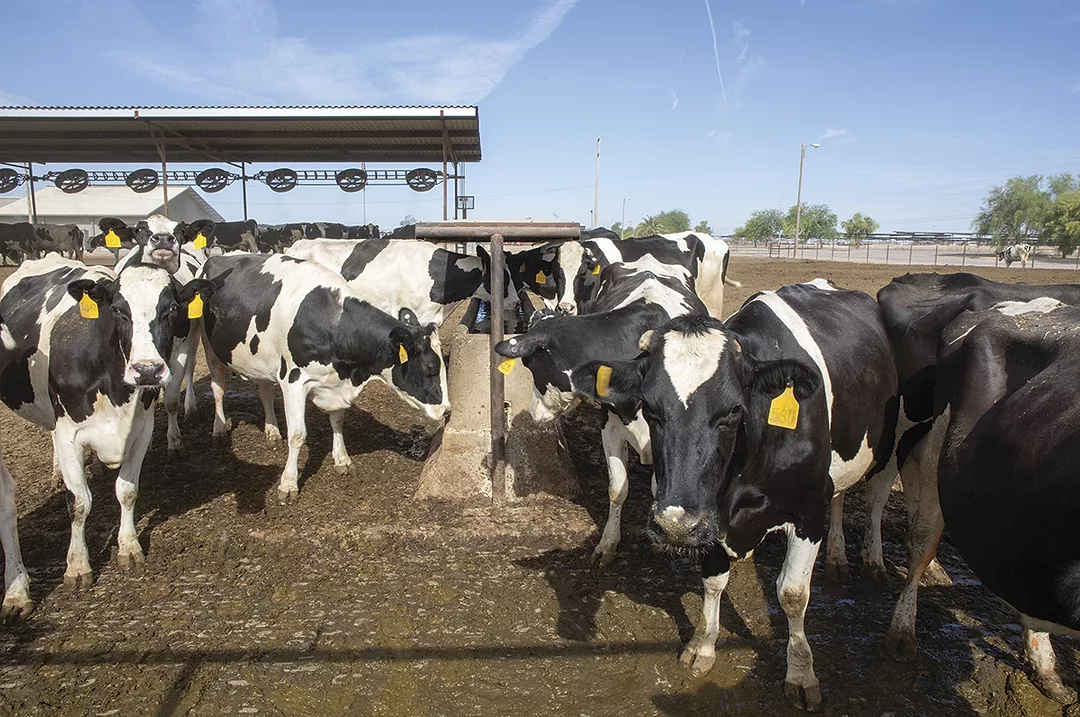
Every dairy in the U.S. has experienced the effects of heat stress on dairy cows. There are a variety of management practices dairy producers can use to proactively address heat stress before it happens or support the herd to lessen the impact once it arrives. Yet with all that we know about managing and mitigating heat stress, there are still misconceptions.

We’ve identified several myths associated with heat stress based on the hundreds of dairy operations we’ve visited across the country.
Myth 1: Dry cows don’t need protection from heat stress
Reality: Dry cows may not be lactating, but they’re still metabolically active – especially in late gestation. Heat stress during this phase affects colostrum quality, calf birthweight, calf immune development and a cow’s ability to transition successfully into the next lactation. Effects may be seen quite long after temperatures drop, so producers need to be aware and monitor carryover benefits when supplementing additives and implementing new strategies.
In addition, calves born to heat-stressed dry cows will have reduced productivity once they get to the milking string. So, if you’re implementing heat stress abatement practices for your lactating herd, make sure you include dry cows as well.
Myth 2: We can do the same thing this year that we did last year
Reality: What you did last year to reduce the impact of heat stress may have worked great, but this is a new year. Each summer is unique, and your cows have changed. They are another year older, and there is a large group of cows that have not experienced what it’s like to have to make milk when they’re hot. Add to that the fact that your cooling equipment is now another year older as well. For example, some fans need to be cleaned or replaced, or valves in your misting system need to be changed. You’ll never experience the same situation twice, so there’s always room for continuous improvement.
Also, consider your herd numbers. In this current dairy environment, heifers are scarce and expensive. Producers may be holding on to more animals. There may be more cows in the barn this summer compared to last year; you’re at 120% capacity today versus 95% capacity last year. That will have a big impact on your ability to keep cows cool.
Myth 3: I’m not hot, so cows must be fine
Reality: Here’s a shocking revelation – cows and humans are not alike. While we may be comfortable walking around the dairy on a beautiful 70ºF day, your cows are already starting to experience heat stress. Additionally, to really feel the effects of heat stress, we need to be where the cows are. The feed alley may feel airy and cool, but in the stalls or near the headlocks could be a different (hotter and humid) story. Start heat abatement practices early in the season to help cows get a head start when it gets hot.
Myth 4: The sun is down, so cows must be cool
Reality: Cows take a lot longer to cool down than humans. A cow’s body temperature lags behind environmental temperature, so while the environmental temperature may peak in late afternoon, a cow’s body temperature continues to rise for several more hours, peaking closer to 9 p.m. So even though the sun goes down and you’re feeling cooler, keep cooling mechanisms in place.
Myth 5: Nutrition doesn’t help with heat stress
Reality: There is a significant amount of research that shows that changes and additions to the ration will help cows manage heat stress. There are basic changes you can make to the ration because we know that cows will eat less. That includes increasing the energy density and adding more focus to including highly digestible forages to the ration. Studies also show that feeding a ration with a positive dietary cation-anion difference (DCAD), especially with higher potassium, helps replenish some of the minerals lost through perspiration and respiration.
There are feed ingredients that can be added to help cows manage heat stress. Vasodilators widen blood vessels and increase blood flow to the skin, allowing heat to radiate from the body. Osmolytes are molecules that attract water into the cell to maintain cell water balance, something that is important for cell function. Electrolytes, such as sodium and potassium, help cows absorb water across tissues and retain water to prevent dehydration. Work with your nutritionist to identify and implement these strategies to best support cooling your animals.
Myth 6: Our cows have enough water
Reality: Cows need to rehydrate more often during hot weather, so easy access to clean, cool water is important. Realize also that the activity pattern around water troughs will change as the demand for water increases. Cows will visit water troughs more often and spend more time there. While you may have enough access to water when it’s cool, you need to factor in access when it gets hot.
Consider adding a water trough in the holding pen and as cows exit the parlor, which will be when the demand for water is highest. You don’t want cows to have to wait or fight for access to water when they’re hot.
Myth 7: I don’t need to worry about calves and heifers
Reality: While the strain on heifers is much less in hot weather, calves and heifers still need protection from heat stress conditions. Make sure calves and heifers always have ready access to cool, clean water. If they are in an enclosed area, make sure ventilation is adequate to maintain optimal air flow. If they’re outside, make sure there is ample shade to provide relief from the sun.
Remember also that the impact of heat stress on springing heifers will be the same as the impact on dry cows with reduced lactation performance, both for the cow and her offspring.
Myth 8: My herd only experiences heat stress during the summer
Reality: While it’s true that the impact of heat stress is more likely to extend past summer months in the southern parts of the U.S., cows in northern climates could feel heat stress beyond summer months as well. Heat stress can impact cows starting at about 70ºF, and some northern states can hit those levels starting in late April or May. There have been several years when the heat extends well into September as well. So just because kids are back in school in the fall doesn’t mean that the risk of heat stress is over.
Myth 9: If cows are eating, they must be comfortable
Reality: While dry matter intake (DMI) may not change for the pen, cows are likely changing their eating patterns. Heat-stressed cows often shift their eating to cooler hours – early morning and late evening – and reduce meal frequency while increasing meal size. This can lead to slug feeding, reduced rumen pH and lower fiber digestibility. Over time, it quietly erodes milk components and increases the risk of subacute ruminal acidosis (SARA). Go beyond intakes to see if your cows are stressed. Look for crowding at the bunk during cooler hours, more time standing, changes in manure consistency, less cud chewing and a drop in components in the bulk tank.
Myth 10: The impact of heat stress is only seen when it’s hot
Reality: The impact of heat stress can be seen far beyond the heat of summer. For example, think about those cows that freshen in hot weather. There’s an anchor on those early days of lactation that will impact their productivity well into the lactation. Then there are those cows that don’t conceive when bred during heat stress – those cows will add more days to their lactation and more services until they get pregnant.
We’ve learned a lot about how to help cows navigate heat stress without a significant reduction in intake and productivity. But there are still many myths, and we need to rely on the results of sound research to help us understand what’s real and what’s not. As always, partner with your nutritionist and veterinarian on a plan that works for your cows and your dairy.