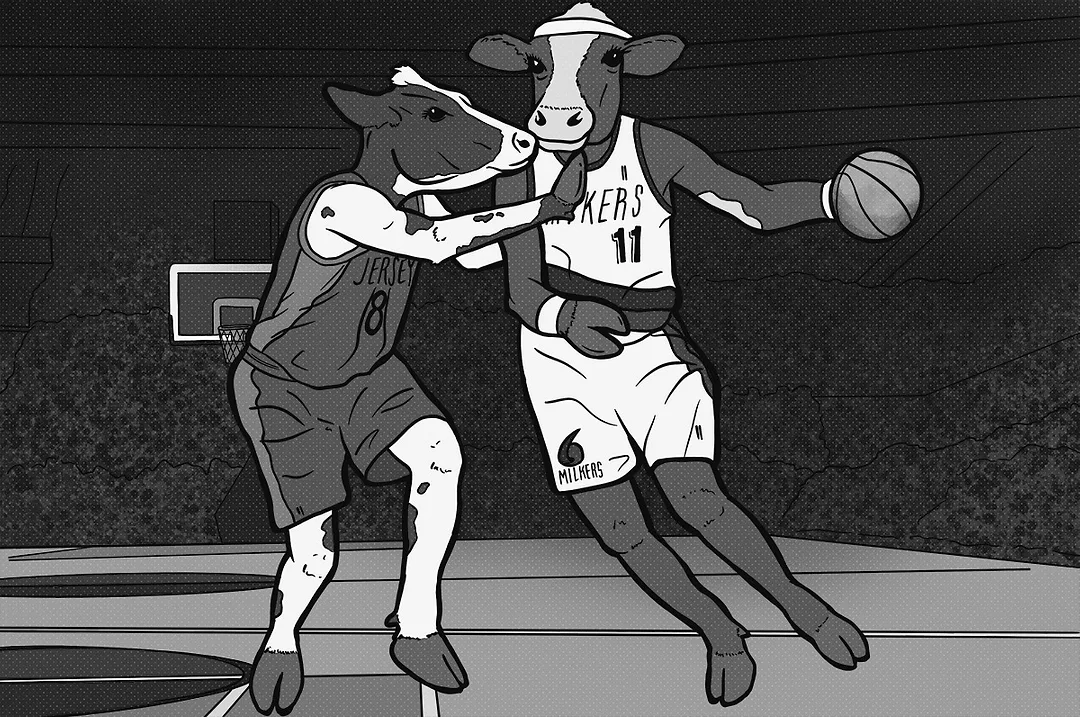
In the past 30 years, the game of basketball has changed. Shot clocks are shorter, making the game faster-paced and players more athletic. Positionless basketball gives players more freedom and adaptability – they handle the ball, shoot, defend and make decisions regardless of their size or the role of a traditional position, like point guard. Training and conditioning are regimented and based on science. Nutrition programs support the players’ needs for greater stamina and strength.

Basketball coaches have evolved their playbooks because the game has changed.
Dairies have evolved as well. Milking herds are significantly larger – shifting from 200- to 300-cow operations in the early 1990s to herds well over 1,000 cows today. These larger operations require intensive management and a team with specialized skill sets, adding greater responsibilities with an attention to detail.
As dairies have grown, the game has changed for operation managers as well. Issues like lameness are no longer an afterthought because we have learned a dairy cow’s hoof health is directly tied to her performance and the dairy’s profitability. Hoof health management programs are now commonplace. They are most successful when there is equal attention to proactive herd management, sound nutrition and strategic hoof trimming.
Ultimately, the goal is to maximize cow well-being to sustain optimal productivity and profitability through:
- Preventing lameness and injury
- Improving cow longevity
- Lowering treatment costs, labor demands, milk loss and reproductive challenges
- Supporting reproductive success
As we consider the importance of hoof health and, particularly, hoof trimming in today’s larger dairies, it may be time to rethink your approach as you choose your starting lineup, staff your bench and approach the important task of minimizing hoof issues for your cows. Every dairy has its own needs, but the following points can help managers and hoof trimmers evaluate and choose the right trimming system.
The right trimming system for you: In-house, contract or hybrid?
Things to consider:
Availability
In some areas, there are no contract hoof trimmers or those who are nearby do not have availability to take on another herd for either regular or emergency hoof care situations. In either case, developing an in-house approach is necessary.
Herd size
Another factor related to availability is herd size. Both dairy managers and hoof trimmers must consider how many cows a single trimmer can reasonably assess, treat and provide routine maintenance.
Having a combination of contract trimmer and someone who is on the farm who knows how to treat lameness is a good idea, no matter the herd size. Things like sickness, injuries or schedule conflicts are bound to happen. Great hoof care, like a great reproduction program, must be done on a timely schedule based on days in milk and/or days carrying a calf.
For some herds, an in-house trimmer working with a contract trimmer may be the best approach. The herd manager has a plethora of other responsibilities with little time to do maintenance trims and provide individual cow hoof care.
Treatment timeliness
Timely treatment is a benefit of a hybrid or team approach to hoof care. An in-house hoof trimmer – and other in-house team members who are trained to spot hoof issues early, take quick action to relieve pain and prevent further hoof damage, are essential for keeping cows healthy and milking at their best. The more quickly the cow receives pain relief, the quicker the cow returns to peak performance.
Cows are treated immediately for mastitis or a displaced abomasum. Lameness also should be prioritized for care. When professional hoof trimmers know they don’t have the bandwidth to assist a cow within 24 hours, they can be a good partner to the dairy by training the clients’ team to lift a foot, put a block on or wrap a lesion to minimize further irritation or infection.
Return on investment
Whether you choose to use a contract trimmer, establish hoof trimming in-house or opt for a combination, the value outweighs the costs.
In 2022, the University of Wisconsin estimated the average cost of dairy cow lameness was about $340 per cow and as much as $533 in severe cases.
In a 2,000-cow herd, reducing the lameness rate from 20% to 10% provides a $68,000 value.
This financial benefit justifies compensation for the professional hoof trimmer, a skilled tradesman doing a hard job – an individual with an investment in their initial education, equipment, vehicle, fuel, insurance, continuing education and time.
This estimate also can serve as a guide for dairy producers who choose to invest in a full-time employee for hoof trimming and care. Adequate compensation for work that is dirty, dangerous and difficult – done throughout the coldest and hottest days of the year – is vital to decrease the turnover rate for a role that is already hard to fill.
Remember: When fielding a team for hoof health care, it doesn’t matter who is doing the trimming as long as they do an excellent job and lameness rates are reduced.
References omitted but are available upon request by sending an email to the editor.