Whether you're feeding peak-lactation dairy cows or a herd of growing beef calves, there's one certainty when it comes to mowing: Forage quality begins to decline the moment the cutter bar hits the crop. While many producers might see mowing as a mechanical task, it is actually one of the most critical decisions they can make to protect both yield and quality. Timely mowing can be the difference between hay that supports animal performance and hay that needs to be supplemented at feeding – an outcome that can impact both profitability and feed efficiency.

As much as we wish harvest windows always align with ideal maturity, the reality is that mowing does not always happen at the ideal time. Weather, schedule, labor and equipment limitations play a role in that. But with a deeper understanding of how maturity affects forage quality and the right strategy and tools in place, producers can start to reclaim control over one of the most critical moments in forage management.
Why maturity matters
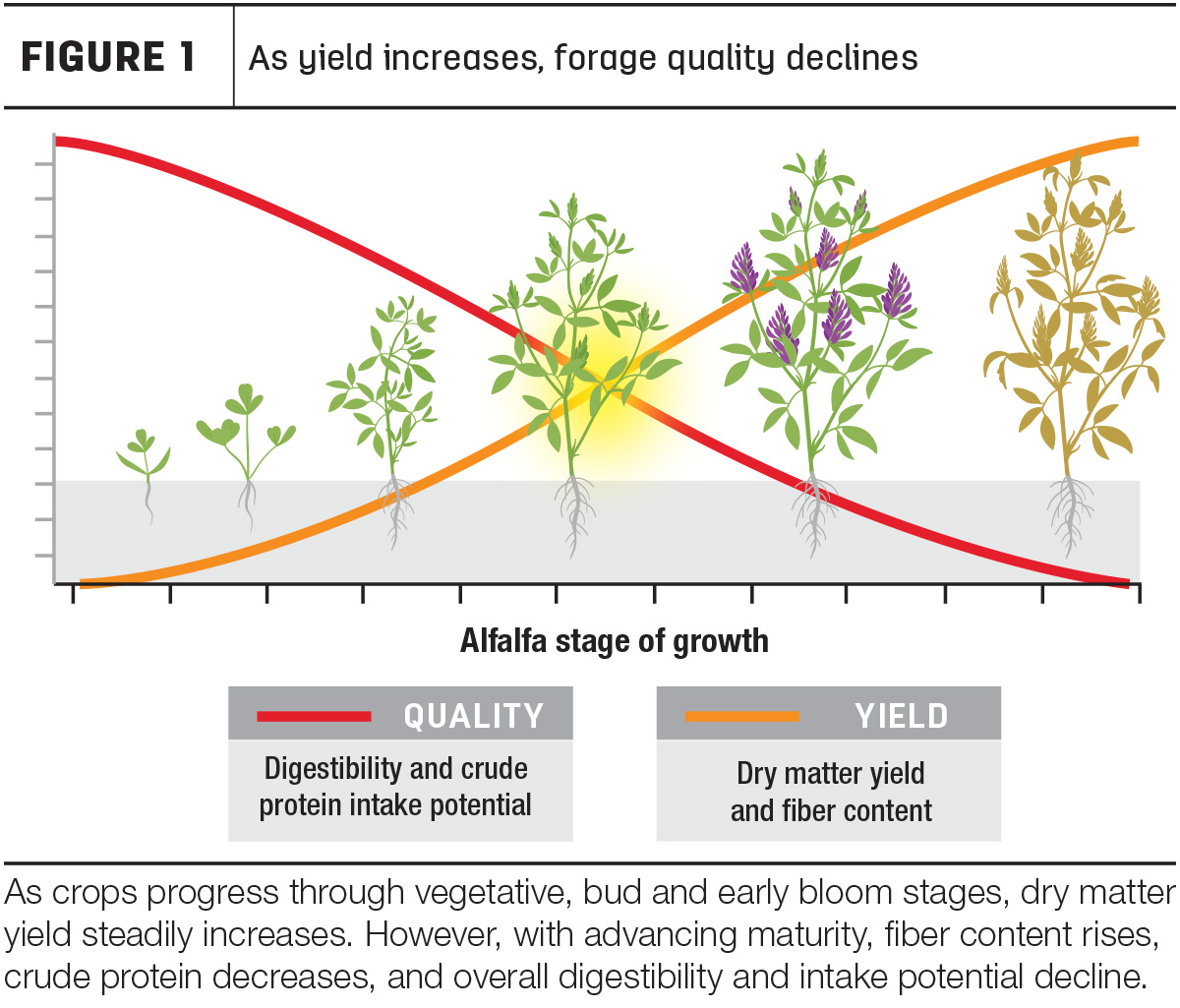
Plant maturity at the time of mowing has a greater impact on forage quality than any other factor. As crops progress through vegetative, bud and early bloom stages, dry matter yield steadily increases. While that gain may be attractive from a tonnage standpoint, it often comes at the expense of nutritional value. With advancing maturity, fiber content rises, crude protein (CP) decreases and the overall digestibility and intake potential decline, especially for ruminant livestock. These shifts reduce how much of the forage animals will eat and how effectively they can use it, ultimately affecting daily gain, milk production and ration balance.
Increased levels of neutral detergent fiber (NDF) limit intake by reducing ruminal motility, while higher acid detergent fiber (ADF) reduces the digestibility of forages. Relative feed value (RFV), total digestible nutrients (TDN) and energy availability decline as the crop matures. These changes can significantly alter the feeding potential and cost efficiency of a given cutting.
Still, later harvests aren't necessarily wrong. The ideal mowing time depends on the intended livestock class and the desired forage quality. Early cut forage with higher leaf content and lower fiber better supports animals with high nutritional demands, such as lactating dairy cows or growing stocker calves. For midgestation beef cattle, a later harvest may deliver sufficient nutrients with improved volume and better economic return.
Effective timing requires aligning plant development with herd needs and matching cutting decisions with the intended feeding goal. Calendar dates may offer a starting point, but the most meaningful measure of forage quality is found in the performance of the animals consuming it.
Making the most of the weather window
Harvest conditions rarely go exactly to plan. Being nimble with strategy helps capture quality even when the forecast isn't cooperative.
For those sticking with dry hay systems, there are still ways to make the most of short weather windows. Mowing after the dew has burned off, widening swaths to maximize sun exposure and using properly adjusted conditioners can speed up drying time and reduce the window for the quality loss that occurs after mowing during respiration. Tedding soon after mowing, after dew is gone, can also help spread heavy swaths and prevent uneven drying, especially in high-yielding stands.
Monitoring moisture throughout the field is another key tactic. Areas shaded by tree lines or with heavy ground cover may take longer to dry. Prioritizing those for an earlier cut or extra tedding can help bring moisture levels into a safe range for baling.
High-moisture bale silage allows producers the opportunity to harvest forage earlier, and it can also reduce exposure to rain and delays that can degrade nutritional value. This method relies on baling between 45% and 60% moisture, then wrapping the bales to promote anaerobic fermentation. The fermentation process preserves nutrients, improves digestibility and inhibits spoilage organisms, helping retain the feed's energy and protein levels, which are critical to maintaining animal performance on stored feed.
When forage is nearly dry but needs to be baled at moisture levels around 16% to 24% due to impending weather, applying a hay preservative is likely the best option. Preservatives help inhibit microbial growth during storage, reducing the risk of mold and heating that can lead to dry matter losses and reduced palatability, and in some cases, thermal events.
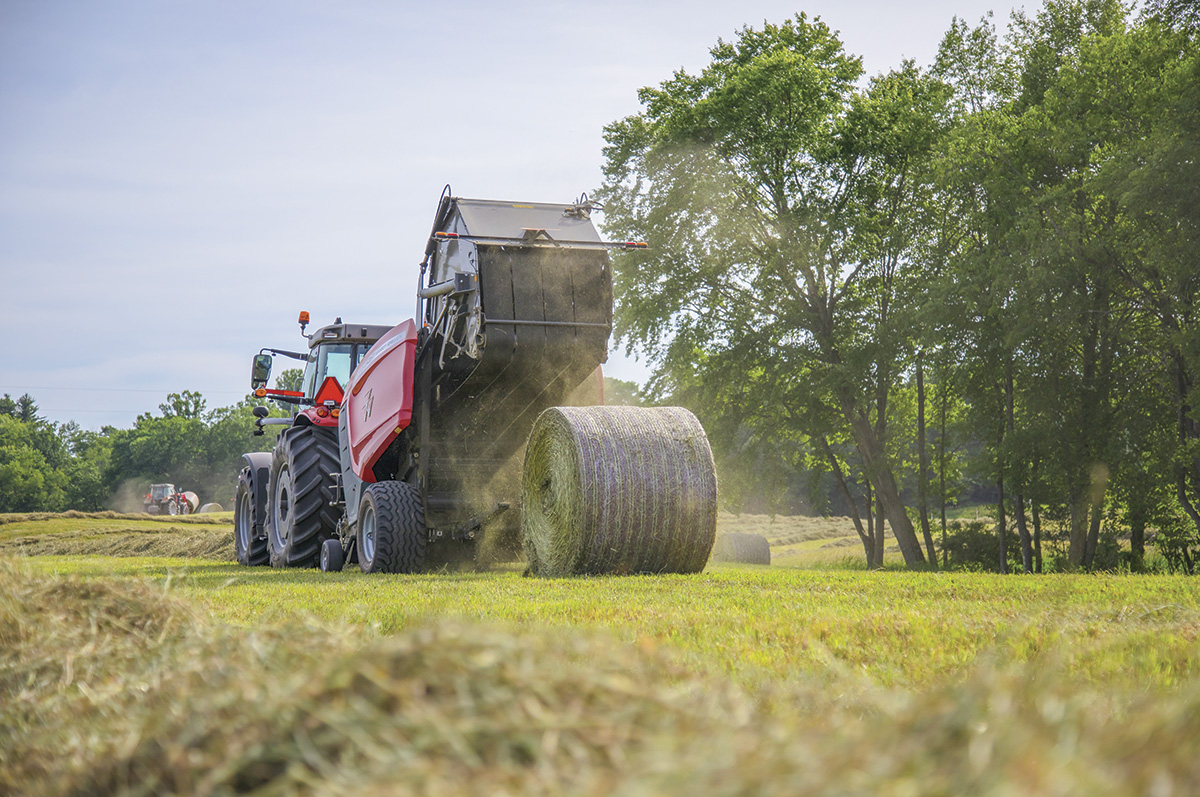
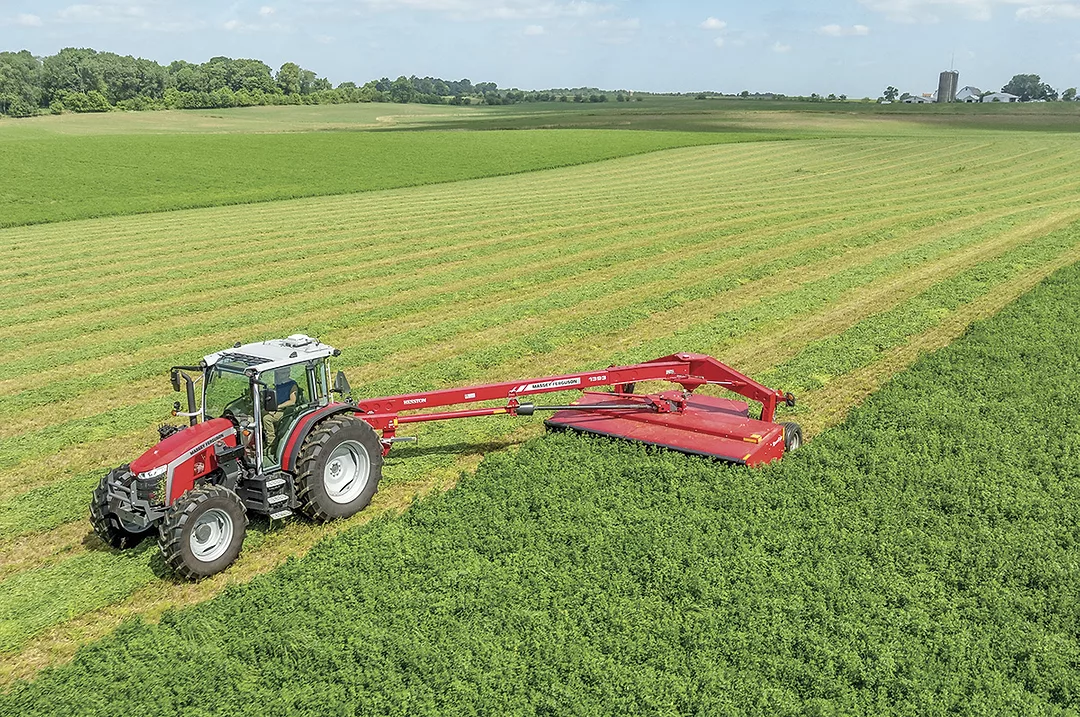
Effective timing requires aligning plant development with herd needs and matching cutting decisions with the intended feeding goal. Image courtesy of Massey Ferguson.
Both approaches allow flexibility in harvest timing and provide insurance against unpredictable weather, helping preserve the investment made in earlier agronomic and fertility decisions. It's worth evaluating bale silage or preservative systems well before hay season begins to ensure the operation is prepared to pivot quickly during the season.
Other considerations for timely mowing
It's fall, and timing decisions shift to focus on protecting future forage potential. For alfalfa, the final cut plays a key role in stand longevity. Cutting five to six weeks before the average first killing frost gives the plant enough time to regrow and restore root reserves before dormancy. If that window passes, it's often better to wait until after dormancy is established to avoid stressing the plant. Consideration of local growing degree days and variety-specific tolerance to late-season cutting can further refine the decision.
In some systems, extending the forage harvest season includes planting winter annuals such as rye, triticale or oats. These crops can be interseeded or planted after corn silage harvest to boost fall forage production. Harvesting them at the right stage is just as important. Timing can influence not only nutritional value but also spring regrowth potential and field management logistics.
In these systems, mixed stands can present unique challenges when it comes to mowing. When species mature at different rates, choosing when to cut may require prioritizing the dominant species or the livestock's nutritional requirements. Delaying for a slower-maturing species can compromise the overall quality, while cutting too early may sacrifice tonnage. As with monocultures, aligning the cutting window with the desired forage quality outcome is key.
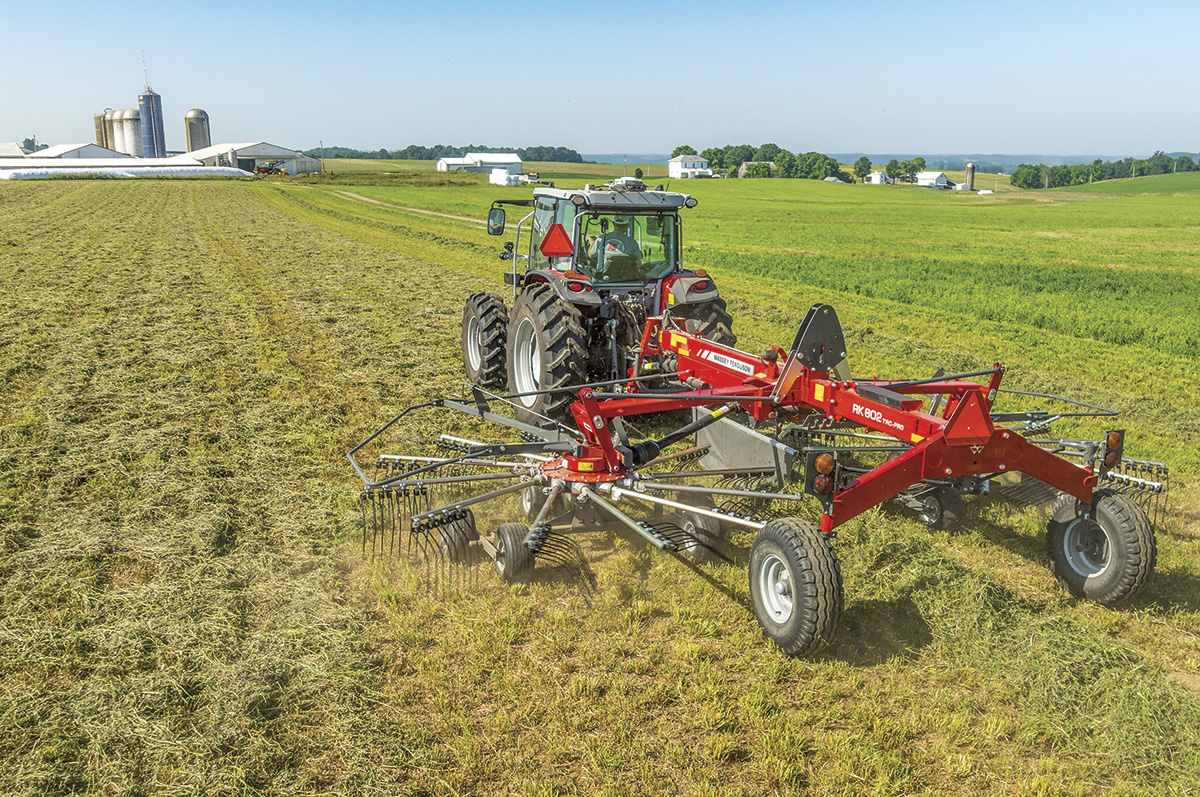
Harvest conditions rarely go exactly to plan. Being nimble with strategy helps capture quality even when the forecast isn't cooperative. Image courtesy of Massey Ferguson.
Getting the most from every pass
Once the decision to mow is made, mechanical setup plays a critical role in protecting both yield and quality.
Raising the cutter bar slightly, typically in the 3-inch range for alfalfa and up to 4 inches for grasses, can improve regrowth potential and reduce ash content by minimizing soil incorporation into the swath. Higher cutting also helps leave more stubble to support airflow and faster drying. Conversely, cutting too low can increase the risk of soil contamination and expose crown buds to damage in alfalfa.
Ground speed affects cut quality and crop flow. Moving too quickly through the field may leave behind uncut or ragged strips, especially in dense stands. Adjusting speed to match field conditions and crop thickness helps ensure a uniform cut and windrow formation, improving both drying and baling efficiency.
Blade sharpness and overall mower condition also matter. Dull blades can tear rather than cleanly cut stems, leading to slower regrowth for perennial forages and reduced forage quality. Regular maintenance, including checking blade sharpness and inspecting conditioning rollers, can extend equipment life and improve field performance.
Additionally, it might be worth considering applicator systems, which allow baling at higher moisture levels with less risk, or adding baler knives to improve fermentation and digestibility by shortening the particle length of the stem. These tools provide options when conditions are less than perfect and can make the difference between salvageable feed and waste.
From field to feed
Perfect conditions are rare, and it's easy to get frustrated when plans shift. But preserving forage quality is still possible, even when the weather or schedule isn’t ideal. With the right approach, timely mowing and smart adaptations can help retain quality, support animal performance and protect return on investment.