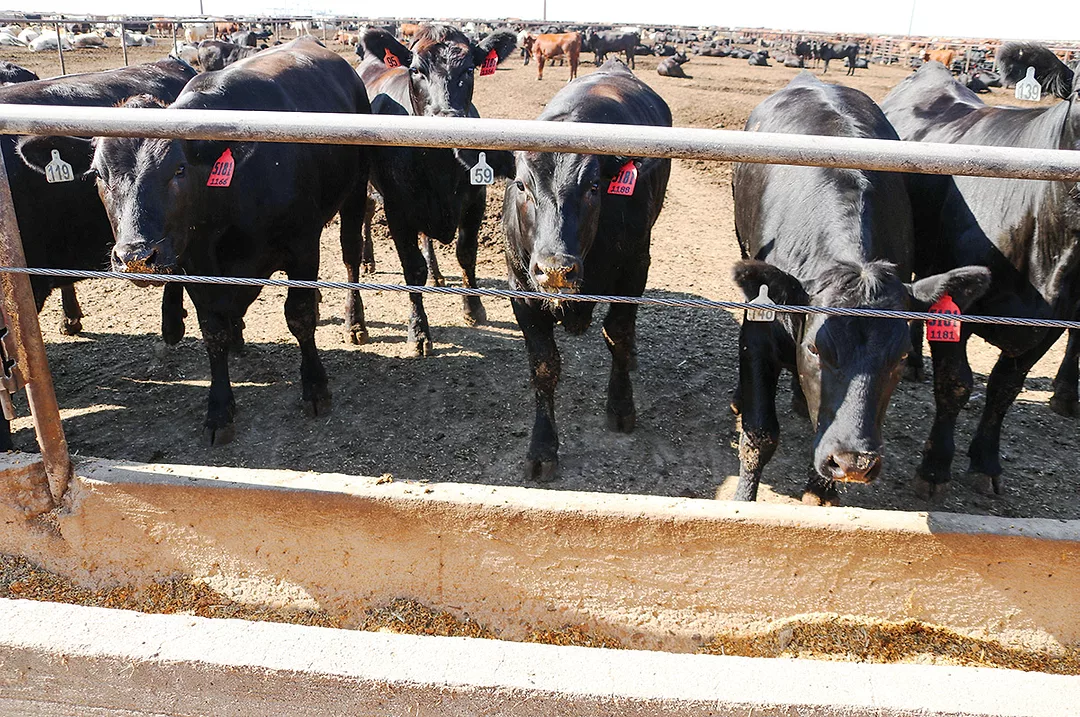
Rethinking nutrition in the era of growth-enhancing technologies
Historically, trace mineral requirements for beef cattle were set to prevent deficiencies. But in the modern beef industry, where cattle continue to grow faster and finish at heavier weights than ever, we have to ask, “Are those long-standing requirements allowing for optimal production?”
From 1977 to 2007, beef cattle growth rates increased by more than 40%. Hot carcass weights continue to increase year on year. These trends continue today, driven by better genetics, precision feeding and strategic use of growth-enhancing technologies such as steroidal implants and beta-adrenergic agonists. These growth-enhancing technologies are an integral component of efficient, modern beef production. Growth-enhancing technologies boost average daily gain (ADG), feed efficiency and hot carcass weight. But as cattle performance continues to improve, the question becomes, “Can yesterday’s mineral program support today’s growth potential?”
Why growth-enhancing technologies change the game
Steroidal implants and beta-agonists stimulate increased muscle growth through a variety of hormonal and metabolic mechanisms. To put it simply, both implants and beta-agonists stimulate muscle protein synthesis, resulting in faster, more efficient weight gain. Trace minerals, such as zinc, play a role in many of these same mechanisms and are vital in supporting a vast range of physiological processes including but not limited to energy metabolism, muscle growth and immune function.
Here’s where it gets interesting: Recent research suggests both implants and beta-agonists may alter the requirement of certain trace minerals in feedlot cattle to some degree. Evidence of this is demonstrated by a consistent decline in plasma zinc concentrations following implant administration precisely during the period when growth rates and protein synthesis are greatest. A similar response can be noted for liver manganese concentrations, which have been shown to decrease following implant administration. Together, these changes may be evidence of increased mineral demand during periods of rapid growth induced by growth-enhancing technologies.
Rethinking 'requirements' in modern cattle
The long-standing mineral recommendations published by the National Academies of Sciences, Engineering and Medicine (NASEM, formerly NRC) date back several decades, and many of these requirements are more than 40 years old. In the time since their publication, we know cattle genetics, nutrition and growth-enhancing technologies have changed a great deal. Thus, it is not unreasonable to wonder if today’s high-performance feedlot animals have higher functional requirements for trace minerals. This may be particularly true when our focus is to optimize growth performance rather than simply prevent trace mineral deficiency.
For zinc, the research picture is particularly compelling. Several studies done at Iowa State University revealed when feedlot finishing cattle receive a high-potency combination implant, supplementing zinc at a rate of approximately 100 milligrams of zinc per kilogram of diet dry matter (greater than the current requirement of 30 milligrams of zinc per kilogram of dry matter) can result in improved ADG and carcass weight. A simple way to think of this is, an implant is used as a tool to improve growth and efficiency, and when we supplement additional zinc to the diet, we are supplying more resources that are needed to better support this increased level of growth.
When more isn’t always better
It cannot be overstated, not all trace minerals function the same. Unlike zinc, the story is more nuanced for copper and manganese. So let’s shift gears a bit. We just discussed how supplementing more zinc can improve implant response. So a common question may be, “Should we just supplement more of all of the trace minerals?” The short answer is no. In fact, copper is a great example of how excess supplementation can become a liability. While copper is essential for enzymes that support energy metabolism, connective tissue formation and antioxidant defense, it is unique in that it also accumulates readily in the liver. Over time, excessive copper storage can lead to damaging oxidative stress and actually impair performance.
In recent feedlot trials, again conducted at Iowa State University, steers classified with either “high” or “deficient” liver copper concentrations had an impaired ractopamine response. Interestingly, steers with “normal” liver copper levels had a typical response to ractopamine. Therefore, as it pertains to beta-agonist response, this research suggests there is a sweet spot for copper status. Essentially, copper must be adequate to support metabolic function but not so high that it creates stress. Thus, supplementing copper beyond recommended levels is not advised in finishing cattle.
Manganese, a far less studied trace mineral, tells yet a different story. Despite its role in nitrogen metabolism and antioxidant support, supplementation above current recommended levels did not improve growth in implanted or non-implanted finishing steers. While evidence shows implants alter liver manganese concentrations, this is likely not indicative of an increased dietary requirement. Therefore, supplementing manganese at greater than the current recommendation, while not detrimental to performance, would not result in improved economic returns.
The takeaway? A one-size-fits-all approach is not suitable for trace mineral nutrition.
The bottom line
Improved genetics, nutrition and growth-enhancing technologies have reshaped what “normal” performance looks like in the feedlot. But with faster growth come changes in nutritional demand. Research now makes it clear that precision trace mineral nutrition can support optimal response to commonly used growth-enhancing technologies.
Building strategic mineral nutrition programs will continue to be important as the industry moves toward more precise and sustainable production. Fine-tuning mineral nutrition represents a real opportunity area. For beef producers and nutritionists, the goal isn’t simply to add more minerals. It’s to add the right ones, at the right levels, at the right time. Matching dietary trace mineral supply to the specific growth stage, implant strategy or beta-agonist program could help producers capture incremental gains without unnecessary cost or environmental impact.
As modern cattle feeding continues to evolve, trace minerals will remain small but mighty players in the story of efficient, sustainable beef production.