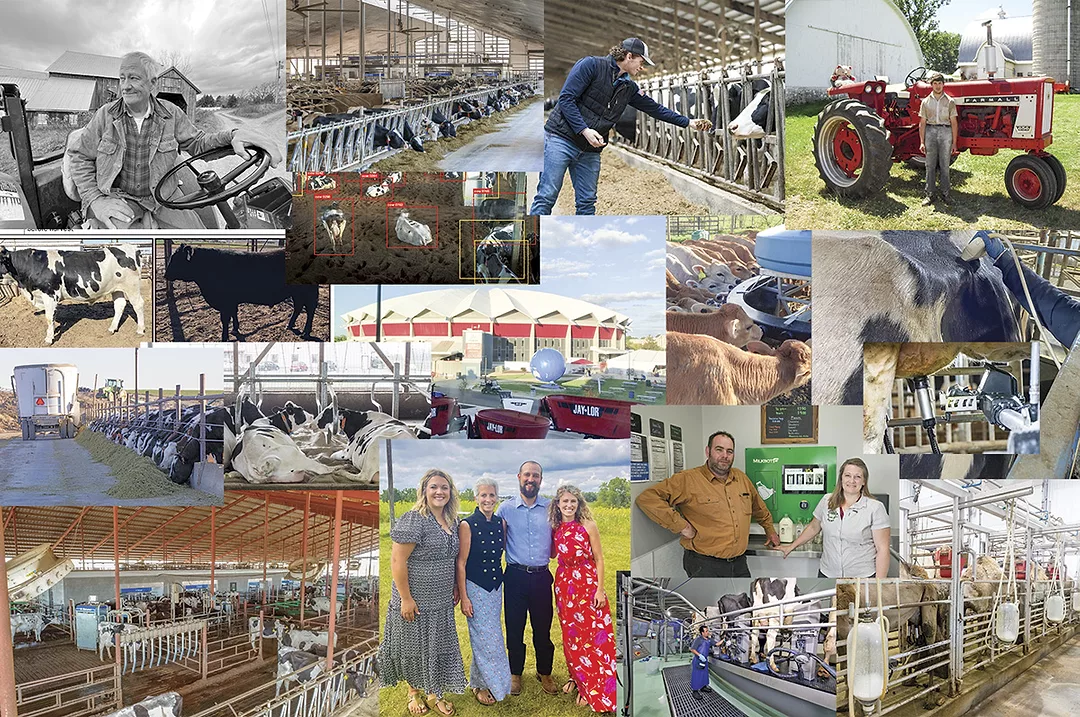
Managing transition cows, feed efficiency, breeding decisions and automation were major topics of interest in 2025. They are common themes on our list of Progressive Dairy's top-viewed articles from October 2024 to October 2025. As we look back on the best 25 articles over the past year, we reached out to several of the subjects and authors to ask a follow-up question. Here are the responses we received.
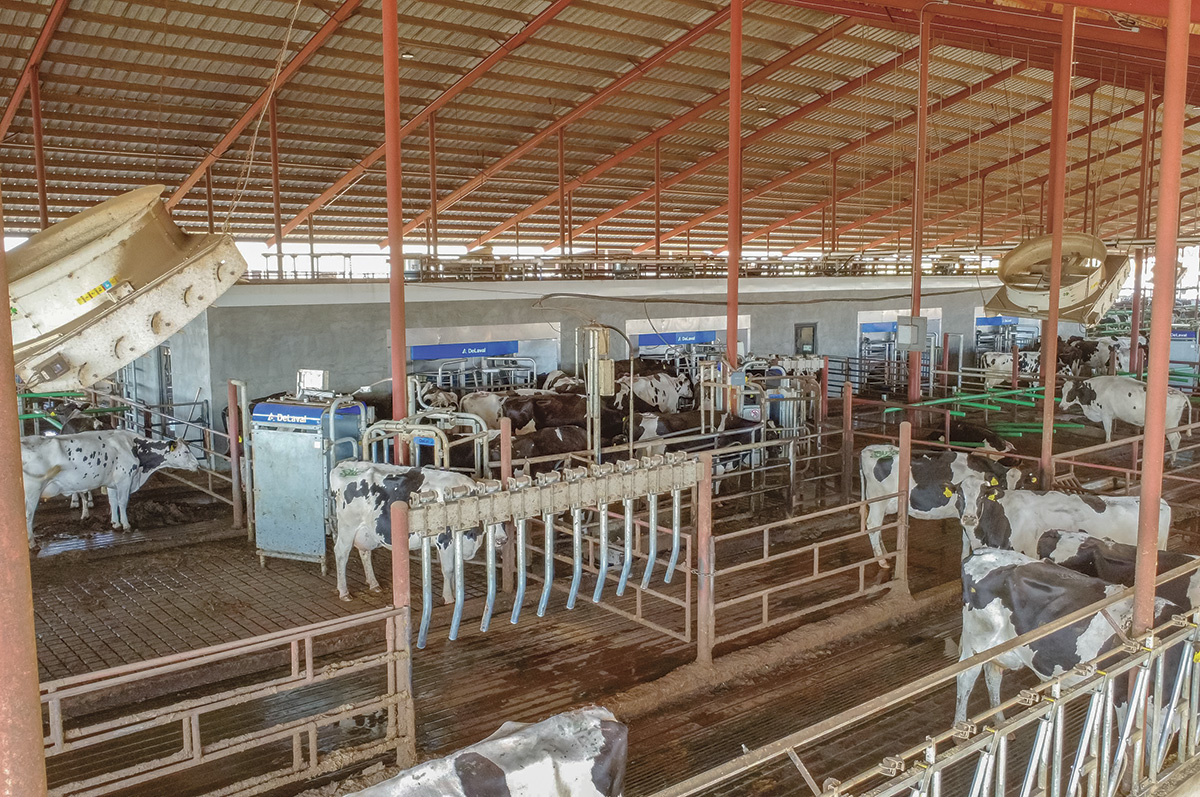
The barn should be set up as a guided-flow system to ensure that cows are going to the robots based on the milking permissions that they are assigned. Photo courtesy of DeLaval.
1. A new, ‘no-feed’ strategy for robotic dairies
As milking strategies have evolved with the industry, so too have feeding strategies. One California dairy producer and their adviser experimented with removing pellets from the automated milking robot so that the herd was not trained to be milked with the promise of an energy source while in the robot. As other producers have adopted this practice, there have been notable key factors that lead to the success of this no-feed management strategy, including guided traffic, a cow training protocol, quality feed in the total mixed ration (TMR) and commitment from farm management and consultants.
This article defines factors for success in no-feed systems. What other factors have come to light as more producers are adapting this management style with their automated milking systems?
There was a thought that if you are feeding TMR in automated milking barns that the energy in the bunk is going to make late-lactation cows increase in weight. However, if the farm is doing a good job with keeping their cows healthy, that allows them to be bred back at the right time in their lactation and allow them to have good production until the end of their lactation. Then, there isn’t a worry for them to gain too much weight at the end of the lactation. It comes back to proper management of the herd, whether it is a conventional milking or automated milking herd.
The overall simplicity of the system continues to be a major factor that is being noticed on farms. Not having to deal with all that comes with feeding a pellet in the robot reduces the work needed to manage this.
—Jason French, VMS solution manager, DeLaval North America
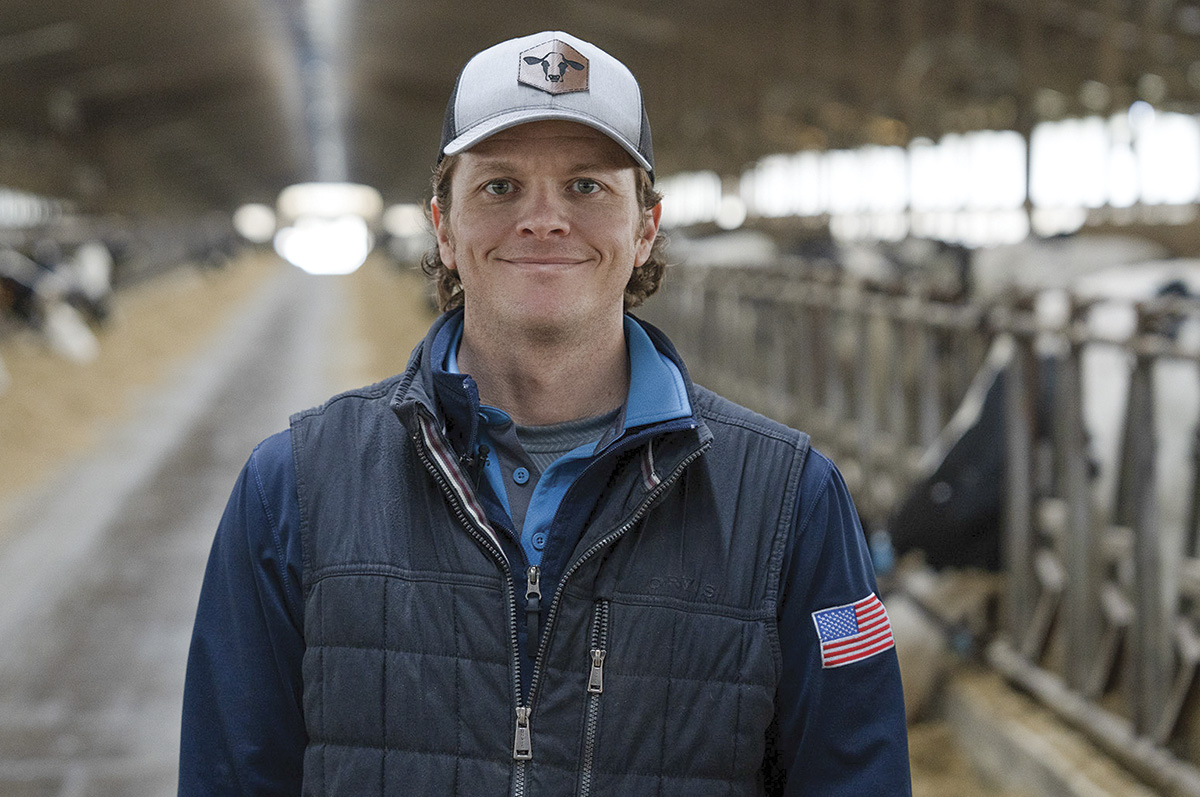
2. Measure It to Manage It: Feed efficiency data improves culling and breeding decisions
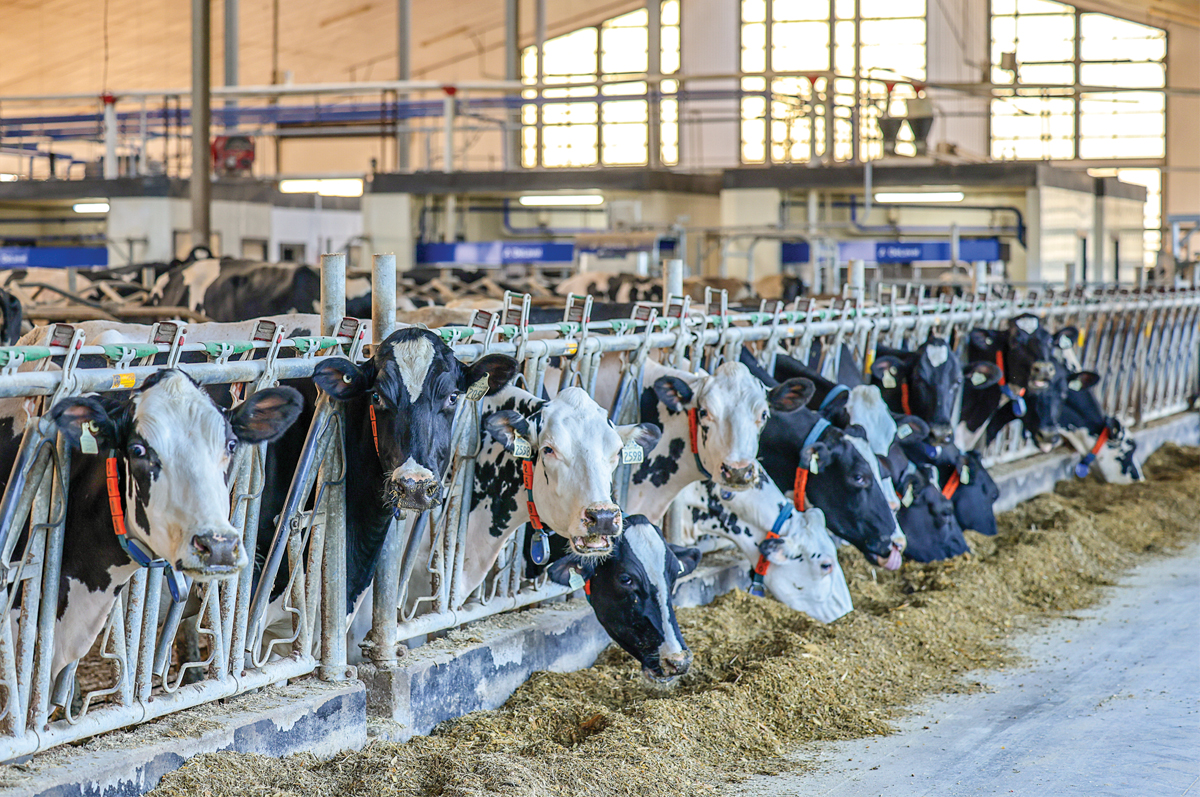
Ryzebol Dairy uses a feed efficiency system to track how well individual cows convert feed into milk. By comparing daily feed intake to milk yield, the farm identifies low-efficiency cows for culling and high-efficiency ones for breeding, thus leading to better herd profitability and genetics.
Why do you think this article resonated with readers so much?
I think the article resonated with readers because feed efficiency is something we have always tried to look at, but it has been hard to measure on individual cows. Having the information on individual cows will allow producers to see their most efficient cows and try to make replacements from them instead of a blanket breeding plan based on lactation or Net Merit.
We have made a lot of progress with genetics and with data capture that is allowing us to move faster as an industry toward more efficiencies in many aspects of the operation. Feed efficiency is a high priority, as we know that feed is the highest expense on a dairy each year, and if you can make even a small impact on your largest expense, that can have a positive impact on our cost of production.
—Clare Alderink, general manager, Ryzebol Dairy

World Dairy Expo grounds are ready for opening day of the show Oct. 1. Photo by Jenn Coyne.
3. Cool stuff we saw at World Dairy Expo 2024
World Dairy Expo is known as the meeting space for the global dairy industry, and because of such a large, diverse audience, many companies and industry allies launch new products, platforms and promotions. During the 2024 show, the Progressive Dairy editorial staff saw an array of cool things, from GEA highlighting the company’s rich history and honoring the 100th anniversary of the Surge bucket milker to FutureCow’s artificial intelligence-powered on-farm analysis to detect mastitis and Monarch’s fully electric and autonomous tractor used to push up feed.
Why is this an editorial staple following World Dairy Expo?
There are new products and promotions presented at World Dairy Expo each year. This article is a way for our editorial staff to share with readers what we saw at the show. It’s also fun to see what is promoted at the show and how it’s incorporated on farms as a new year soon gets underway.
—Jenn Coyne, editor, Progressive Dairy
4. Transition cows: Immune suppression or a state of immune robustness?
There are multiple lines of evidence indicating the term “immune suppression” to describe the dynamic immune system around calving should evolve. Some aspects of the immune system are downregulated, but other aspects are upregulated and robust, and some remain unchanged. Consequently, while increased morbidity obviously occurs in early lactation, it does not appear to be caused by immune suppression but rather by increased exposure risk to antigens and pathogens.
In your opinion, what makes understanding the transition period challenging?
Transition cows often respond with great variability from one another and individually in a very narrow window of time, making the transition period a challenge to research and understand. Many environmental factors contribute to divergent transition period outcomes, including diet and forage changes, social stress of pen moves, proximity of vaccination and hoof trimming to calving, body condition, pen cleanliness and calving difficulty. Further, individual cows experience large changes in energy, protein and mineral metabolism in a narrow window of time: when evaluating immunity and metabolism, the same cow has a vastly different blood sample at two days in milk than four days in milk. Interpreting how much of these changes indicate normal adaptations to lactation or signs of a poor transition adds even more complexity.
—Julie Opgenorth, technical sales and support specialist, Purina Animal Nutrition

5. Recent studies on beef-on-dairy steers in the feedlot
Research from Colorado State University and University of California studied 400,000 head of beef-on-dairy cattle in the Imperial Valley. The study focused on energy requirements, ration ratios, heat tolerance and the most efficient crosses. Results showed Angus-Holstein crossbred steers consumed less feed and had improved carcass performance.

Photo illustration by Kristen Phillips.
6. AI enables cameras to put ‘new eyes’ on your cows
The concept of using cameras to watch your dairy isn’t new, but with the arrival of artificial intelligence (AI) and significant players actively investing in the U.S. dairy industry, AI systems are transforming the management of cows. Aidan Connolly highlighted several of these systems and their capabilities of monitoring feedbunks, lameness, maternity pens, parlor operations and animal welfare.
What is your best advice for dairy producers thinking of investing in an AI-enabled technology?
The golden question, and the one that trips up a lot of new technologies, is for the producer to ask them, “Who is using and paying for your product/service and can I have their phone number?” Many innovators hate this question because either they are still perfecting their product, maybe fixing mistakes, or providing it for free to their “customers.” The reality is that if you are getting a project, or a test pilot, and of course sometimes it is the right thing to do, you need to be clear that is what you are getting into.
—Aidan Connolly, president, AgriTech Capital

Image by Kathrine Edgar.
7. Through the decades: The evolution of hypocalcemia mitigation strategies
Managing and achieving a successful fresh-cow transition is a critical component of a profitable and sustainable dairy business. This article reviews the last several decades of macromineral research and recommendations that have helped shape efforts to control hypocalcemia. Early methods focused on providing additional calcium to cows postpartum while later dietary modifications, such as adjusting the dietary cation-anion difference (DCAD) and dietary phosphorus binders, became commonly used to affect calcium metabolism pre-calving.
What is your advice for achieving a successful transition period?
It is essential to have strong collaboration and transparent discussion among the farm managers, nutritionists and veterinarians to determine farm-specific transitional risk factors with a plan to mitigate those challenges. A holistic approach that evaluates the three pillars of transition success: environment, management and nutrition, is critical. Implementation, monitoring and attention to detail in these three areas will be the key to consistent success.
—Rod Martin, dairy nutritionist and management consultant, Protekta-USA
In automated dairy systems, a vast array of data is collected from a variety of performance indicators. Image courtesy of DeLaval.
8. Evaluating KPIs for automated milking systems
Key performance indicators (KPIs) are useful to fully track and improve the outcomes in automated milking systems. For dairy producers using automated milking systems, the KPIs most useful can be broken into different categories – cows to optimize lactation and production, milking permissions to evaluate milking at the right time, robotic equipment to ensure performance efficiency, and management to define workflows and daily routines. From there, the specific KPIs include average days in milk, number of cows per robot, incomplete milking per robot and attachment time, to name a few.
There are several KPIs listed for cows, milking permissions, equipment and management within this article. If you could add one more for automated milking systems, what would it be? Explain.
Instead of adding more KPIs, I would like to emphasize the ones already listed because every herd is different and what matters most can vary from farm to farm. When I look at KPIs for automated milking systems, I like to break them into three parts: cow, robot and people. From a data point of view, if I had to choose, I’d focus on cow flow and attachment time.
Cow flow can mean a lot of things. I usually look at numbers like milkings per hour per robot and how long do cows wait in the commitment pen. Those tell me how cows are moving through the barn and how well people are training and managing them. The way we train cows directly affects how smoothly they move, and that really shows up in the data. When training goes well, cows understand the smart gate system – they move from the feed area to the commitment pen to the robot and back out to the bunk on their own. A well-trained cow will walk to the robot when she has milking permission and leave when she’s done. That’s when you see higher milkings per hour and fewer cows waiting around.
On the robot side, I look at attachment time as a sign of how well the robot is working. It’s one of the things our technicians check when they’re troubleshooting or fine-tuning performance on the farm.
In the end, when the cows, robots and people are all in sync – with good routines and regular maintenance – every farm builds its own set of KPIs that make sense for them. Prevention is always better than reaction.
—Nicky Tsai, dairy adviser, DeLaval
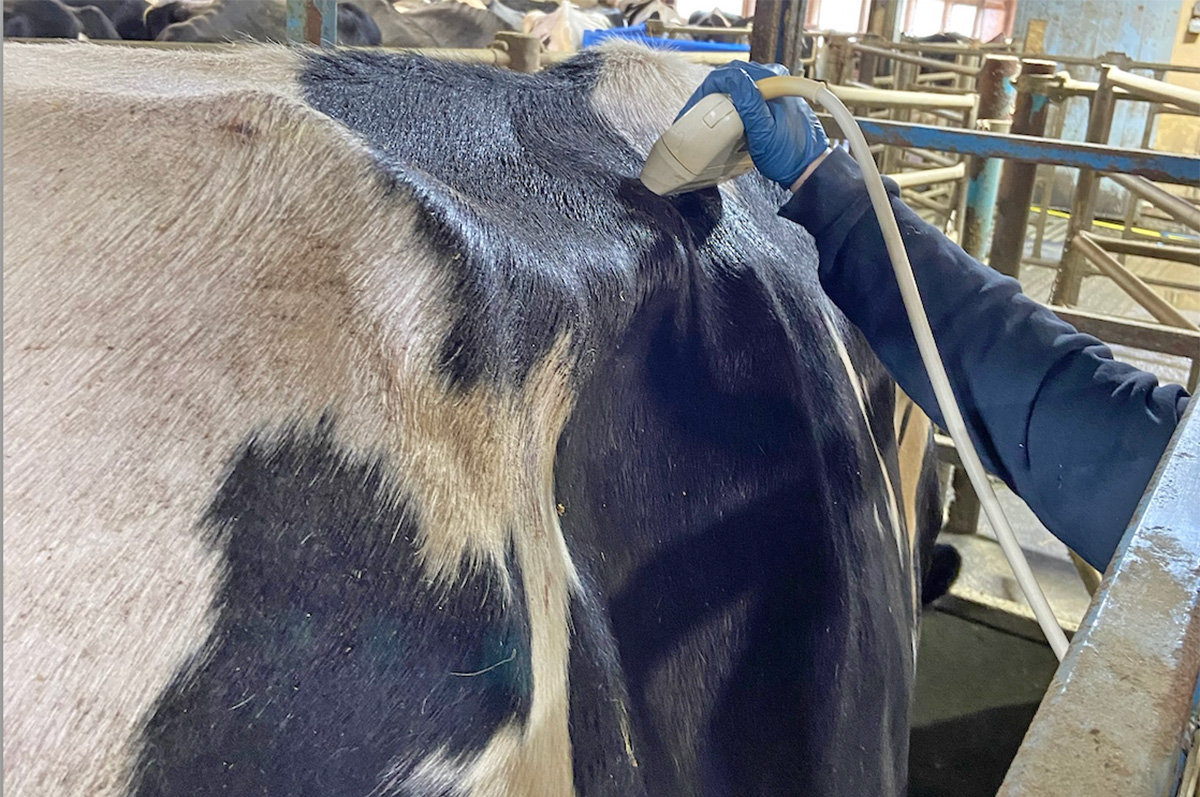
Photo provided by Kyrstin Gouveia.
9. When and how much muscle do cows lose and gain throughout lactation?
Skeletal muscle plays a crucial role in dairy cows’ health and productivity, but it is also a very dynamic tissue. It can be mobilized to support milk production during periods of negative energy balance, but recovery of lost muscle is much slower. Understanding how and when muscle depletion occurs is important for improving cow welfare and maximizing milk yields. Recently, a series of studies have been conducted at Purdue University to evaluate skeletal muscle changes throughout lactation.
What is your best advice for maintaining muscle mass throughout lactation?
Cows are going to lose muscle in early lactation when they are in negative protein balance due to high milk production with insufficient intake. The best way to maintain muscle mass is to minimize negative protein balance by getting cows to eat in early lactation and to feed diets balanced for amino acids. Throughout lactation, we believe cows largely maintain muscle mass unless they become ill or injured (i.e., mastitis or lame), during which time they may need to draw on protein reserves, reducing muscle mass.
—Jackie Boerman, associate professor, Purdue University
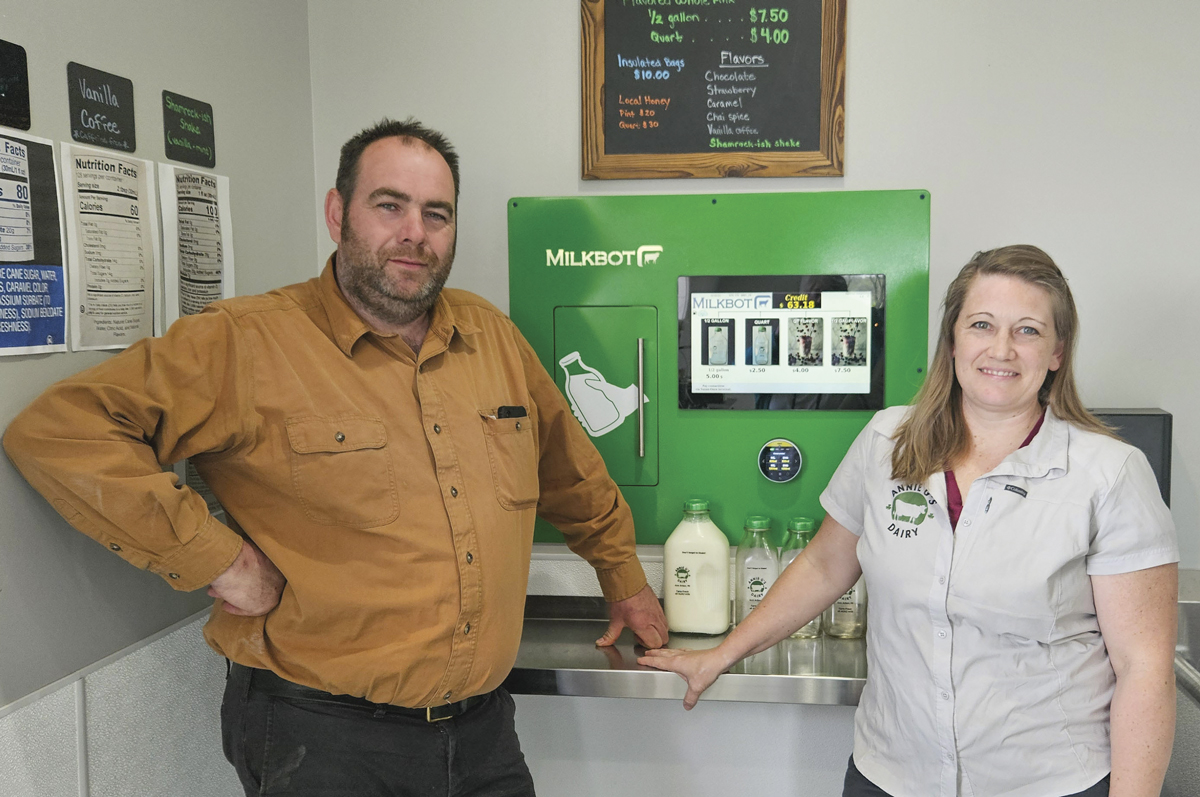
Once Dave and Kat purchased the vending machine and it was on-site, Dave used his engineering skills to adjust and modify it after each inspection, putting a lot of time, effort, money and frustration into re-engineering the dispenser. Image provided by Bev Berens.
10. Annie G's Dairy: First-of-its-kind milk vending machine debuts in the U.S.
A 2021 trip to Ireland introduced Dave and Kat Mageean to a different kind of milk vending machine – a European design where customers fill and cap glass bottles themselves using the same concept as a convenience store fountain drink dispenser. The search for a distributor began, but the initial model they saw was not available in the U.S., mostly because of differences in requirements around pasteurization, connections and especially scale. Once the vending machine was purchased and on-site, Dave used his engineering skills to adjust and modify it after each inspection, putting a lot of time, effort, money and frustration into re-engineering the dispenser. When a customer makes a purchase, they are given a clean, capped bottle, then assume the risk when they open the bottle to fill it with their choice of several milk flavors. The customer pays a bottle deposit for the glass bottle, returning it on the next trip so it can be washed and sanitized in the creamery.
What intrigued you most about Annie G’s Dairy when you pitched this story idea to Progressive Dairy?
From farmer directly to table. I believe this is the most basic and foundational food distribution system in society, wrapped in history, trust and tradition. The farmer has 100 percent control of the product and potential rewards – not to mention all the risk. It isn't easy with any food product, but farm-to-table dairy – especially fluid milk that can be openly marketed – has its own set of barriers to clear. I was drawn to this story because the Mageeans were doing just that – clearing barriers, building a model for a small dairy that can carry the load for themselves and the next generation. I went into the story expecting to see already bottled milk in coolers. I didn't expect to see a milk dispenser system where customers fill their own bottles and even get to choose a flavor if they want it. I was drawn to the story because of the fundamental model. I fell in love with the story because of the innovation, creativity and brute drive it took to make the system work.
—Bev Berens, freelancer
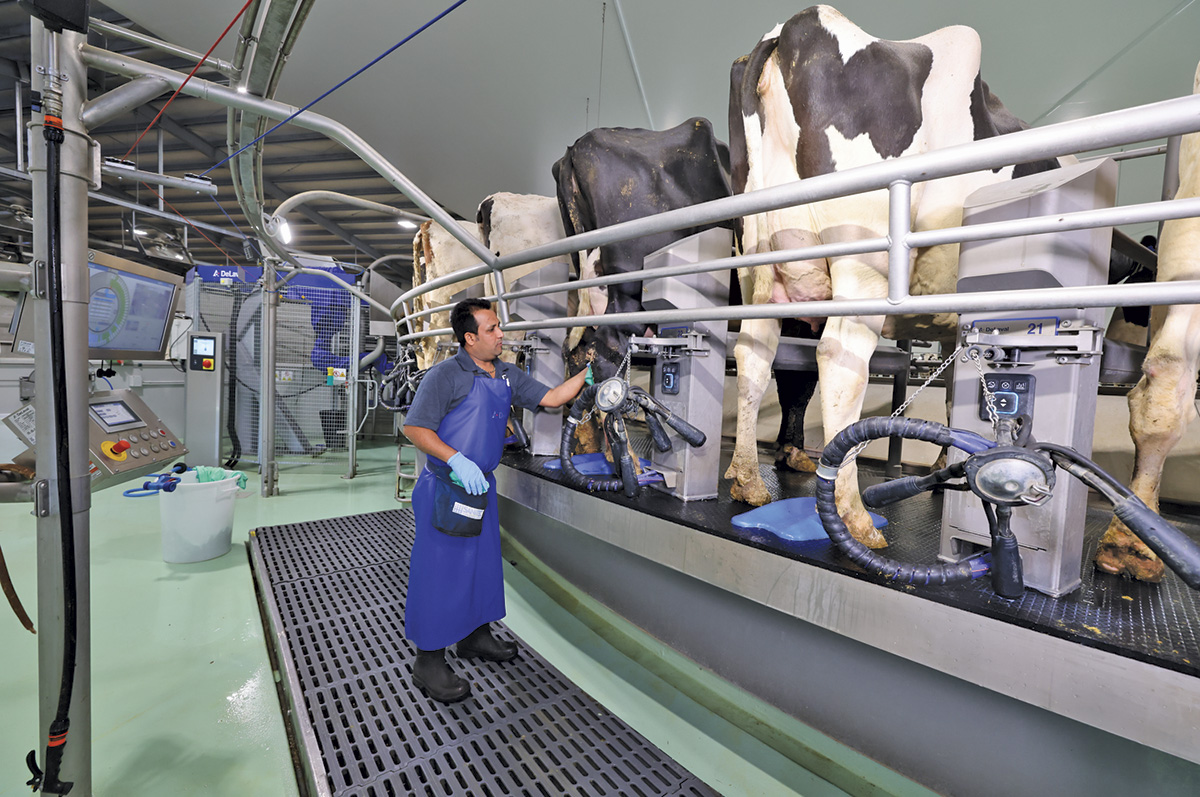
Attention to detail at every level in the parlor will result in success. Image provided by DeLaval.
11. 7 parlor hygiene tips to improve milk quality
Ernesto Tapia discusses seven points to parlor success: Following proper milking procedures, monitoring teat health regularly, optimizing equipment function and cleanliness, focusing on parlor cleanliness, employee training and compliance, implementing milk quality testing and monitoring milking performance data.
How do you get employees to buy into these tips on dairies you work with?
Constant feedback and reassurance build confidence and trust. When employees feel valued, they perform their best – and that’s what makes the farm operate at its highest level.
—Ernesto Tapia, dairy adviser, DeLaval
12. Using feed efficiency as a cost-control measure and monitor
The methods currently utilized to measure feed efficiency and income over feed do so at a group or herd level. However, we know that some cows are simply genetically superior at converting feed to milk. The heritability of feed efficiency is supported by multiple research publications and accepted by the industry. However, the current process of identifying efficient and inefficient cows is a lengthy, costly process and one in which genetics companies have invested heavily.
Why do you think the push to identify individual cow feed efficiency will continue?
The push to identify individual cow feed efficiency and make decisions based on that data won’t just continue; it will grow in importance. Dairies that know which cows convert feed most efficiently will stay competitive and profitable. Beyond efficiency-based culling and breeding decisions, this level of data has the power to enable precision feeding strategies and enhance decision-making regarding health treatments and dry-off management, leading to healthier and more profitable herds.
—Veronica Shabtai, DVM and product manager, Afimilk
13. An analytical approach: Three trends in the A.I. industry
Sophie Eaglen analyzes three of the most popular trends in the A.I. industry: conventional semen sales declining, the popularity of crossbred bulls and the rise of non-Certified Semen Services semen. Eaglen explains the cause and effect of each of these trends and notes that continued collaboration between all parties producing, selling and buying semen will aid in better data collection.
Which of these three trends do you predict will follow us into 2026?
The type of semen used by U.S. dairy producers keeps shifting, and the gap between categories is getting wider. In 2024, sales of gender-selected dairy semen increased by about 1.5 million units, making it the most commonly used dairy semen type. Beef-on-dairy semen held a strong second place at 7.9 million units, while conventional dairy semen declined to around 6.2 million units.
—Sophie Eaglen, international program director, National Association of Animal Breeders Inc./Certified Semen Services Inc.

Katie Coyne is pictured here with her children, (left to right) Kelly Reynolds, Katie Coyne, Wyatt Lee and Maureen Lee. Image provided by Katie Coyne.
14. Lessons in grit, grace and change from Katie Coyne
Katie Coyne positively impacted many lives throughout the dairy industry, especially dairy youth through her show clinics and other activities. Shortly before Coyne lost her battle to cancer, Michele Payn visited with her to write an article about some of the life lessons that she wanted to share with others. These lessons were to always continue learning, make sure the people around you are there for the right reasons and to be well rounded. She also shared how she hoped to be remembered and about finding solace among stress.
What about Katie Coyne inspires you most?
Katie’s passion for helping dairy youth and her determination inspires me the most. She fought cancer multiple times with grit and grace; I was thankful she allowed me to share her story.
—Michele Payn, Cause Matters Corp.

Photo by Mike Dixon.
15. Klebsiella mastitis: Stop it before it starts
Outlining a plan of treatment before Klebsiella mastitis strikes will help production levels return to normal. Carefully monitoring the milking parlor, cow traffic areas, freestall management, teat disinfectant, teat skin health, vaccinations and nutrition will help build a foundation for success.
What can producers do during the winter months to prevent Klebsiella outbreaks in the summer months?
Although mastitis caused by Klebsiella can occur any time of the year, one thing producers should prioritize during cold temperatures is improving teat skin health and reducing open lesions, as these tend to be worse in winter. This can be accomplished through reducing moisture in stall bedding, especially in herds that bed with manure solids, and by using high-emollient post-dip that completely covers the teat end and barrel. Producers should also reduce environmental challenges in winter, such as wind blowing across large open areas like walkways that can increase the number of dry, chapped teats and, in some cases, frostbite.
Additionally, during the winter months, producers can upgrade or repair freestalls. For example, installing a brisket pipe can improve cow positioning, leading to lower Klebsiella counts in the back one-third of stalls during the spring and summer months. Vaccination can also be performed during this time so that cows are fully immunized ahead of the summer season when cases tend to peak on many farms.
Being proactive in the winter months should set farms up for a better summer regarding Klebsiella mastitis.
—Angela Rowson, senior technical service veterinarian, Vaxxinova; and Paul Virkler, senior extension associate, Cornell University College of Veterinary Medicine
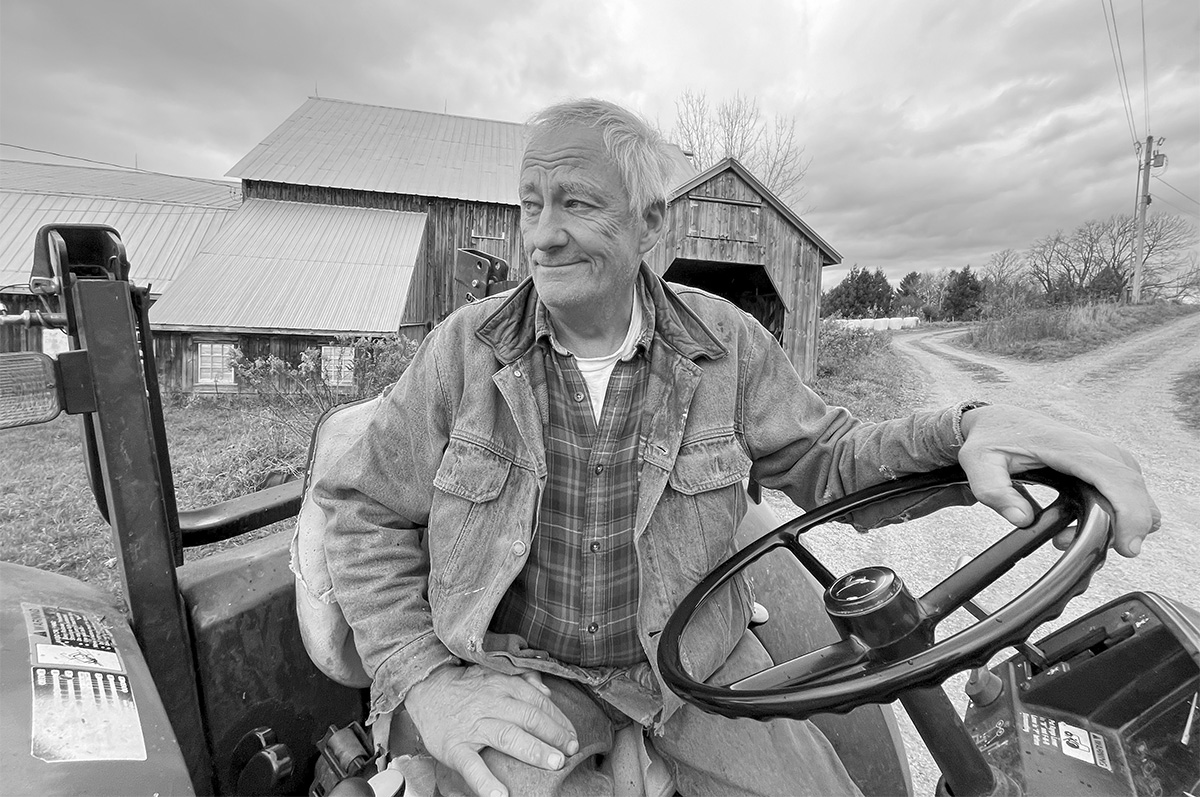
Courtesy photo.
16. Retired Vermont dairy farmer writes children’s Christmas book
The Christmas Calf by George Woodard captures the essence of a true holiday miracle through the perspective of a 9-year-old farm boy. On a cold Christmas Eve, this young boy's curiosity and care lead him to the barn, where a cow is expected to give birth. In the quiet, snowy night, he experiences the wonder and mystery of new life, illuminated by the magic of the season. Woodard’s storytelling transports readers to this heartwarming moment, making The Christmas Calf a memorable tale for all ages.
What message do you hope children take away from The Christmas Calf?
Imagination doesn’t apply only to stories of fantasy and adventure, it also can help in real life when farm things break down or go wrong and the answers aren’t obvious. I hope the children who read The Christmas Calf will learn that growing up on a farm provides them not only with adventures but also the opportunity to experience the magic of everyday life. As they watch the grown-ups in their lives use imagination sometimes to solve problems, maybe those children will do the same when they become the grown-ups. Albert Einstein said, “Imagination is more important than knowledge.”
—George Woodard, author and retired Vermont dairy producer
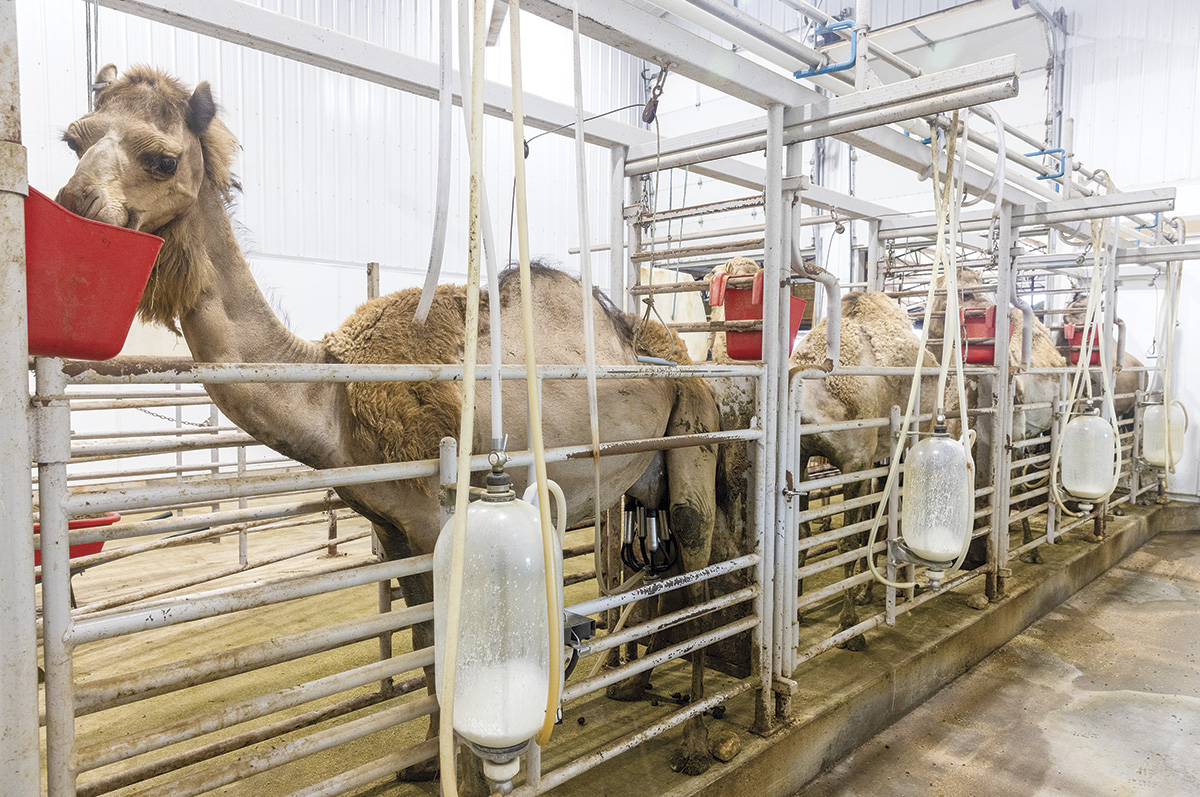
Humpback Dairy has a new modern-day facility, the first in the U.S. where camel milk went into a pipeline, straight to the tank and the bottling plant, according to owner Sam Hostetler. Image by Julie Brown.
17. Camel dairies offer intriguing alternative to cattle dairies
Camel milk, a popular nutritional staple in the Middle East, offers consumers a variety of health benefits, including people with conditions such as diabetes and those with certain allergies. It is available at many markets across the country but is much more easily found online in both liquid and powdered versions. Freelancer Steve Pastis spoke with the owners of Humpback Dairy in Missouri, Camelot Camel Dairy in Colorado and River Jordan Camel Dairy in Indiana to learn about their operations, why they chose to milk camels and how they market their camel milk.
18. Shaping success: The role of fat and muscle in transition cows
Recent research efforts have explored how muscle amount and mobilization impacts transition success and early lactation performance. Like fat, it has been found that the more muscle a cow has, the more she will mobilize in early lactation. However, unlike fat, no negative consequences have been identified as being associated with high levels of muscle mobilization.
How do initial muscle reserves before calving influence early-lactation performance and milk yield?
Muscle tissue is a protein reserve that cows can draw upon during times of high demand, such as the transition period. The amount of muscle a cow has prior to calving greatly influences her early-lactation production performance, both in fluid milk and components, and may also influence other factors such as health and reproductive ability. While muscle cannot be visually assessed, it is just as important as fat when taking into consideration how to feed and support our cows.
—Kyrstin Gouveia, graduate research assistant, Michigan State University
19. The silent impact of subclinical hypocalcemia
Dyscalcemic cows experience changes in milk constituents, elevated inflammation and impaired immunity, as well as depressed feed intake, rumination time and activity. These findings, combined with the knowledge that these cows also experience an increased risk of clinical diseases downstream, suggest these cows are not adapting well to lactation.
With your current research, have you learned anything new about dyscalcemia since writing this article?
We’ve discovered that dyscalcemia is highly associated with excessive inflammation following calving, such that cows with more inflammation two days post-calving are at a much higher risk of developing dyscalcemia. What we still don’t know is if excessive inflammation is causing dyscalcemia or if some other process is resulting in both increased inflammation and dyscalcemia. Stay tuned – we have more studies in the works.
—Jessica McArt, associate professor, Ambulatory and Production Medicine Clinic, Cornell University College of Veterinary Medicine

Joshua Heck with the 656 Farmall. Photo provided by Tom Heck.
20. Life on the Family Farm: Not what I want, but what he wants
Tom Heck and his son Joshua decided to purchase a 656 Farmall tractor after using an older Farmall for many years. The 656 model was one Heck did not have experience with but one his son was eager to purchase for the farm. After searching, the family found one at a reasonable price in Iowa. They traveled 224 miles to purchase the implement and then spent time fixing and modifying it to work on their Wisconsin dairy.
How has the 656 Farmall worked out for you and your family this year?
The Farmall 656 tractor that we bought has turned out to be an excellent tractor. We did need to do some work on the brakes and carburetor, but since the tractor was built in 1967, we expected to have to do some minor fix-it work on it. Joshua has run and run it this year bringing in loads of haylage, corn silage, high-moisture corn and round bales of hay and cornstalk bedding. It has become his favorite tractor. One thing we really like about it is its narrow front, which makes it much more maneuverable. We’ve nicknamed it “Mr. Maneuverable.” We are so happy that we bought this tractor.
—Tom Heck, columnist and Wisconsin dairy producer
21. Proving the payoff
A University of Illinois study investigated the benefits of increasing dietary calcium inclusion during the prepartum period. These benefits include reduced inflammation, a healthier uterine environment and fewer days to first ovulation.
22. Dairies big and small are likely to return to profitability in 2025
Referencing a Zisk report at the end of 2024, Aidan Connolly wrote that U.S. dairy producers could expect profitability in 2025, but there was variation among farms of different sizes. Those who milk more than 5,000 cows will make more money on average than those with over 1,000 cows, who in turn expect to be more profitable than those with fewer than 1,000. Those with less than 250 cows will be the least profitable in an otherwise good year.
As we near the end of 2025, how did these projections play out?
2025 turned out to be a much better year than many analysts expected, proving the value of using the big data approach of analyzing the information provided by the widely used Zisk App to project future profits. As we had outlined, it wasn’t just the largest producers who benefited from stronger prices, but the medium and smaller ones did as well. This next year may be more complex with trade disruptions and fluctuating feed prices. We’ve also seen producers adjust their milk fat/protein ratios. But, based on Zisk’s data from farms milking 5 million cows and using the information on their feed costs and milk contracts, it looks like another profitable year in 2026.
—Aidan Connolly, president, AgriTech Capital

Determining which cows are most efficient in your barn will aid in creating an efficient herd. Photo courtesy of Hannah Barthels Communications.
23. Using a custom index to select your best robot cows
Milk production, milkability, robot visits and milking speed are traits to focus on when creating a custom index for a robot herd. John Gerbitz dives into the importance of each and how to use this index to rank your cows for efficiency in an automated milking system.
What other traits are important to automated milking that you might add to this list?
Use bulls that sire sound feet and legs, and correct udders to make heifers that milk more efficiently in robots. Robot cows with high or close rear teats will get attention on the list of incomplete/failed milkings. Cows with poor mobility are a little more insidious. They might be on the fetch list, or they may fly under the radar, staying off the fetch list but not milking frequently enough to reach their full potential.
—John Gerbitz, robotic milking consultant, Cow Corner LLC
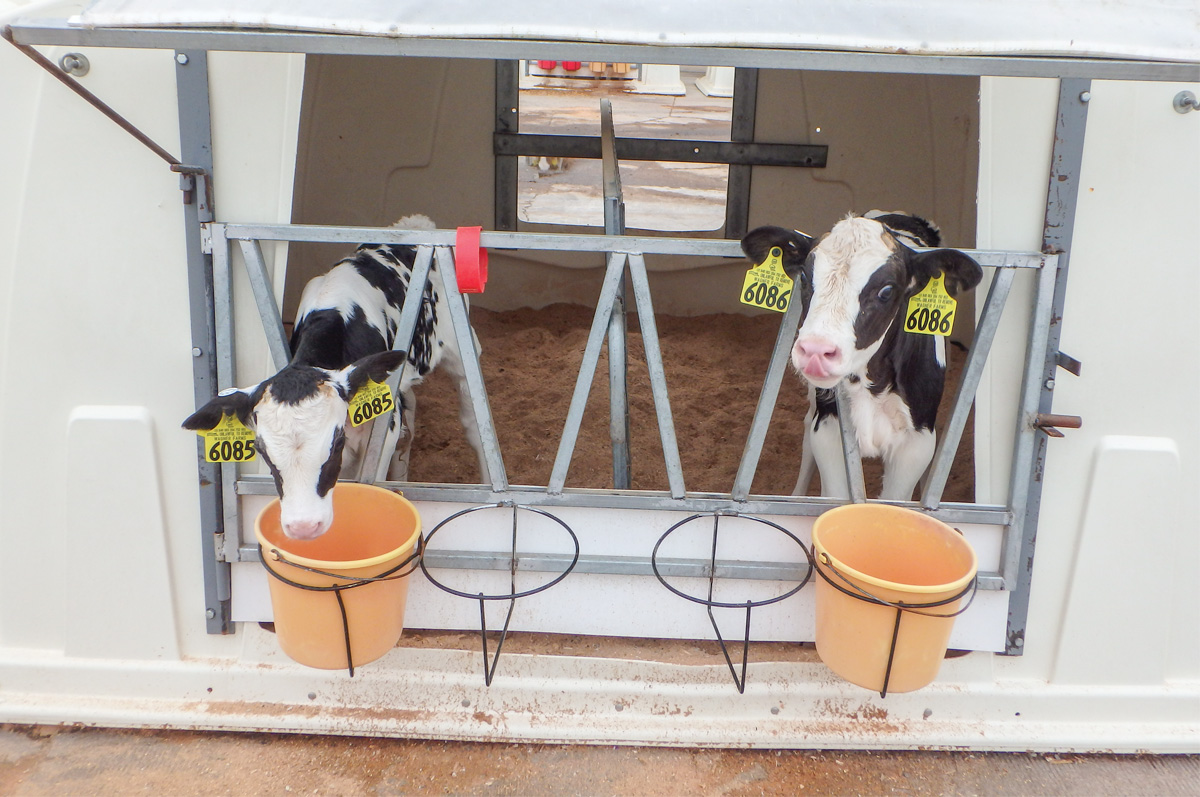
Image provided by Robert James.
24. Are calf hutches still the ‘gold’ standard?
While calf hutches have historically been considered the “gold” standard and are still used on about 40% of U.S. dairies, it may be time to reevaluate the pros and cons of this system. Considerations like temperature, environmental regulations, labor and data collection must be reevaluated, especially as animal welfare and behavior become more prominent factors in developing a calf management program. In addition, newer technologies like autofeeders can offer valuable insights into calf health, but the benefits of this system don't come without a price tag. In the end, dairies need to determine where they want their calf program to be in five years and build a program that aligns with that vision.
25. Selective breeding could help farmers lower enteric methane emissions in dairy cows
To capitalize on the opportunity of growing dairy demand from an ever-increasing population, U.S. dairy farmers are also tasked with finding methods to reduce dairy cow enteric methane emissions. Francisco Peñagaricano, with the University of Wisconsin – Madison, is leading a research project from the Greener Cattle Initiative which evaluates how selective breeding could provide practical and effective options for dairy producers to mitigate methane emissions.
Why was this a topic of conversation last year?
U.S. dairy producers are tasked with an overwhelming request to feed a growing population while reducing greenhouse gas emissions at the same time. While there are proven manure-handling practices that do reduce emissions, they take time, capital and other resources to implement effectively. Sharing research on breeding strategies is exciting because, if proven effective, there are very few limited factors that would prohibit U.S. dairy producers from incorporating it into their herd management.
—Jenn Coyne, editor, Progressive Dairy