Canada’s dairy industry has experienced another year of challenges and triumphs. From tumultuous trade waters to new technologies available to inspiring dairy producer stories, Progressive Dairy’s team has enjoyed covering a multitude of topics throughout the year. We have gathered a list of our top-viewed articles from Oct. 1, 2024 to Oct. 1, 2025. Enjoy a brief summary of each article and when possible, a question and answer with the author and/or producers featured.
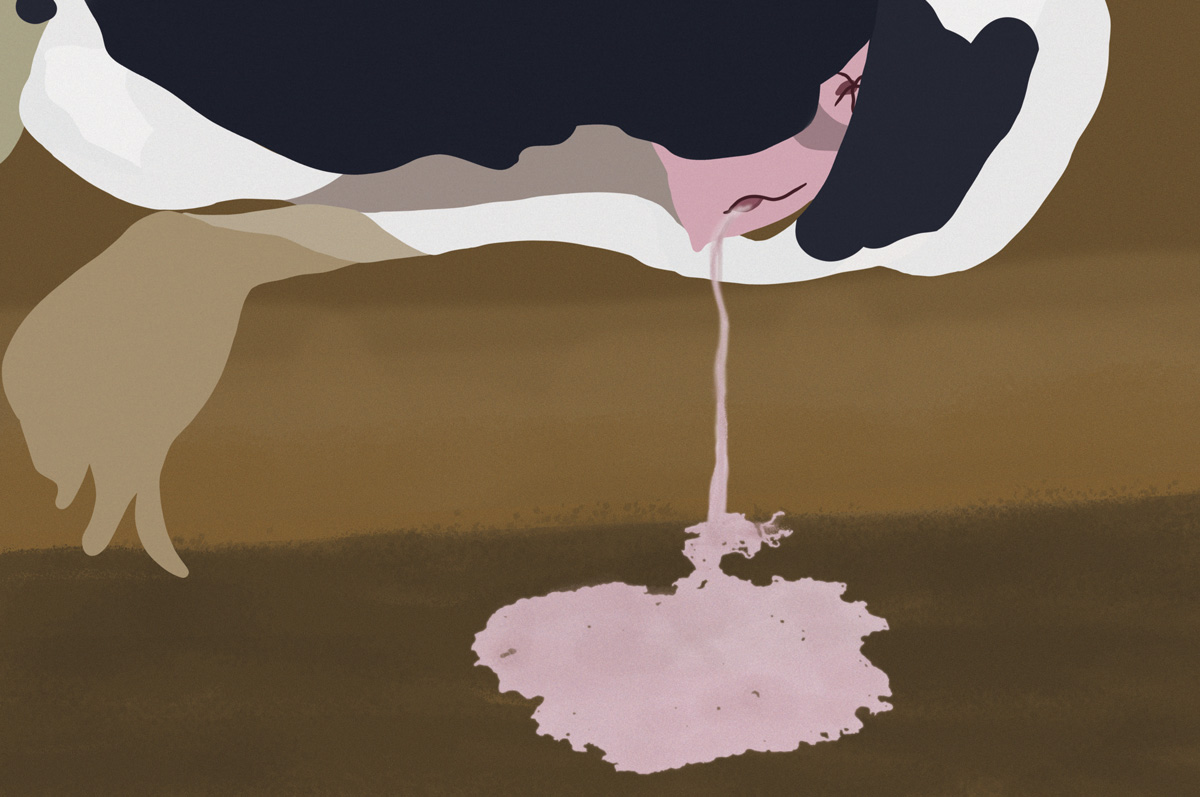
Illustration by Kathrine Edgar.
1. Managing metritis in dairy cows
Stephen LeBlanc discusses the importance of identifying metritis and treating it quickly to prevent worse infection. Looking at the economic impact of metritis, treatment can save producers upward of $250 per case; however, some cows do not fully cure with treatment. Research is ongoing to see if selective metritis protocols are effective.
Q: If you could change one thing about how the industry currently approaches metritis, what would it be?
A: To implement a more consistent approach to finding cases. On the best evidence today, it is clear that the aim is to identify cows with fetid (i.e., foul-smelling) vaginal discharge. That means getting close behind fresh cows at least twice a week, targeting cows between three and 10 DIM. We use the Metricheck device to sample the discharge, and that is a quick and easy way to do it. We are getting closer to more automated and/or selective identification of cows to check using rumination, eating, activity and milk data, but that is not perfect yet.
Today, the best course of action is to treat cows with fetid discharge with an on-label course of systemic antibiotic approved for metritis, in a protocol developed with your vet.
—Stephen LeBlanc, University of Guelph
2. AI and dairy farming
Though artificial intelligence might seem daunting to many, the dairy industry stands to benefit from applying this technology. Dan Veeneman discusses ways in which health monitoring, reproductive management, feed optimization and resource management can be improved with AI.
Q: How do you answer producers who say 'AI is too expensive for my operation'?
A: When a producer says, “AI is too expensive for my operation,” I usually encourage them to look past the sticker price and think in terms of return on investment. The question isn’t simply how much it costs, but what it gives back. AI should never be viewed as a shiny gadget; it is a management tool designed to solve real problems, whether that is catching health issues sooner, improving reproduction or making better use of feed and labour.
—Dan Veeneman, InBarn

The transition period heavily influences lactation performance. Image courtesy of Cargill.
3. How the transition period influences the longevity of dairy cows
A sound transition program can be the difference between a productive cow and a cull cow. Matt Groen discusses the importance of preventing ketosis and hypocalcemia through nutrition and environmental practices.
Q: What is the first conversation you would have with a farm manager who sees their lactation distribution and realizes they have a problem?
A: Improving longevity with transition cow management on any dairy farm starts with completing the basics around cow comfort and management consistently, day after day and month after month. Often, we can improve transition by simply optimizing things like body condition, stocking density, cow comfort, pen move timing, days dry, time in close-up pen, etc. If those management factors are not right, investing in nutrition to target transition issues will not result in the best return on investment.
—Matt Groen, Cargill
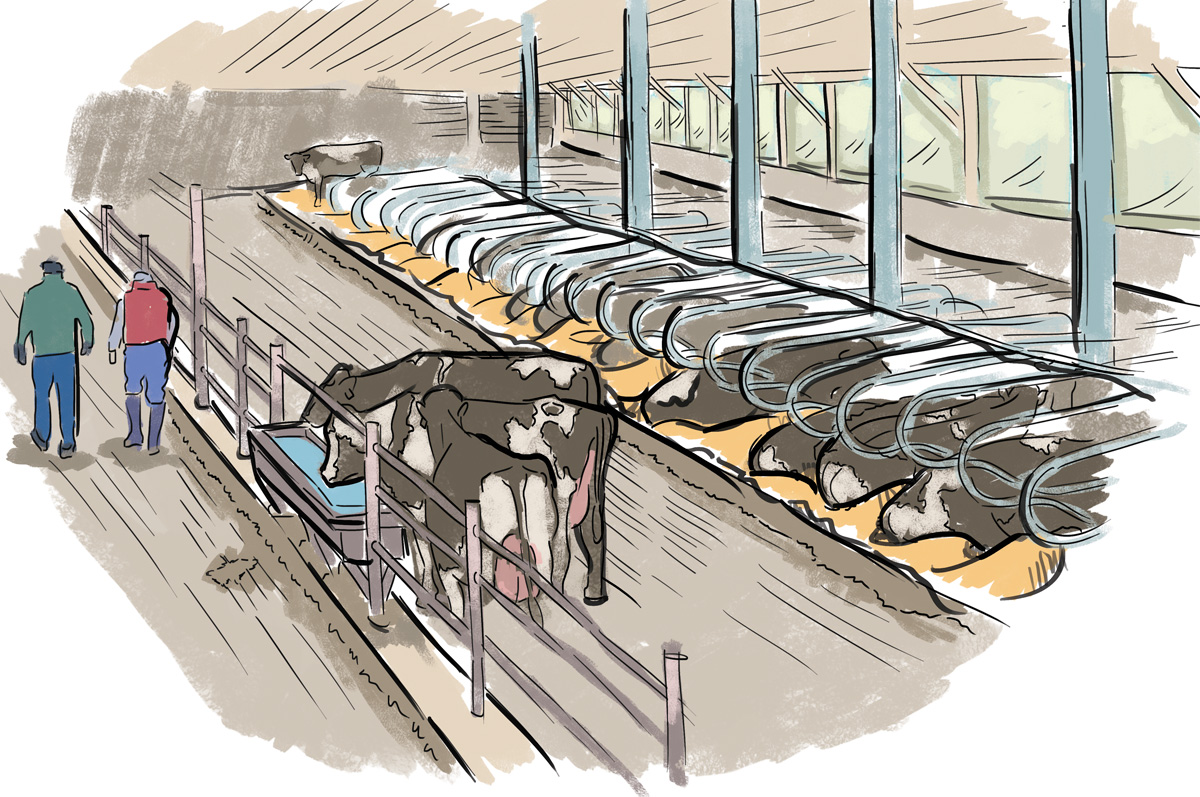
Illustration by Corey Lewis.
4. 6 considerations to maximize cow comfort this winter
Cow housing, bedding, nutrition, forage quality, water and body condition scoring all heavily influence cow comfort during the winter months. Prioritizing these factors can optimize production for your operation.
Q: Many progressive dairies have good winter protocols in place; what do you see as the next-level detail that separates excellent winter management from just good?
A: Excellent winter management goes beyond having a good plan on paper; it is about mastering the small details that keep comfort and air quality consistent, even as conditions outside change by the hour. Many dairies close up barns to conserve heat, but the best operators think dynamically about airflow. They fine-tune ventilation daily, adjusting fans, inlets and curtains to balance fresh air with warmth rather than choosing one over the other. They measure humidity, not just temperature, and know that dry air and dry bedding are just as important as insulation.
—Dan Veeneman, InBarn
5. Ruminating for better health
Research from the University of Guelph finds monitoring rumination before calving offers a powerful window into postpartum outcomes in parous dairy cows. Cows that ruminated 53 minutes or more below the herd average were 3.2 times more likely to develop disease, produced 428 kilograms less milk and were twice as likely to be culled. Other disease incidence also spiked in these high-risk animals. With the help of machine learning, farms can better identify at-risk cows early and take targeted steps to improve health and productivity during the transition period.
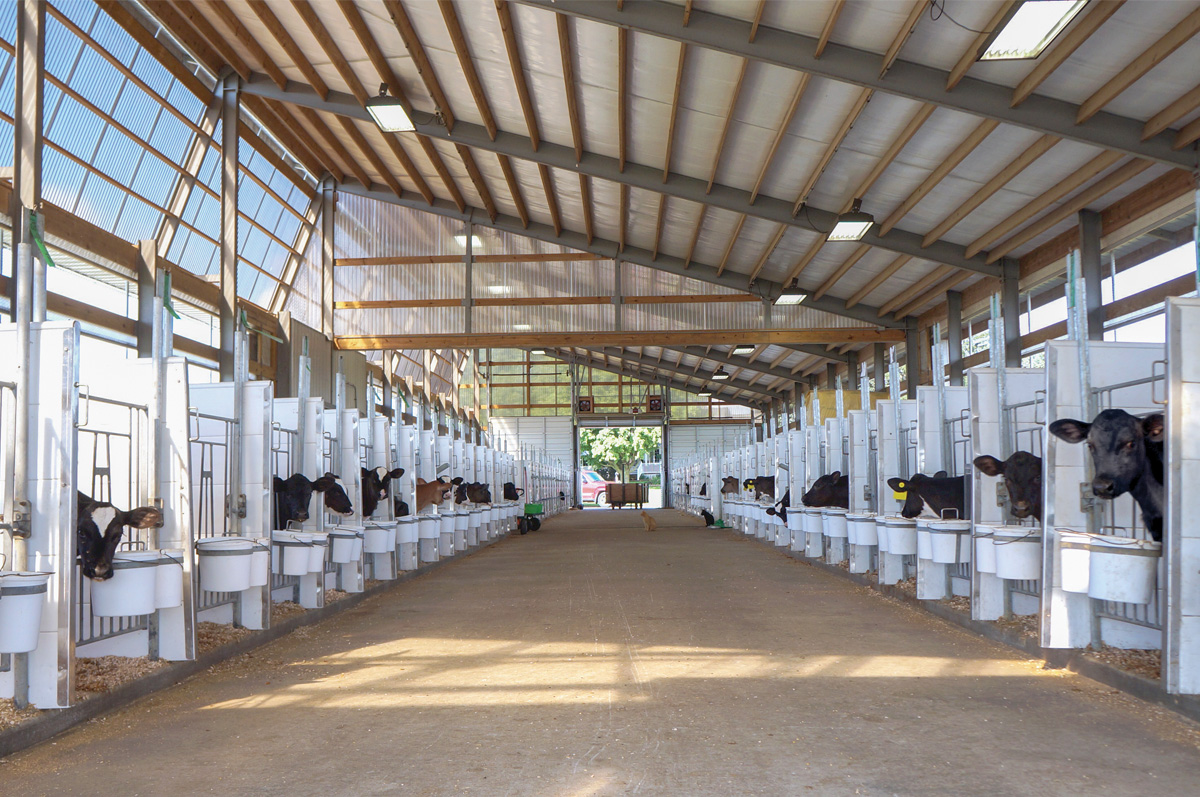
6. From hutches to barns: How calf housing is changing
Indoor calf housing is increasingly replacing outdoor hutches on dairy operations. These systems centralize feeding and health monitoring, protect workers from harsh weather and feature convertible pens that transition calves to group housing in seconds to reduce stress and labour. With proper ventilation, they also help control respiratory disease risk. Producers with indoor calf housing are seeing measurable gains in operational efficiency and productivity.
7. How can we determine the ideal amount of corn silage in dairy cow diets?
While cows can perform across a range of corn silage ratios, optimal rumen health and performance typically occur between 50% to 70%. However, the ideal ratio must also support sustainable crop rotation. Excessive corn silage use can compromise soil health, increase input costs and reduce long-term farm profitability through repeated corn cropping.
Q: How do you help producers balance the nutritional case for 50% to 70% corn silage against the agronomic limitations that might come with meeting this objective?
A: To be clear, the optimal corn silage ratio will be unique to each farm depending on multiple factors such as production cost, concentrate prices, cows’ productivity, crop rotation and so on. However, farmers with a high proportion of corn silage need to ask themselves a few questions:
- Have you had mycotoxin problems or frequently used “toxin binders”? How much did it cost?
- When you consider yields and nitrogen rates, how does the cost of producing corn on corn compare to corn following haycrops or soybeans?
- Is the organic matter in your soil increasing or decreasing?
If some of those answers are concerning, producers might consider reducing their corn silage proportion. Equally, producers should not hesitate to discuss this with their nutritionist and agronomist.
—Jean-Phillipe Laroche, Lactanet
8. Should we target longevity or extend lactation length for dairy cows?
Stephen LeBlanc shares why longevity alone is not a reliable indicator of welfare or profitability in dairy herds. Optimal culling and lactation decisions depend on health, productivity and farm constraints. Rather than maximizing lifespan, producers should aim to optimize each cow’s contribution through sound management, timely reproduction and data-driven decisions aligned with herd goals.
Q: What is the biggest longevity misconception costing producers money?
A: That keeping cows as long as possible is more profitable. A close second is that a lower annual herd culling rate is better. Some cows earn their place in the herd year after year and should be kept for a long, productive life. Others would be more profitably replaced much sooner. It is an individual cow-level decision that depends on milk, replacement and market cow prices, heifer quality and availability, and other variables. Our challenge is to provide management, nutrition, comfort and care that allows for planned selection of which cows leave the herd and when. That should not be confused with “older is better.”
—Stephen LeBlanc, University of Guelph
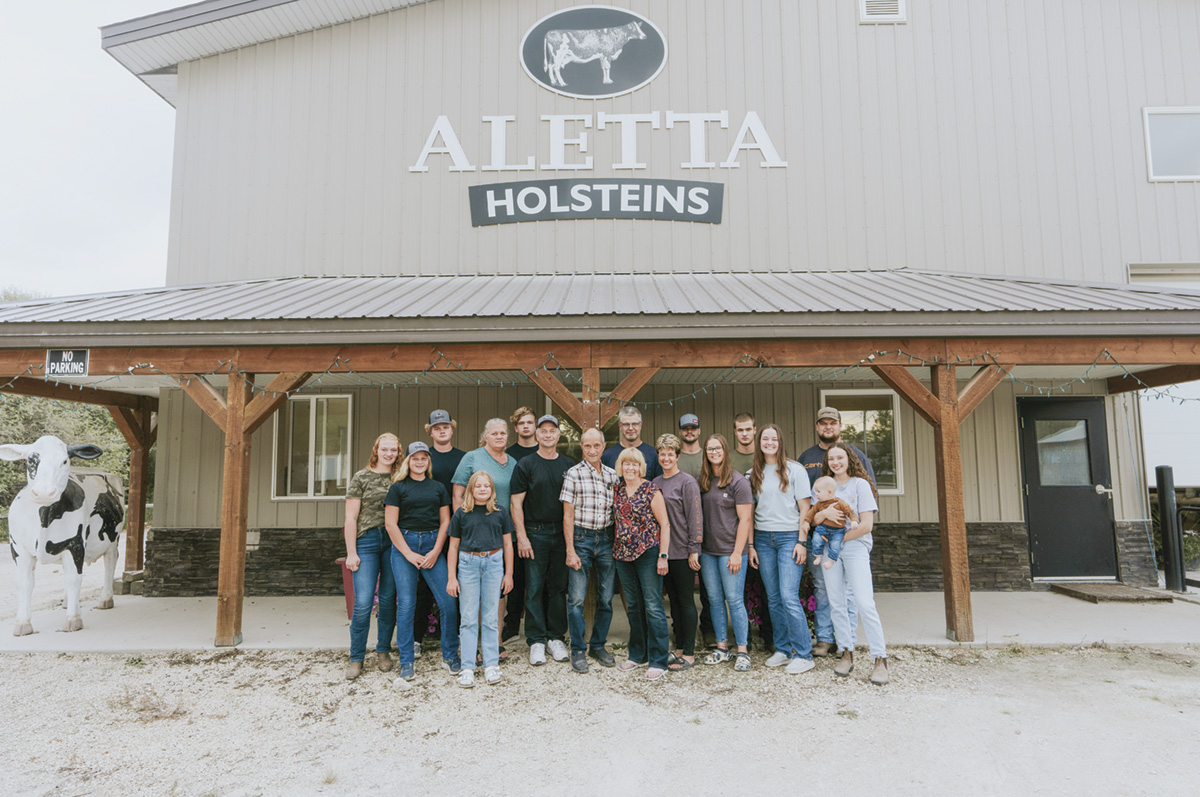
(Left to right) Julia, Rebecca, JJ, Connie, Sarah, Timothy and Kevin Plett, Alvin and Katherine Plett, Paul, Cheryle, Bryce, Kelsey, Jeremy, Kaitlyn, Ethan, Kristin and Rhett Warkentine. Photo by Alexa Rose Media.
9. Aletta Holsteins: Faith, family and the future
A solid succession plan allows the Plett and Warkentine families to farm together successfully in southeastern Manitoba. With plans to pass the operation to the next generation, Aletta Holsteins has expanded the operation to include an additional dairy site, a poultry farm and hog facility.
Q: What's the biggest opportunity you see for your operation in 2026?
A: Looking back helps us appreciate where we are headed. Fifteen years ago, we were milking 900 cows and unsure of our future growth – a nudge during prayer time led us to purchase a farm for sale just 5 miles away.
What is the biggest opportunity for 2026? We are excited about how God has orchestrated farm growth, excited to see where the new technology and innovation in the robot barn will take us, and most exciting is to see the involvement of the next generation and how God clearly opens up spots for them that are unique to each of their giftings. We trust Jesus will give the next generation the wisdom and strength for all the bumps along the way. We know with farming there are plenty of challenges with weather, finances, people interactions, animal health and the impact we have on the community.
—Cheryle Warkentine, Aletta Holsteins
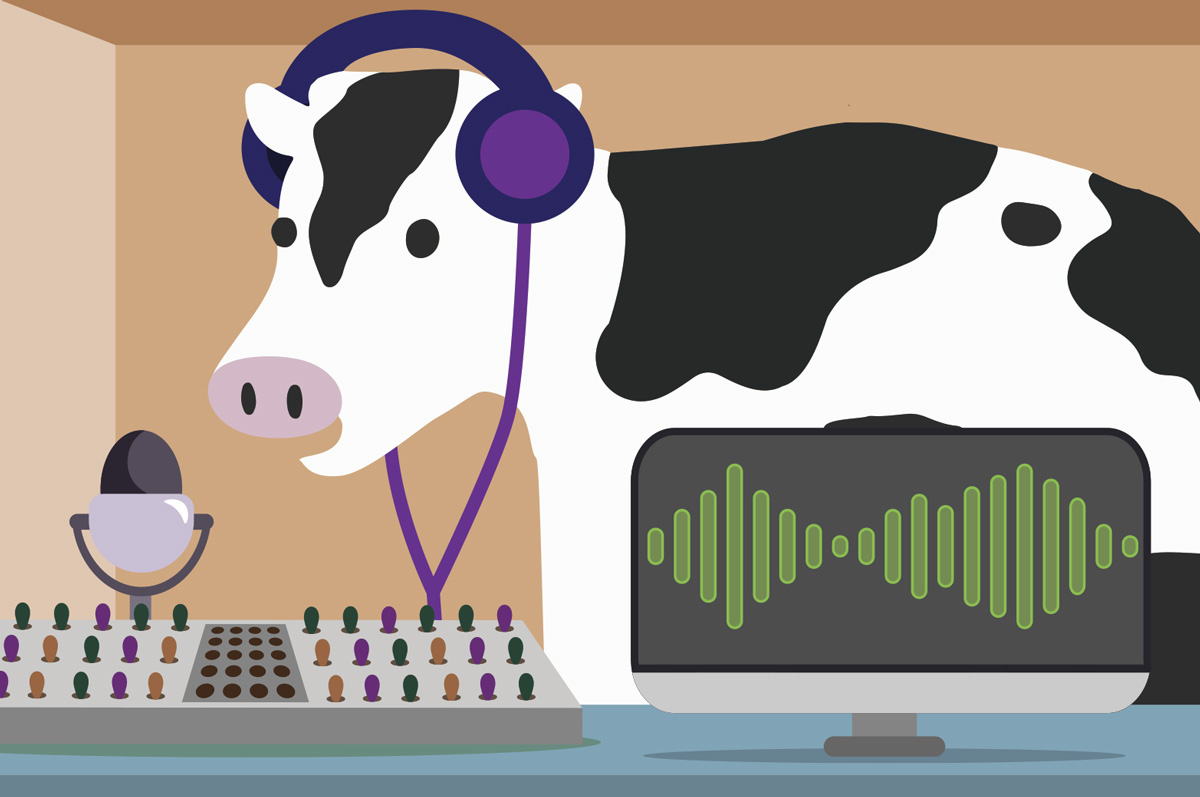
Illustration by Kathrine Edgar.
10. Listening to cows: Unlocking the secrets of cow communication with AI
Cow vocalizations might be telling us more than we think. Using artificial intelligence, Dalhousie University is working to decode vocalizations and understand the emotional states of individual animals. Determining which sounds equate to a comfortable, relaxed cow and which are associated with stress can aid producers in identifying problems before seeing drops in milk.
Q: How does background noise (fans, machinery, etc.) affect accuracy, and can the system filter that out reliably?
A: Barns are noisy ecosystems – fans, milkers, robots, feed mixers – it’s like trying to eavesdrop at a construction site. But AI now has the ears for it. Cattle vocalizations occur primarily in the 0.3 to 8 kilohertz range, while machinery noise sits in distinct, predictable bands. Using spectral filtering and temporal pattern recognition, modern systems can boost vocalization classification accuracy from about 91% to 94%, even in ventilated barns. The latest “biodenoising” algorithms can isolate the dynamic nature of animal calls from the steady hum of machines. Field tests show around 82% accuracy in detecting behaviours like estrus, coughing and feeding in real time.
—Suresh Raja Nethirajan, Dalhousie University
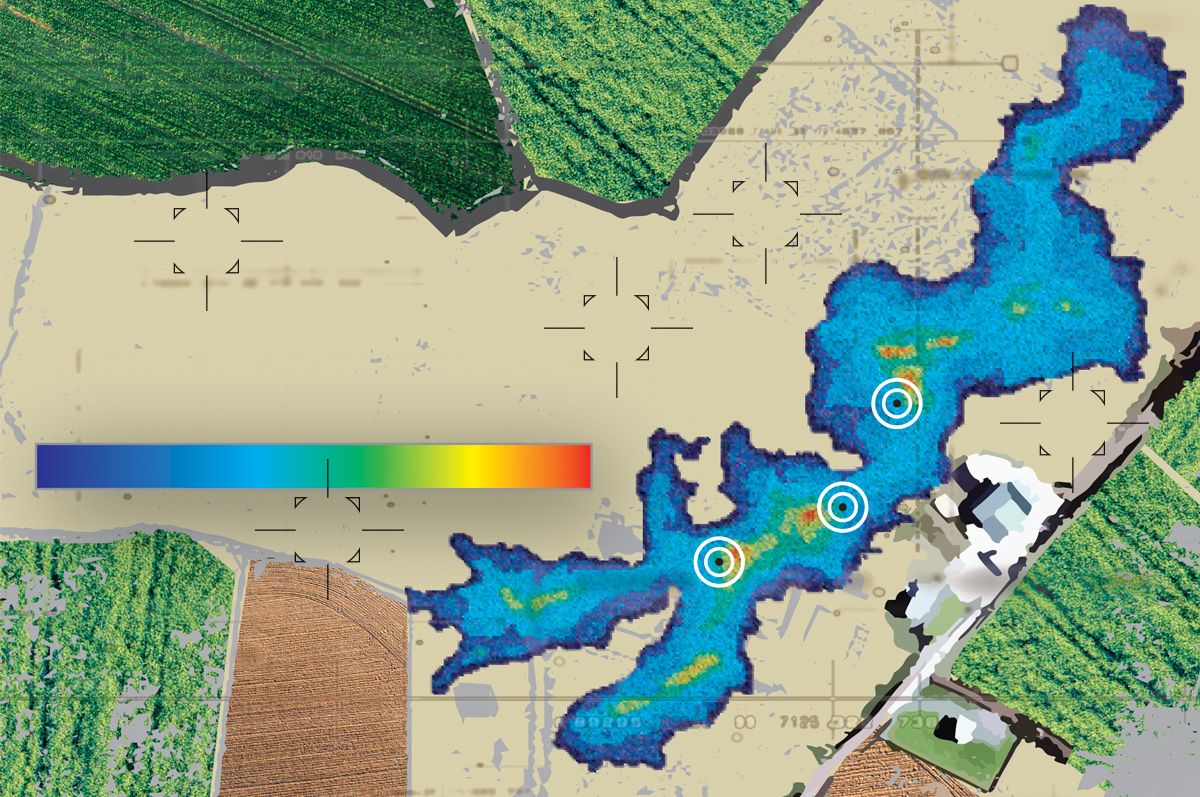
Image by Corey Lewis.
11. Mapping methane from the sky: How satellites and AI are transforming dairy's path to net zero
Research from Dalhousie University has been using satellite imagery and artificial intelligence to identify methane hotspots. By developing accurate metrics, this can aid Canada’s dairy producers in achieving net-zero emissions by 2050.
Q: In your article, you mention traditional ground-based methods were unreliable; how confident should we be that satellite data and the AI models used are more accurate?
A: Measuring methane from the ground is like catching rain with a thimble in a windstorm – you will get something, but not the full picture. Satellites have changed that completely. Recent advances in targeted high-resolution satellites can now detect methane plumes as small as 0.01 square kilometre with emission rates as low as 200 kilograms per hour. The real power of an integrated broader-coverage satellite approach lies in scale and consistency: Multiple satellite systems cross-verify one another across thousands of farms, providing reliable regional and temporal trends that ground methods simply cannot match.
—Suresh Raja Nethirajan, Dalhousie University
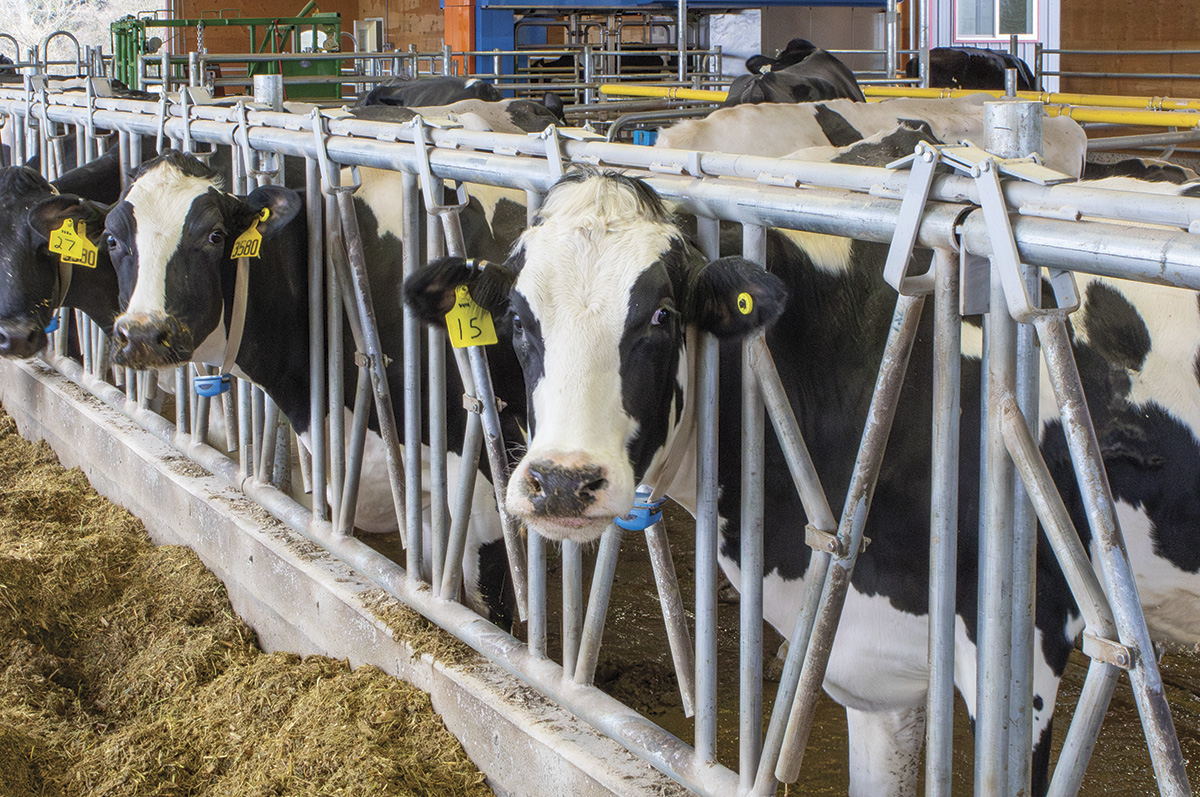
Image by Mike Dixon.
12. Benchmarking the nutritional strategies used on Canadian automated milking farms
A study by the University of Guelph looked at 160 automated milking farms, finding high variation in nutritional strategies. Corn silage was the most common forage in the PMR, and 77% of farms used pelleted concentrates at milking robots. Despite diverse diets and average daily milk production of studied farms to be above the national average, limited nutritional factors were linked to production. Still, higher milking frequency was associated with increased milk yield, regardless of the nutritional strategy.
Q: You mention a few non-dietary factors that influence milk production in this article. Which of these factors is easiest for dairy producers to manipulate on their respective operations?
A: The easiest thing producers can do to manipulate on their farms is to ensure continuous feed access to a balanced ration. That involves pushing up feed frequently (at least every two hours or more, throughout the entire 24-hour period), as well as maintaining feed refusals such that cows are never without feed in front of them (other than the brief time between bunk cleanup and delivery of new feed).
—Trevor DeVries, University of Guelph

Photo courtesy of Cattleytics.
13. Buy your employee a cow: Empowering your team for long-term success
Employee empowerment is a worthwhile investment for encouraging employee engagement – and ultimately, the overall success and growth of your farm business. Strategies that promote employee development and foster a sense of belonging, like better follow-through, tracking progress of new systems and tools, providing opportunities for employees to take ownership, will all contribute to a farm’s long-term goals.
Q: How can producers get part-time help to buy into the dairy without ‘buying the whole cow’?
A: Getting part-time employees to buy in starts with giving them a purpose they can see every shift. Even when someone only milks or scrapes, they take pride when they understand why their work matters. One farm’s calf feeder learned why transition milk helps calves thrive and began choosing the best bucket milk to use first, without being told. That’s training that pays for itself. You don’t need full-time hours to build pride. Give clear responsibility, honest feedback and share small wins. Try micro-inclusion: Post quick updates or results so everyone sees progress. When people feel trusted, they care more and your dairy runs smoother.
—Ester de Groot, CATTLEytics
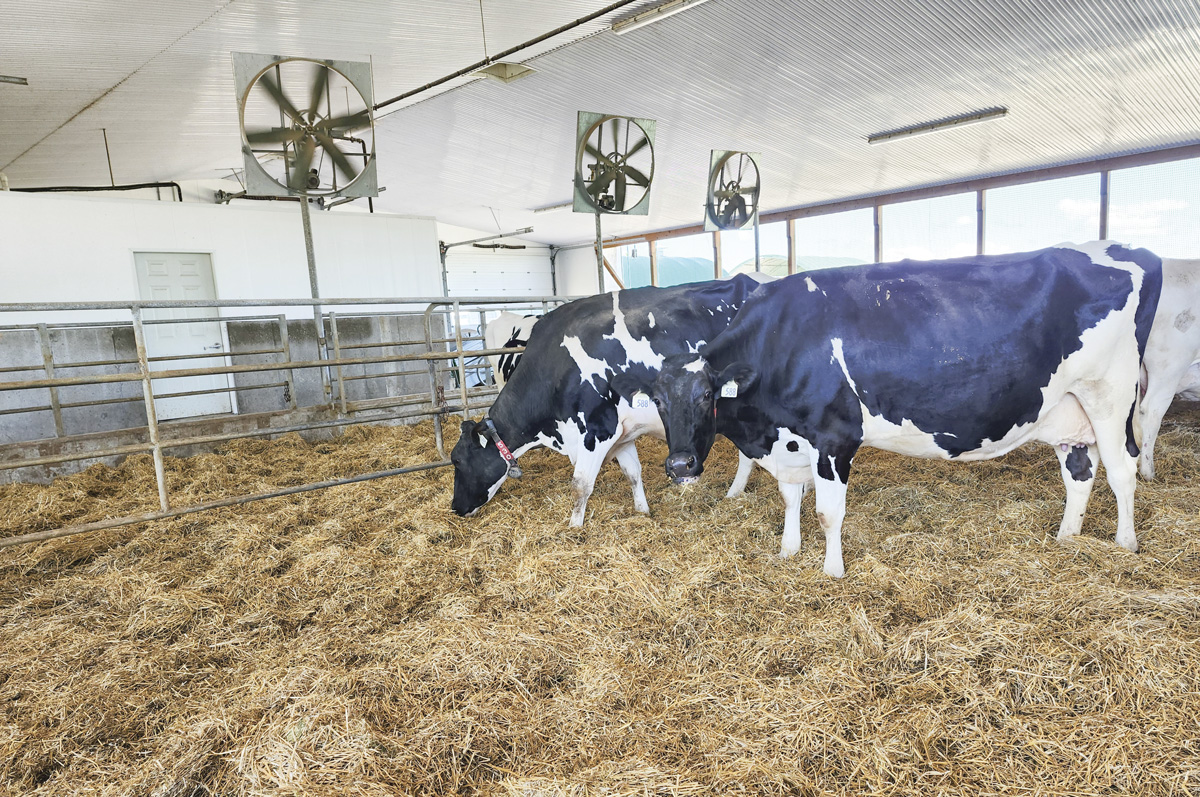
Monitoring a few simple aspects of the dry period can improve transition for your herd. Courtesy image.
14. Ontario dry cow housing and management – not a ‘dry’ topic
Dry cows might not be actively making money, but the investment in this portion of the herd remains integral to dairy productivity. Research from Ontario Ministry of Agriculture, Food and Agribusiness (OMAFRA) shows space allowance, heat stress, body condition score, wind speed and CO2 levels cannot be overlooked when managing dry cows.
Q: What tips do you have to manage dry cows during the winter months?
A: The priorities for managing dry cows in the winter are similar to the ones in the summer. A big priority should remain focused on providing ample space and to avoid crowding dry cows. Ventilation also remains a priority, but with the emphasis on providing fresh air likely with fewer air exchanges than in the summer as the winter temperatures are lower, but avoid creating situations of not enough fresh air. Dairy cows can be quite comfortable at temperatures that we find too cold ourselves. Good, comfortable and dry bedding is another must in winter. Finally, the forages can be switching over from different inventories, whether bunks or different harvests. Dry cow rations should be reformulated regularly whenever there is a switch.
—Tom Wright, OMAFRA
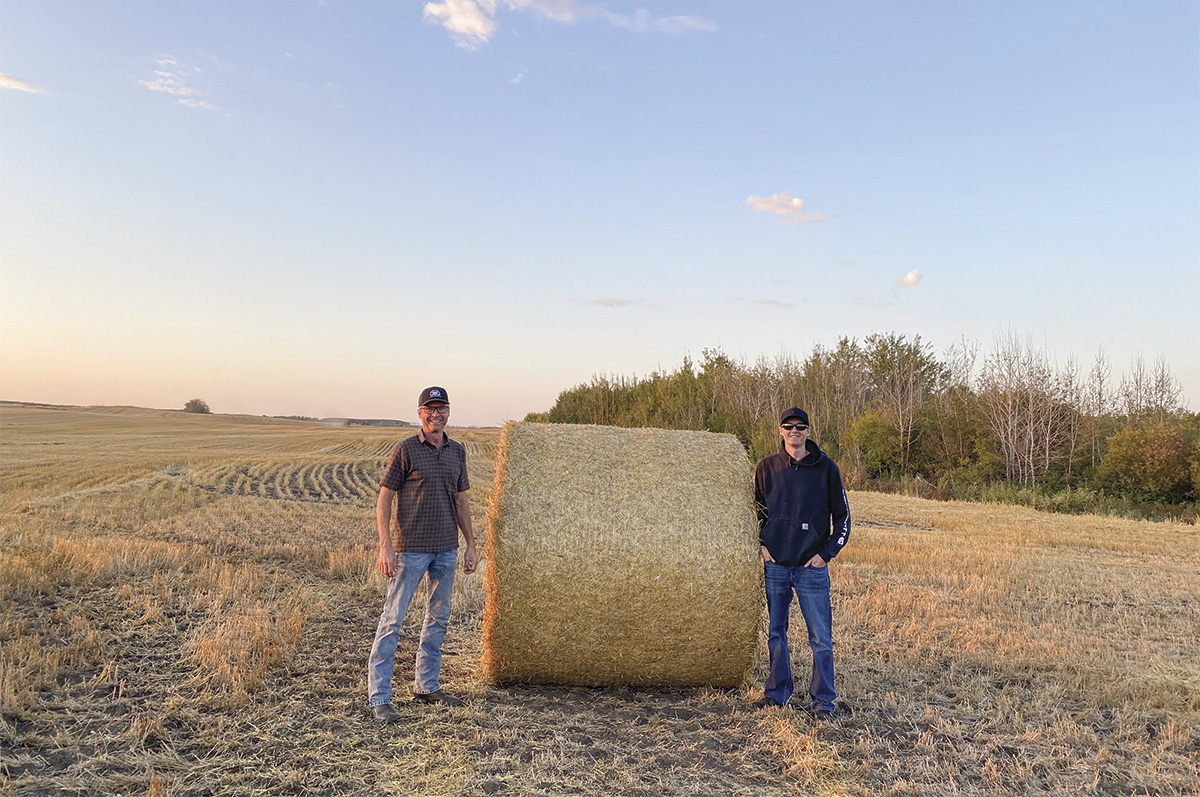
(Left to right) Larry and Austin Ruud pose with a round bale wrapped with their compostable net wrap. Photo provided by Austin Ruud.
15. Alberta rancher develops compostable net wrap for round bales
A frustration with traditional plastic round bale wrap inspired Austin Ruud to create a compostable net wrap. With the help of researchers at the University of Alberta, University of Saskatchewan and Lakeland College, Ruud has started a new business alongside his father.