In Fischer County, Texas, ranching is as tough as the land itself. Deep-cut creeks, washed-out roads, and miles of rough pasture test even the most seasoned cattlemen. For Bob Spikes, that challenge is part of what makes it worthwhile.
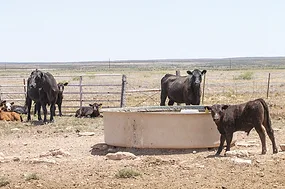
After nearly four decades as a school administrator, Bob retired to focus on his first love of ranching. He and his wife run a cow-calf operation on 950 acres in Fischer County, but in 2024, he took on a new challenge: reviving a 700-acre lease that hadn’t been grazed in more than 18 months.
The land was wild and overgrown with creek bottoms tangled in brush, uplands scorched bare. Most would have passed it by. But Bob saw potential. What he needed was a way to work the land without miles of costly, short-lived fencing.
That’s when he turned to Nofence virtual fencing, a modern solution built for places just like his.
Ranching Roots, Reimagined
Ranching runs deep in Bob’s family. “My grandfather was born in 1895 and made his living as a rancher,” he says. “Those roots go way back.”
When he retired, Bob poured his full energy into restoring and managing his ranchland. The leased property represented a chance to breathe life into neglected ground, but it also came with challenges only rugged Texas country can deliver.
“The first time it rained, the creek crossings got washed out,” he recalls. “For six weeks, I couldn’t even get over there.”
Red Creek, which drops 235 feet in elevation across the property, carved through his pastures, taking fences and access with it. “We call them water gaps because they’re only there until the next rain washes them away,” he says. “It’d be an endless battle to keep fences up.”
In short, the land demanded a smarter kind of fence – one that could cross rock, brush and creeks without a single strand of wire.
Why Nofence?
Bob researched all the virtual fencing providers he could find before choosing Nofence. He wanted something simple, reliable and self-contained with no extra equipment, no base stations and no line-of-sight connectivity.
“Some systems needed expensive base stations. That’s a no-go out here,” he says. “It’s just too remote.”
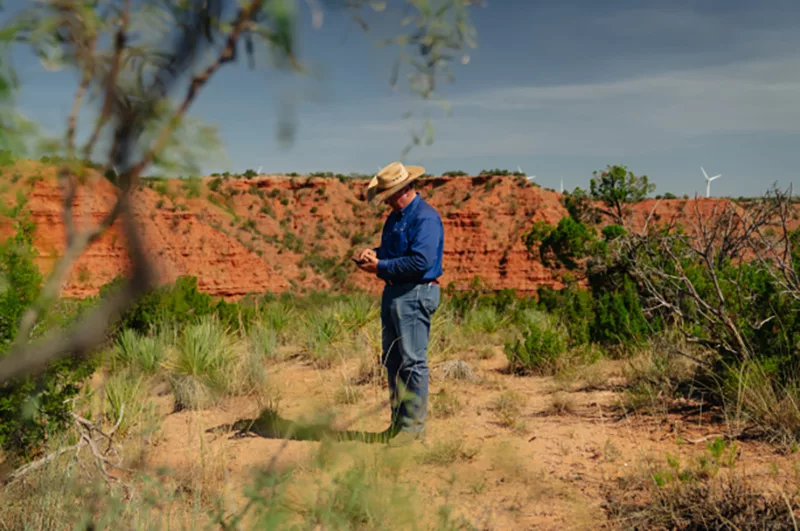
Nofence’s GPS-based collars stood out for their simplicity. With no base stations to install, Bob could draw and adjust boundaries directly from his phone – even in areas with limited cell service.
“I can track and contain the herd even where I couldn’t buy a signal with a 400-foot tower,” he says. “If I can use this system to graze a few more cows on the same land, that pays for the collars. And if I don’t have to fight creek crossings every time it rains, that’s a huge win.”
Restoring the Land with Smarter Grazing
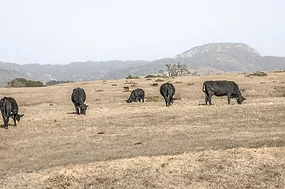
When Bob took over the lease, the land was unevenly grazed and out of balance. The creek bottoms were dense with brush, while the upland areas looked “like the Mojave Desert.”
Using the Nofence app, Bob divided the property into smaller zones for rotational grazing, allowing grasslands to rest and recover between cycles. He moves the herd every few days all from his phone.
“I can divide the whole unit into thirds and move cows without setting foot on the place or pulling a single wire,” he says. “That flexibility lets me be a better steward of the land.”
By managing grazing pressure digitally, Bob is helping restore native grasses and soil health. It’s the same approach he’s used successfully on his home property. Only now, he can do it more efficiently and with less labor.
“It’s not just about running cattle,” he says. “It’s about bringing the land back to life.”
Technology That Works as Hard as Ranchers Do
For Bob, the biggest value of Nofence lies in control and efficiency. Managing over 1,600 acres would normally mean long days and constant fence maintenance. Now, he can check herd location, monitor movement and adjust pastures without leaving home.
“It’s amazing to pull up the app and see exactly where they are,” he says. “I can make changes instantly instead of spending half the day driving fences.”
That time saved adds up allowing him to focus on improving water access, reseeding native plants and managing herd health instead of rebuilding after every storm.
“It doesn’t take the cowboy out of ranching,” Bob says. “It just takes away some of the frustration.”
Ranching for the Next Generation
Bob started with 20 cows on the new property, but he’s already planning to expand, and Nofence will grow with him. “I’ll buy more collars as I grow the herd,” he says. “So far, it’s doing everything I hoped it would, and more.”
But his investment in innovation isn’t just about efficiency. It’s about the future of ranching.
“My daughters are in their 30s,” he says. “Their generation values time differently. For them, technology like this is going to be key if they ever want to step into this life.”
In an era when younger generations often leave rural life behind, Bob sees Nofence as a bridge and a way to make ranching sustainable, flexible and appealing again.
“For people who love the land but also want balance, this kind of technology keeps that door open,” he says.
In the rugged hills of Fischer County, a rancher with deep roots is showing how technology can breathe new life into old ground proving that even in the toughest country, there’s no fence too strong to stop progress.
Read this article on the Nofence website and learn more.