Most cattle producers first think about feed, forage and mineral supplementation when evaluating herd performance or troubleshooting challenges. Water quality often doesn’t even make the list. But high levels of iron and other mineral antagonists in water sources can interfere with trace mineral absorption, limiting health and performance long before obvious signs of deficiency appear.

The issue is that many operations may never realize water is part of the problem.
You can invest in a strong trace mineral program and still struggle with hidden deficiencies if cattle are unable to absorb and utilize those nutrients effectively. As water quality remains an issue across many regions, understanding how water impacts trace mineral status is becoming an increasingly important part of herd management.
How water impacts mineral absorption
Excess iron can block transporter sites in intestinal cells responsible for mineral uptake. When those sites are occupied by iron, key trace minerals cannot be absorbed and utilized efficiently by the animal. This means cattle may still consume minerals, but they do not receive the full biological benefit from them.
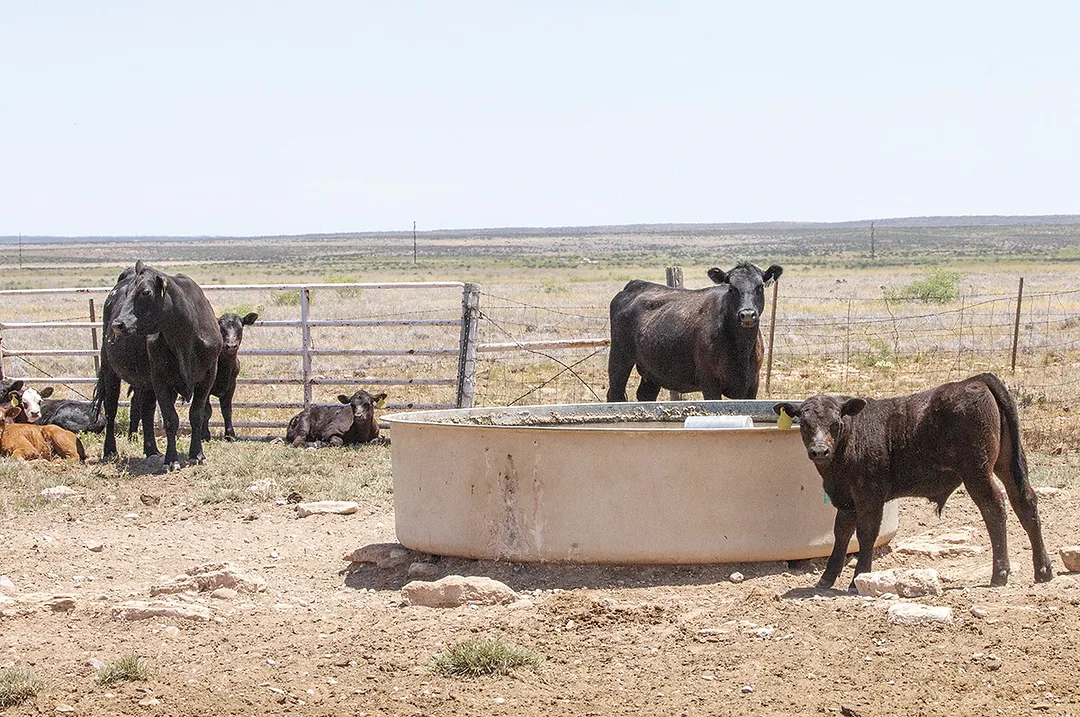
And during times of drought, surface water such as ponds and tanks can have a significant amount of water that is evaporated out of the water source. This, therefore, increases the concentration of solutes such as iron, manganese, sulfate and nitrates. When pond levels decrease and rains do arrive, the rain can move solutes from the pond banks into the pond water, increasing iron, sulfate and nitrate levels to a point where they are dangerous to animal health and block the absorption of inorganic trace minerals.
Hidden deficiencies from poor water quality often develop gradually. Producers may not immediately recognize the connection between water quality and cattle performance until more visible issues begin to appear.
Over time, trace mineral deficiencies due to poor water quality can contribute to:
- Increased foot and hoof health challenges
- Reduced reproductive performance
- Lower-quality colostrum
- Decreased growth and feed efficiency
- Greater health and immune challenges during stress periods
For stocker and feedlot operations, poor mineral absorption can also impact average daily gain (ADG) and cattle resilience during high-stress times, like receiving and transition periods.
The hidden cost of poor water quality
When water quality interferes with mineral absorption, producers may unknowingly reduce the effectiveness of their entire nutrition program and leave valuable performance potential on the table.
Trace minerals play a critical role in immunity, reproduction, hoof integrity and growth performance across beef operations. Research has shown that cattle receiving more bioavailable trace minerals during stressful periods demonstrated improved health and performance outcomes, including lower antibiotic re-treatment rates, improved ADG and heavier final bodyweights in receiving calves.
Additional research in beef cows supplemented with more bioavailable trace minerals during late gestation resulted in heavier weaning weights, fewer bovine respiratory disease treatments in offspring and improved carcass quality.
Why mineral source matters
Not all mineral sources offer equal benefits.
Inorganic mineral sources use transporter pathways that can be blocked by excess iron and other antagonists in the digestive tract. When this happens, absorption efficiency decreases.
Amino acid-complexed trace minerals function differently.
Because the trace minerals remain attached to an amino acid, they can utilize amino acid transport pathways for absorption rather than competing for traditional mineral transporter sites. This allows the minerals to bypass many of the antagonistic interactions that occur with inorganic mineral sources.
This difference becomes especially valuable in operations where water quality issues cannot be completely corrected or where mineral antagonists remain present in the water supply. Look for a mineral source specifically designed to utilize this amino acid absorption pathway, helping cattle maintain mineral status even under challenging conditions.
Water testing should be part of every management plan
Despite its important role, water is often evaluated far less frequently than feed ingredients or forage quality.
A livestock water suitability test should be considered a routine management practice on every cattle operation. Regular testing can help identify elevated iron levels and other antagonists before they begin affecting performance.
The sampling process itself is relatively simple:
- Collect water as close to the wellhead as possible after allowing the water to run for several minutes.
- Submit samples to a diagnostic laboratory specializing in livestock water analysis.
Testing can help identify elevated iron levels along with other mineral antagonists, such as sulfates, nitrates and manganese. Once identified, work with your nutritionist and veterinarian to determine the best management approach.
In some cases, filtration systems or aeration methods may help reduce iron levels and improve overall water quality. In other situations, adjusting the trace mineral program to include more bioavailable trace mineral sources may help cattle maintain adequate mineral status despite challenging water conditions.
Ultimately, water quality should be viewed as part of your total nutrition program. A balanced ration only works if cattle can properly absorb and utilize the trace minerals being provided.
By regularly evaluating water quality and understanding its impact on trace mineral absorption, you can better protect cattle health, performance and long-term profitability.
References omitted but are available upon request by sending an email to the editor.
Water testing resources for producers
Routine livestock water testing can help identify hidden mineral antagonists before they impact cattle performance. Work with laboratories experienced in livestock water analysis and interpretation.
While there are many livestock water testing laboratories, here are a few to get you started:
When collecting samples:
- Pull water from as close to the wellhead as possible.
- Allow water to run for several minutes before sampling.
- Use clean sampling containers provided by the laboratory.
- Submit samples promptly for analysis.
Key components to evaluate include iron, sulfates, nitrates, manganese, total dissolved solids, pH and hardness.