As the statistics were gathered and numbers crunched for 2024, the most noticeable theme across the board was very little change from the previous year. This reflects the steadiness and strength within Canada’s dairy industry.

Milk production increased slightly in 2024, up 0.7% (714,334 hectolitres) from 2023. The Western Milk Pool grew more in milk production, up 1.6%, over the P5, which increased 0.5% for the year.
Cow numbers held steady at 969,400, only down 100 from the year before and now equal to the number of cows in 2022. With little change in cow numbers, the increase in overall milk production can be attributed to more milk per cow. Canada’s average milk per cow rose 0.8% or an additional 75 litres per cow. Largest gains were seen in Prince Edward Island (4%), New Brunswick (3.9%), and Quebec and Manitoba (both at 3.4%).
Nearly 190 farms stopped shipping milk in 2024. With the minimal change in total cow numbers, the result was an increase in the average herd size, bumping the national average up two to 150 cows per farm.

Total dairy cash receipts came in at $8.9 billion, up 9% from 2023. Total farm input prices were up just 1.2% last year, with machinery fuel, general business costs and crop production expenses all lower than the previous year.
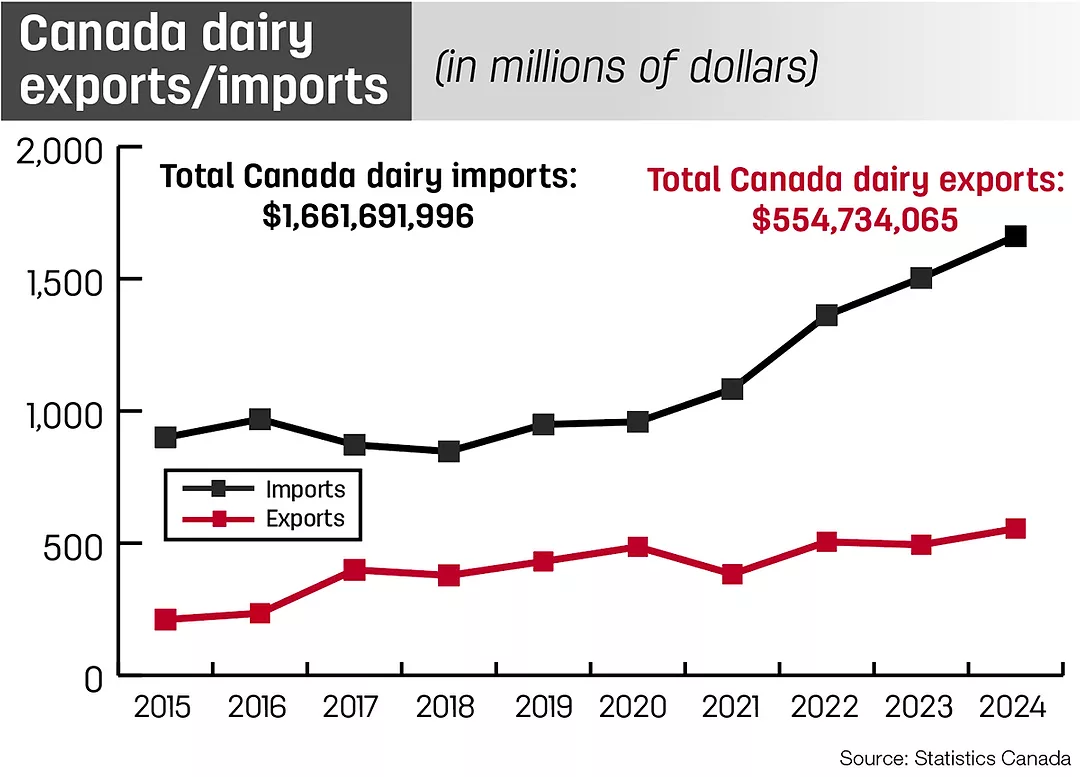
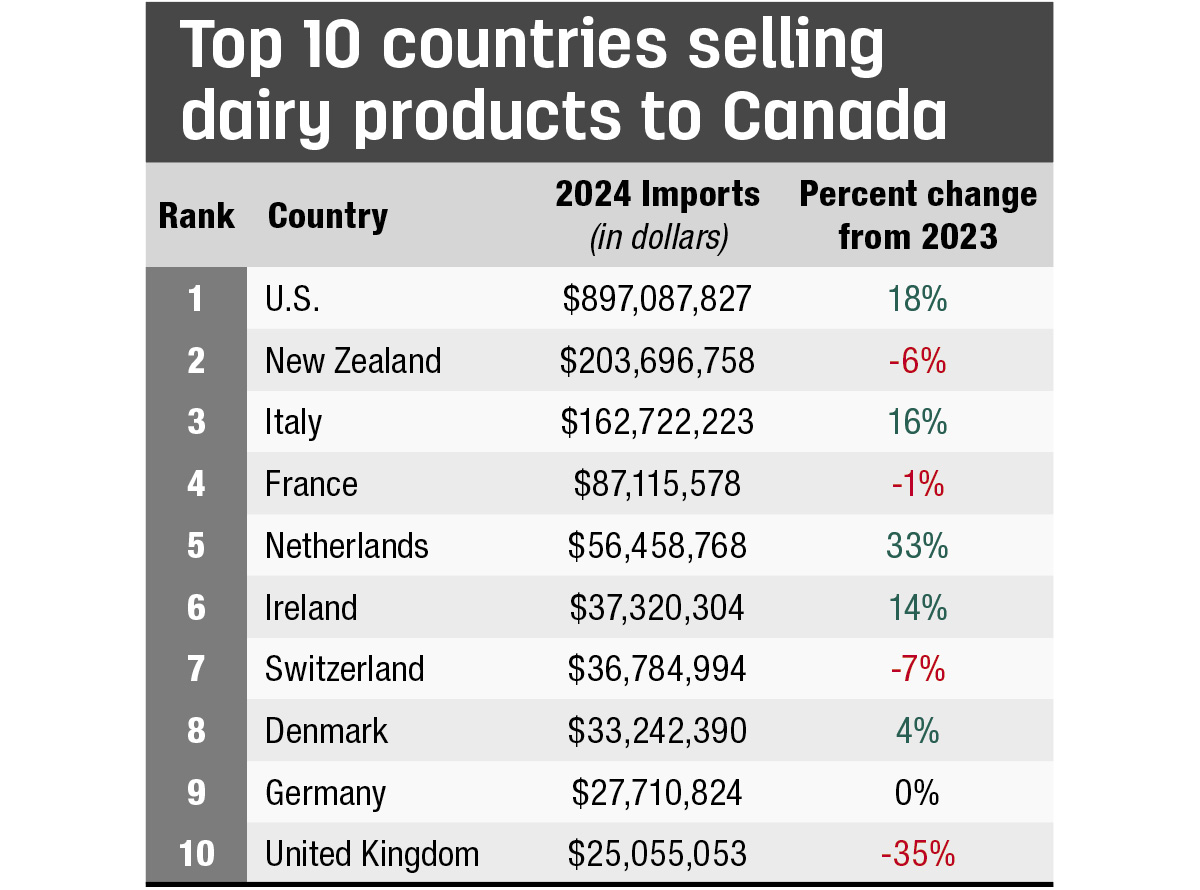
The dairy trade balance grew to -$1.1 billion. This deficit has been widening the past few years, as the results of trade agreements have doubled the amount of imported dairy products since 2018.
See the poster with the full year's stats here.