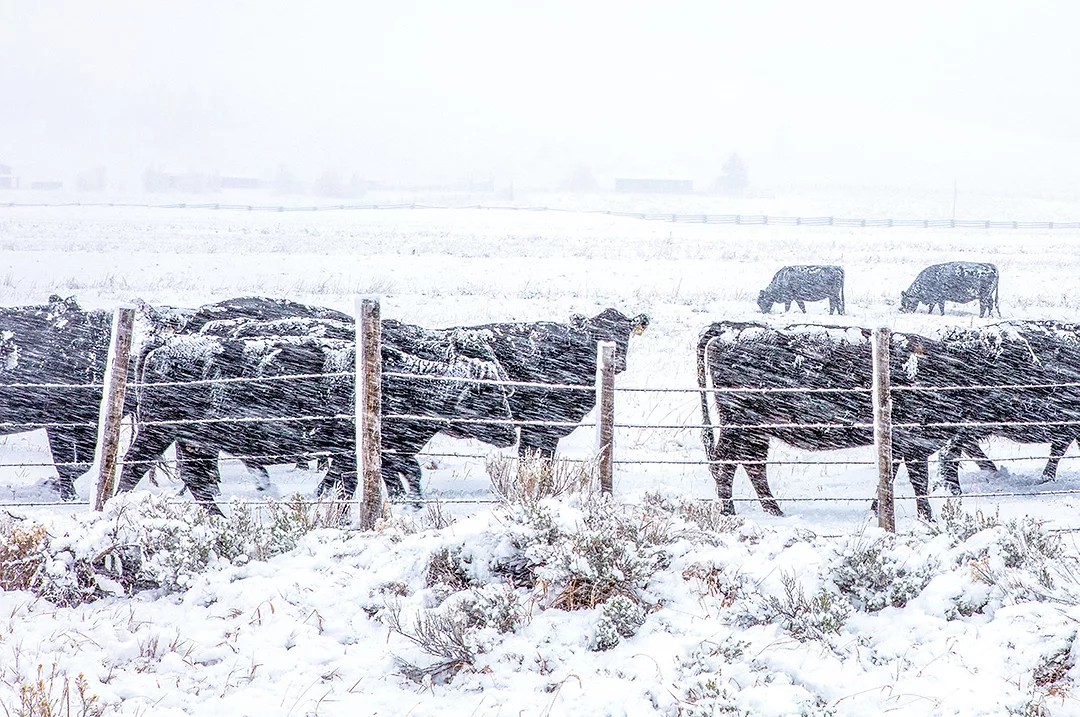
After several years of mild winters, agricultural weather forecasters are warning ranchers of possible blizzards this winter. Producers should care for their herds before, during and after snowstorms. However, before they repair water lines, collect medical supplies or hay bales for windbreaks, the first step is to develop a blizzard plan well in advance of a storm’s arrival.

Gather cattle before the storm arrives
KC Olson, Ph.D., professor of beef cattle nutrition and management at Kansas State University, says, “Communication is key, as is having all the assets in place before a storm begins. All employees or family members must understand what has to happen. We need to preplace bales of hay or other moderately fermentable feed in an area out of the wind. When the cattle arrive at that location, they need to be able to get a drink of water and get their bellies full. Hay in the rumen continues to ferment, creating heat, which helps keep cattle warm during cold temperatures. Cows benefit from a little time to get comfortable before the bad weather arrives. Feed intake is naturally elevated when the barometric pressure is dropping.”
Olson admits that he is a planner who writes everything down. “I think a blizzard plan is something you post on the bulletin board in the breakroom,” Olson admits. “It may be two or three bullet items describing what you’re going to do. I like the idea of prepositioning feed resources and bringing cattle to a location out of the wind. That becomes the only step you must execute in those pre-storm hours; gathering the cattle and bringing them to where they’ll ride out the storm. With preparation, everything you need is already there.”
A critical part of living on the Great Plains is planning from a production cycle perspective to protect vulnerable animals. Olson recommends that producers aim for calving in fair weather, rather than February or March. Cows lactating on green grass when they have the highest nutritional requirements is a smart management option. Calves will not have a huge weaning weight on Nov. 1, but they are born when the weather is much milder, placing them at a lower risk, and these lighter calves are extremely feed-efficient.
“My storm management procedures on both of the ranches I manage are very simple because they do not involve having to [care for] baby calves or pregnant cows that might go into labor as the weather changes for the worse,” Olson concludes.
Include a blizzard plan when making yearly plans
Patrick Wall, a beef specialist with Iowa State University, says with a laugh, “The easiest way to remind yourself to make a blizzard plan is to remember when you had to fix the frozen water in a storm. Remember the days that didn’t go so well. You were paying for being unprepared.”
Wall says the logical thing to do is to make a blizzard plan part of a strategy ranchers already have. “Guys sit at computers for days developing a breeding plan, hay and grazing inventory, and lists of what they need to buy,” Wall explains. “A blizzard proposal could go on the backside of these plans. For instance, when you’re making a winter feeding plan, maybe these 50 bales are what we’ll use to build a windbreak. We’re not going to feed them, but we will set them aside.”
Establishing windbreaks to protect animals from the damaging effects of wind chill temperatures is critical. Strategically place big round bales or stacks of hay as a windbreak. If round bales or barn space is not available, move cattle to a valley or a pasture with a tree line. Some ranchers have created U-shaped windbreaks with used railroad cars or semitrailers.
Other things to consider are making sure three bottles of diesel treatment are on hand for each tractor, all gas or diesel tanks are topped off, water lines are repaired and heat sources, such as a calf warmer box, are operational. Ranchers can install water tank heaters and block heaters for tractors, so they operate efficiently during the blizzard.
Human safety is important, too. Have at least two forms of communication available during a storm. If a producer has to go out to check cattle, he should have a cellphone and a two-way radio, in case the cellphone does not work.
“Each rancher’s cow herd has never been worth more money, whether it’s cows, calves or heifers,” Wall reports. “Why wouldn’t you take the time to make sure that you’re prepared for the worst weather your animals are going to go through?”
Keep medical supplies on hand
Clint Roof, DVM and instructor at the Texas Tech University School of Veterinary Medicine, recommends that producers plan ahead for blizzards. It is a good management strategy for each family member or employee to know their particular chores. “It’s a lot less stressful during a stressful time,” Roof advises. “Make plans tailored to your specific operation, whether that’s 10 head or 300. Not all groups will require the same level of protection; pregnant cows and heifers and calves are considered to be high risk. Producers should also give thinner cattle a higher priority. If you train your people, it doesn’t leave emergency decisions to chance, and you don’t have to micromanage.”
Roof recommends that producers review their health protocols with their veterinarian. Make sure vaccinations are current because stressed cattle are more susceptible to illnesses following a heavy snow. “If you know a storm is coming in a few days, vaccinations aren’t a good idea,” Roof adds. “Include them in your blizzard protocol.”
Producers should also make sure their livestock are tagged with a fire brand, freeze brand or eartag with a phone number that is unique to the farm. Fences are knocked down by heavy snow and cattle can wander over fences covered by snow drifts. Identification helps with recovery.
After the storm, Roof reminds producers that they will have animals that require medical attention. “Prepare to have delayed veterinary help,” Roof advises. “Have basic first-aid supplies available, such as antibiotics, nonsteroidal anti-inflammatory drugs (NSAIDs) and wound management material for calves and for animals that have frostbite. Stock a dedicated tote with old, clean towels to dry off calves.”
A critical part of planning for a blizzard is to write down what producers and employees or family members learned from each one. Document what went well and what actions could be improved to prepare for the next storm.
Don’t underestimate how quickly conditions can deteriorate or how drastically forecasts can change. Preparing livestock and people takes time and resources. Cold stress affects animal welfare and economic loss due to illness and injury.
Try to be organized ahead of the storm. “Know where your resources may be limited,” Roof advises. “It’s not all about shelter. It’s also about maintaining energy balance, keeping animals hydrated, being proactive and ensuring their health. Prioritize which animals need to be protected, such as high-risk, young, old or pregnant animals. Focus on those valuable newborn calves or late-gestation cows that could go into early labor or those thinner animals. Producers should develop a good relationship with their veterinarian before a crisis occurs. The veterinarian is a knowledgeable, trusted partner who can help ranchers prepare for the storm.”