Pricing of feeder calves is based on weight as well as their expected future performance. Feedlot owners and managers are tracing superior as well as inferior animals to the previous owners, and future bids depend on animal quality.
Retained ownership programs provide producers with knowledge of feedlot performance and carcass characteristics, which can be used to improve the quality of animals to meet the producers’ production goals and cattle demanded by feedlots. The key to a successful retained ownership program is using the information received to develop management decisions that ensure safe, high-quality end producers that are profitable to their operations.
According to the USDA’s 2017 publication Beef Cow-calf Health and Management Practices in the United States, 43.1% of calves are weaned and shipped off the operation the same day. How are these producers receiving any information from the post-weaning phase or carcass characteristics? Is the assumption that if they received a “good” price from the buyer, they are doing it correctly?
The goal of producers is to make a profit while supplying a high-quality beef product that consumers want and are willing to pay for. However, if cow-calf producers do not know the quality of the end product or how their animals are performing post-weaning, it’s difficult to reach this goal. It requires all segments of the industry working toward this goal.
South Dakota State University (SDSU) started the Calf Value Discovery Program in the late 1980s under the direction of John Wagner, which allowed cow-calf producers to enroll feeder calves into a feedlot program, and they received feedlot performance and carcass characteristics back on each calf.
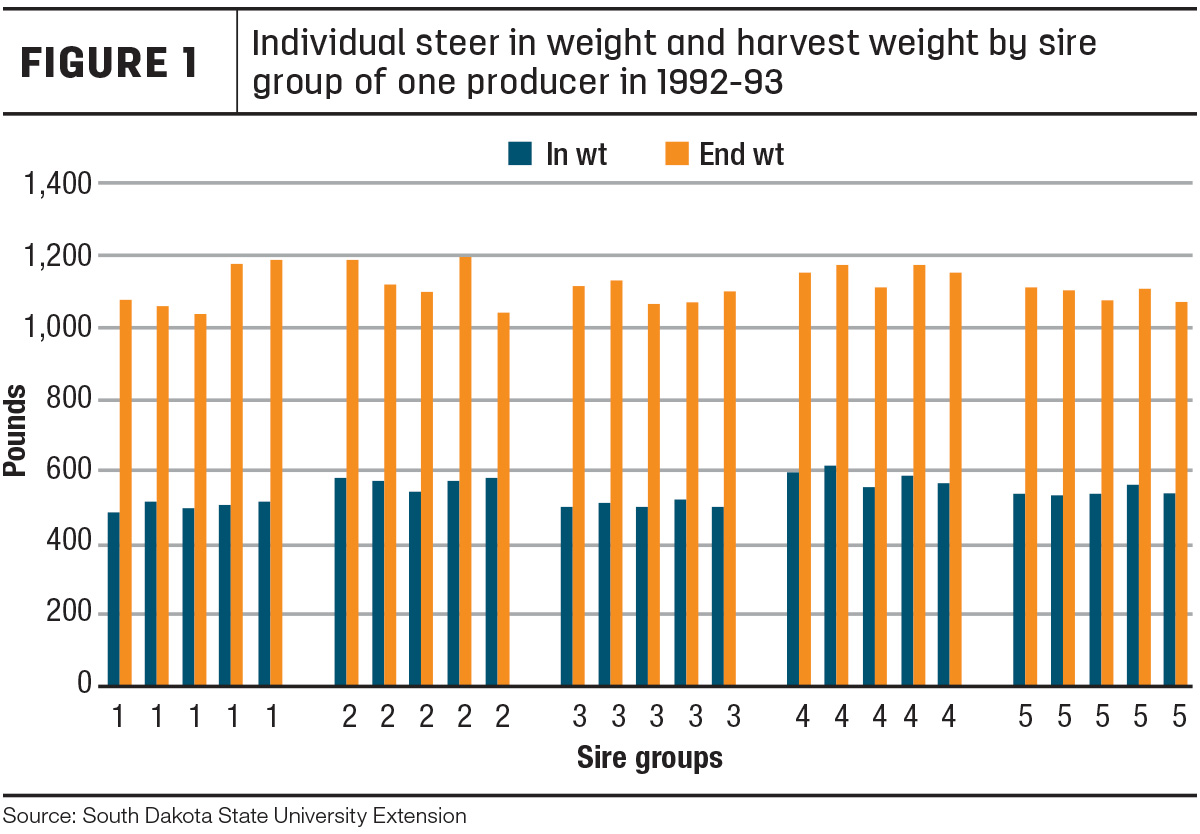
Early in the program (1992-93), a producer brought five sire groups to determine to add in providing direction to their operation. Figure 1 shows the in weight and harvest weight. What are some decisions that we can make from this data?
- Selling as feeder calves: Sire groups 4 (average 588 pounds) and 2 (572 pounds) were the heaviest.
- Selling as finished steers: Average harvest weight ranged from 1,095 to 1,156 pounds. If the decision is only weight, group 4 is the heaviest, but all groups are close.
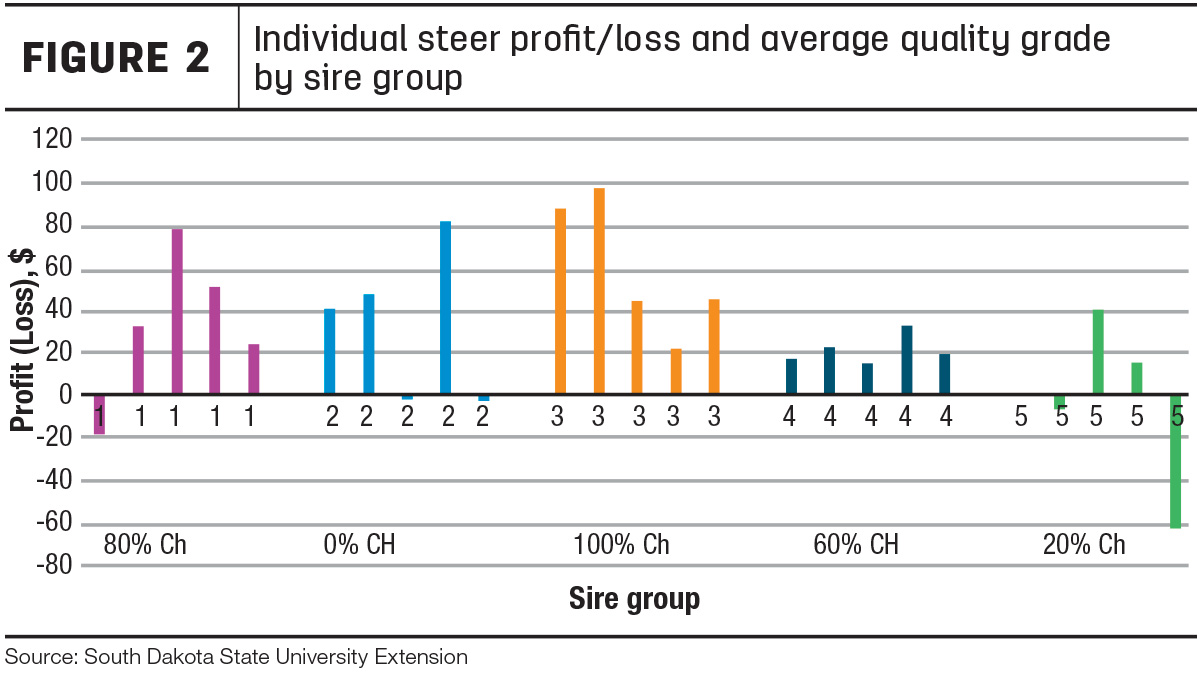
- Selling based on carcass value: Average hot carcass weights ranged from 651 to 704 pounds for the five sire groups. Quality grades for the five groups are shown in Figure 2. All groups were Yield Grade 3. Greatest value depends on how carcasses are sold, flat dressed price or on a grid:
- Carcass weight alone: Group 2 or 4
- Grid marketing: Group 1 or 3
- Combining feedlot performance, grid pricing and quality of calves coming into the feedlot, profit goes to group 3 (average $59.90), followed by group 1 ($33.87) and 2 ($33.47).
When asked years later how this information changed his operation, the rancher indicated that some cows had to be sold and bull selection was changed. He credits learning how his calves performed post-weaning with inspiring changes that are still paying dividends in their operation today.
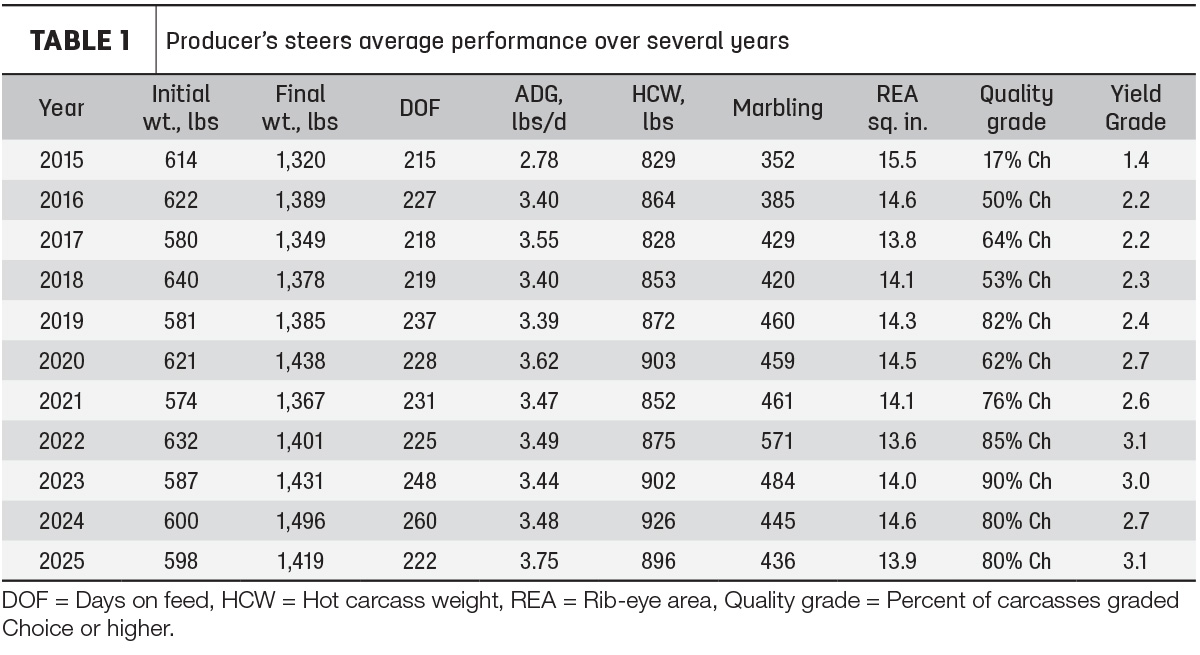
Let’s look at another producer who, for the past several years, has maintained the same breed but has worked on bull selection to improve quality grade. They weren’t successful immediately; however, they have achieved their goal of improving quality grade. Additionally, this producer has seen improved average daily gain (ADG) and hot carcass weight during this period due to his management decisions, which have impacted his revenue. Rib-eye area has fluctuated over the years, and they have not seen a pattern yet (Table 1).
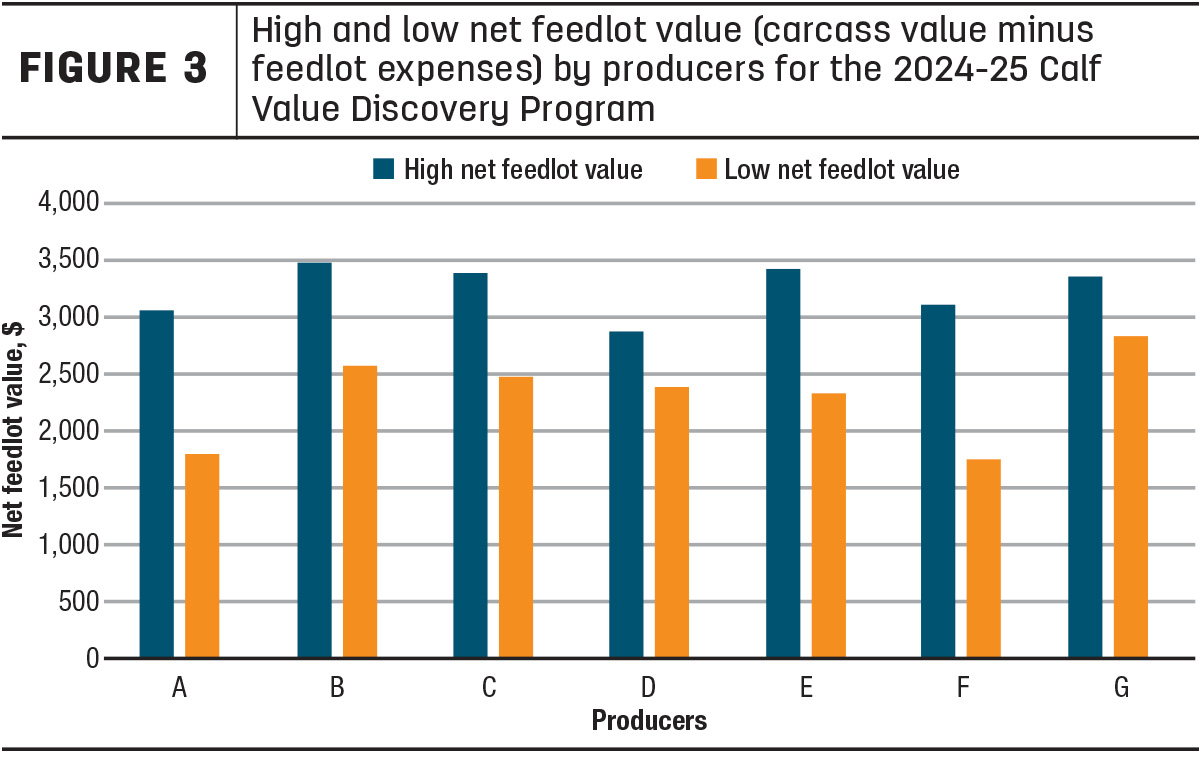
To get to some more recent values, Figure 3 is the high and low net feedlot value (carcass value minus feedlot expenses) for the steers enrolled in the 2024-25 program for the second producer. A quick assessment of the data shows a substantial difference from high to low feedlot profit. Looking at the group data does not tell me what calves are the most profitable.
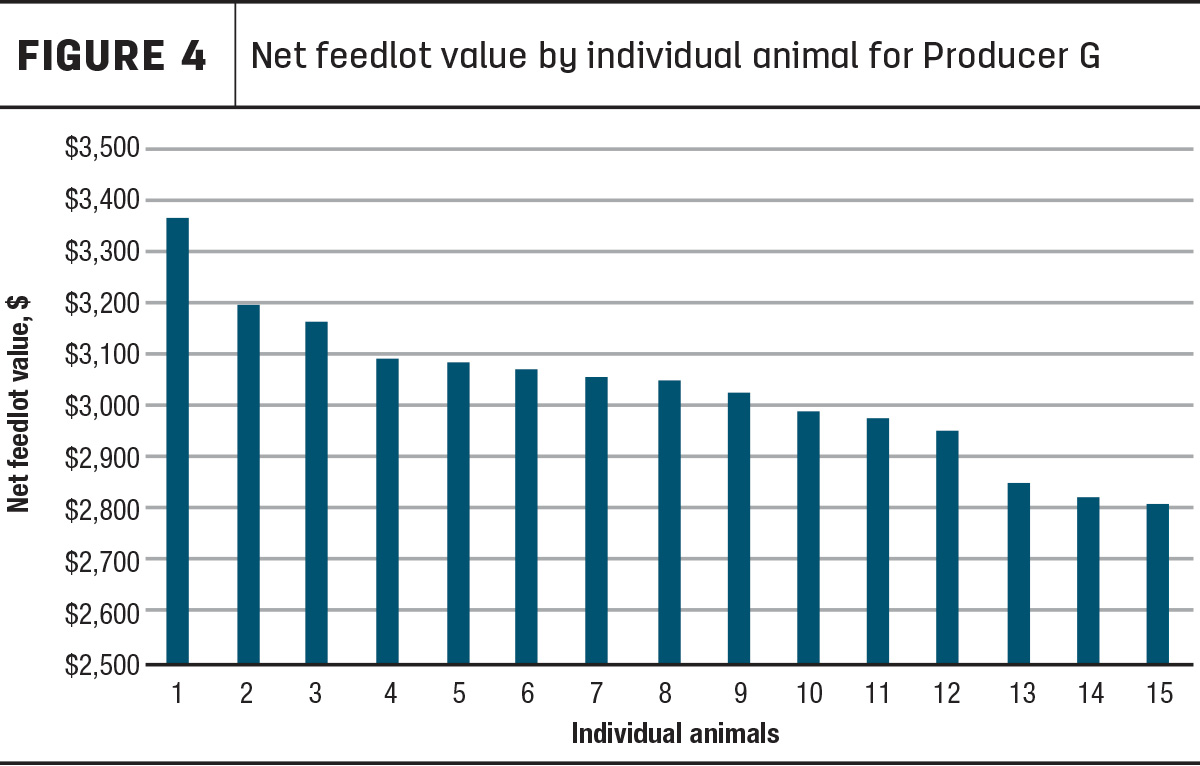
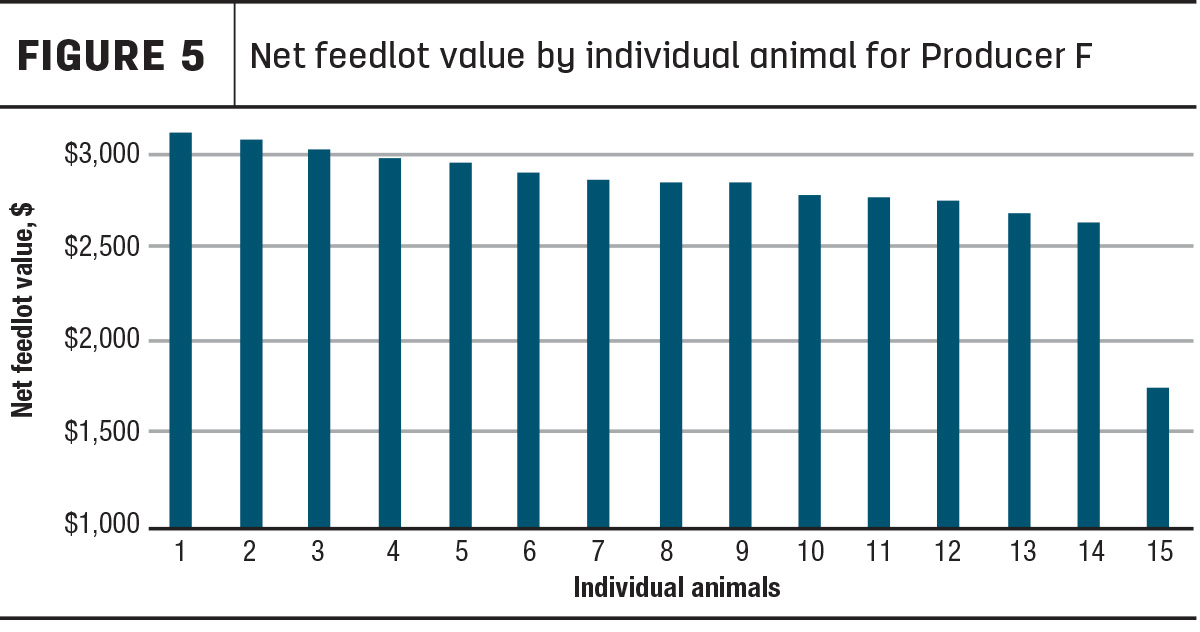
Let’s look at the individual steers for Producers F and G (Figures 4 and 5). The range for producer G was $542; there was one steer that seemed better than the rest along with three lower-profit steers. All of these steers were shipped on the same day weighing over 1,414 pounds, so why the difference? The three less profitable steers were treated during the feedlot phase. Figure 5 shows steers with a range of $1,363 from the high to low animal. However, normally this animal would be considered an outlier. The low-profitable steer was a chronically sick animal; it weighed less than its herdmates and was a “no roll” at the harvest plant. If this chronic steer was removed, this group of steers only ranged $477 from top to bottom.
Post-weaning information provides producers with data that can aid in making management decisions that impact the financial bottom line if you sell feeder calves or retain ownership of your animals. Topping the feeder calf sale or having the repeat buyer may indicate that you are providing a quality product, but are you getting what your calves are worth? Finding opportunity to gain knowledge about how your calves are performing post-weaning may be through communicating with the repeat buyer, retaining ownership of your calves – or part of them – or enrolling your calves into a program that can provide that information.