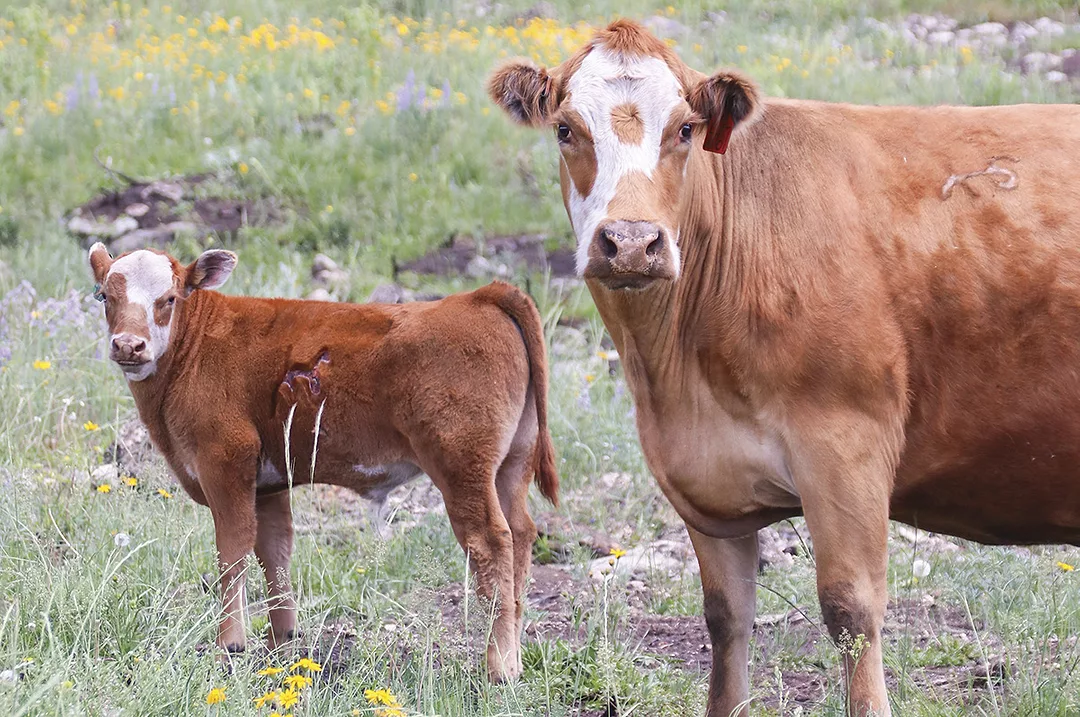
Over the past several decades, beef cows have quietly gotten bigger. In 1975, the average beef cow weighed just over 1,000 pounds; by 2009, that number had jumped to 1,350 pounds, and today, many herds include cows tipping the scales at 1,400 pounds or more. Breed association data and carcass weights confirm this trend is continuing today, driven largely by genetic selection for growth and carcass traits. While this selection has improved feedlot performance and carcass quality, it has left a lasting mark on the size of our nation’s beef cows.

The cost of size
Are big cows helping or hurting your ranch’s profitability? Larger cows eat more. A 1,000-pound cow needs roughly 25 pounds of forage per day, while a 1,400-pound cow requires about 35 pounds. In other words, the pasture that supported 100 cows in 1975 might only support 71 today. If stocking rates haven’t been adjusted, overgrazing and poor body condition could lead to lower pregnancy rates and shorter herd longevity.
Do bigger cows wean bigger calves?
Not always. Research from Wyoming and other states suggests that weaning weights have plateaued in many regions despite increasing cow size. In fact, under rangeland conditions where quantity and/or quality of forage may not allow calves to reach their genetic potential, 1,000-pound cows often wean calves similar in weight to those from 1,400-pound cows. Smaller cows also tend to be more efficient, weaning calves that are a higher percentage of their own bodyweight.
Milk production: A hidden cost
Milk production has increased for many breeds. For example, the average milk EPD has increased 16 pounds for Angus from 1972 to 2024, while the average Hereford milk EPD has increased 15 pounds from 1992 to 2023. Selection for higher milk production has often accompanied the push for growth. While more milk can boost calf gains early in life, research in Nebraska led by Travis Mulliniks found calves from high-milking cows may gain more in the first 60 days, but by weaning, weights are often similar across milk levels. Meanwhile, high-milking cows require greater maintenance energy, consume more forage and experience longer postpartum intervals, reducing pregnancy rates and herd longevity. Increased milk production can raise annual cow costs by hundreds of dollars without guaranteeing higher returns, especially in environments where forage quality and availability are often not sufficient to meet cow nutrient requirements for extended periods during the year.
Genetic trends: Why bull selection matters
The beef cattle industry has been tremendously successful in making genetic progress in beef cattle performance, growth and carcass quality. The data tells a clear story: Genetic selection has steadily increased mature cow size, yearling weights, carcass weights and dry matter intake.
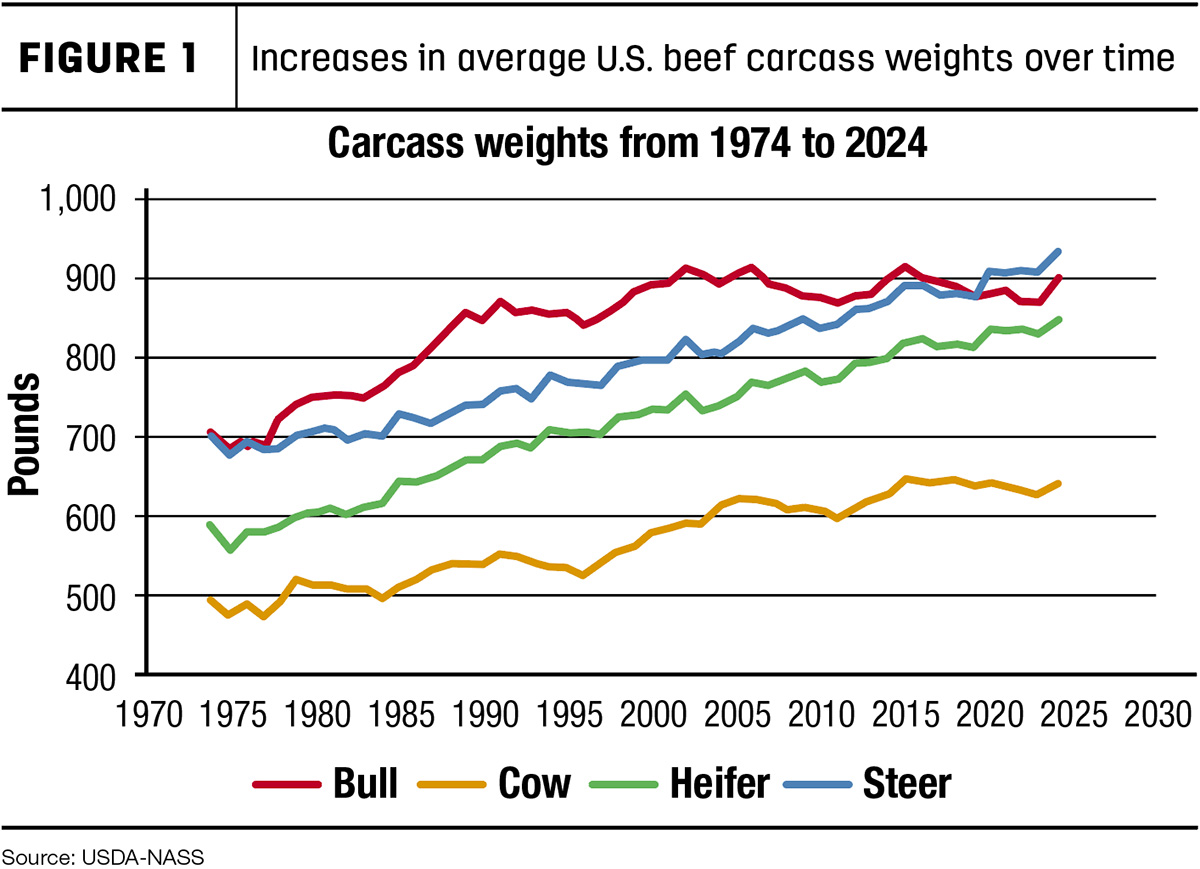
Carcass weights from 1974 to 2024 have increased, on average, 3.8, 3.6, 5.7 and 5 pounds per year, respectively, for bulls, cows, heifers and steers (Figure 1).
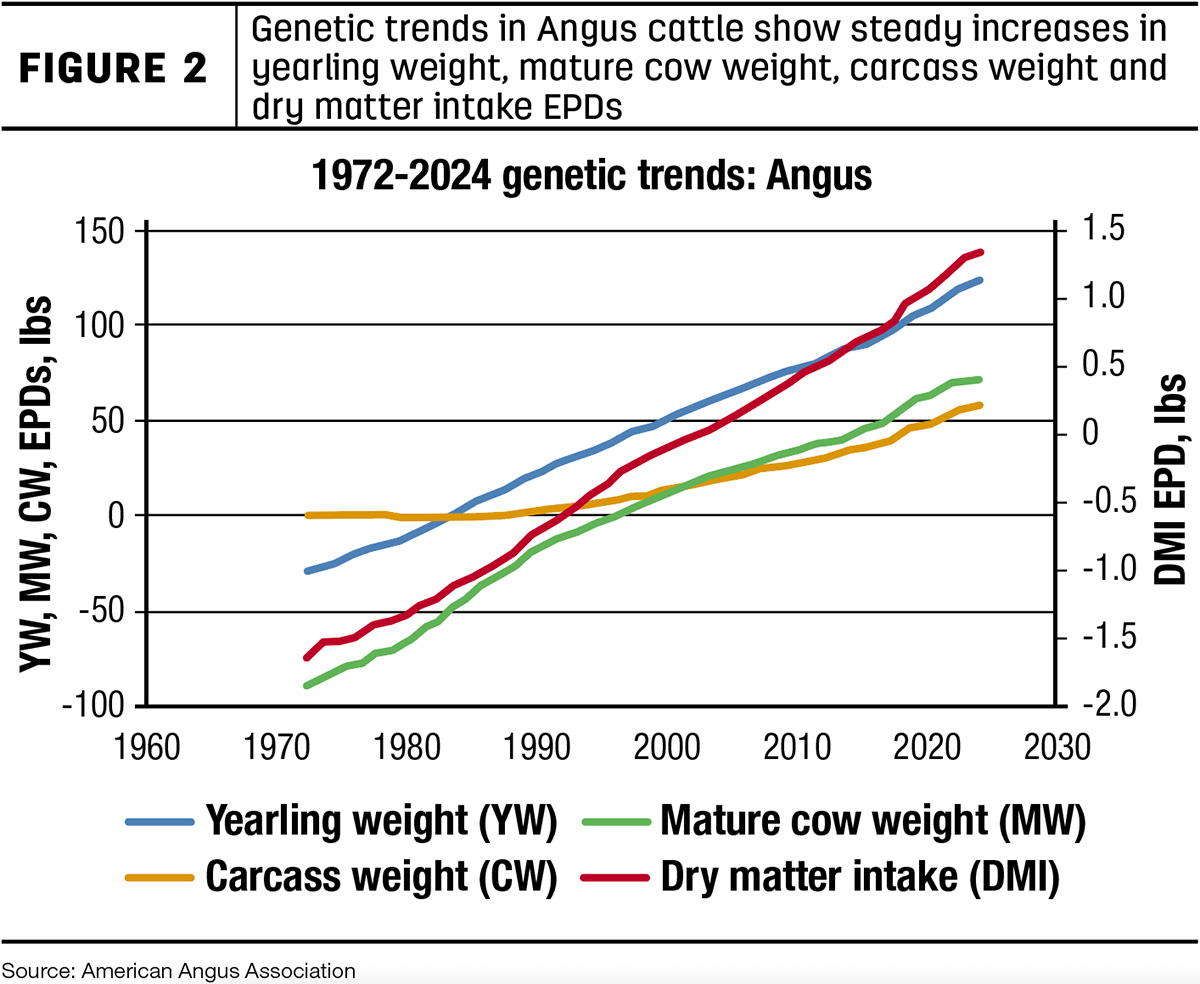
This data supports the EPD trends with Angus and Hereford cattle. Data from the American Angus Association (Figure 2) shows the following changes from 1972 to 2024:
- Mature cow weight EPD moved from -89 pounds to 72 pounds.
- Yearling weight EPD increased from -29 pounds to 123 pounds.
- Carcass weight EPD jumped from 0 pound to 58 pounds.
- Dry matter intake EPD rose from -1.63 to 1.32, signaling higher feed requirements.
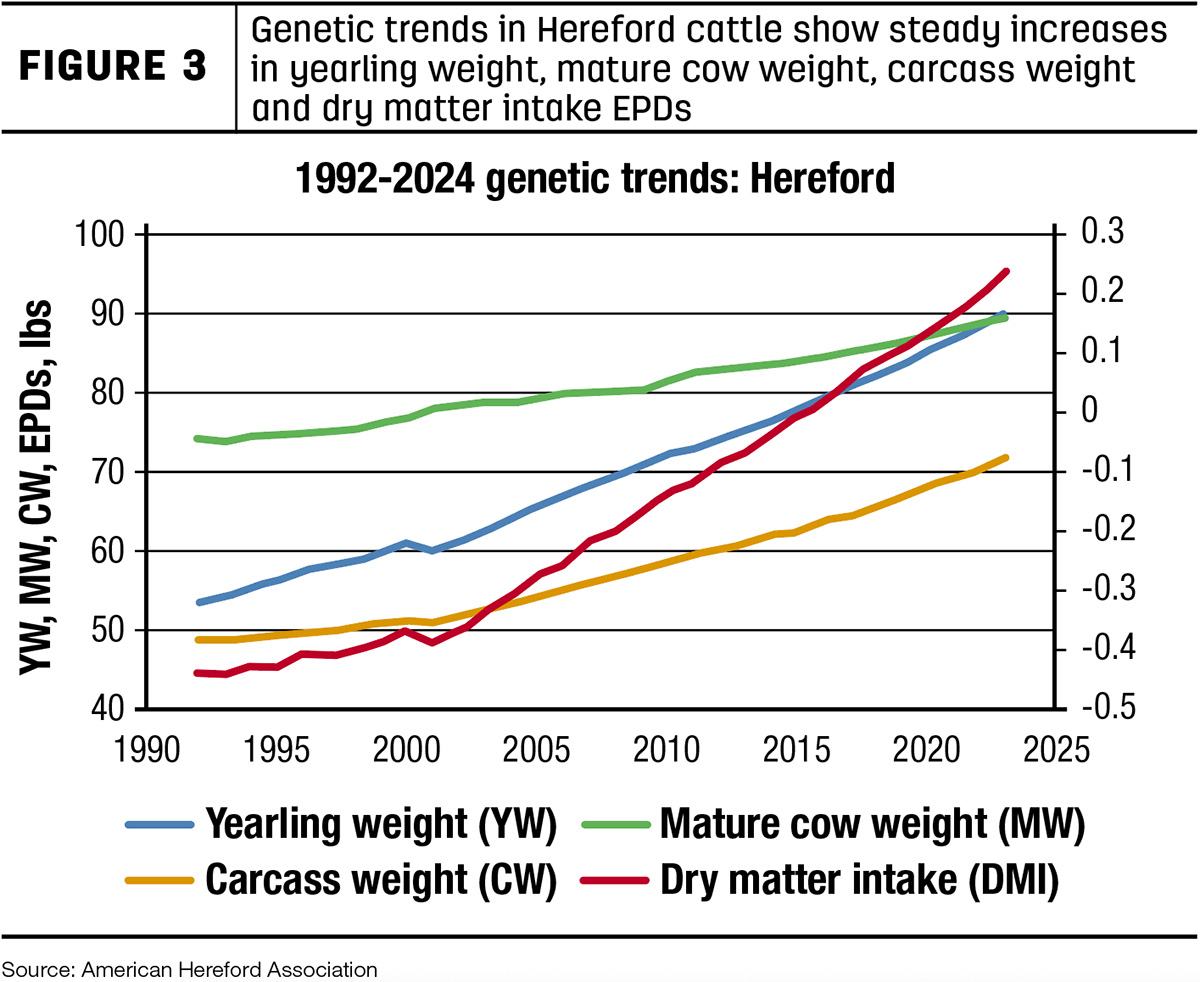
American Hereford Association data (Figure 3) indicate similar increases in the same EPD numbers from 1992 to 2023:
- Mature cow weight EPD increased from 74 pounds to 89 pounds.
- Yearling weight EPD increased from 53 pounds to 123 pounds.
- Carcass weight EPD climbed from 49 pounds to 71 pounds.
- Dry matter intake EPD shifted from -0.44 to 0.23.
These changes reflect decades of aggressive selection for growth and carcass traits. While these genetics can pay off in feedlot and carcass value, they also increase maintenance costs and forage demand at the ranch level. In low-input or resource-limited environments, selecting bulls with high growth and milk EPDs without considering impacts on mature size and dry matter intake can lead to cows that are too big and costly for your forage base.
Finding the right fit
So should you downsize? Maybe – but not necessarily. Bigger cows with higher milk production potential aren’t inherently bad, but they need the right environment and management. If your cows maintain body condition, breed back on time and stay in the herd long enough to pay for themselves, they may be right for your operation. If not, it’s time to rethink genetics and stocking rates.
Start by:
- Tracking cow weights, milk potential and body condition
- Matching cow size and milk production to forage resources
- Focusing on fertility and longevity, not just growth or milk
Smart bull selection for extensive rangeland environments
In resource-limited environments, every decision matters, especially when it comes to bull selection. The right bull can improve herd efficiency, reduce feed costs and ensure long-term sustainability. Following are some key considerations for producers operating in rangeland environments where forage resources may limit animal performance.
Match genetics to your environment. Large-framed, high-maintenance cattle often struggle where forage and resources are limited. Selecting bulls with genetics that fit your environment helps maintain cow condition and reproductive performance without costly supplementation. EPDs are powerful tools for predicting offspring traits. Focus on key selection traits when resources often limit production:
- Mature weight and height, yearling weight, carcass weight: Lower values generally mean smaller cows, reducing maintenance costs.
- Milk: High milk EPDs can increase nutritional demands. Low to moderate milk levels often work best in extensive, rangeland-based systems.
- Dry matter intake (DMI): Lower DMI EPDs indicate cattle that potentially require less feed to maintain body condition.
Once selection criteria are determined for an operation, the next question is to determine the most appropriate range of EPD values to assist in bull selection. The best place to start is knowing the breed average EPDs for the traits selected. When evaluating EPDs like mature weight, yearling weight, carcass weight, milk production and dry matter intake, if your bull EPDs are above breed average, you will typically be increasing those traits in your herd’s progeny compared with selecting bulls below breed average. Selecting bulls with above-breed-average EPDs may not be the most efficient and economical choice for producers wanting to generate replacements for a cow herd that must make a living in a resource-limited environment. That said, be smart and balance growth with efficiency, as growth traits are important for your bottom line.
Final thoughts
Cow size has crept up over the years, but bigger isn’t always better. In many cases, small to moderate-sized cows with moderate milk potential can improve efficiency, spread overhead costs across more animals and boost total pounds weaned per acre. The key is aligning genetics, forage and management to keep your ranch profitable for the long haul. In resource-limited systems, efficiency often beats size. Choose bulls that produce moderate-framed, easy-keeping cows with balanced milk and intake requirements. Smart selection today means fewer headaches and lower costs tomorrow.
References omitted but are available upon request by sending an email to the editor.