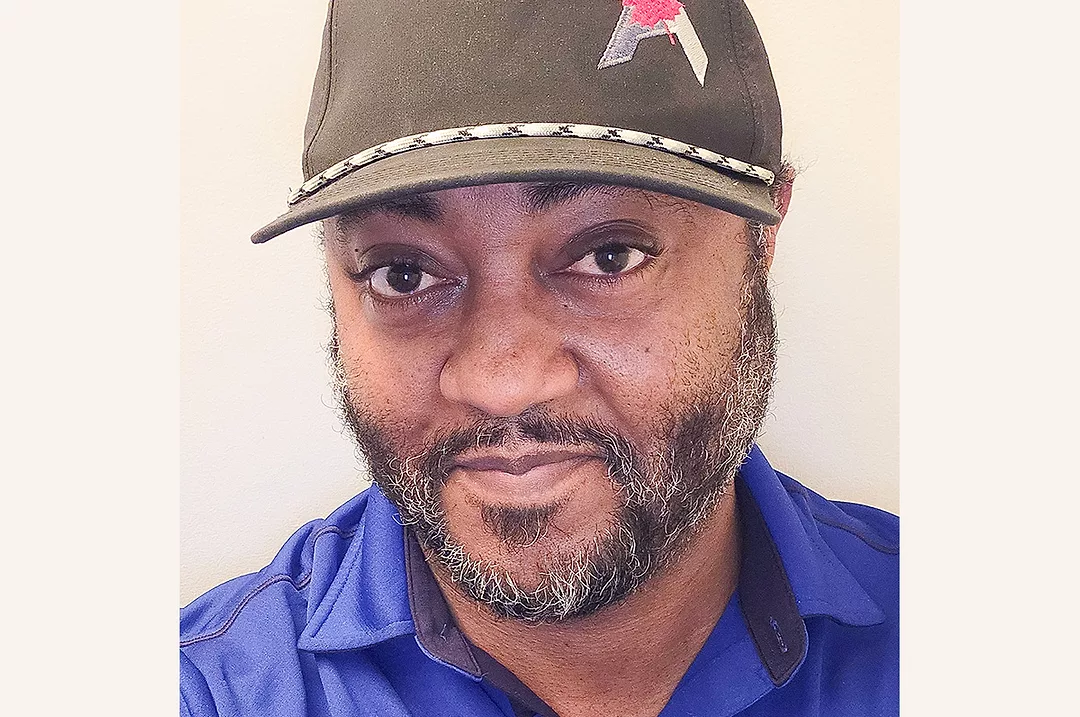
Elyas Tesfaye has been sharing his collection of agricultural film online for several years. Progressive Dairy Editor Matti McBride interviewed Tesfaye to learn how this hobby began and what it means to him.

Please describe your background and current standing in the dairy and/or cattle industry.
TESFAYE: I am the business development manager, Dairy Concepts, at Agribution Canada Ltd. I have my bachelor’s degree in animal science from my native Ethiopia and a master's degree in dairy science from the University of Georgia in the U.S.
What inspired you to collect films about the dairy/cattle industries?
TESFAYE: I have been collecting film since I was 13, although my first gauge that got me started was the very small 8mm/Super 8 format. I have always been fascinated by machines and mechanics, as well as movies, so the projector was a perfect combination of both, which inspired me to get started in the hobby. I have since graduated to the larger, and therefore better-quality, 16mm format. This format also has the added benefit of a much larger catalog of titles to choose from.
I started collecting dairy/cattle titles initially by sheer luck. A former professor at the University of Manitoba gifted me a reel titled "The Magic of Milk" that she came across while she was cleaning her office. It ended up being a 20-minute educational documentary short on the dairy industry of Manitoba from 1953 in beautiful Kodachrome colour. This is one of my favourite prints in our collection of over 700 titles that my wife and I currently own. With "The Magic of Milk" having opened my eyes to this genre, I have since purchased titles both locally and on eBay.
Can you briefly describe the process of sourcing, collecting and uploading film?
TESFAYE: While local sourcing is understandably the cheapest – as you don't have the added cost of shipping heavy film reels which could be rather prohibitive depending on the global point of origin, eBay is by far the best marketplace for collectors. The film collector community also has Facebook groups where we trade and/or sell film. I use the telecine method to convert film to digital. It is a cheaper method of conversion, the results of which I have perfected over the last decade since we started uploading to our YouTube channel "Canada 150 Archive" (16mmMaestro). Once I have successfully telecined a print, I then use an editing software to make any adjustments I want (exposure, depth, etc.). The best conversion method is scanning. This entails the time-consuming method of scanning film frame-by-frame by using expensive film scanners that produce the best result achievable.
How do you feel this benefits the past and future generations of agriculture?
TESFAYE: I feel this is a great motivator to the future generation of agriculture. I think that seeing such a legacy will give youth pride to become a part of a great fraternity and sorority of hardworking folk, farmers. The past generation gets to appreciate how far we have come, thanks to these time capsules and the stroll down memory lane they provide. While we have yet to get comments from students on our agriculture titles, they have been commenting on our other titles, sharing that their teacher used one of our films in class. We appreciate that these titles can be used as teaching tools.
Tesfaye’s collection is available to view online.