In my article titled “My farm has a culture, but who is aware of it?” published in Progressive Dairy in 2024, I explored how culture exists on every farm – whether by design or by default – and how we can begin to measure and shape it intentionally. Building on that foundation, this article looks at one of the most practical ways to strengthen culture and boost engagement: holding meaningful conversations between supervisors and employees.

We defined culture with a simple formula:
Culture = values + expectations + behaviors
(both desired and undesired)
In our three decades working alongside dairy operations, one truth has become crystal clear: Every farm has a culture. It might be clearly defined by ownership, or it might just evolve on its own over time. But either way, it’s there, embedded in the way people interact, the standards that are reinforced and the way decisions get made.
Culture isn’t something you bolt onto the side of your business. It’s the way things get done, day in and day out. And when values, expectations and behaviors are aligned with intention, they create a positive work experience. When they’re misaligned – or worse, ignored – what you often get is disengagement, high turnover and what people sometimes call toxic culture (we call it a failed culture).
Over the years, we’ve used anonymous surveys and hands-on leadership coaching to help dairies and operations better understand their own culture. When the results come in and the right conversations start happening, we often see improvements in:
- Employee engagement and retention
- Teamwork and productivity
- Safety and communication
- Flexibility and adaptability
But here’s the thing – even the best-defined culture won’t stick unless it’s reinforced regularly. And that reinforcement doesn’t happen from posters on the wall. It happens through people, especially supervisors.
As I say, supervisors are more than task managers; they’re culture carriers. They bring values to life every day, mostly through how they talk with their team. And that’s why I believe one of the most powerful tools a supervisor can use is a meaningful conversation.
Why meaningful conversations matter
Time and again, we’ve seen this simple truth in action: When supervisors make time for regular, intentional conversations with their team members, everything starts to shift for the better.
You don’t need long sit-downs. You don’t need fancy frameworks. What you do need is authenticity, consistency and care. When a conversation feels real, it builds trust, deepens connection and makes people feel seen.
That’s the foundation for a better workplace and a stronger culture.
Top five characteristics of a culture-building conversation
When we coach supervisors on having these conversations, we always highlight the five elements below, in order of impact.
- Recognition and appreciation. Reinforces what matters. Fuels motivation and trust.
- Team relationships and collaboration. Builds belonging. Encourages mutual support.
- Clarity on goals and priorities. Keeps people aligned and focused on what matters now.
- Consistent length and frequency. It only takes 15 to 30 minutes if it happens regularly.
- Strengths-based dialogue. Helps people lean into what they do best and grow from there.
Supervisor practices that strengthen culture
You don’t need to be a professional coach to have a meaningful conversation. Here are a few simple habits we share with supervisors that go a long way:
- Be present. Put the phone down. Make eye contact.
- Start with what’s working. Lead with appreciation.
- Ask, don’t assume. Invite input and listen with curiosity.
- Connect to purpose. Tie individual work back to the team’s or farm’s values.
- Follow up. A quick check-in next week shows you really care.
Sample questions to start a meaningful conversation
Here are a few simple, open-ended questions we’ve found work well to get conversations started. They’re not complicated, just good prompts to help people open up and get things flowing:
- “What’s something you’ve felt proud of recently?”
- “How are things going between you and the rest of the team?”
- “Is there anything unclear about your role or the week ahead?”
- “What part of your work feels like a good fit for your strengths?”
- “What can I do to support you better?”
A real-world example
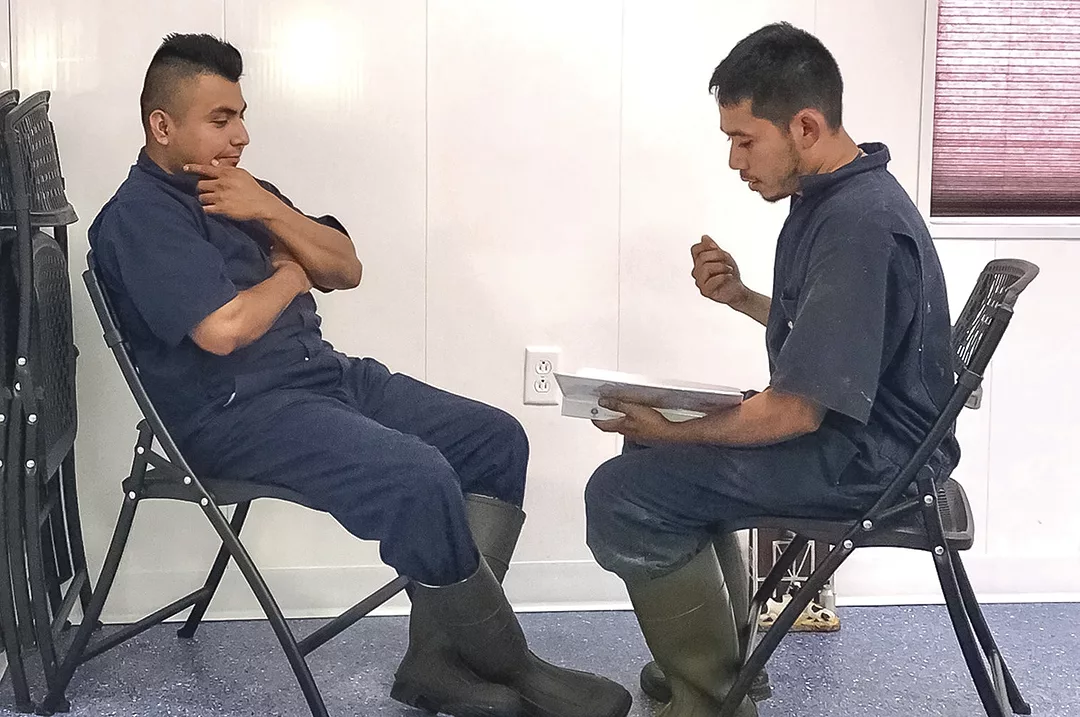
Let’s say you’re checking in with Ana, a new milker who’s been on the job for six weeks. She’s improving steadily, but she’s had a couple of hiccups. Here’s what a meaningful conversation might look like.
1. Start with appreciation
Supervisor:
“Hi Ana, thanks for taking a few minutes. I want to say that I’ve noticed the effort you’ve been putting in lately, especially on those afternoon shifts. The way you prep the parlor has really improved. That’s helped the whole team.”
2. Ask about her perspective
Supervisor:
“How are you feeling about the work so far? Is there anything you’re struggling with or unsure about?”
Ana:
“I feel OK, but sometimes I get nervous about messing things up. I try to ask questions but don’t want to be a bother.”
3. Connect to values and expectations
Supervisor:
“I appreciate your honesty. Around here, we value people who ask questions. That’s how we all get better. If you’re not sure about something, please speak up. You’re never a bother.”
4. Clarify priorities
Supervisor:
“This week, we’re focused on keeping transitions smooth between shifts. If you’re able, I’d love for you to help make sure the handoff to the evening team is clean and on time. Would that work?”
Ana:
“Yes, I can help with that. I’ll talk to Julia too.”
5. End with strength and encouragement
Supervisor:
“Ana, I’ve seen how reliable and detail-oriented you are. That’s a real strength. Keep leaning into it. Let’s check in again next week even just for 15 minutes.”
Why this conversation works
In our experience, these kinds of conversations have proven to be especially effective. They strike a healthy balance by blending recognition, clarity and support. Rather than feeling like a box-checking exercise, they strengthen culture by putting values into action. They also encourage engagement, showing employees that their leader cares and that there is real purpose behind the exchange. Most importantly, they come across as a partnership, not an evaluation, and that makes people more open and willing to grow.
Bottom line
Culture doesn’t grow on its own; it must be built, day by day, through relationships and conversations.
When supervisors lead those conversations with consistency and care, they help shape a culture that people want to be part of. They bring values to life, nurture growth and create workplaces where people feel proud to show up.