In late January, PDP’s Managers Academy ventured off the mainland for its first-ever event in San Juan, Puerto Rico. With the theme, “Business Prime on Island Time,” the event challenged dairy producers and industry representatives to take a closer look at their business structure and how to position it for success into the next generation.

Three executive-level trainers with roots deep in agriculture led the group through lessons on business governance, leadership and succession. The group also spent a day touring agribusinesses on the island to learn how they’ve capitalized on opportunities and grown their businesses.
Professional business management
Dick Wittman, family business consultant with Wittman Consulting, kicked off the conference with a deep dive into professional business management. Wittman comes from a 20,000-acre grain, cattle, timber and wildlife operation that has experienced 12 transition events over 40 years. He has also provided financial literacy, succession planning and conflict resolution services to farm family businesses throughout the U.S., Canada and many foreign countries.
Many farm businesses today have challenges that are different than 40 years ago. Wittman explained, “We have a lot of businesses that don’t just have people that work and own. We have people that are investors that don’t work on the farm. We have people that work on the farm that are not investors.”
In this dynamic, the challenge is identifying expectations and making sure that there is an alignment of expectations with those that are owning and working together.
Wittman walked the group through several parts of a management system and how they all function together to form a professional business structure.
He said to start by taking a look at the business’s mission and core values statement or create one if it doesn’t exist. This sets what you do, where you want to go and the ground rules for how you’ll get there.
Next, review your operational and strategic plans. Then organize your team and divide up responsibilities. Utilizing a case study Wittman provided, the groups assigned roles and set an organizational structure for a multigeneration farm business. There was good discussion on how to utilize advisers and provide opportunities for the next generation to learn and offer input on business decisions.
In addition to writing out job descriptions for each person on the farm, Wittman said farms should put policies in writing. Policies can range from housing and company vehicles to family employment and time off. “These should be agreed upon, documented and followed,” he said.
With alignment and expectations, the people that are moving forward in a business transition can choose to do so with a commitment to running a professional business.
Hacienda Muñoz
The first tour stop was Hacienda Muñoz in San Lorenzo, Puerto Rico. It started as a restaurant 27 years ago, then a terrace was added, followed by an activity salon large enough to hold 150 people, then a coffee shop and bar.
Coffee entered the business 10 years ago after the owner, Héctor Muñoz, received his certification as a quality grader and roaster. This was not offered in Puerto Rico, so he had to travel to Costa Rica to gain the knowledge, certification and necessary processing equipment to start a coffee operation.
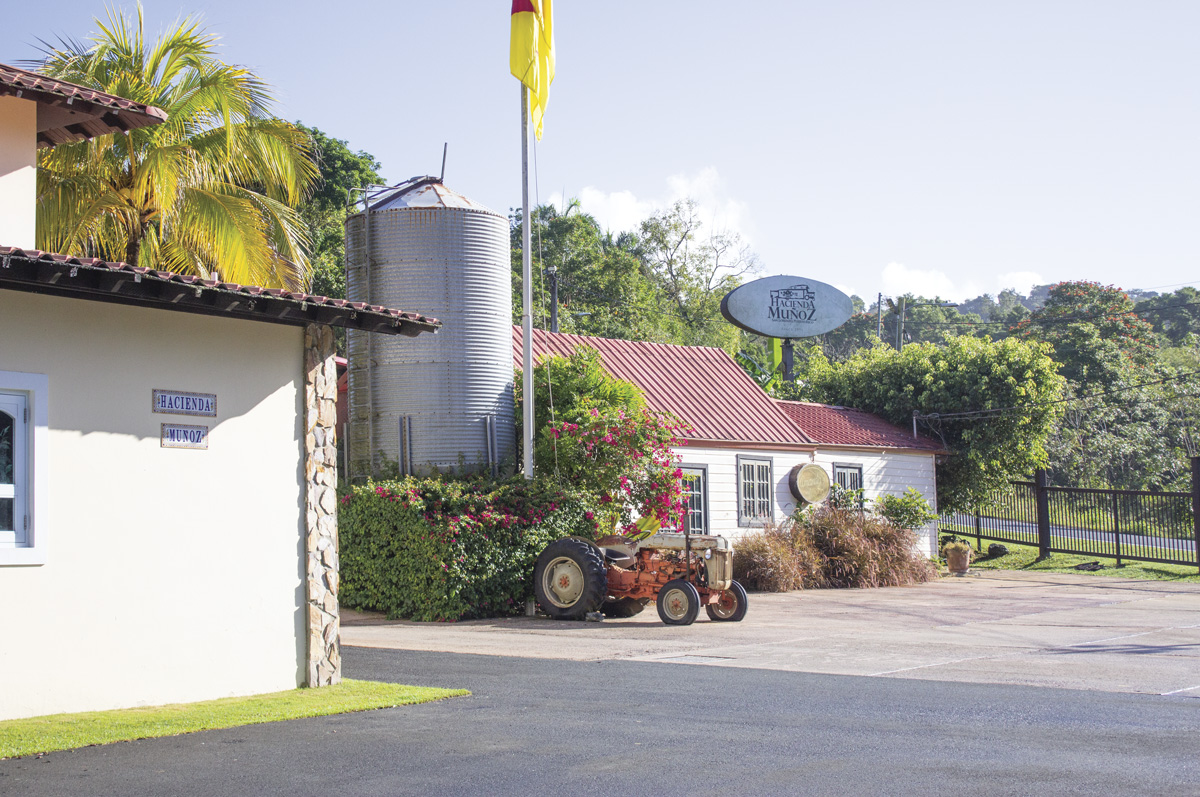
Hacienda Muñoz in San Lorenzo, Puerto Rico, started as a restaurant 27 years ago and now coffee is the biggest part of the business. Image by Karen Lee.
Coffee used to be very prominent in Puerto Rico until sugarcane production overtook it in the late 1800s. Coffee moved from prime agricultural soils to the more mountainous areas of the island.
Industrialization further hampered the crop, in taking away labor.
“The problem is not that we don’t have coffee; we have no one to pick it,” our tour guide said.
Production has dwindled so much that growers and roasters on the island can only supply 20% of Puerto Rico’s population with fresh coffee.
Hacienda Muñoz has 7 acres of coffee that produces 10,000 pounds per year.
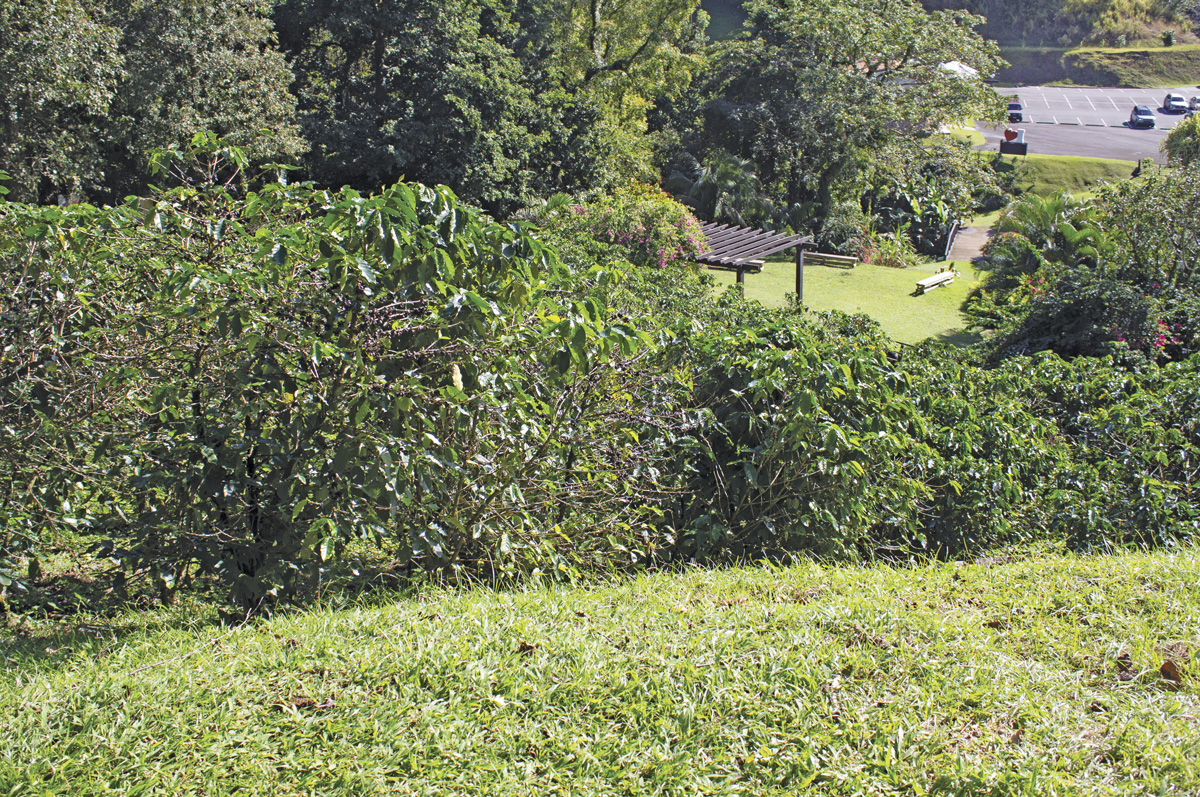
Coffee plants are grown on a hill for sun and drainage. Image by Karen Lee.
It takes three years before a coffee plant starts to produce fruit, and it is productive for about 20 years.
Their plants are grown on a hill for sun and drainage. They can be challenged by insects, fungus and iguanas.
Harvest occurs once a year in August, September and October. They have a crew of five men to hand pick the berries. They also use high school students and community volunteers. In addition, they offer the experience to people who purchase a tour at that time of year.
Coffee berries do not mature all at once, so they revisit the plants throughout harvest. Hacienda Muñoz is very selective and only picks the red berries. They want them in their prime, as coffee does not continue to ripen after it is picked. In leaving the rest, they estimate a harvest loss of 20% to 25%.
Hacienda Muñoz dries the berries in the sun. The natural method takes one month to dry under the sun. Berries that are washed to remove some of the fruit layers first can dry in one to three weeks.
Machines are used to classify the coffee by size and weight, as well as detect defects in color.
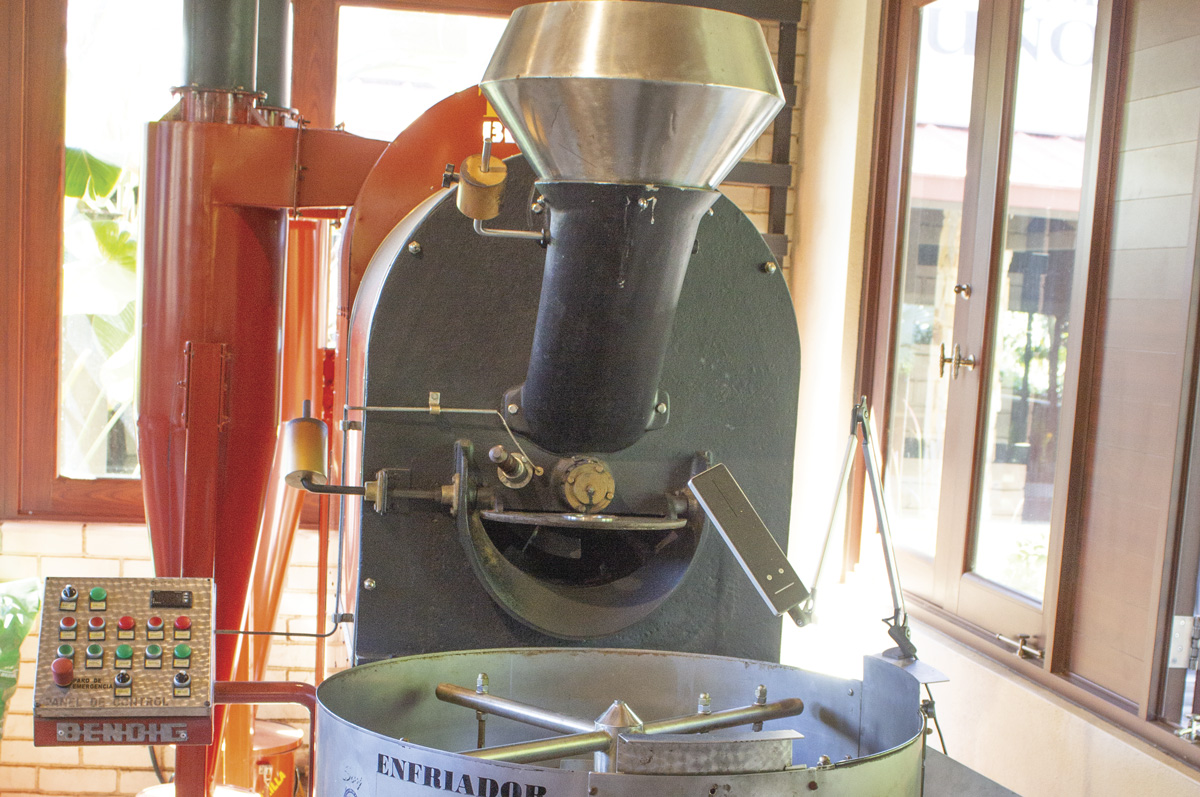
The quality of coffee depends on the roast. At Hacienda Muñoz, only the owner and coffee shop manager roast the coffee beans. Image by Karen Lee.
The quality of coffee depends on the roast. Of the 50 people employed by the business, only the owner and coffee shop manager roast their coffee.
In 10 years, coffee has grown to be the largest business portion of Hacienda Muñoz.
Finca Neo Jibairo
Puerto Rico’s first certified agritourism farm has grown over 16 years to produce 26 different types of fruits and vegetables.
Located in Río Grande, near the El Yunque National Forest, the farm focuses on sustainability. It collects rainwater and is 100% solar powered. They start plants in a nursery and use hydroponics.
The farm is open to visitors Thursday through Sunday, offering a bar, cigar shop, garden tours and coffee shop. They also host farm-to-table dinners and weddings, have a tiny home vacationers can rent and hold hands-on workshops to generate extra income.
“People are looking for these types of experiences,” said Cristina González Rodríguez, co-owner and operations manager of the farm.
She owns the farm with her life partner, Francisco Castro Barreto, who originally grew tobacco as a natural pesticide but now produces it for artisan cigars made by his brother Antonio.
Much like coffee, tobacco production was pushed off the island for sugarcane, so they had to go to Cuba and the Dominican Republic to get the tools and knowledge to bring back to Puerto Rico.
They are now the only farm on the island to grow tobacco from seed to final product.
They start the plants at the end of hurricane season, a lesson they learned the hard way.
Fungus is controlled using a natural bacteria product, and worms are managed by picking them off the plants by hand.
They harvest the leaves, separating bottom, middle and top, and hang them to dry for 60 to 70 days in a barn. The dried leaves are aged for a minimum of four years.
Antonio selects different leaves he likes for each cigar blend. At first they made 100 cigars a month; now with six people rolling and four people packaging, they can make 500 cigars a day.
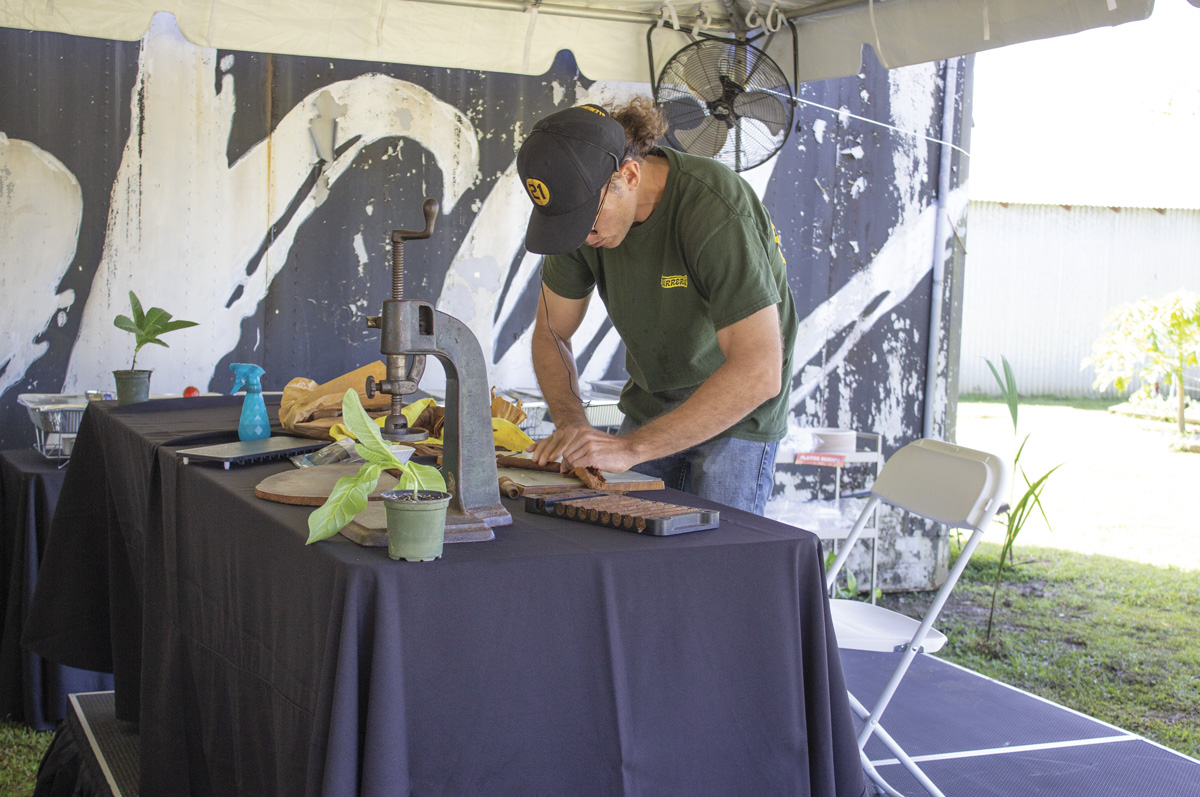
Antonio Castro Barreto demonstrated how to roll a cigar. Image by Karen Lee.
Their cigars sell for $12 to $30 depending on age of leaf and the wrapper leaf. In addition to selling at the farm, they are sold at a cigar lounge 30 minutes away, and they just partnered with a distributor to cigar lounges in the U.S.
They profit 30% off the tobacco and 15% off their fruits and vegetables, which are primarily sold through an organic supermarket chain.
Casa BACARDÍ
Safety, family and employee engagement are some of the main pillars of the world’s largest rum distillery.
Bacardi rum began in Cuba in 1862. It arrived in Puerto Rico in 1909, then moved to its home in Cataño in 1943. Its epic cathedral was built in 1958. A few years later, they opened for tours and is now the second most popular attraction in San Juan.
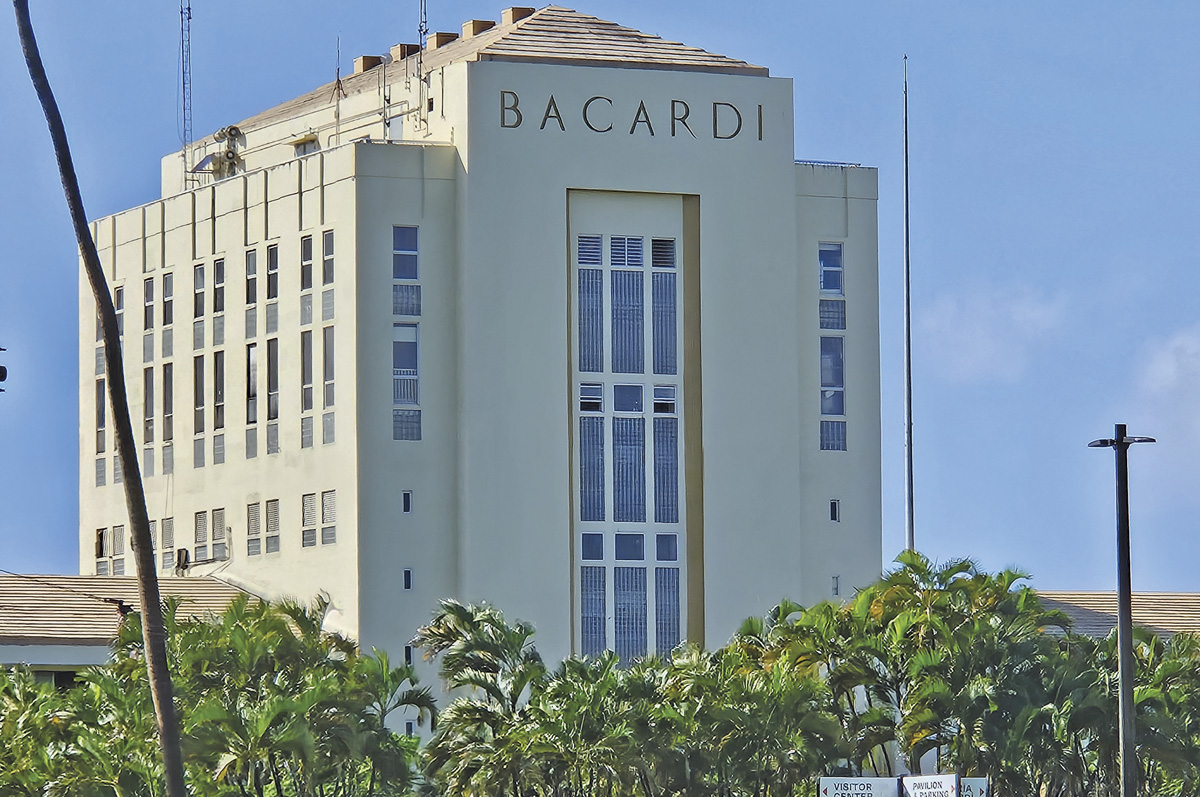
The iconic Bacardi cathedral was built in Cataño, Puerto Rico, in 1958, on a 127-acre site where the majority of the company's rum is produced. Image by Karen Lee.
At the 127-acre site, 80% of Bacardi’s global rum supply is fermented, distilled, aged, blended and shipped.
Sugarcane molasses is sourced from different parts of the world and arrives through a terminal 7 kilometers (4.3 miles) away.
Waste material is digested to generate heat and electricity, and water is discharged to the ocean.
Safety is prioritized every day, minute and second. They focus on near misses and hazard identification, and had logged over 10,008 hours without an accident.
As a seventh-generation family-owned business, a lot of family members work in the organization around the globe. At the Cataño site, employees are referred to as primos, the Spanish word for cousins, as family is part of their company culture.
To keep employees engaged and growing within the company, they have various development programs, including internships, mentor programs and cross-training. At a minimum, employees meet quarterly with their managers to review their goals. These programs have led to low turnover with a lot of employees there for more than 35 years.
Strategically plan your life, family and farm
Marissa Nehlsen, author of Live Life Rich, encouraged participants to achieve a rich life in all aspects.
“Every day, the question I ask myself is: Am I just living my life or am I leading my life? Am I leading my family? Am I leading my business? Am I leading others around me? Am I serving them in such a way that I do something that makes a difference in the world?” Nehlsen said.
Nehlsen’s journey began on a North Dakota farm, and she is now the founder and CEO of an eight-figure, debt-free financial firm, managing over $1 billion in assets across 46 states.
For her, a rich life is not just being rich financially, and she led the group through a little soul work. Nehlsen asked everyone to perform a life analysis by ranking how they are doing in work, health, wealth, family and friends, relationship, physical environment, and fun and recreation. This was followed by looking at the area with the lowest ranking and identifying one thing that could be done to improve it.
Participants were then asked to rank their business areas to see where they can prioritize improvements.
Another strategy Nehlsen encouraged is to perform a SWOT analysis of your business. This is an organizational development plan broken into quarters – strengths, weaknesses, opportunities and threats.
Assemble a team in your farm business and ask what the business does well, what could help it grow, what are the weak spots and what could harm your company.
Nehlsen said this should be done quarterly or at least annually.
Transition planning is another important process to prepare for the future. “When the vision is clear, the decisions are easy,” Nehlsen said.
So the first step in transition planning is to clarify the goals of each generation, including lifestyle, financial goals, ownership, management responsibilities and the long-term vision of the operation.
Nick Mock, chief operations officer for Freedom Financial Group, discussed estate tax planning, gifting strategies, wills, trusts and life insurance policies.
Nehlsen and Mock also covered long-term care, retirement planning and investing strategies to consider.
“It’s not how much you know,” Nehlsen said. “Execution is the key.”
Her very first lesson in finding one small action you can take to improve your life transfers into business transitions as well. Find the actions you can take and create a plan to help yourself, your family and your farm team transition through life.