Despite advances in vaccines, nutrition and management, bovine respiratory disease (BRD) remains one of the most persistent and costly challenges in beef production. While the weather this fall has been off to an unseasonably mild start, producers shouldn’t mistake low rates of BRD in early months for a disease-free season.

BRD, or bacterial pneumonia, isn’t gone; it’s just delayed. As calves move through sale barns and feedyards in late fall, that’s when we’ll see cases pick up.
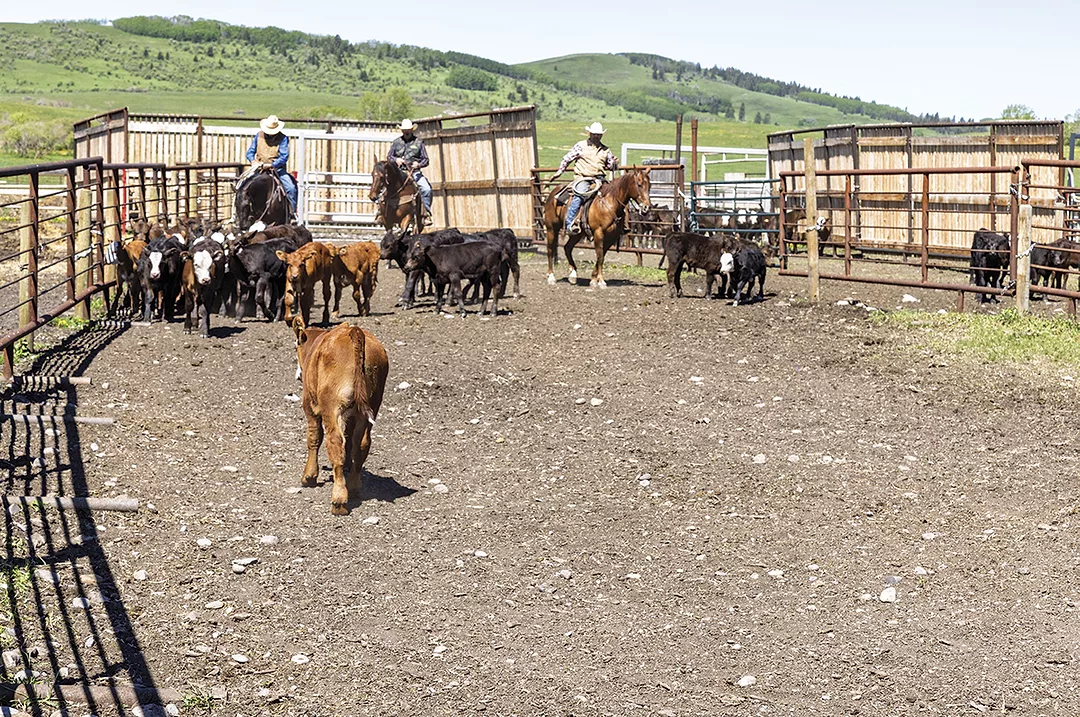
The combination of weaning stress, transport, commingling and fluctuating weather makes fall and winter one of the most challenging times of year for respiratory health.
Nearly 20% of cattle will face a BRD challenge in their lifetime. It’s one of the most costly health issues we deal with.
Industrywide, BRD costs nearly $1 billion annually across treatment expenses, lost performance and death loss. With high cattle prices on the line, it is a risk producers cannot afford to ignore.
The complex challenge
BRD, often referred to interchangeably as pneumonia or shipping fever, is not a single disease but a complex of bacterial and viral infections that attack the respiratory system.
The bacterial side of the equation, or bacterial pneumonia, commonly involves Mannheimia haemolytica and Pasteurella multocida, with Histophilus somni and Mycoplasma bovis also playing a role. These bacteria can be primary pathogens but are more often secondary, taking advantage of an immune system already stressed by viral infections or environmental factors. In most cases, the bacteria found are already living in the respiratory tract and stress on cattle can tip the balance. For example, when cattle are weaned, commingled or transported, their immune defenses weaken, which allows those commensal bacteria to flourish.
The bacteria are often present in the respiratory system. It’s when stress weakens cattle’s immunity that the bacteria can take hold.
Timing + treatment = better outcomes
While seasonality varies, the most dangerous window tends to be the four to six weeks following major stress events, such as weaning or relocation, which increases exposure to pathogens and suppresses immunity.
Early detection can make or break treatment outcomes. Producers should watch for:
- Droopy ears or lowered head posture
- Lethargy or separation from the group
- Reduced appetite or failure to come to the bunk
- Labored breathing or coughing
- Clear to cloudy nasal discharge
One leading indicator of illness in cattle is when they stop moving with the rest of their penmates. If they’re not coming to the bunk, that’s your first clue something’s wrong.
When pneumonia is confirmed, medicated feed containing chlortetracycline, used under veterinary direction, can help control and treat bacterial pneumonia as part of a responsible herd health strategy. These Type A medicated articles are approved for this purpose under the order of a licensed veterinarian. Work with your veterinarian to determine the best approach for your operation – whether that’s a complete feed or a top-dress application.
Get ahead, stay ahead with good management
Medicated feeds are only part of the equation. The foundation of good respiratory health is effective management, and that starts long before symptoms appear. While pathogens cannot be eliminated from the environment, producers can manage the stress animals face and prepare their immune systems to respond.
Here are top practices recommended to reduce stress in calves:
- Precondition calves with vaccines against key viruses.
- Use dewormers to control internal and external parasites.
- Wean early and gradually, before transport or sale.
- Introduce feed rations preweaning so calves learn to eat confidently on their own.
- Provide a clean, well-ventilated environment with minimal dust, moisture and crowding.
These foundational steps are still the gold standard to manage stress.
Insights and outlook
Looking back over decades in the industry, impactful progress has come from improved vaccines, faster diagnostics and stronger awareness among producers.
Forty years ago, preconditioning programs were rare, and diagnostic tools like polymerase chain reaction (PCR) didn’t exist. We’ve come a long way in understanding the disease complex and the pathogens involved. Today, producers are far more proactive about animal health and understand the return on investment in prevention.
As for the future, anticipate gradual evolution rather than revolution. Gains will continue to come from continued advances in nutrition, immunomodulation and genetics. But for now, proactive and strategic management remains an effective tool.
While BRD continues to challenge the industry, the fundamentals have not changed. Stress drives disease and optimal results come from understanding and minimizing stress, controlling the environment, attentive observation and timely decision-making.
We’ll continue refining management practices, but the basics of stress reduction and early prevention will always matter most.
Pneumonia may be delayed, but it is not going away any time soon. The best defense is preparation. By combining proven tools like chlortetracycline with smart, stress-reducing management and vigilant observation, producers can stay ahead of the disease curve and protect both animal health and profitability.