Bovine respiratory disease (BRD) is essentially pneumonia. Caused by specific bacteria and viruses, it is the most expensive disease in the beef industry.

BRD is a disease of management
Meredyth Jones, DVM, professor of practice in livestock production at the Texas Tech University School of Veterinary Medicine, says that death loss from BRD is expensive; however, animals that recover from BRD can have residual lung and heart damage, decreasing their performance, which is proportional to the amount of lung and heart damage they have. Drugs for treating the illness and labor for treating sick cattle are additional expenses.
“We consider BRD to be a disease of management,” Jones explains. “Vaccines are just one of many things we can do to help control it. If your protein nutrition and trace mineral supplements aren’t on point, cows won’t be able to produce high-quality colostrum. The BRD risk stems from each calf’s birth and colostrum intake. If they don’t get high-quality colostrum in the first 24 hours of life, they risk BRD months later.”
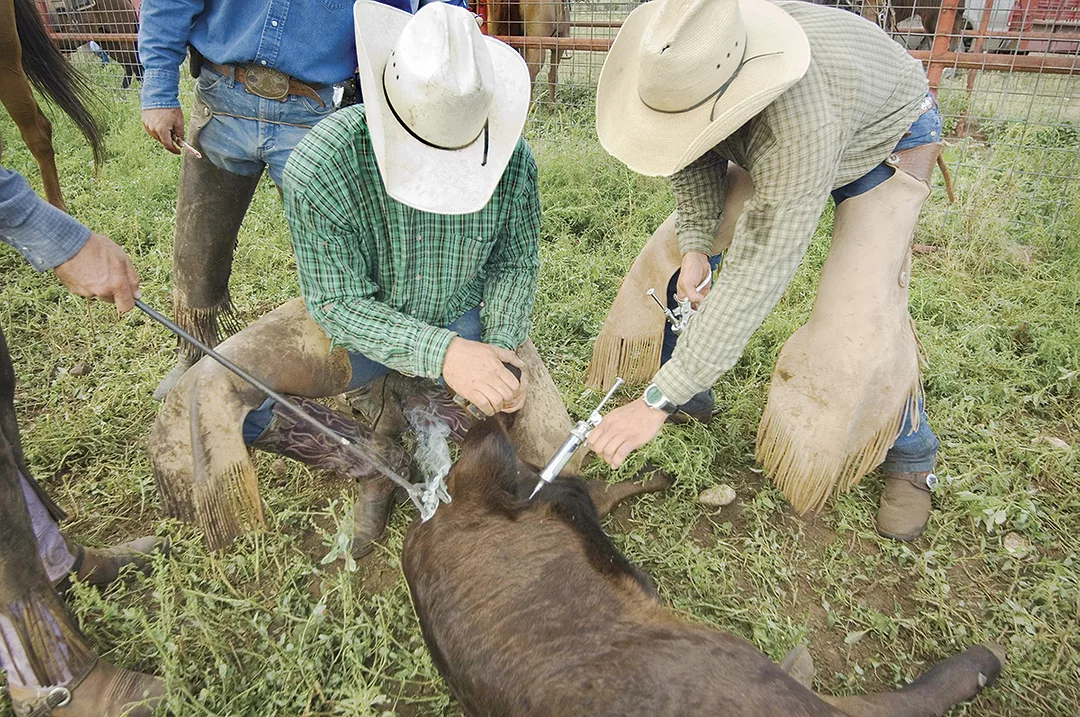
Some of the BRD pathogens specific to the virus are also reproductive pathogens. “We recommend vaccinating the cow and heifer prebreeding so they have good immunity,” Jones advises. “In calves, we recommend vaccinating them preweaning, then we may boost them at weaning, depending on the management system. It’s important to have them protected before weaning because this timing is really about giving them time to develop immunity before weaning and transport, which are the biggest stressors that can set them up for BRD.”
The BRD vaccine benefits the herd and those calves that may enter the feedlot sector. These viruses can cause pregnancy losses, a major concern. Calves may get sick during the cow-calf, stocker, backgrounding or feedlot phase. “As an industry, we want to protect those calves before weaning so they have some immunity and can maintain it throughout the feeding period,” Jones reports. “Sometimes the backgrounder or feedlot may boost vaccines in those calves, but vaccines work better when the calves have had them at the cow-calf stage.”
Cow-calf producers may think that when the calf enters the next beef production phase, it is no longer their responsibility. “It’s critical at every stage of the process to view beef production as a system, that we know our part in it and how it contributes to the next step,” Jones concludes. “That’s why we strongly encourage the cow-calf producer to do things right: vaccinate, wean for 45 days, castrate and heal and have a deworming program – because you don’t want to raise a calf, send him to the next phase and have him fail. That has a ripple effect across the entire industry, and it exposes us to criticism from other groups. It’s easy to focus on your segment and say, ‘I did my job.’ Your job is to prepare each calf to go to the next phase.”
Work with a trusted veterinarian
Kelsey M. Harvey, Ph.D., PAS; Reinaldo F. Cooke, Ph.D.; and W. Isaac Jumper, DVM, gathered published vaccination data to determine the ideal timing and vaccine types for protecting calves and their dams against BRD. Recently, these experts published a review of vaccinations against respiratory pathogens on cow-calf operations, including their effects on production and health responses in feedlot cattle in the August special issue of Applied Animal Science.
Harvey says the first and most significant step producers can take is to always work with a veterinarian to design a tailored vaccine program for each operation. There are no standard protocols because vaccinations depend on each operation’s management system. “The vaccination period is critical,” Harvey explains. “Working with your veterinarian that you have a relationship with, who knows your herd, can help you put a vaccination protocol together.”
Veterinarians know which vaccines target the BRD complex, whether it’s a modified-live virus (MLV), a killed virus or a nasal vaccine. Timely vaccinations are key to controlling the BRD complex, which occurs in unvaccinated calves during weaning, shipping and entering a feedlot, all stressful events. Harvey believes that understanding the major benefits of vaccinating calves on the farm before they undergo the stress of shipping, commingling with new calves, novel diets and a new feedlot environment is critical. Research indicates that calves receiving BRD vaccines and the resulting immunity protection before going through stressful events do well. When calves experience stressors, their immune systems are suppressed. Vaccinating calves during times of stress reduces vaccine efficacy.
One significant study of producer data found that producers who vaccinated their cow herds and maintained well-established vaccination programs raised animals that were more productive in the feedlot. Harvey believes these operators with their solid vaccine protocols are likely providing good nutrition, mineral and vitamin supplementation, and a tight calving season. Data showed that feedlots had fewer cases of illness and death when calves were born to dams that received BRD vaccines. Those calves were also heavier at birth and weaning, easily sustaining body condition.
Vaccinating calves before they enter the feedlot is critical because the antibodies they receive from colostrum decline rapidly as they grow. Although there is concern about interference with maternal antibodies, calves respond to vaccines, even when maternal antibodies are present. “Multiple studies show that calves receiving MLV between 30 and 90 days of age were able to generate antibodies with no maternal antibody interference,” Harvey explains.
Harvey’s team concluded there are few market incentives for producers to adopt health and management practices, such as vaccination and preconditioning, which reduce BRD risk in subsequent beef industry sectors. Improving the health and performance of calves in the feeding sector is possible by improving health management in the cow-calf sector.
Vaccine details
W. Isaac Jumper, DVM, assistant professor in the department of pathobiology and population medicine at the Mississippi State University College of Veterinary Medicine, says two vaccines are commonly used by beef producers. Killed vaccines are safe, convenient, easy to administer and tend to be shelf-stable. The MLV stimulates a different kind of immunity. “In some cases, it’s more advantageous,” Jumper reports. “However, if we use MLV in pregnant animals that have never had them before, abortions may occur. They aren’t as shelf-stable as killed vaccines. Once they’re reconstituted, producers must use them promptly, typically the same day. MLVs can be inactivated by exposure to [high temperatures and UV light].”
Developed in the 1970s, nasal vaccines are administered when a rapid immune response is needed in calves as young as 1 to 7 days old. “We reconstitute the nasal vaccine, coating the inside of each nostril with the [liquid] vaccine to create a local immunity at the mucosa level,” Jumper explains. “[This tactic is useful] when calves commingle and it’s likely they’ll come in contact with respiratory pathogens.”
It takes time for the immune system to develop a response. Jumper recommends vaccinating animals when they are unstressed and healthy before weaning at 3 months. “Ideally, I’d love to have two doses before weaning, but that isn’t always practical,” Jumper concludes. “In most cases, we vaccinate calves, castrate, deworm and turn them out to pasture to recover from the stress. A month later, we give a booster and separate them from the cow. If we can give those vaccines before they experience shipping, commingling and weaning stress, we’re more likely to experience a better outcome and get more from the vaccines.”
This review demonstrates that producers can maximize BRD vaccine effectiveness through strategic timing during the cow-calf phase, improving cattle health and performance as animals enter the next production phase.