
Anyone who is at least somewhat familiar with the cattle industry knows there is a long list of products and product types that can be used for providing supplemental nutrients to cattle. So the question posed in the title of this article seems a little simplistic. Of course, the difference is that one is a liquid and one is dry. But over time, the industry has learned that it’s not really that simple. There is a wide variety of pros and cons to each type of supplementation. We live in a world where animal response, costs, time, convenience, labor availability, etc., all have to be factored into the equation to determine which form is best used in a given situation or operation.

This article will examine the general pros and cons of each basic supplement type and then take a dive into the economics.
Dry supplements
Dry supplements are composed of any and every ingredient we use in the feed industry. In many cases, the exact ingredients or formula used is largely dictated by cost but also by what nutrients a given supplement is designed to deliver. In the cow-calf industry, the most common nutrient supplemented is protein. A few of the most common sources include cottonseed meal, soybean meal and canola meal (oilseeds). Distillers grains have become very common along with other byproducts or co-products such as corn gluten feed or meal, wheat midds, alfalfa meal, etc.
Energy can be supplemented by adding a grain component such as corn, milo, wheat or others as well as the byproducts such as soyhulls or beet pulp (also fiber sources). More energy can be added by including some of the fat products (dried distillers grains [DDGs], whole cottonseed [WCS]) or even liquid fat to increase fat levels, which can significantly raise energy. Finally, minerals, vitamins and a laundry list of additives and medications can also be delivered through dry supplements.
A key factor to the use of dry supplements is their handling ability. With cubing and pelleting, everything can be put together in one package. Cubes (or cake in some parts of the country) are generally larger in size and can be fed on the ground if troughs are not available. There is some loss in these instances. Dry supplements can also be made into pellets (different sizes), meals, commodity mixes, blocks, tubs (although these do start out with a liquid base) and so on. Commodities such as whole cottonseed, DDGs, corn gluten feed and so on are commonly fed.
The choice of which product to use is based on a wide variety of factors. These include:
- History: “This is what we have always fed.”
- Cost: “It was the cheapest thing I could find.”
- Time or labor availability: “This is the only thing we have time to get put out.”
- Resources: “I don’t have the storage, facilities, equipment, etc., to feed anything else.”
- Input: “This is what my vet/the guy at the feed store/my neighbor/guys at the coffee shop use or said I should use.”
One of the predominant factors listed above is time and labor availability. Sometimes this is because the producer has another job that only allows him to supplement after work or on weekends. In other cases, it is because the pastures are very large or spread far apart, and it’s not feasible to get everywhere. In these cases, cattle can only be supplemented a few days per week or intake-limiting technologies have to be used. One of the oldest and most common is using salt to limit intake, so salt/meal mixes came about. Salt limiting is inconsistent, plus it is corrosive and hard on metal feeders. Other intake-limiting methods have also been developed, most of which are very expensive.
Another factor is resources. Commodities such as WCS can be very economical and cost-effective. However, such commodities are generally sold in bulk and delivered in truckload quantities. This means the ranch has to have a place to store a product like this and the equipment to handle it. These resources come at a considerable cost.
Overall, use of some type of dry supplement is the most common across the cow-calf industry.
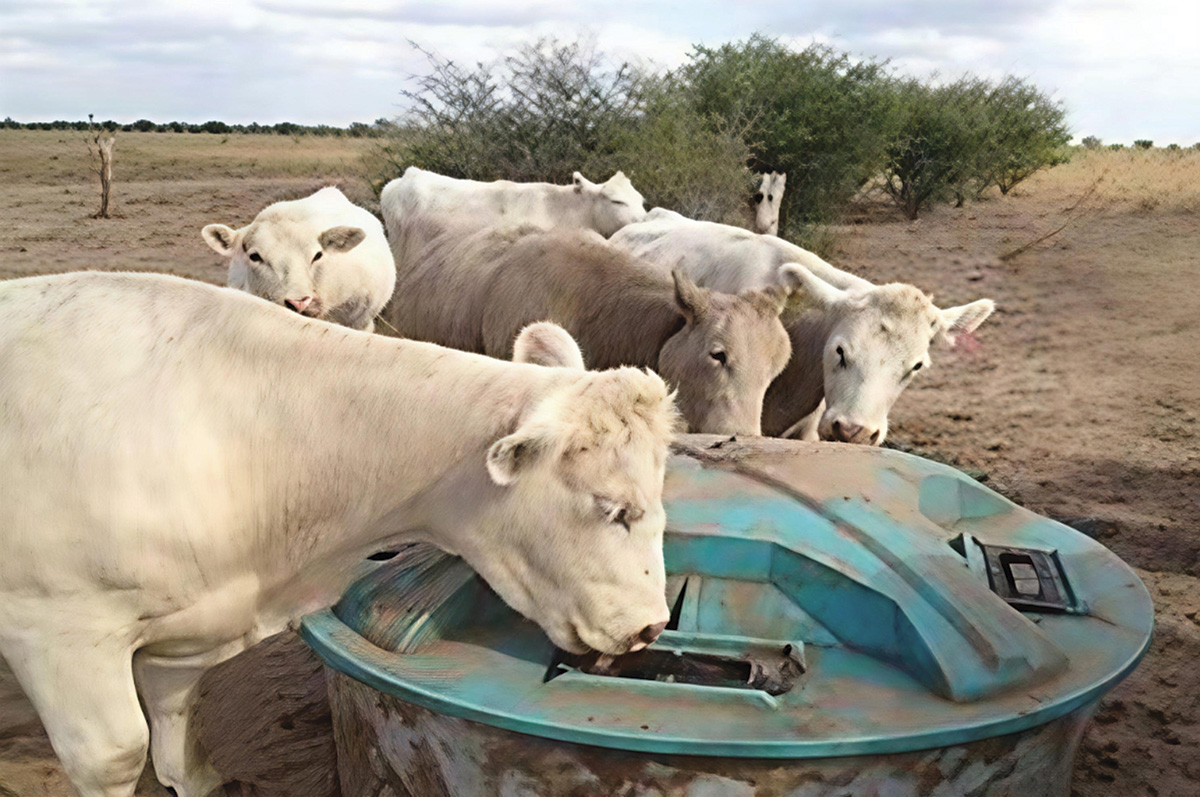
One benefit of liquid supplement feeders is that cattle tend to come back several times per day, providing them a consistent, balanced nutrient intake. Image by Stephen B. Blezinger.
Liquid supplementation
Before “liquid feed supplements” existed as a category, molasses was already being used as a palatable energy source for livestock. As the U.S. sugar industry expanded, cane and beet molasses became an abundant byproduct, setting the stage for liquid supplementation. By the 1930s, liquid feeds began spreading more widely in U.S. cattle nutrition, driven by the rapid expansion of the sugar industry, increased availability and low cost of molasses, and recognition that molasses could carry nutrients and improve palatability.
From the ’40s through the ’60s, molasses shifted from being just an energy ingredient to becoming a carrier for protein, minerals and additives. Producers began experimenting with adding urea, blending minerals and vitamins, using liquids to improve intake on poor forages. This era laid the groundwork for the modern “liquid supplement” concept.
By the 1990s, research began validating what producers had observed for decades:
- Liquid supplements improved forage digestibility.
- Sugars enhanced rumen microbial activity.
- Non-protein nitrogen (NPN) in liquids could be safely and effectively utilized.
- Liquids improved cow body condition and reproductive performance.
The ingredients in liquid supplements are largely reflective of the byproduct industry. While still largely based on cane and beet molasses, other common ingredients are sourced from the corn sweetener, distilling and brewing industries.
While liquid supplement formulas for pasture or forage supplementation can vary greatly, most commonly they are characterized by:
- Moderate to high dry matter ranging from 58% to 65% or higher. Dry matter affects energy content and product stability. Low dry matter products (less than 55%) tend to be unstable in the field and can separate.
- Protein levels ranging from 12% to 35%. Most of the time, a significant portion of this protein is from non-protein nitrogen (urea or biuret).
- Moderate phosphorus content (0.5% to 1.25%).
- Varying fat levels. Fat inclusion can range from basic 1% all the way to 10% or more. Higher fat levels require suspension technologies to ensure the product will not separate. This comes with greater cost. High-fat products can thicken in colder temperatures.
- Mineral and vitamin inclusion. This can also vary greatly depending on the product and company. Liquids can be a particularly effective carrier for trace minerals and vitamins.
- Ability to carry an assortment of other additives such as ionophores, probiotics, enzyme sources, etc.
- Typical intake of self-fed formulas ranges from 2 to 3 pounds for an average 1,200-pound mature cow.
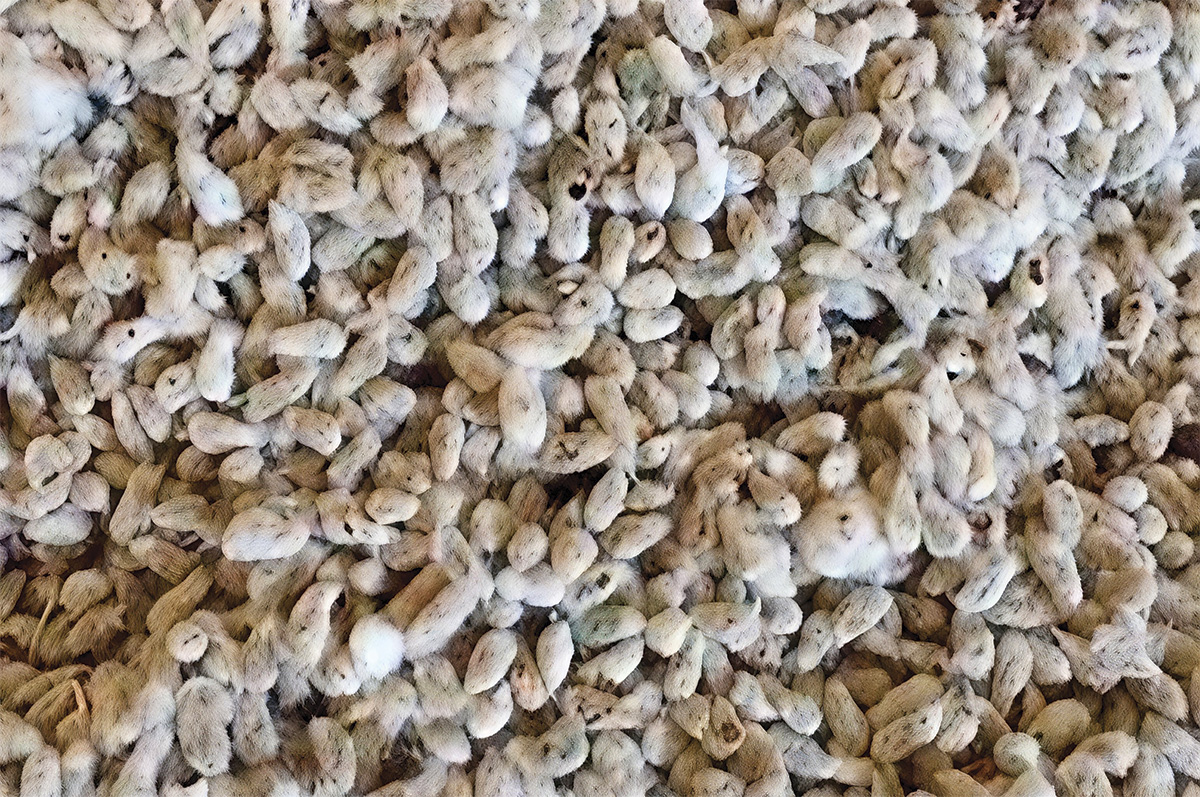
Commodities such as whole cottonseed can be economical and cost-effective solutions for adding energy to your herd's diet. Image by Stephen B. Blezinger.
Feeding convenience
While most dry supplements are designed to be hand-fed every day or so, liquid pasture supplements are designed for self-feeding. A typical covered liquid feeder will hold 300 gallons of product (around 3,000 pounds) and can provide supplement for 80 to 100 cows. Most large feeders have four “lick wheels,” and the typical recommended stocking rate is 20 to 25 cows per wheel. At an average intake of 2.5 pounds per head per day, a full feeder can supplement 50 cows for 24 days.
Since most liquids are predominantly a protein supplement, this gives the cows access 24 hours per day. One study by Montana State University suggested that cows with unrestricted access to the liquid feeder visited and consumed supplement multiple times per day ranging from three to eight visits, with a small amount of consumption at each visit. Thus, the supplement is regularly consumed throughout the day, which is highly beneficial to the rumen bacteria and to the animal. This is the primary mechanism that helps improve forage digestion on liquid supplements.
This is in contrast to hand-feeding of dry supplements where “slugs” of feed may be delivered at each feeding, meaning the cow eats large amounts of feed over short periods of time. This can be detrimental to the rumen and to forage digestion.
Feeding convenience is further illustrated by the fact that most of the time, producers using a liquid supplement have that product delivered to their feeders by their local dealer. When it comes time to fill a feeder, the producer calls his dealer and requests his feeder (or feeders) be filled. The dealer comes with his delivery unit and fills the tank directly, measuring the amount filled by a meter on the end of a delivery hose. The producer is then invoiced for the amount of feed delivered. In some cases, dealers will even monitor feeders for the producer and refill as necessary. In other situations, if the producer desires, he can take a tank or liquid tote container and pick up product directly from the dealer, similar to picking up dry supplements.
Costs and economics
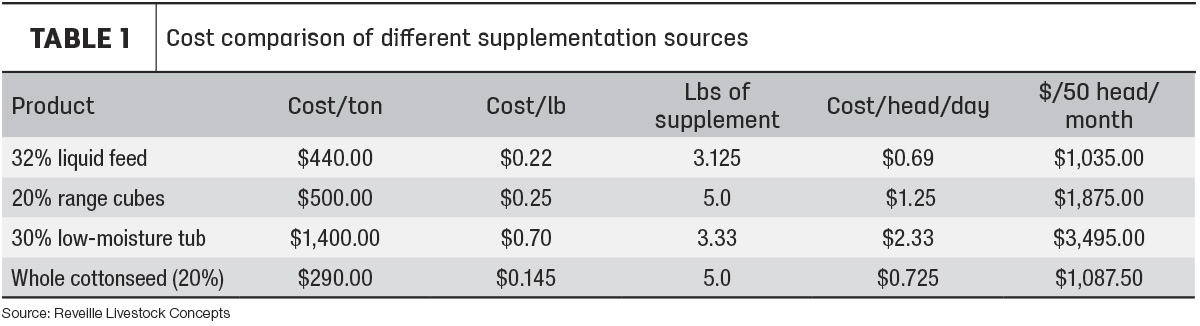
In most cases, liquid supplementation can be one of the most cost-effective methods available. Table 1 illustrates the cost difference between a 32% liquid supplement, 20% range cube, 30% low-moisture tub and whole cottonseed. The goal is to provide 1 pound of protein to the cow per day. Prices are estimates based on current markets and can vary depending on location, dealer pricing, etc.
From the table, you can see that the liquid supplement is the least expensive in supplying 1 pound of protein to the cow herd. While the value of other nutrients comes into play as well, the cost of protein is generally the primary consideration. One point that needs to be made here: Low-moisture tubs are not formulated or manufactured for the kind of intake shown. In general, a typical tub intake is 0.75 to 1 pound at 30% protein, meaning it is delivering 0.225 to 0.3 pound of protein – less than the amount needed. The cost at this level of intake is 52.5 cents to 70 cents per head per day, but again, for significantly less protein intake than needed.
Another way to look at this is to consider the actual cost per pound of protein. Based on these numbers, the cost of protein is 69 cents, $1.25, $2.33 and 72.5 cents respectively, for the liquid feed, the cubes, the tubs and the WCS.
Conclusions
Most supplements (not all) can be effective tools for meeting the nutritional needs of the cow herd. The cost evaluation must be considered along with storage, equipment and labor costs to make a solid decision. With nutrition being the single most expensive input cost for the cattle producer, it is important to evaluate all supplement types and the related factors when making this decision.