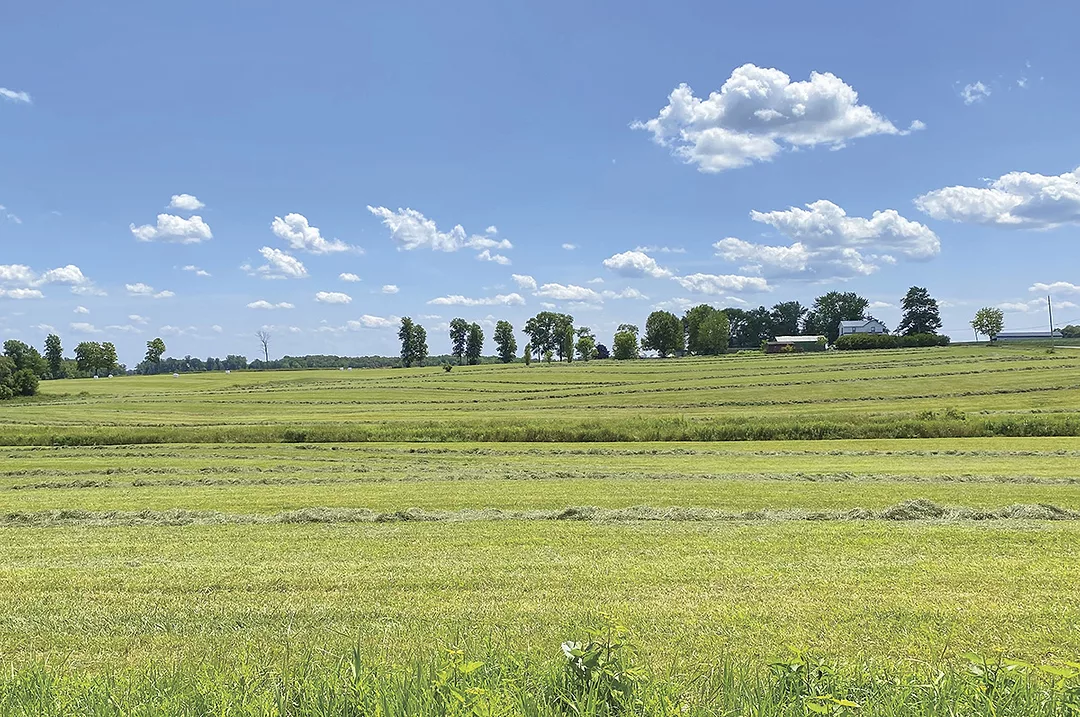
“What should I plant in my pasture?” It’s a question that farmers frequently ask Jason Cavadini, a grazing outreach specialist at the University of Wisconsin (UW) Extension. Because every pasture or hayfield is different, the answer is, “It depends.”
One needs to consider such things as one’s grazing or hay management program, livestock nutritional needs, the farm’s soil types and drainage, and whether one is doing new seeding or renovating a pasture. University extension agents throughout the cool-season grass region are valuable sources for local recommendations. And forage variety test reports can also be helpful if they’re available in one’s area and meet the farmer’s individual needs.
Cavadini frequently receives questions from forage producers about seed selection. Because seed companies are participating in fewer public variety trials, he plants small trials of the most commonly used cool-season forages in Wisconsin. Local retailers supply him with small amounts of seed from top recommended varieties. UW hasn’t had any large forage grass variety trials in several years, he adds. He and his colleagues also cut forage species at different heights to provide farmers information on forage quality and quantity.
UW Extension has published a fact sheet titled, “What should I plant in my pasture?” that provides ratings for several cool-season grass and legume species. The species are rated for traits such as regrowth potential, winterhardiness, ease of establishment, droughty soils, poorly drained soils, persistence, palatability and compatibility with legumes. The publication includes recommended seeding rates as well as information on species combinations that are compatible. And when new seeding isn’t necessary, farmers can obtain information on how to develop a renovation plan.
Meadow fescue has an edge on other grasses for forage quality in north-central Wisconsin. That’s because, in addition to being of higher quality, it performs better in wetter soils. Silt loam soils that are somewhat poorly drained are common in that part of the state.
“Animals also graze meadow fescue first,” says Cavadini.
It’s not as high yielding as orchardgrass or as hardy as timothy, but it has better forage quality. That in turn boosts milk production.
“The irony is that the characteristics that make this grass higher in forage quality make them poorer seed producers,” he adds.
Orchardgrass performs better on Wisconsin’s rolling ground with coarser soils. It grows quickly in spring and produces seedheads early, which can be a negative for grazing. But there’s a wide spectrum of varieties and some of the newer ones are later maturing and better for grazing.
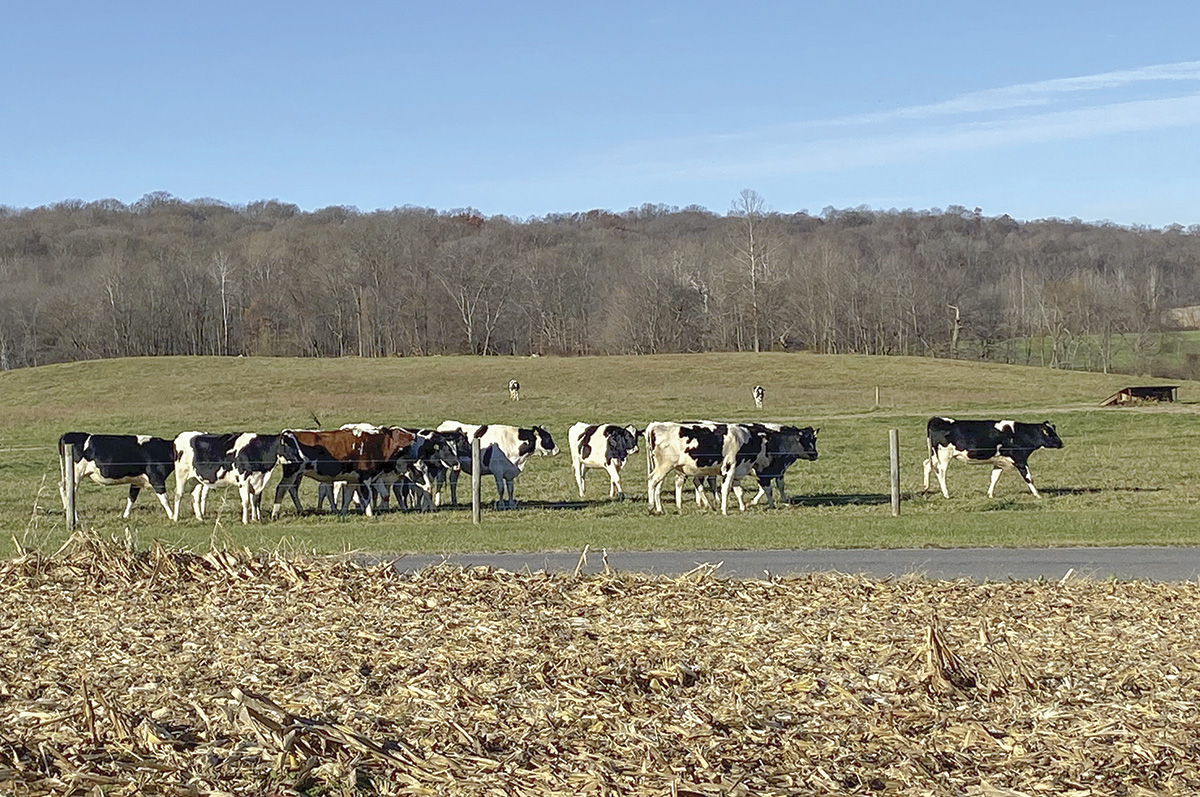
Dairy cows graze on grass pasture in northern Ohio in late fall. Image courtesy of Ohio State University.
Michigan’s go-to grass
In Michigan, orchardgrass is the go-to grass for alfalfa mixtures, says Kimberly Cassida, Michigan State University forage and cover crop specialist. She recommends that a late-maturing variety should be used.
MSU Extension conducts variety trials of orchardgrass and many other forage species.
“Orchardgrass has dependable establishment in co-seeded mixtures, good yields and good stand persistence up to five years,” explains Cassida. “It’s aggressive compared to alfalfa and probably shouldn’t be planted at more than 25 percent of its sole seeded rate, unless the producer wants a grass-heavy mix from the start. It will gradually increase as the percentage of stand as the alfalfa ages out.”
Cassida also has been observing good performance from endophyte-free tall fescue. It will outperform orchardgrass in summer droughts but may still winter-kill in northern Michigan. Winterkill usually means the plant died in the spring during extreme temperature fluctuations.
She adds that there’s a lot of interest in meadow fescue due to its good forage quality.
“But I’ve found we consistently get only about two good years of productivity from this in mixtures or sole crops before it starts to die out,” she says. “It tolerates cold well but not drought. It could still work in a short hay rotation. Just be aware it will probably need frequent reestablishment.”
Cassida recommends farmers use alfalfa with orchardgrass or endophyte-free tall fescue for hay or haylage. If one sells hay to horse buyers, adding timothy is a good option. In a mix with alfalfa, she recommends using an early maturing timothy.
While she doesn’t have research data on grazing mixtures, she suggests farmers use a mixture featuring a wide diversity of legumes – such as alfalfa, red clover, ladino or intermediate white clover and birdsfoot trefoil – and grasses – such as orchardgrass, timothy, endophyte-free tall fescue, meadow fescue, perennial ryegrass, festulolium, bromegrass and Kentucky bluegrass. Specific choices depend on soil type and drainage of specific sites, and what kind of livestock will be grazing it. Like Wisconsin, Michigan has a publication, “Recommended hay and pasture forages for Michigan,” to help farmers determine which species are best suited to their site conditions.
Cavadini adds that there are palatability differences between species in a mixture. For example, while both tall fescue and meadow are fescues, their palatability differs.
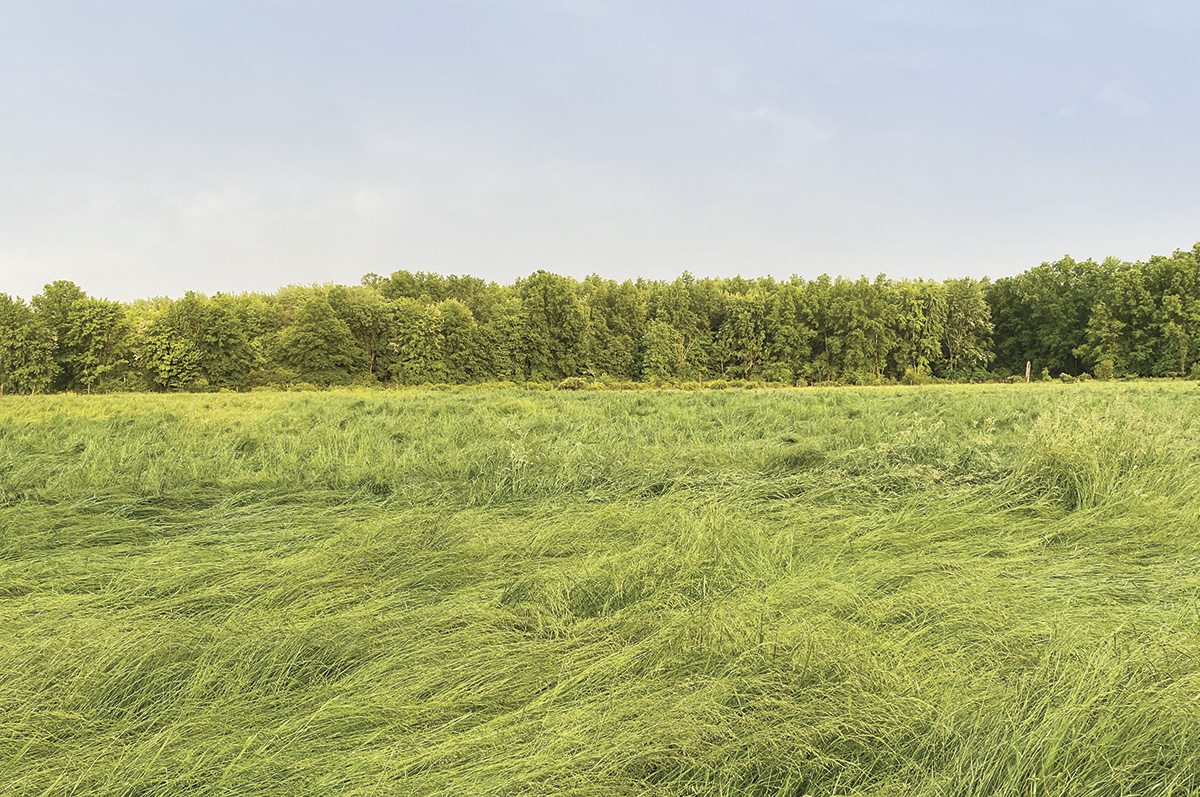
Hay harvest delayed due to wet conditions led to lodging of a stand of mixed grass hay. Image courtesy of Ohio State University.
Ohio experiencing dry conditions
Meadow fescue also is becoming more popular in northern Ohio, particularly as it can be used as a midsummer forage after timothy becomes less productive, says Lee Beers, assistant professor and extension educator in Ohio State University’s (OSU) department of agriculture and natural resources. Meadow fescue, perennial ryegrass and Kentucky bluegrass are increasingly being used in traditional mixtures of orchardgrass, timothy and tall fescue.
In grazing operations, meadow fescue also is increasingly replacing tall fescue due to toxicosis problems with the latter grass. New and improved tall fescue varieties, however, are addressing those issues.
Perennial ryegrass and tall fescue are often used in baleage for cattle, while bromegrass is more commonly used in dry hay production.
Because of traditionally wet conditions in northeastern Ohio, extension agents recommend red clover and alsike clover in mixes versus alfalfa. However, the past two summers have been especially dry.
“Cool-season grasses shut down,” says Beers. “Farmers were lucky if they were able to get a second cutting.”
Beers adds that farmers are more focused now on species rather than particular varieties. OSU has resources available for recommended seeding dates and rates.
Changing weather patterns
More frequent drought in some areas of the country is part of changing weather patterns being observed across the country.
“We see more extreme wet or dry conditions at the very beginning or the very end of the growing season,” says Cavadini. “We call these shoulder seasons.”
To keep pastures resilient through such extremes, he recommends that farmers select species based on soil types. “If your soil is dry, select species that perform in that type of condition.”
And farmers shouldn’t rule out the value of species that are considered weeds, if they already exist in pastures.
“Quackgrass may be well adapted to certain parts of the land, and it can be managed for good grazing,” he says. “If pasture growth slows in August, quackgrass might be one species that’s still growing.”
Emma Matcham, assistant professor in horticulture and crop science at OSU, says the state’s summers are getting hotter and dryer, which intensifies the summer slump of cool-season forages. She points to two articles about managing cool-season forages in hot, dry conditions (links to the publications provided at the end of this article).
“Some folks are interested in having some warm-season annuals or warm-season perennials,” she says, adding that she is conducting research on the use of both in Ohio.
Cassida says that the increasing incidence of dry, hot summers is definitely influencing cool-season grass productivity.
“Whether or not producers have good summer hay cuttings/grazing is very dependent on whether they got timely rain,” she adds. “Timely summer rain has been very uneven across Michigan in recent years. Very little forage ground is irrigated here.”
She explains that another indicator of changing weather patterns is the strong performance of tall fescue in Michigan, which is well north of the traditional fescue belt.
“There’s a lot more naturalized tall fescue in Michigan than people think,” says Cassida. “I suspect we’ll continue to see this increase.”
References omitted but are available upon request by sending an email to the editor.
For more information
What should I plant in my pasture?
Michigan forage variety test report
Recommended hay and pasture forages for Michigan
Ohio Agronomy Guide, 16th Edition
Forage management after drought and a tough growing season
Timing of last alfalfa cutting is particularly important in dry years