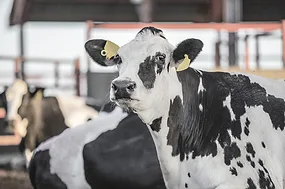
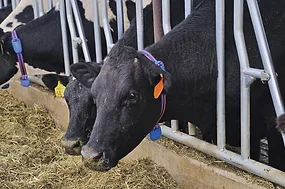
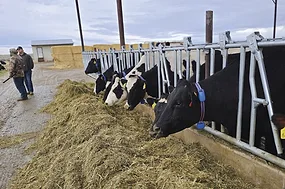
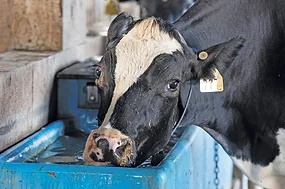
High-producing dairy cows are sensitive to numerous stressors throughout the year. As temperature and humidity rise, an increasing temperature and humidity index (THI) beyond the thermo-neutral zone for dairy cows contributes additional stress.

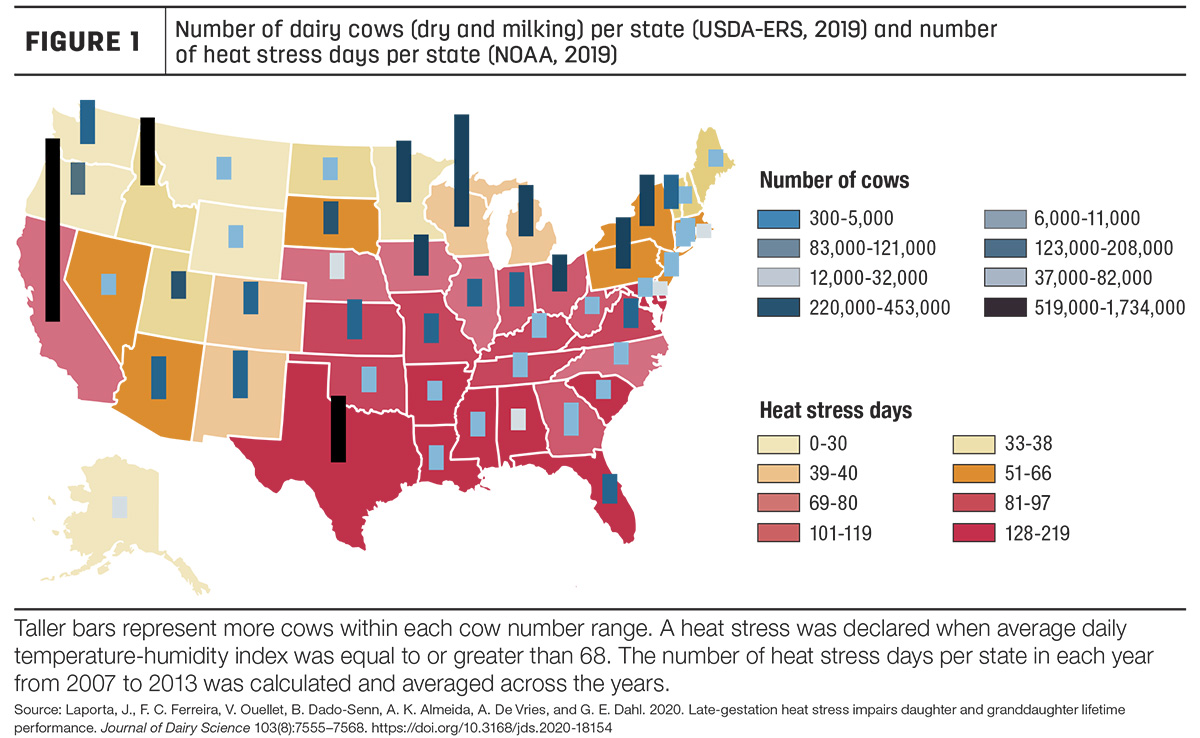
The metabolic heat produced within the rumen makes high-performing dairy cows and dry cows particularly susceptible to heat stress, with increasing THI negatively affecting dairy cow health and performance and, in extreme cases, fertility. It can also affect offspring’s health in subsequent years if the stress is not mitigated. Expanding on the areas affected, elevated body temperatures in dairy cattle can lead to reduced dry matter intake, milk production, reduced feed conversion efficiency, reduced fertility and conception rates, weakened immune system function, increased disease incidence and somatic cell score. All of these contribute to substantially decreased farm profitability. Hence, alleviating heat stress is an important topic for thriving dairy farm agribusinesses (Figure 1).
There are various strategies to minimize heat stress on dairy cows, with increasing airflow over cows’ backs and wetting cows down with sprinklers being the most prevalent mechanical approaches to cooling cows. Nutritionally, there are several strategies to intervene to either reduce the heat associated with fermentation or improve cows’ ability to handle heat stress. Betaine is a unique supplement that works in this second capacity, acting both as a methyl donor and as an osmolyte to help shield biochemical pathways and maintain hydration.
Betaine is traditionally sourced from sugarbeet processing, hence the name. Betaine can also be found in other plants, like spinach. It functions as a methyl donor and helps recycle homocysteine back to methionine. Acting as an osmolyte, betaine helps cells stay hydrated and protects proteins and enzymes from damage during heat stress.
Numerous scientific studies have explored how betaine supplementation can affect dairy cattle’s health and performance. Multiple meta-analyses have also been conducted and published thanks to the sizable number of studies published on the supplement. Interestingly, betaine has been recognized to significantly improve animal health and performance under both heat stress and thermo-neutral conditions. Betaine has been found to improve dry matter intake in both heat-stressed and non-stressed cows, though the roughly 1.3-pound increase in dry matter intake under heat stress was greater than the increase observed with betaine under thermo-neutral conditions. Energy-corrected milk and component yields were also found to be greater with betaine supplementation, while blood metabolic parameters were not found to be affected by betaine, suggesting no changes in liver fat metabolism were likely happening.
In addition to affecting dry matter intake, milk yield and components, betaine supplementation may affect rumen metabolism and digestive tract function. Researchers in 2020 noted increased dry matter, organic matter and fiber digestibility in a feeding study evaluating 15 to 30 grams betaine supplementation in lactating dairy cows. This study also noted changes in the rumen volatile fatty acid concentrations, substantiating the observed differences in nutrient digestion. While this study evaluated relatively low-production cows in a heat-stressed environment, the observed impact on nutrient digestion offers additional insight into the mode of action through which betaine can affect animal health and performance. The impact on microbial function and efficiency within the rumen can contribute to greater microbial protein yield, thus improving energy yield from feed consumed.
While direct effects upon reproductive health and immune status under heat stress were not evaluated in the studies referenced here, one can logically reason that reduced body temperature and improved health with betaine supplementation during increasing THI periods may coincide with improved immune and reproductive system performance in dairy cattle.
Lastly, despite betaine supplementation being heavily focused upon alleviating heat and hydration-related stress, there may be health and performance improvements associated with betaine during thermo-neutral conditions. The meta-analyses cited here made several references to dairy health and performance improvements associated with betaine under normal conditions. Notably, dry matter intake and milk yield have been increased with betaine when fed in normal THI conditions in some studies. Betaine likely interacts with other nutrients and dietary conditions, with more research warranted to better understand how supplementation affects health and performance under thermo-neutral conditions.
Whether dairy cows are under heat stress or not, there are opportunities to improve health and feed conversion efficiency on many dairy farms across the U.S. Incremental gains contribute to improved profitability and dairy sustainability. Betaine is a natural ingredient capable of dramatically affecting animal health and performance, specifically under increasing THI and heat stress-inducing conditions.
Not all betaine sources are created equal, and product quality matters when selecting a supplement for your herd. Look for a high-quality source of betaine anhydrous and betaine HCl (hydrochloride) specifically formulated to meet the needs of the U.S. feed market. You want to look for a free-flowing, solid product that delivers 95% betaine/HCl, providing an easy-to-use, cost-effective solution to support animal performance and combat heat stress.
Look at efficacy rooted in two well-established modes of action, acting as a cellular osmolyte to help cells retain water, maintain integrity and support enzyme activity and metabolic efficiency under stress. And as a methyl donor to support key methylation reactions involved in nutrient metabolism and gene expression. For producers operating under organic certification, there are also products on the Organic Materials Review Institute (OMRI) Products List, approved for use in accordance with National Organic Program standards for organic feed production in the U.S.
References omitted but are available upon request by sending an email to the editor.