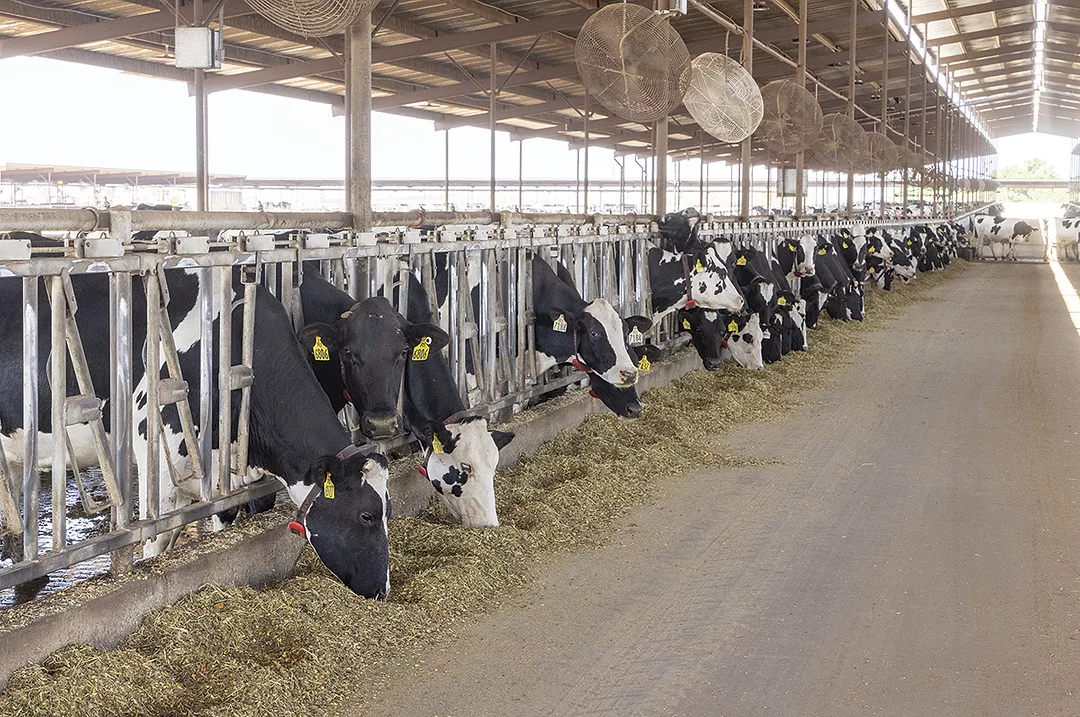
Have you ever been swimming in a pool on a hot day and been chilled on that brisk walk between the water and your towel? Especially if there’s a slight breeze? That’s evaporative cooling, and while it may make you chilly on a hot summer day, the same thing happens to your cows. When you get cows wet, then apply a decent amount of airflow across their bodies, the water evaporates and takes some of the extra heat with it. That’s the best and most effective way to cool cows when they are under heat stress.

Keeping cows cool on the outside is important to cool cows down once they’re hot. But implementing nutrition practices can help prepare cows for the heat and humidity and reduce the impact of heat stress once it occurs.
Adjust the ration
There are certain elements of the ration that can be adjusted to help cows navigate heat stress. We know that cows eat less when it is hot. Adjusting the energy density of the ration should be considered, as it allows the cows to ingest sufficient energy with fewer bites. To do this, nutritionists can reduce neutral detergent fibers and increase higher-energy grains, sugars and fats. This also helps the cow reduce the heat it generates.
In ruminants, the process to break down forages in the rumen is more energy-intense, which can add to the heat load cows are experiencing. The breakdown and metabolism of fats, on the other hand, produce less metabolic heat, keeping cows well energized but cooler. Do not go too far and reduce forages to a minimum, as risk to develop acidosis increases. If available, switch to higher-quality and more digestible forages. Even though protein metabolism generates more metabolic heat, adjusting upward the protein content of the ration, focusing on the rumen-undegradable fraction should be considered as it ensures adequate rumen intake at a time of lower intake and lower rumen microbial growth.
In addition to adjusting the energy profile, mineral levels can be adjusted. During heat, dairy cows may increase urination and sweating, leading to greater mineral losses. Increasing all mineral levels can be justifiable due to the lower intake; otherwise, focusing on the addition of sodium, potassium and magnesium has shown beneficial effects during heat stress. This will push the dietary cation-anion difference (DCAD) toward the positive side, which can create a more rumen-friendly environment, but cannot be easily achievable in certain groups, like the pre-fresh, where a negative DCAD is a common strategy.
Targeted supplementation
In addition to ration changes, supplements and additives can be included in diets during heat stress to address the heat’s impacts and help the rumen be as efficient as possible.
Microbiome boosters and stabilizers
Heat not only stresses the cow but also her microbiome, causing bacterial death and toxins release. It is then important to provide cows with functional ingredients that help boost and support their microflora. Products that target rumen function, such as those derived from yeast fermentation, provide functional metabolites to boost specific microbial families and improve the overall efficiency of the rumen microbiome, by optimizing fiber digestion and microbial protein synthesis. They can help stabilize the rumen environment by smoothing pH changes and prevent bacterial death, reducing the risk for metabolic disruptions that frequently happen when cows are stressed. Some yeast fermentation products also boost the cow’s immune system to help counter the impact of heat stress on her defenses. These effects are also observed in the cooler period of the year and should be considered for year-round feeding.
Vasodilators
Vasodilators widen blood vessels and increase blood flow. This can help the skin radiate more heat from the body to be released into the air. There are products on the market that, when combined with proper hydration, can promote an efficient increase in blood flow, facilitating heat exchange and aiding in the capacity of cows to regulate their body temperature, without causing damage to the intestine due to diverted blood flow.
Electrolytes and osmolytes
During heat stress, cows can experience dehydration and cell damage and often struggle to maintain an electrical balance inside their bodies. When cows lose water through sweating and urination, they also lose electrolytes – essential minerals that help cells move water in and out. The cow needs to rebalance the lost salts to allow cells to maintain fluid balance. Commercially available electrolyte packs – blends of positively charged minerals – can be fed to cows to help them stay hydrated during hot and humid months. Access to plenty of clean drinkable water is table stakes.
If electrolytes help move water in and out of cells, osmolytes help cells keep it inside them. Osmolytes are water lovers, molecules that help maintain cell volume and hydration by attracting water molecules to them. Not only do they help maintain water within the cells, but they also protect cell structures, limiting damage to protein and membranes caused by oxidative stress, a common scenario during heat stress.
Working in tandem, osmolytes help maintain cell volume by holding water into the cell on their own, while electrolytes help with water absorption. However, the positive charge of electrolytes can limit their application in negative-DCAD diets, like dry cows. These animals are often forgotten when it comes to heat stress. A growing body of research shows negative effects on their future production and that of their offspring, making their cooling and support paramount for future performance and profitability.
When to make heat stress season ration adjustments
A popular question is when to start adjusting the ration to account for heat stress. If you live in a warmer climate, you likely have a year-round inclusion of ingredients or additives that can alleviate heat stress. For northern climates, you may start thinking about making ration adjustments in April or May to get cows ready for June through September – the height of heat stress challenges. At a minimum, herds should prioritize adjustments for the three central summer months of the season. Remember that with shifting climates, we often experience late-summer heat waves.
Rumen modulators are always good to have, as they help support the rumen during different stressful periods, and their positive effect on productivity and health is not limited to the summer alone. Vasodilators and electrolytes start working inside the body right away. In fact, because they go to work so fast, they could be used as a reaction to a heat stress situation. Electrolytes have a shorter-term effect. Producers often add them to diets for a limited time following strong heat waves, not only for lactating cows but for calves as well. On the other hand, osmolytes need to bioaccumulate. They may need one to two weeks to build up in cells. Herds should account for this period to ensure effective levels are met prior to heat stress season’s arrival. Additionally, they maintain their effect longer throughout the summer and bring added benefits like cell protection from damage.
Takeaway: A full court press is needed for heat stress
It is nearly impossible to alleviate heat stress altogether, but there are steps you can take to reduce its impact on a herd’s performance and reproductive health. Mechanical cooling of cows with forced air and sprinklers that provides conduction, convection and evaporative cooling helps physically remove heat from cows and is a must-have in all regions of the U.S. Additionally, nutrition interventions can help, working alongside external mitigation to help reduce the impact of heat stress. Together, they help keep internal processes balanced and alleviate some of the stress from higher heat and humidity. Work with your nutritionist to identify those products that best fit your business and your cows.