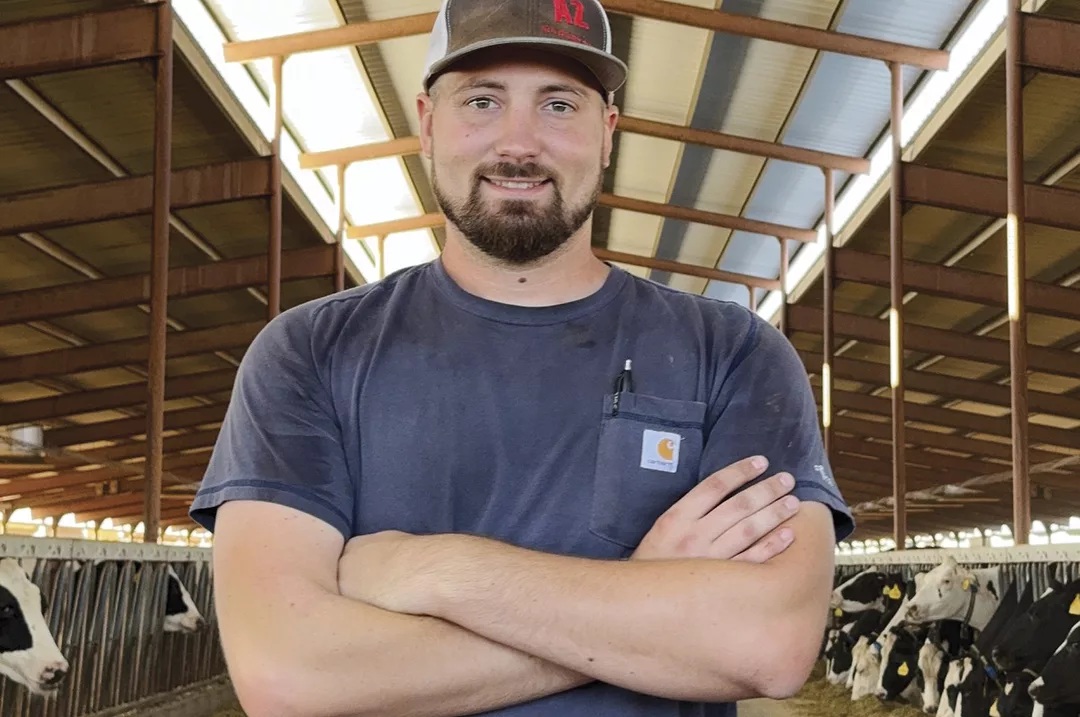
Dairyman Skylar Gericke had just one month’s notice that the dairy where he was working in Ohio had been sold and his role as assistant manager there was over. As an Ohio native, dairying in the Buckeye State is all he had ever known. He’d been working on dairies since he was in high school.

Then in his mid-20s, he decided to head west with his wife and in-laws to Arizona. He found work and a friendly welcome, ironically, at another Buckeye dairy – this one in Buckeye, Arizona.
Gericke began as a cow breeder at Triple G Dairy in 2019. He now manages the facility with Max Gingg, the oldest son of owner Ben Gingg, who is an active member of United Dairymen of Arizona.
“When I thought about Arizona when I lived in Ohio, I thought it was just a desert,” Gericke says.
Gericke quickly learned how brutal Arizona summers can be on conception rates and getting cows pregnant. He did his best to get cows bred, and when he was done for the day, he started noticing other improvement areas on the dairy.
“In my off hours, I was in the milk barn, the corrals, the calf barn, the hospital pen, wherever I could be to find an area to work on to improve the dairy,” Gericke says. “We had a map of the dairy with highlighted areas of responsibility. Over time, my area kept getting bigger and bigger.”
Now, his day job is managing day-to-day operations at Triple G, a 3,800-cow dairy milking Holsteins and Brown Swiss. He is also partners in a joint venture with his bosses and his own cows at Legend Dairy, a 1,600-cow dairy within a mile of Triple G that milks Holsteins and Jerseys. The dairy group also owns and manages Sunrise Dairy, a 3,900-cow Jersey dairy.
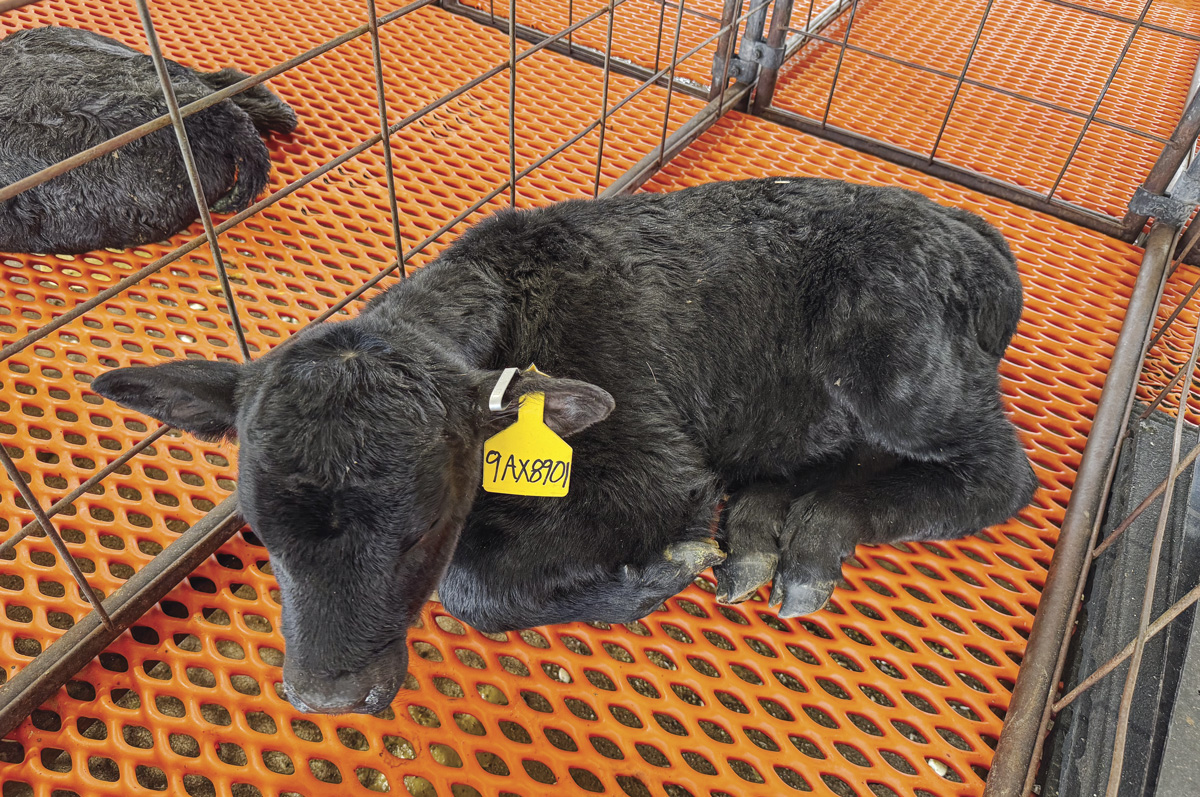
Looking for ways to capture more value from the beef-on-dairy market, the ownership group began implanting full Angus embryos into its Jersey cows a few years ago. At the time, they could get $1,400 for a full Angus calf versus $1,000 for a crossbred Charolais-Jersey calf.
Courtesy image.
“The idea was that instead of trying to breed heat-stressed ovaries during the summertime, we were going to put in non-heat-stressed embryos,” Gericke says.
They found that pregnancy rates for the embryos were better than semen-bred cows in the summer. Gericke says today he sees 40% conception rates with embryos, while semen breedings get 28% during summertime.
“That helps hold our pregnancies steady when it’s 120 degrees out,” Gericke says.
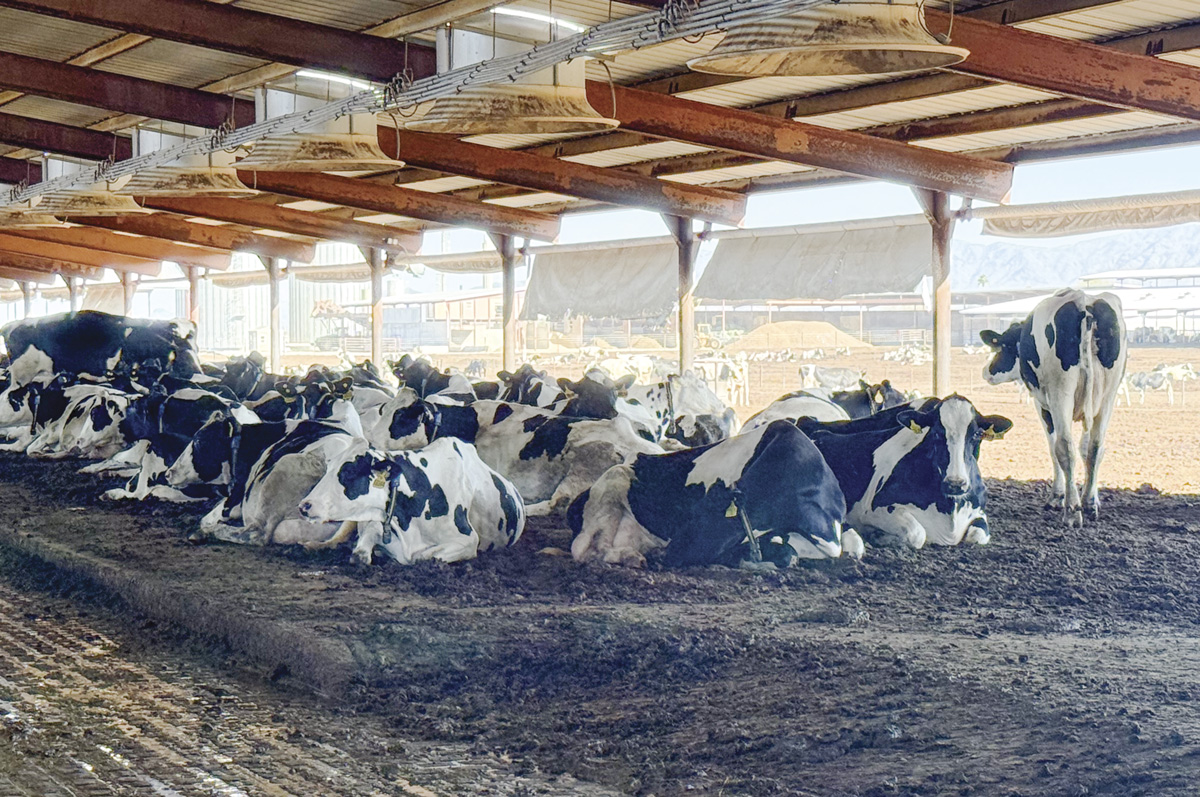
Triple G Dairy started embryo transfers to make full-blooded Angus calves out of their Jersey cows. They discovered the embryos had better conception during hot Arizona summers. They have since expanded to use embryos year-round to optimize beef-on-dairy production and improve the genetics of their cow herd. Courtesy image.
The dairy starting doing embryo transfers year-round after seeing the success they had with them in summer. Plus, it doesn’t just use embryos for beef-on-dairy breeding. They also now use it to improve the genetic makeup of their milking string.
“When we started flushing cows to make embryos, our top female was 2,700 TPI,” Gericke recalls. “Now, we’re IVF’ing heifers that are 3,400 TPI just two years later.”
Gericke sees the future of reproductive management on dairies including more embryos, IVF and flushing.
“I think the industry is going to move more towards embryos,” Gericke says. “Dairies are starting to realize that they need to make the most beef calves and at the same time the best replacements they can. Embryos that have a higher conception rate, the ability to use more beef genetics while at the same time create a right-size crop of better heifers – that’s profitability to me.”
While improving genetics, Gericke has also been improving the dairy’s cow cooling.
The farm replaced the computer and algorithm controlling its cow cooling with their own – which offers more flexibility. Instead of just flipping the cooling switch on when it gets hot, Gericke checks the weather for humidity, temperature and wind patterns regularly. He says at least once a month he’s tweaking how much water is applied and when and how long fans run to account for weather changes.
“In Ohio, all I knew for cooling cows was fans. But as a non-native in Arizona, I had to learn how to cool cows in this environment. When I investigated these Saudi-style systems, I thought, ‘We can use this better,’” Gericke says. “If you’re from Arizona, you might just think, ‘The cooling is on. The cows are wet. It’s just hot. It’s hot every year.’ But I knew we could do better.”
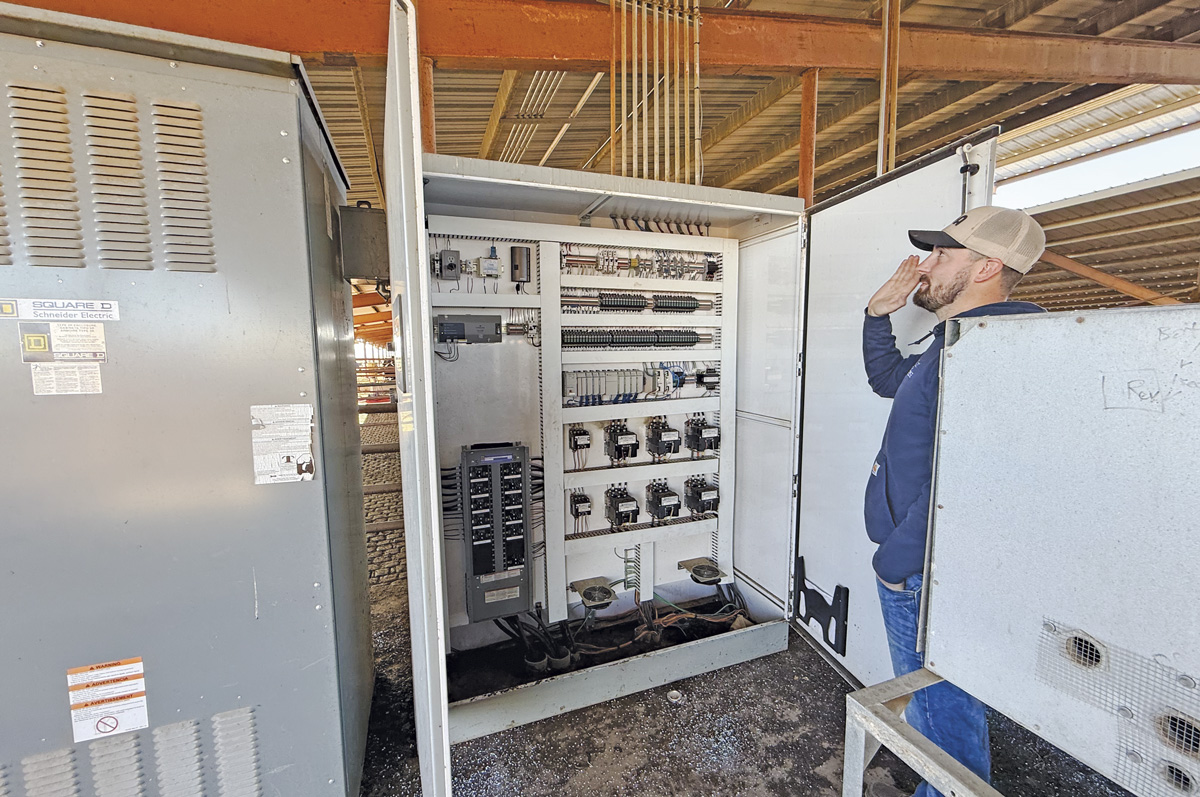 Skylar Gericke explains the system changes they made to Triple G’s Korral Kool system to make it more to their dairy’s liking for cooling cows in Arizona summers. Courtesy image.
 Not everything has been easy for Gericke and the Triple G team to improve on the dairy. During an episode of the Real Producer Exchange in February 2026, Gericke detailed some of the challenges he’s had in raising calves.
“My biggest weakness is calves.” Gericke says. “I eventually had to take the pride out of it and say, ‘There are people that can do this better than me.’ If don’t have to spend 80 percent of my day trying to keep calves alive, maybe I could do a better job of milking cows or feeding cows or caring for cows.”
When the dairy was raising its own calves, they saw death rates climb as high as 25%.
After two unsuccessful attempts to find a calf raiser they liked, Gericke found one in California that he has stuck with. He cautioned dairies to make sure they have personally visited the location where they send their calves. He says most calf raisers have a philosophy that you should understand and that you’re going to “get what you pay for.”
“If you run your dairy cheap, you should probably go to a cheap calf raiser. But you’re not going to love the results,” Gericke cautions. “I’m going to pay a little bit more to let someone else raise my calves professionally. That way I can spend more time here on the dairy making better animals and money in the milk barn.”
This episode was sponsored by Simplot Animal Sciences, Balchem and TransOva. Go to the Real Producer Exchange to register to attend the next episode.