The term “postbiotic” was coined in 2021, but the research behind postbiotics has been going on for over 80 years. Although not a new discovery, we are only now fully appreciating the value of feeding postbiotics routinely to cattle.

Research and field trials from the last 10 years show that feeding a Saccharomyces cerevisiae fermentation product (SCFP), which we will refer to as a yeast postbiotic, can help support a healthy immune system.
Cows that maintain a healthy immune system are often better able to handle the everyday challenges that impact performance, such as transition, mastitis, lameness and heat stress. Let’s walk through some of the research highlighting the outcomes associated with feeding cattle a yeast postbiotic.
Managing mastitis challenges
Mastitis remains one of the most common and costly reasons cows leave the herd. A typical mastitis case is estimated to cost $444 per cow (lost milk, treatment, labor, culling risk). Research and field trials have shown that cows fed a yeast postbiotic experienced fewer observed cases of mastitis and had improved recovery following infection (Figure 1).
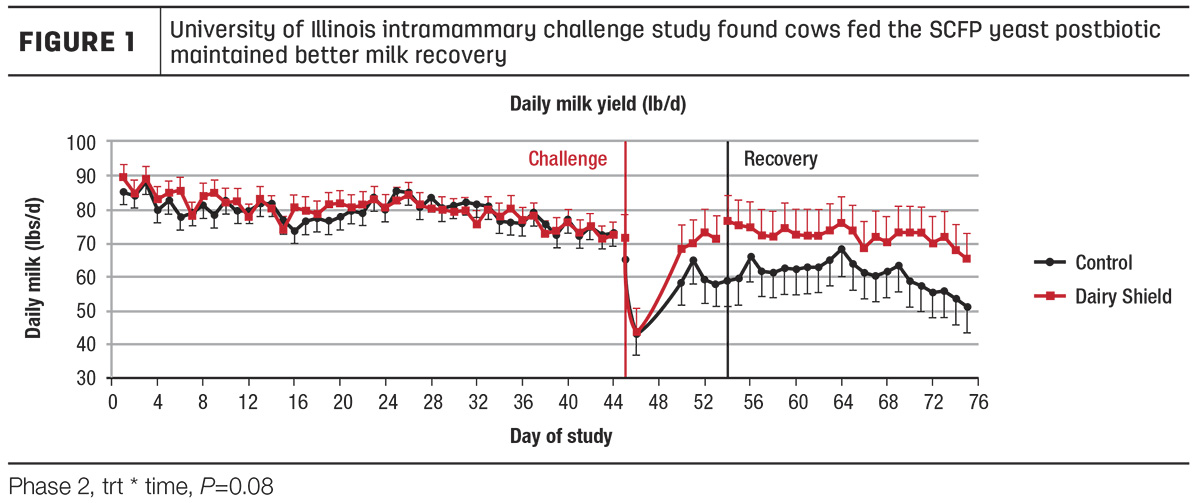
- Help lower somatic cell counts (SCC): The control cows that were not fed a yeast postbiotic measured over 1 million SCC at 30 hours postinfection, while cows fed a yeast postbiotic stayed under 200,000 SCC, the level normally considered a full-blown mastitis case.
- Support quicker return to milk production: Both groups dropped roughly 35 pounds of milk after a mastitis infection, but cows fed the yeast postbiotic returned to normal dry matter intake (DMI) sooner and came back to their premastitis milk levels faster.
Bottom line: If feeding a yeast postbiotic can lessen the impact of just one case of mastitis per 100 cows per month, the avoided costs can likely cover the expense of feeding a yeast postbiotic. Added benefits such as higher milk yield, fewer chronic cows and less involuntary culling add to that return on investment.
Maintaining hoof health
Digital dermatitis (DD) is a chronic bacterial infection in the foot that can result in lameness. Once a cow gets DD, it tends to follow her for life. If we can better manage it, that cow will have a better chance of reaching multiple lactations.
When researchers looked specifically at DD, they found that feeding a yeast postbiotic was associated with improved hoof tissue integrity, moderated inflammation and fewer active lesions.
- Promote a stronger skin barrier: Feeding a yeast postbiotic has been shown to improve the connection points between epithelial cells. A stronger barrier makes it harder for DD-causing bacteria to penetrate the skin between the claws.
- Help lower inflammation inside the foot: These cows also had lower amounts of hoof inflammation, but their inflammation response increased appropriately when a lesion began forming. To researchers, this showed a targeted but not overactive immune response.
Bottom line: DD is a major contributor to lameness-associated culling due to its impact on milk production and reproduction. Supporting cows so they have fewer and milder DD lesions can mean more long-lived cows (or as my colleagues and I refer to them, golden girls). These are cows that can stay sound, reaching into those profitable later lactations.
Supporting a smoother transition
The transition period from dry-off through the first 30 days of lactation is when cows are most vulnerable to metabolic and infectious diseases such as mastitis, ketosis, displaced abomasum and metritis.
Feeding yeast postbiotics during this window can help support rumen stability, moderate inflammatory responses and maintain energy balance during their shift from a positive energy balance to a negative and back again.
- Help smoother rumen shifts: What the data shows is that feeding a yeast postbiotic helps support a more stable microbial population, with fewer peaks and crashes that can cause transition challenges. It promotes feed intake and fiber digestion as cows move onto higher-energy lactating rations.
- Support reduced inflammation around calving: Transition studies show lower inflammation markers in cows fed a yeast postbiotic through the dry and fresh period. Less chronic inflammation means less immune-related energy drain and more energy available for recovery, milk and reproduction.
Bottom line: Transition cows fed a yeast postbiotic ration tend to do three things: eat more consistently, lose less body condition and reach higher peak milk and component yields. These cows are more likely to follow the four-event cow card of being fresh, bred, pregnant and dried off without being treated for off-feed events.
Maintaining stability in hot weather
When cows experience heat stress (respiration rates over 60 breaths per minute), they will eat fewer, larger meals or slug feed. In the heat, cows will also stand longer and lie down less. All this results in less rumination, less cud chewing and less saliva production, increasing the risk of rumen acidosis.
- During heat stress, researchers observed that cows fed a yeast postbiotic maintained a more robust microbiome, including fiber-digesting and acid-utilizing bacteria which:
- Digested excess acid
- Balanced rumen pH
- Supported milk production, butterfat production and overall rumen health during hot weather
- Help lower body temperature and stress: Some research indicates that cows fed a yeast postbiotic had lower core body temperatures (around 0.5°F) during heat stress. Supporting lower heat stress can contribute to improved reproduction and immune function during the summer months.
Bottom line: While fans, soakers and shade are essential, feeding a yeast postbiotic adds internal protection by buffering the rumen and reducing heat-related inflammation. According to studies, the reported return on investment often approaches or exceeds 3-to-1 during heat stress.
The bottom line
A yeast postbiotic is an economical and consistent product for dairy producers trying to improve herd performance and resilience. By supporting immune function, helping moderate the impact of health challenges and contributing to more consistent performance, a yeast postbiotic helps raise more long-lived cows that quietly pay you back in the parlor.
References omitted but are available upon request by sending an email to the editor.
What is a yeast postbiotic and how does it work?
A yeast postbiotic is an ingredient produced as a result of a controlled fermentation process. Unlike probiotics, a yeast postbiotic contains no live organisms, which helps provide a consistent product from batch to batch.
Feeding a yeast postbiotic helps:
- Feed the “good bugs” in the rumen and keep the rumen more stable, especially during stress.
- Keep the immune system healthy, so it can respond quickly when challenges hit.
- Support normal inflammation response, so less energy is diverted to immune activity and more can support growth and milk production.
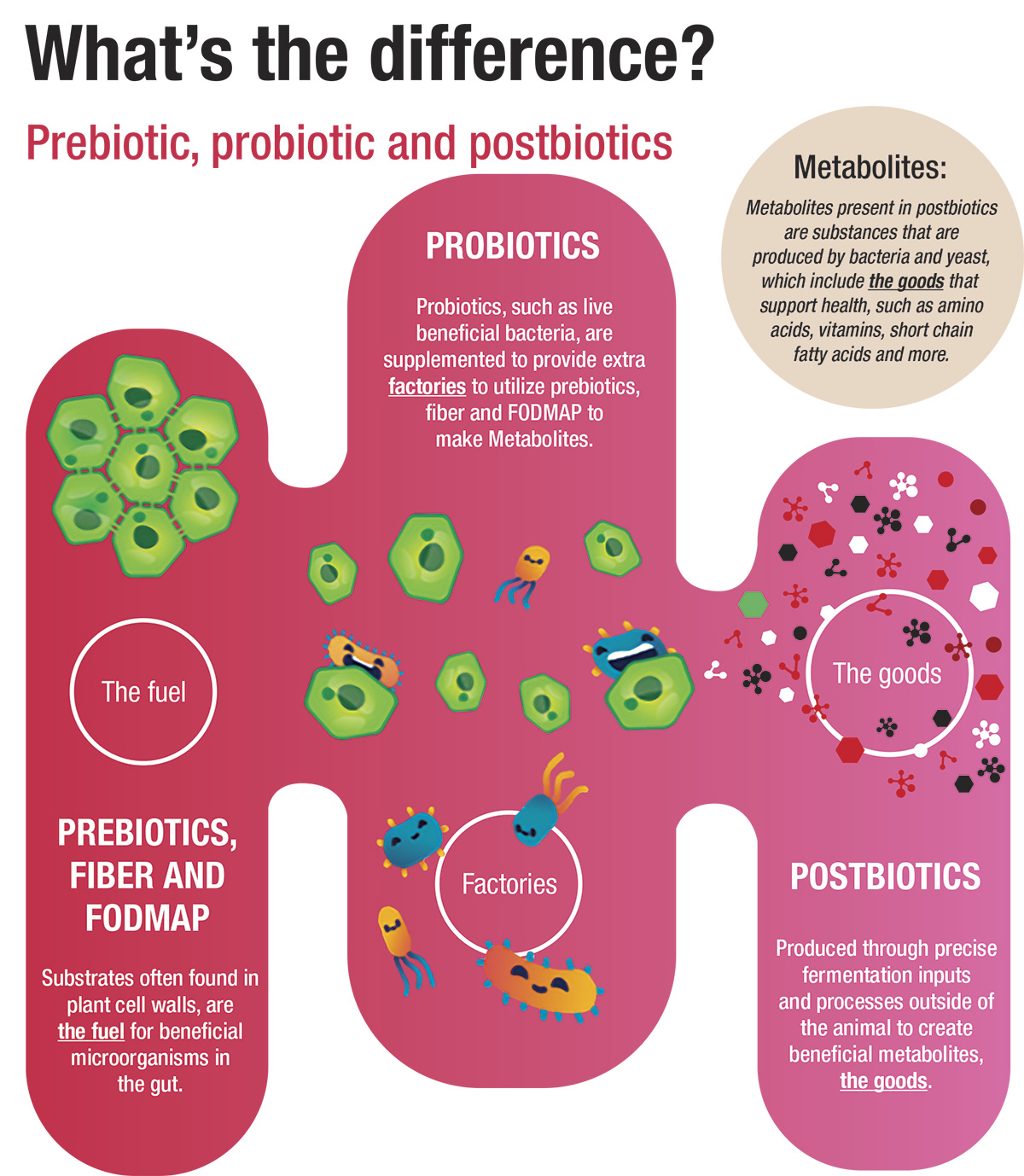
Image courtesy of Diamond V.