With a tight heifer supply and increasing production costs, every cow in the herd has become more valuable than ever. One of the most critical phases of a cow’s lifecycle often receives less attention than it deserves: the transition period.

For dairy producers, success often hinges on how well cows move from late gestation into early lactation. The transition period, three weeks before and after calving, is one of the most biologically challenging stages of a cow’s life. When cows navigate this phase successfully, they enter lactation healthy, productive and ready to breed back. But when something goes wrong during this short window, the consequences can affect the entire lactation.
Research consistently shows that many health problems seen after calving begin before calving. That means the dry period and transition phase deserve just as much management attention as peak milk production.
Why is the transition period so demanding?
As calving approaches, a cow’s body undergoes dramatic physiological changes. Nutrient requirements increase rapidly to support fetal growth and prepare for milk production. At the same time, dry matter intake typically declines. This mismatch between nutrient demand and intake creates a negative energy balance that cows must overcome as they enter lactation.
Alongside metabolic stress, cows also experience immune challenges during this period. Hormonal shifts, metabolic changes and the stress of calving can weaken immune defenses, making cows more susceptible to inflammation and disease.
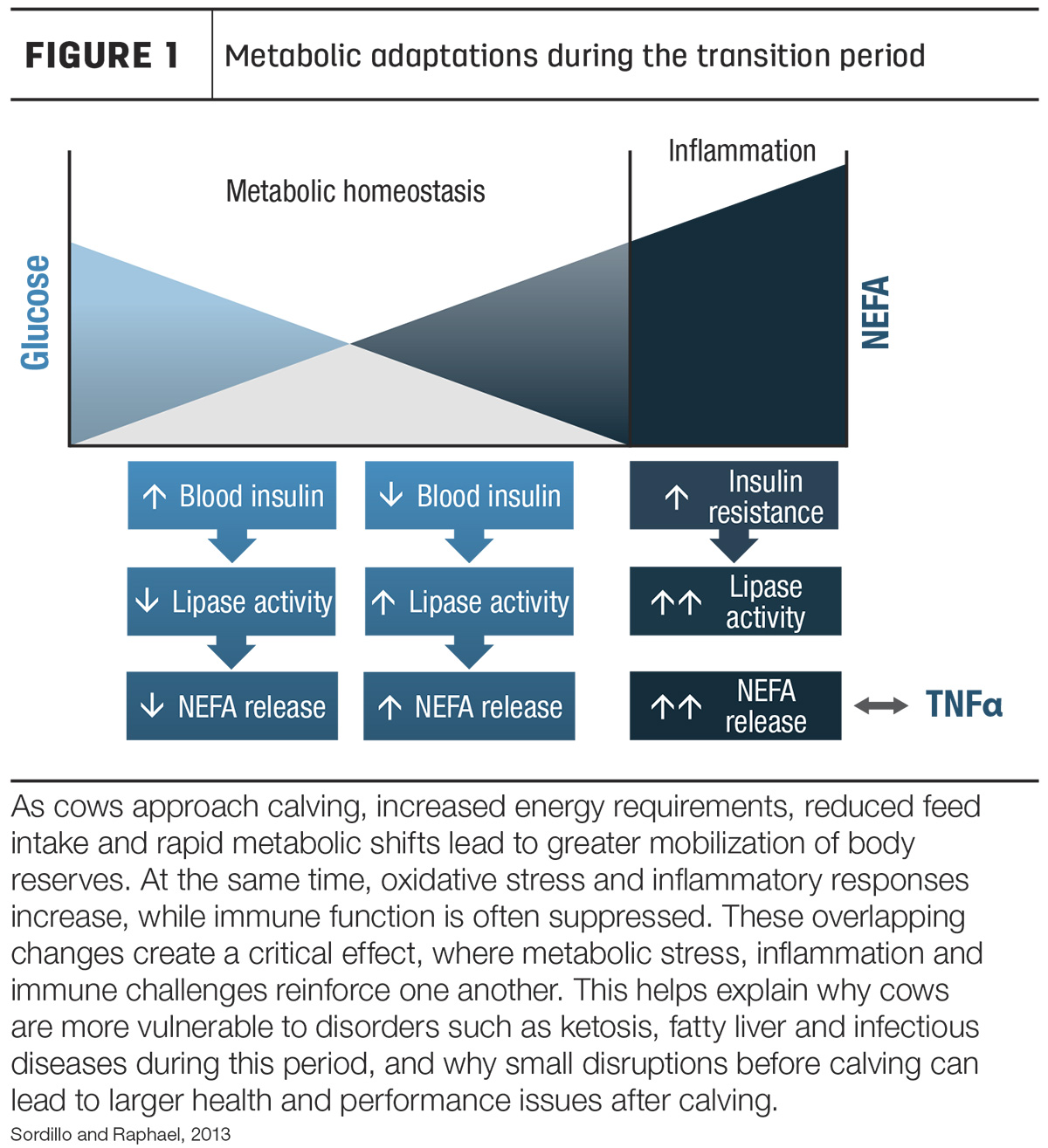
In fact, studies have shown that markers of inflammation often increase around calving and remain elevated during early lactation (Figure 1). While inflammation is part of the natural immune response, excessive inflammation can reduce feed intake, disrupt metabolism and increase the risk of metabolic disorders. Conditions such as ketosis, displaced abomasum and fatty liver are commonly linked to these metabolic and inflammatory stresses.
When small problems become costly
Transition challenges don’t just affect the first few weeks after calving. They can influence milk production, fertility and longevity for the entire lactation.
Cows that experience metabolic disorders early in lactation often produce less milk and take longer to become pregnant again. In addition, cows that struggle during the transition period are more likely to leave the herd prematurely. That is a significant concern at a time when replacement heifers are limited and expensive.
Even subclinical problems that may not be immediately obvious can quietly reduce herd performance. For example, research suggests that cows experiencing subclinical ketosis may produce several pounds less milk per day and have poorer reproductive performance compared to healthy cows.
In other words, transition health is not only a welfare issue; it is also a key driver of profitability.
The role of inflammation in transition cow health
One area receiving increased attention in dairy research is the role of inflammation in transition cow performance. Inflammation helps the body respond to stress and infection. However, when inflammation becomes excessive or prolonged, it can interfere with normal metabolic processes.
Research has shown that elevated inflammatory responses can suppress appetite and alter nutrient metabolism during early lactation. Reduced feed intake during this period can worsen negative energy balance and increase the risk of metabolic disorders.
Because inflammation and metabolism are closely connected, managing inflammatory stress has become an important focus for improving transition cow health.
Supporting the immune system through nutrition
Nutrition plays a central role in helping cows cope with the stresses of the transition period. While energy balance is often the primary focus, micronutrients also play a critical role in maintaining immune and metabolic function.
Trace minerals such as zinc, copper and manganese are involved in many biological processes, including immune cell activity, antioxidant defense and tissue repair. In addition, supplementation of organic zinc, copper and manganese in mid-lactation dairy cows increased plasma immunoglobulin G concentrations (IgG).
These nutrients also support enzymes that help protect cells from oxidative stress. Oxidative stress is a natural result of increased metabolic activity, but excessive or prolonged stress can damage cells and tissues such as liver, immune cells and mammary tissue. When oxidative stress goes unchecked, it can impair immune function, reduce a cow’s ability to respond to infections, and contribute to the development of metabolic disorders. Oxidative stress increases during late gestation and early lactation, making adequate mineral status especially important during this time.
Research has demonstrated that the form of trace minerals in the diet can influence how effectively cows utilize them. Studies comparing traditional inorganic mineral sources with more bioavailable forms such as organic (methionine) trace minerals have reported improvements in immune markers, antioxidant status and tissue integrity. Similarly, providing bis-chelated sources of copper, zinc and manganese to beef cows during late gestation improved maternal mineral status and enhanced neonatal calf mineral status compared with inorganic mineral supplementation, highlighting the importance of trace mineral sources during this critical period.
While trace minerals represent only a small portion of the diet, their impact on metabolic resilience can be significant. For example, research has shown that improving trace mineral status can support antioxidant enzyme activity and immune function, helping cows better cope with oxidative stress and inflammatory challenges during the transition period.
The connection between transition health and productivity
Improving transition cow health can have lasting benefits throughout the lactation cycle.
Healthy cows typically reach peak milk faster, maintain higher production and recover reproductive function sooner. They also tend to experience fewer veterinary interventions and remain productive in the herd longer.
Previous studies have shown that cows experiencing fewer metabolic challenges during the transition period produce more milk over the entire lactation compared with cows that develop health disorders early after calving. In addition, improved immune function during the transition period has been associated with lower rates of mastitis and uterine infections.
These findings highlight the importance of proactive management before and immediately after calving.
Looking beyond calving day
One of the biggest misconceptions about transition management is that it begins at calving. Many of the factors influencing transition success occur weeks earlier during the dry period.
Body condition management, adequate nutrient intake and minimizing stress each play an important role in preparing cows for lactation. Overconditioned cows, for example, often experience more severe metabolic stress after calving and may be more prone to ketosis.
Similarly, overcrowding, inconsistent feeding schedules and environmental stressors can increase inflammation and compromise immune function.
For producers, this means transition cow management requires a proactive approach that begins well before calving and continues through early lactation.
A shift in priorities
As the dairy industry continues to face economic pressure and limited replacement animals, the importance of transition cow management is becoming clearer. Every cow that remains healthy through the transition period has a better chance of reaching her production potential and staying in the herd longer. By focusing more attention on the dry period through nutrition, management and stress reduction, producers can help cows become stronger and more resilient.
In today’s dairy environment, that extra attention during the transition period may be one of the most effective ways to protect both herd health and profitability.
References omitted but are available by sending an email to an editor.