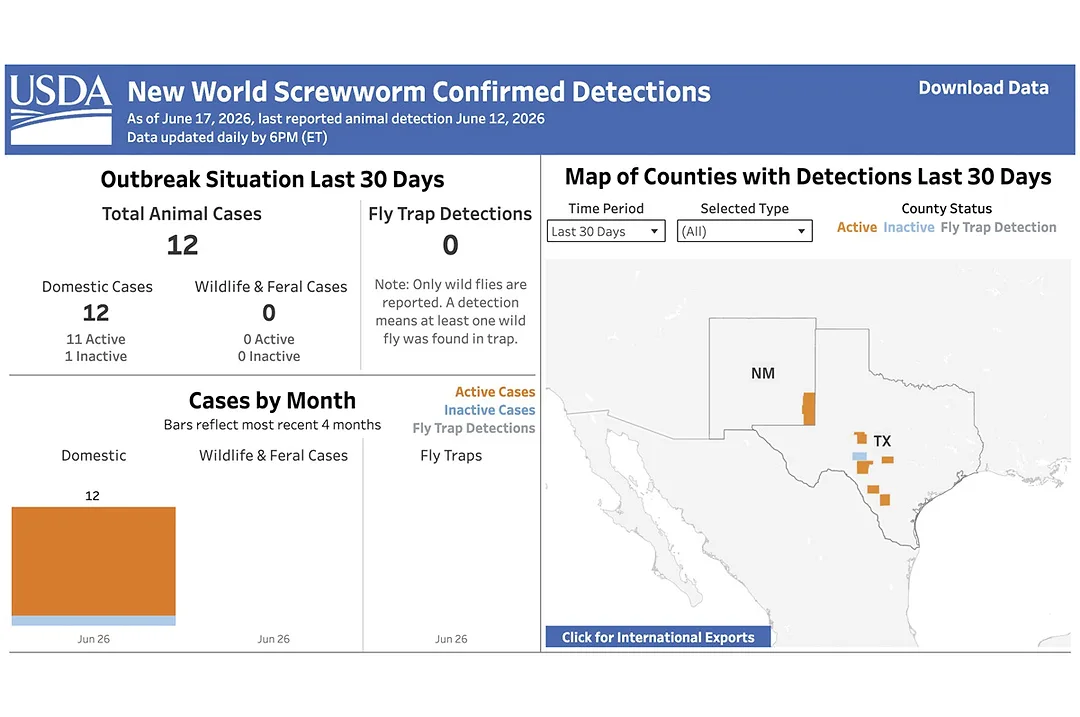
No doubt you’ve heard that New World screwworm (NWS) is now in the U.S. As of this writing, it is as far north as Tom Green County, Texas. This is not an article to tell you what NWS is, how to treat it or whom to call should you come in contact with it. There are plenty of other great articles and resources for those pieces of information.

This article is meant to serve as a list of legal considerations now that NWS is present here in the USA. Of course, each operation is different, but the few points touched on here are a good place to start.
Read only accurate and reliable information
This first point is more general advice rather than a legal consideration. As my friend and colleague Texas A&M AgriLife Extension’s Tiffany Lashmet reminds us, do not get your NWS information from random Facebook comments. Having reliable and accurate information is incredibly important when handling NWS. Reach out to the USDA or the relevant state’s animal health commission or department of agriculture. For reliable information, go to reliable sources (such as Progressive Cattle). NWS is too serious an issue to make decisions based on paranoid social media comments.
Mandatory reporting
Of course, you are required to report NWS should you find it. This is more of a reminder than a consideration. Producers have an affirmative legal duty to report suspected cases (not just confirmed cases) to their state animal health official or the USDA. Not only is this the moral thing to do, you may subject yourself to legal penalties should you choose not to report.
The tax treatment of forced sales
Under IRC §1033(d), livestock destroyed by disease or sold or exchanged because of disease can be treated as an involuntary conversion, allowing deferral of gain if proceeds are reinvested in replacement livestock. Anyone forced to liquidate should talk to their tax adviser before assuming the sale is fully taxable in the year of sale.
Review any relevant insurance policies
Don't assume your livestock policy will pay out if screwworms harm your cattle or lead to their death. Livestock mortality coverage is often written to cover death by accident, and many policies either exclude or sharply limit losses caused by disease and parasitic infestation unless you've paid for that specific coverage. It's also worth asking your agent whether any business-interruption or extra-expense coverage would be enacted if a quarantine halts your ability to sell or move animals, since the financial hit from a movement ban can rival the loss of the animals themselves.
Address wildlife population on purchased property
Whether you are buying or selling real estate, you need to address the property’s wildlife. A buyer needs to know whether a property sits inside an infested or quarantine zone because that can affect permitted uses, the ability to stock or move livestock, financing and closing timelines. Sellers face disclosure questions. Make sure to disclose all material pieces of information, even if you think it may be unnecessary!
Livestock sale, feedlot and grazing contracts when performance becomes illegal
A quarantine or movement order can make it legally impossible to do what your contract requires – deliver cattle to a buyer, ship to a feedlot on schedule or get animals off leased grazing land at the end of the term. Whether that excuses you or breaches your deal turns on language that often gets overlooked. Pull your existing contracts now and check whether they contain a force majeure clause that actually covers a government movement restriction. A generic "acts of God" provision may not reach a regulatory hold order, and without it you may be left arguing common-law principles of impossibility or impracticability with an uncertain outcome. Pay special attention to grazing leases. If a quarantine traps your herd on someone else's land past the lease termination date, the lease should say who bears the holdover, the added rent and the cost of care during the standstill.
Leased livestock and liability
Who bears treatment costs, who's liable if animals can't be moved off at lease end because of a quarantine and who controls biosecurity decisions are often unaddressed in older leases. If this is something you need to address in your contracts, consider an addendum to your current agreement.