Desperate for light news, headlines of how the USDA deterred wolves from ranches in Oregon have spread around the world. In an effort to “haze” the animals and discourage them from areas where cattle roam freely, USDA agents played the audio from a scene in the movie Marriage Story (2019) over a drone in which Scarlett Johansson and Adam Driver are engaged in an intense and vocal fight. The film is an acute look at a relationship falling apart – feeling both so accurate and overwhelming, at times, that it can be hard to watch. Still, in certain rural places in Oregon, one could find themself without another human in sight, but still hear Adam Driver yell “Every day I wake up and I hope you’re dead!”

Such news caused a few chuckles from radio presenters, many of them playing a clip from the scene to fill in the listener (including the Irish station I was tuned to). While the lightheartedness was appreciated, and the USDA was credited for their cleverness, less talked about was the complicated relationship between wolf and cattle farmer in some parts of the U.S.
Wolves once roamed most of the western half of the U.S., especially gray wolves, red wolves and Mexican gray wolves. As human settlement increased, however, wolves suffered shrinking habitats and eventual extermination by ranchers. By the 1940s, it is believed that all wolves were extirpated (locally extinct) within the contiguous 48 states, except for a few wolves that survived in a remote area of northeastern Minnesota.
After 1926, when the last wolves were killed in Yellowstone National Park, the elk population began to boom. The increased elk presence led to overgrazing on the vegetation in the park, significantly altering its ecosystem and harming certain species of plants and mammals. This led a group of biologists to approach Congress in 1966 with the proposal to reintroduce the wolf into certain areas of the U.S. Vehemently opposed by ranchers, however, the topic became a political flashpoint between conversationalists and cattle farmers, with various lawsuits and campaigns put forth from both sides. Nonetheless, in January 1996 – 30 years later – 31 gray wolves from Canada were released in Yellowstone National Park.
Reintroduction efforts have continued since then, and today, there are approximately 5,000 to 6,000 gray wolves in the lower 48 states. (Alaska’s wolf population was been consistent enough to have never been listed as “threatened.") Most of these packs are near the northern Rocky Mountains and the western Great Lakes region. Other wolf species, nonetheless, are still critically endangered in the U.S. In 2021, 186 Mexican wolves were counted in Arizona and New Mexico. The last five known members of the species were captured in 1980 and used in a domestic breeding program as part of a recovery plan; the first Mexican wolves were reintroduced in 1998. Additionally, red wolves almost disappeared, but have grown to include 110-130 individuals in a recovery area in North Carolina.
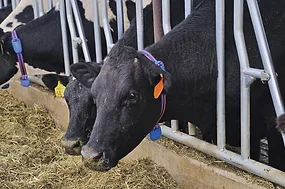
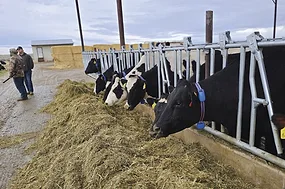
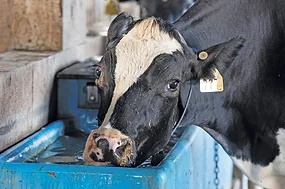
Unsurprisingly, as the wolf population has increased in the U.S., so have incidents of wolf attacks on cattle. A few months ago, in fact, a reintroduced pack was blamed for calf deaths on several farms in the Middle Park area of Colorado. In the five states with the largest population, the USDA estimated that 4,300 cattle were killed by wolves in 2015, or about 0.04% of the bovine population in these states. Although wolf advocates claim these figures suggest that wolf impact is negligible, farmers remain on edge, continuing to create political headaches for local governments. Various states have responded differently. For example, in Wyoming, it is legal to shoot a wolf on site in most parts of the state, while others, like Oregon, continue to push nonlethal deterrent methods as a first course of action. Kim Bean, the founder and president of Wolf and Wildlife Advocates, has experimented with hazing techniques, such as blasting Ozzy Osbourne’s “Crazy Train” loudly from drone speakers, as well as a recording of her yelling “Bad dog! You’re just a bad dog, go away!”
As much of a hassle as it is to protect livestock from wolves, growing up in New York state, I’m admittedly a little jealous that wasn’t part of my farming experience. All we had were coyotes, and although plenty eerie to listen to when closing in on their prey in the middle of the night, they were relatively harmless. I never got the adrenaline from going to the pasture, staring into the woods and wondering if a predator was staring back. The closest we got to something like that was when a neighboring sheep farmer shot a panther with a collar, after which the Department of Conservation immediately picked it up and denied they had released it into the area.
As the wolf population grows in the U.S., so will the tension between farmers and conservationists. However, measures have been put in place to mitigate the problem. The Wolf Livestock Loss Demonstration Project, launched in 2009, compensates farmers for cattle killed by wolves, as well as provides financial assistance for prevention measures. This can include everything from fencing to bright flags, as well as motion sensors that create loud sounds when activated. Maybe if all of Marriage Story is played for the wolves and they see how difficult relationships can be, they will stop breeding altogether.