Lameness is an issue that impacts every part of the supply chain – not just the welfare and health of cows but also the farmers and their teams working to maintain herd productivity, as well as the dairy processors and retailers seeking to build trust in their brand.


Over the past three decades, we’ve gained considerable knowledge in understanding lameness, from the causes and development of hoof lesions to the role of cow comfort, advancements in hoof-trimming techniques, genetics and emerging technologies. Yet, despite these advancements, lameness remains a persistent challenge, with approximately one in four dairy cows lame at any given time.
Addressing lameness requires skilled on-farm hoof health teams with a diverse set of abilities, from accurately identifying lame cows and performing both proper functional and therapeutic hoof trimming to determining the best course of action based on the type of hoof lesion. Their responsibilities also include recording and tracking events, using data to guide management decisions and ensuring a comfortable, hygienic environment for the cows – and none of these tasks are straightforward.
However, while we have a solid understanding of how to reduce lameness and tools to address it, one crucial factor is often overlooked: the human element. Beyond providing education and training for proper hoof trimming, it involves ensuring that those who directly manage hoof health every day have the support, resources and environment they need to thrive in their roles.
This brings us to the importance of cultivating a supportive work environment within the on-farm hoof health team. How can we foster a culture of trust, camaraderie, autonomy and safety within the hoof health team? How can we ensure that the well-being of cows extends to the people caring for them? And how does this, in turn, affect the management of lameness?
By recognizing and addressing the needs and barriers faced by these caretakers – such as workplace environment, language barriers, safety and communication challenges – we can influence not only lameness reduction but also the broader impact on animal welfare.
To bring these concepts to life, we can look at examples of successful implementation. One such example comes from Demetrio Bautista, a hoof care specialist and Spanish instructor for on-farm hoof care training. His insights draw from his wealth of experience leading three hoof health teams on large U.S. dairy farms caring for over 28,000 cows annually. His tasks ranged from trimming 50 to 60 cows per day and conducting weekly locomotion scoring to standardizing hoof-trimming techniques across all personnel, establishing customized hoof-trimming programs, implementing electronic records and using those records effectively, while leading a hoof health team of 10 people. Although these farms already maintained a lower-than-average occurrence of hoof lesions (approximately 7%), targeted efforts from Bautista’s team reduced occurrence even further to less than 2.5% of hoof lesions over eight years.
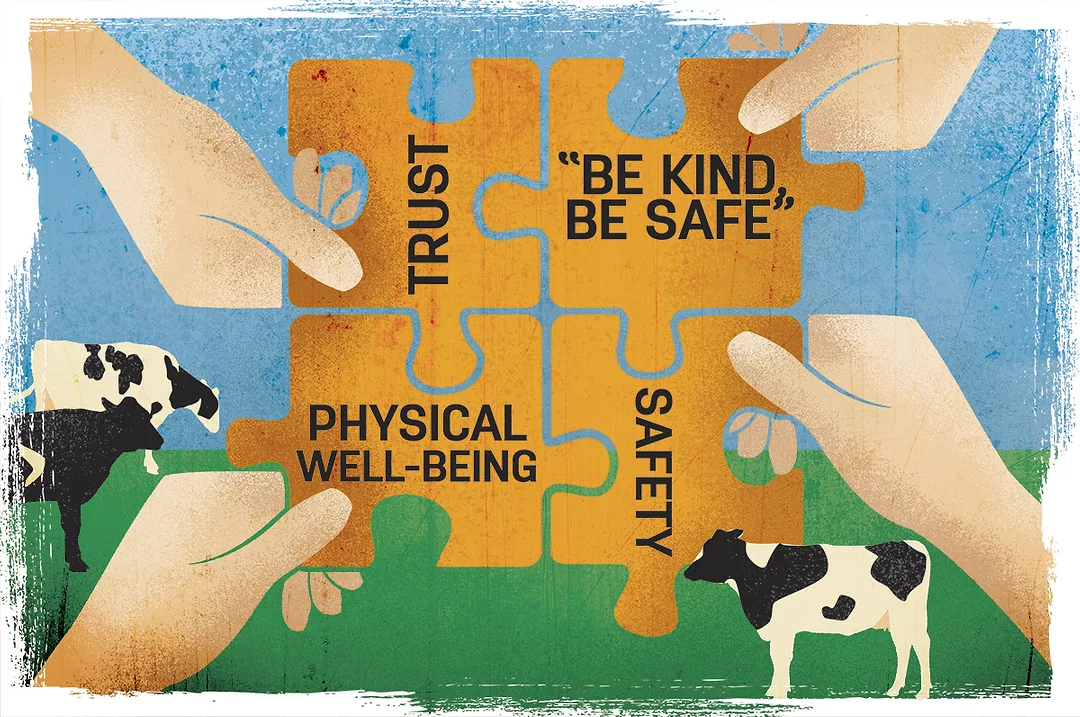
Building on his experience, Bautista reflects on specific strategies he believes address both cow and caregiver well-being. Fostering a workplace where people feel valued and empowered – taking ownership of their tasks while prioritizing safety – was key. Recognizing the risks that come with the daily grind of hoof trimming, the hoof health team embraced a holistic approach that prioritized employee safety, comfort, compassion and trust.
A guiding principle: “Be kind, be safe” was the team’s guiding principle, reminding everyone each morning of the importance of fostering a supportive and safe environment before starting their daily tasks of hoof trimming and handling cattle.
Articulating and equipping safety: Besides practical safety measures, such as providing and ensuring the use of personal protective equipment – safety vests, cut-resistant gloves, safety glasses and face shields – the team was encouraged to internalize a set of guiding statements:
"Nothing I do is worth getting hurt."
"All injuries can be prevented."
"I will lead my own safety."
"My safety is a condition of my employment."
This mindset shift fostered a sense of ownership and accountability for both individual and team safety.
Promoting physical well-being: Understanding the physical demands of the job, the team was provided access to a physical therapist. The physical therapist guided employees through exercises they could perform daily before starting their hoof-trimming routines to stretch and strengthen their arms and hands, ensuring they were ready for the physical demands of the day.
Building trust and compassion: A sense of connection, belonging and mutual understanding among the hoof health team was essential for creating an environment of trust, where personnel felt comfortable expressing concerns about their health, well-being or even meeting targets. The pressure to meet goals, which can sometimes lead to manipulating numbers, was something Bautista addressed. He often reminded his team that "Numbers don’t lie, but you can lie with numbers," emphasizing the importance of honesty and integrity. This pressure to meet targets, combined with challenges such as language barriers, immigration and cultural adjustment, could be alleviated by fostering a workplace where employees feel valued, heard and supported.
Success in tackling lameness goes beyond addressing the cow and the farm – it requires paying attention to the human element as well. Building a workplace culture rooted in competence, kindness, motivation and satisfaction is just as critical as implementing the right hoof care practices. Together, these elements create the foundation for meaningful and lasting progress.