What is a genetic base change?
A genetic base is the zero point from which predicted transmitting abilities (PTAs) are measured in dairy cattle. Think of it as the starting line in measuring genetic improvement in a singular animal, herd or even the national herd.

The genetic base is set by calculating the average PTA of cows born in a specific year. This group of cows is called the genetic reference population. In April, the reference population will move from U.S. cows born in 2015 to cows born in 2020.
The cow performance data used to set the reference points is stored in the National Cooperator Database – a collaborative, industry-wide database stewarded by CDCB. The ability to set zero points for genetic selection traits that reflect the national dairy herd is dependent on the continued commitment to industry programs that contribute data to the national database – programs that include Dairy Herd Information (DHI) milk testing organizations, dairy records processing centers and breed associations.
Routine five-year update
The genetic bases to which (most) dairy traits are expressed in the U.S. have been updated every five years since 1980. This adjustment schedule allows PTAs to reflect genetic improvement over time while still maintaining stability in evaluations. A routine update to the genetic reference population allows the industry to measure progress from a contemporary group rather than a historical group, giving producers a better tool for informed decision-making.
Some countries choose to update their genetic base on an annual schedule, so be aware when comparing information from various countries and systems.
Base change evaluation
The math is easy. When genetic base change values are shared, it is simply the average PTA of the new reference population (cows born in 2020) minus the average PTA of the former reference population (cows born in 2015).
For most traits, changes greater than zero mean younger cows have a higher genetic merit than older cows. Genetic improvement has been achieved. The inverse is true for traits expressed on a negative scale like Somatic Cell Score, Residual Feed Intake and many of the calving traits. A greater negative value indicates greater genetic progress.
This difference in genetic reference populations is the value of the base change for each trait and where the conversation shifts to the impact on the PTA values utilized on farms.
Herd-level impact
Discussing the new genetic base as a change from the previous population helps to put the anticipated impacts in perspective. This is because the change is how much the “zero” from which each PTA is measured is moving.
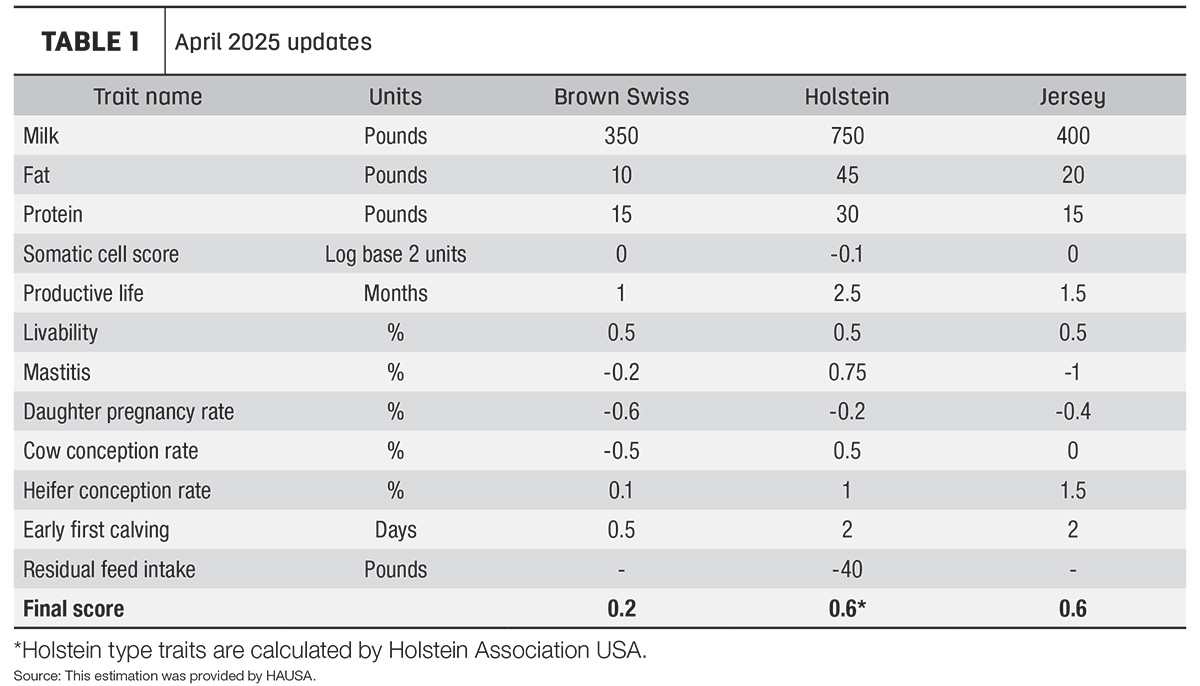
For example, in Holsteins, it is anticipated that the base change value for milk will be approximately 750 pounds. This means the PTA values for milk are expected to decrease about 750 pounds. In other words, a Holstein bull who is +1000 for milk in December is expected to be around +250 for milk in April (not considering any other impacts like the addition of new daughter or pedigree information).
Understanding the expected change is important when setting thresholds in breeding programs. A bull might check all of the boxes today, but on April 1, when the new genetic base goes into effect, he may no longer meet one’s criteria. This is not because the bull’s genetic abilities decreased but because the starting line was adjusted.
Table 1 includes the estimated genetic base change for key traits in Holstein, Jersey and Brown Swiss. A complete table for all breeds is available online and will be updated with final figures when available, by mid-March.
Bottom line
The April evaluations – both bull proofs and female genomic evaluations – will experience the genetic base change. The anticipated base change values indicate great strides in genetic improvement for milk, fat, protein and Productive Life. However, they also tell a cautionary story about the lack of improvement for Somatic Cell Score and fertility.
As the industry looks to the future, the commitment to programs that gather and submit cow data into the National Cooperator Database cannot be undervalued. Producers currently engaged in these programs are encouraged to talk with their field representatives to ensure their data is flowing into the National Cooperator Database. This data results in greater reliability in selection traits, accurate representation in reference populations and research to support new genetic tools. At the end of the day, data drives genetic improvement.
For more information, look for future articles in Progressive Dairy and sign up for the CDCB Connection.
Other changes happening in April
Along with the genetic base change, these updates will be implemented in the April 1 evaluations:
- A revision in the calculation of Net Merit $, Cheese Merit $, Fluid Merit $ and Grazing Merit $
- An update in the methodology to calculate genetic correlation among type traits for non-Holstein breeds
- A new Breed Base Representation (BBR) reference population utilized in determining BBR values and crossbred evaluations