Good hoof health is a core factor for productive, problem-free cows. Longevity and lifetime production directly improve profitability on dairy farms; however, management must remain vigilant with respect to the health and welfare of the animal.

Throughout the world, two claw horn disruptions (sole ulcers and white line lesions) and one infectious lesion (digital dermatitis) are routinely found in over 20% of all dairy cows, with over 95% of all these lesions occurring in the rear feet. This type of lameness increases cumulative damage to bone development, horn production tissue and vascular systems, which begins the “get lame, stay lame” cycle.
Today, progressive dairy managers are selecting animals based on genomics, specifically overall health and reproductive traits, to increase longevity. The importance of managing hoof health to achieve this objective should not be overlooked. Older, healthy cows have a significant advantage when it comes to being productive herd members. With the recent changes in the dairy industry, such as sexed semen, beef-on-dairy, the shortage of replacements and high heifer and cow prices, it is justified to boost hoof health management to better retain mature, high-producing cows while reducing the need for additional replacements.
Lameness results from failures in the management of time budgets, cow handling or overcrowding. Other factors contributing to lameness are the condition of the freestalls, the quality of walking surfaces and poor heat abatement. Incorrect hoof trimming procedures, which do not reestablish the functionality of the claws, can also lead to an increase in lameness.
It is most critical to perform timed maintenance hoof trimming so cows can avoid visiting the hoof trimming chute 21 days before calving to 30 days post calving. There are also strong indicators that sending cows for hoof trimming between 45 and 110 days in milk (DIM) reduces peak milk production. The goal is to take actions that will prevent lameness through this critical 50-day parturition period and 60-day peak production phase. Often, cows experiencing lameness during these crucial periods have a high risk of leaving the herd due to lower milk production, poor reproduction and mastitis.
Over the last decade, a more comprehensive understanding of irreversible claw damage has provided better tools that can prevent lesions and slow disease progression, therefore interrupting the “get lame, stay lame” cycle. Dairy cows go through various cycles during lactation. Changes during close-up, calving, heat stress and peak production are sensitive time periods where proper anatomical claw condition is the most vital.
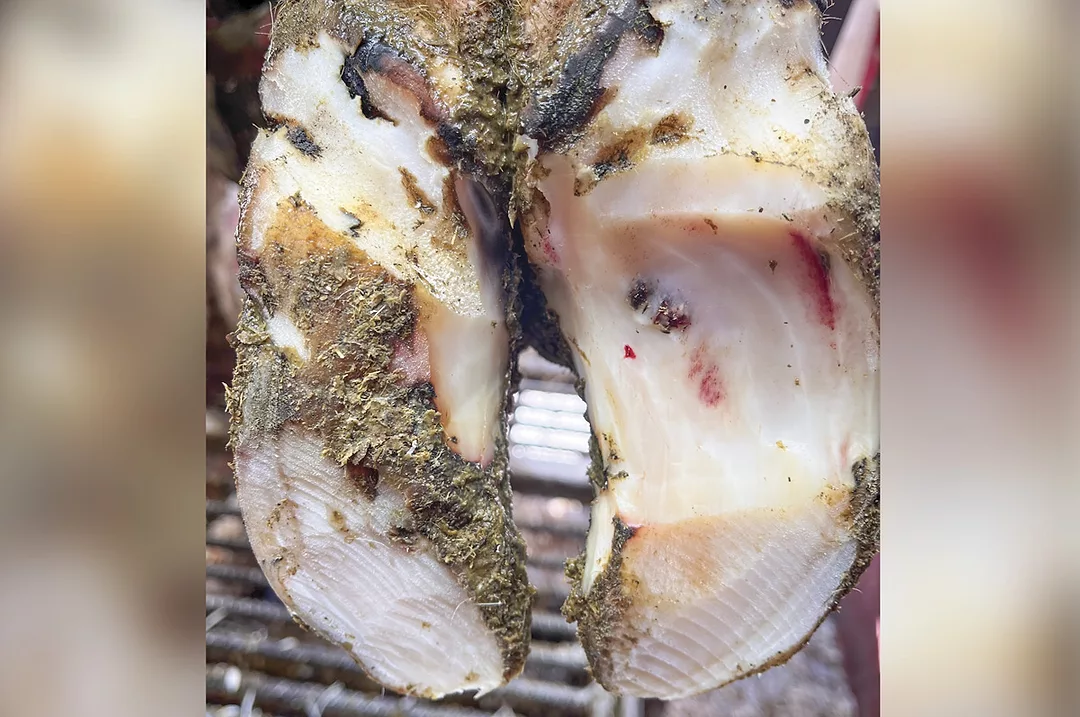
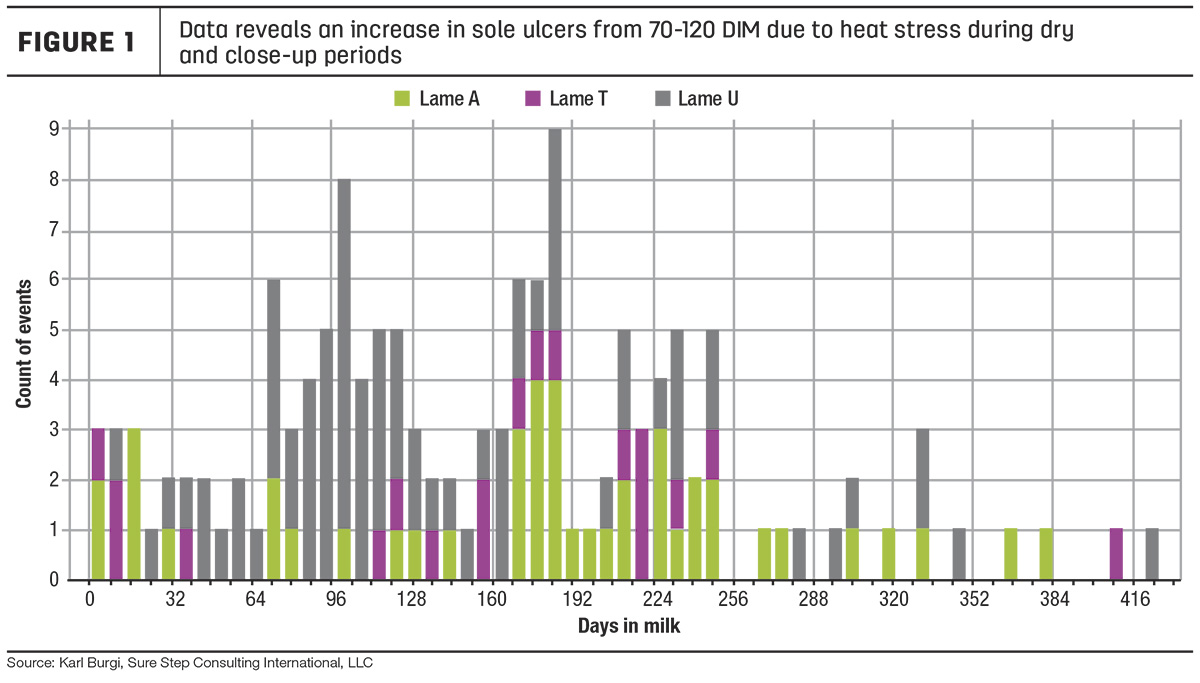
Data shows the increase in sole ulcers (grey) from 70-120 DIM due to heat stress during dry and close-up periods (Figure 1). When prevention fails, lesions often occur. The early sign of internal damage is a hemorrhage in the typical sole ulcer site (Image above).
When this occurs in the first or second lactation, it will repeat itself in consecutive lactations, making it more severe with each case. It is highly unlikely to interrupt this cycle and stay ahead of the lameness curve when routine hoof health assessments are performed on a two-times-per-year trim schedule.
The natural reaction from internal damage is for the corium to overproduce horn, resulting in a change of claw function within two to four months. This increases trauma to the site, and within time, will lead to a sole ulcer or white line lesion. Failure to interrupt in the early stages usually results in more severe lameness and additional internal damage.
To combat the severity and impact of these claw horn lesions, hoof health assessments of rear claws must be more frequent on high-risk cows. First, correctly identify these animals in hoof trimming and management software. When a hoof trimming technician spots hemorrhaging during standard work, the abnormalities must be recorded, in addition to assigning a future check-up. These cows will follow the normal trimming schedule, with additional assessments between 30-45 DIM and every three months following the midlactation trim. A trim at dry-off will set the cow up for an uneventful transition and a successful early lactation period. Regardless of other events, high-risk cows will need additional assessments for the rest of their life to keep them in the herd.
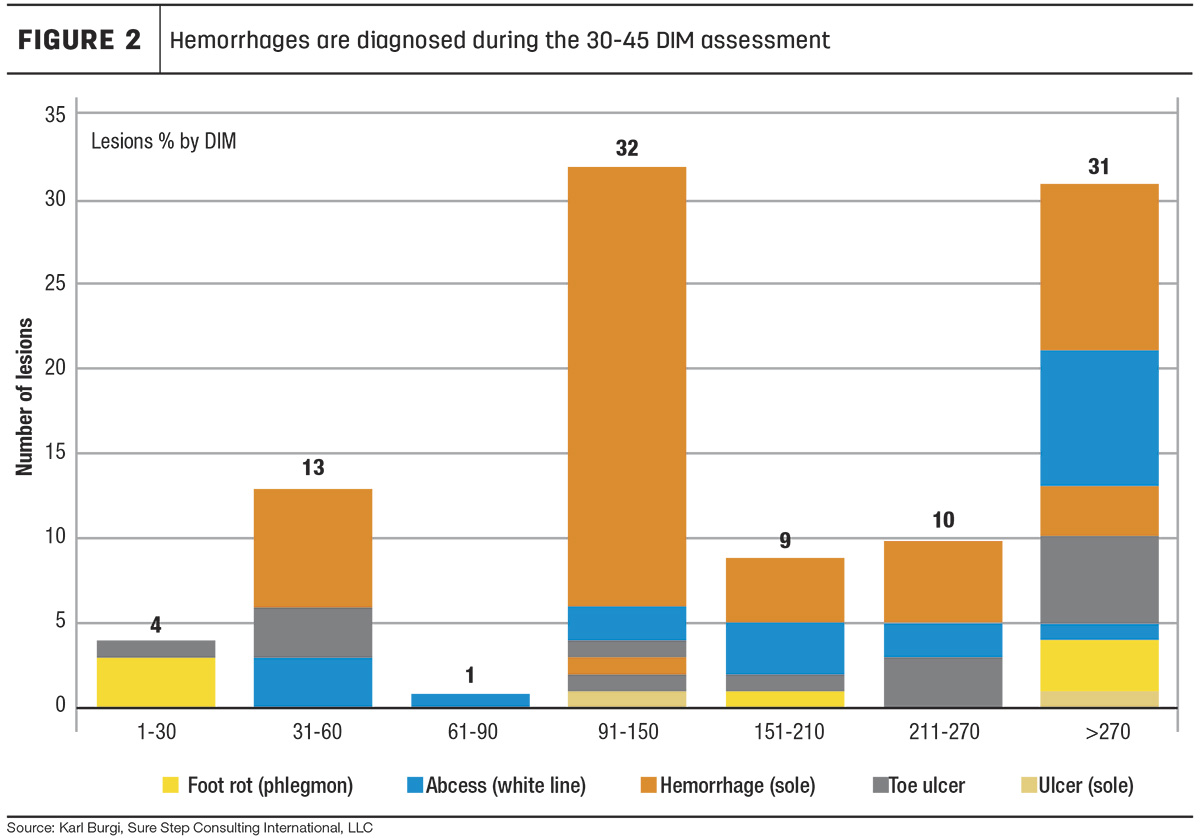
During the 30-45 DIM assessments, hemorrhages are diagnosed as shown in Figure 2. Note that trimming intervention prevented all lesions until the midlactation trim at 125 DIM. The 90-day assessment also prevented sole ulcers in multiple-lactation cows.
In conclusion, animal welfare may be compromised when there is a failure in managing the cow’s environment, as well as improper hoof trimming procedures and a lack of attention given to high-risk cows. By refining the trim schedule and providing additional hoof health assessments, cows remain productive and stay in the herd.