Pinkeye in cattle presents a significant challenge for producers, impacting animal performance and requiring costly and time-consuming treatments. Vaccination against pinkeye is crucial in a producer's prevention strategy, alongside effective fly, weed and dust control with appropriate trace mineral supplementation. While vaccines are sometimes criticized for poor outcomes, often overlooked factors play a crucial role in their effectiveness. Here are reasons why some pinkeye vaccines are successful and why others appear to fail.

What is a 'pinkeye' vaccine?
Historically, commercially available vaccines for Moraxella bovis were administered to reduce pinkeye in cattle. More recently, vaccines for Moraxella bovoculi have come to the market to help address pinkeye. The issue we face with pinkeye is that it is a multifactorial disease involving several bacteria: Moraxella bovis, Moraxella bovoculi and Mycoplasma bovoculi. These bacteria work together to initiate the infection in the eye. Therefore, the best option for pinkeye vaccination should incorporate all three of these pathogens to provide adequate immunity to reduce the risk of pinkeye. Producers can use a combination of commercially available vaccines for Moraxella bovis and Moraxella bovoculi to broaden immunity. Alternatively, producers can work with their veterinarians to develop a custom vaccine for pinkeye that can include Moraxella bovis, Moraxella bovoculi and Mycoplasma bovoculi. This process entails collecting samples from clinical cases of pinkeye on your operation and utilizing those isolates to manufacture an autogenous vaccine. Only custom vaccines can include all three pathogens in a single dose. Minimizing the number of doses and utilizing specific strains of bacteria are why custom pinkeye vaccines are the most common custom vaccines used in the cattle industry.
Vaccine expectations
The goal of a pinkeye vaccine is to limit the number of cases of pinkeye on your operation. This can be a challenge for the vaccine alone. The numerous factors associated with the health of the cornea, the eye surface where pinkeye starts, are directly tied to environmental irritants, stressors and nutritional deficiencies. If these factors are not addressed through management, it may be difficult to realize a significant reduction in clinical pinkeye cases.
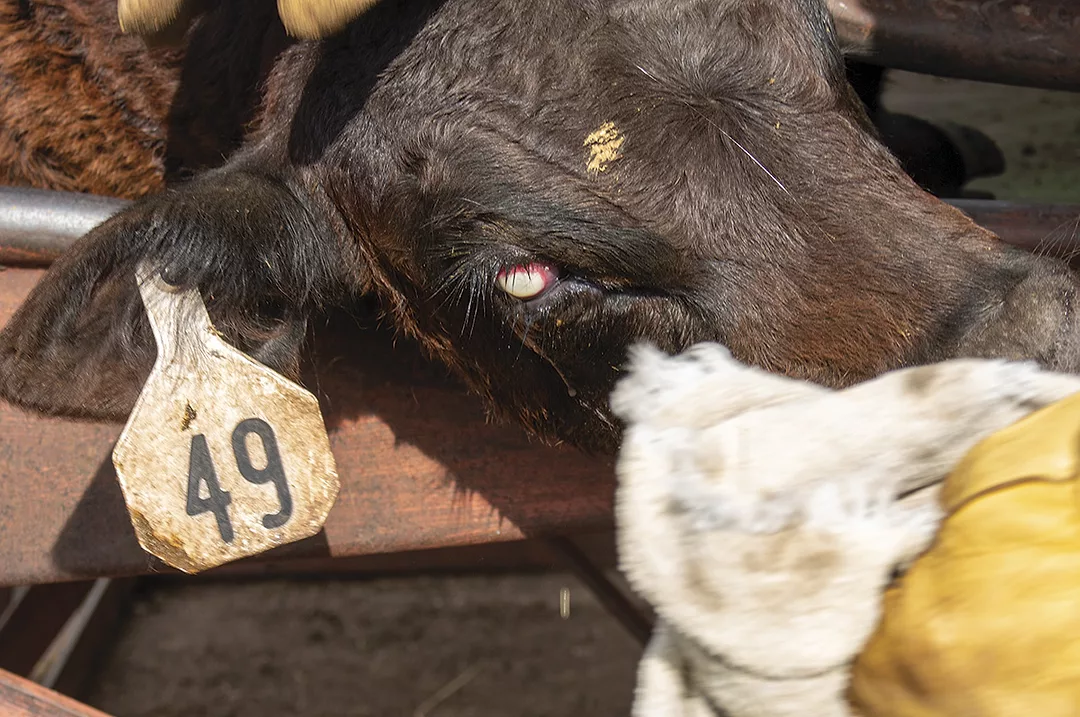
There are secondary benefits associated with pinkeye vaccines as well. Vaccinated cattle that experience cases of pinkeye can still benefit from the vaccine. Cattle that are vaccinated tend to respond better to treatment. They often have a shorter duration of clinical signs and resolve with a single treatment. Another benefit from vaccination is a reduction in permanent scarring of the cornea. Corneal scarring from pinkeye appears as a white dot on the outer portion of the eyeball, which can cause visual deficits. Lactating animals with such visual deficits may have issues navigating in their home pen and in the parlor. Reducing the risk of these scars can also help maintain the value of high-end replacements and bulls.
Vaccine failure
The risk for cattle developing pinkeye is tied to the health of the cornea of the eye. The cornea is the physical barrier covering the eye and is where pinkeye develops. Bacteria cannot attach and replicate on a normal, healthy cornea due to its tight structure with limited sites for attachment. However, whenever the cornea is irritated or damaged, the junctions between the cells of the cornea loosen up and expose attachment sites for the Moraxella spp. to colonize the eye. There are several environmental factors irritating to the cornea. Young calves raised in poorly ventilated barns experience corneal irritation due to high ammonia levels. Physical irritants such as dust, headed-out grass or grains, blown-in sawdust or shavings and excessive UV light can also damage the cornea, leading to increased cases of pinkeye. Fly pressure can lead to some corneal irritation but really increases the transmission of bacteria within the group. These factors must be accounted for in the operation’s management plan, or pinkeye will be a problem. Weather also plays a role in these risks. We see taller, more mature pastures during wet seasons due to limited mowing of pastures. Dust also becomes more difficult to control in drier seasons. These management and environmental factors play a crucial role in how we evaluate the impact of a pinkeye vaccine.
Another perceived vaccine failure is associated with duration of immunity stimulated by the vaccine. Many vaccines are given on an annual basis, and we expect them to provide protection between vaccinations. Pinkeye vaccines should not be expected to protect cattle for that long. A realistic expectation for immunity for pinkeye vaccines is more likely four to five months. It may be necessary to revaccinate cattle to maintain adequate immunity throughout the entire pinkeye season, especially since we are seeing pinkeye all year long on dairy farms in many regions of the country.
Strain variation within Moraxella bovis and Moraxella bovoculi can also lead to perceived vaccine failure. There are documented differences in the pathogenic traits with Moraxella bovis and Moraxella bovoculi. That means that the specific strain of Moraxella bovis or Moraxella bovoculi you have in your herd may not be protected by the strains in the vaccine administered to the cattle. Commercial vaccines try to accommodate for this by including multiple isolates to broaden protection. However, the only way to be able to compare strains of Moraxella bovis or Moraxella bovoculi from clinical pinkeye cases to vaccine strains is by using genetic sequencing in conjunction with a custom vaccine. This is a common procedure offered by many custom vaccine providers and can help ensure the appropriate isolates are being used in the vaccine you use on your farm.
Pinkeye program
A vaccine alone will be marginal in decreasing the risk of pinkeye on an operation. The best approach is to have a pinkeye program that includes managing environmental risks, reducing common stressors, feeding appropriate trace minerals and vitamins, and utilizing a comprehensive vaccination program. Pinkeye risk can be more seasonal on grazing operations. They need to manage pastures so that grass seedheads and weeds are kept in check and not a source of irritation to the eyes. The vaccination schedule should also start with initial immunization with two doses of vaccine in the spring and a booster later in the summer. Pinkeye risk on confinement operations, such as calf ranches, tends to be associated with the age of the animal, more so than on a seasonal basis. The vaccination schedule on these types of facilities should plan to immunize calves with two doses of vaccine around 2 to 3 months old and a booster again four to five months later. Fly control is essential to every type of operation for a successful pinkeye program.
Rarely is just implementing pinkeye vaccination the difference between a herd not experiencing pinkeye issues or seeing substantial pinkeye outbreaks. It takes a strategic management approach to positively impact your outcome. Collaborate with your veterinarian to assess risks and build a customized pinkeye prevention plan for your herd.