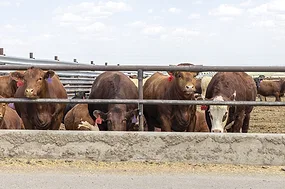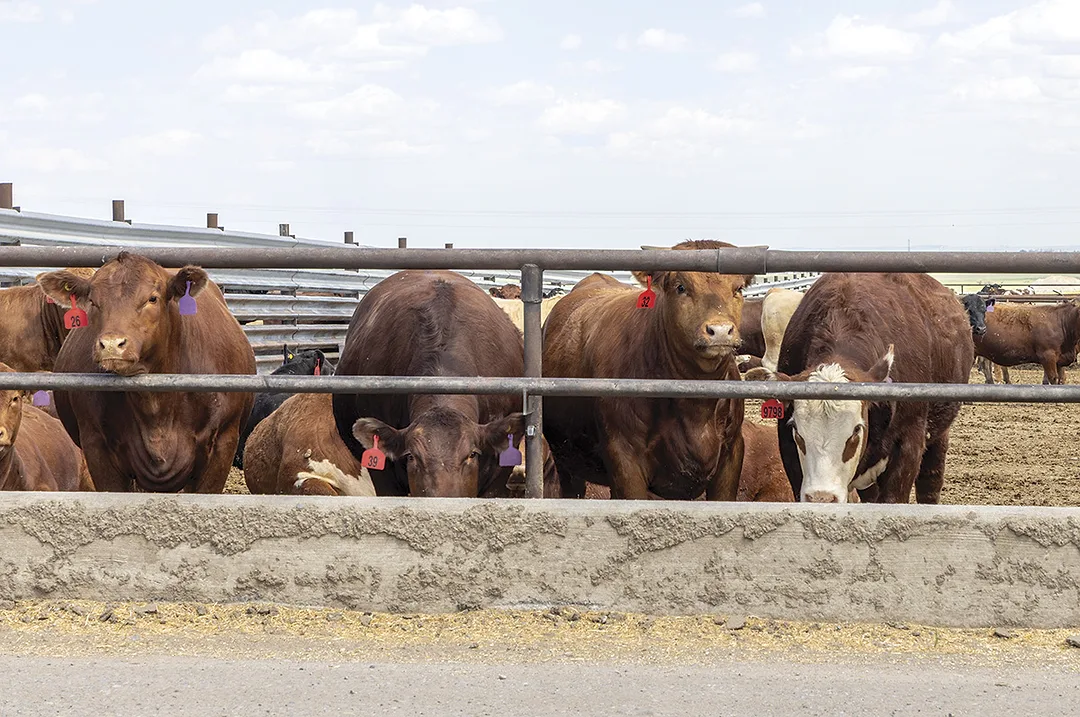
Cattle performance in the feedlot is strongly influenced by management practices prior to feedlot arrival. Management practices can refer to a number of proactive steps producers can take to improve performance (i.e., proper vaccination, low-stress handling, feeding various feed additives/supplements, etc.) While not a new concept, a method that has gained increased attention in recent years includes utilizing alternative feeding strategies.

Alternative feeding strategies refer to feed intake management systems and are designed to manage feed intake relative to ad libitum (at will) intake. Two common alternative feeding strategies include limit- and program-feeding. Limit-feeding is where feed intake is restricted 75% to 80% of the ad libitum dry matter intake of cattle. This restriction can be of intake itself or restriction of specific nutrients (commonly energy or protein). Program-feeding utilizes energetic equations to determine the amount of feed required per head to achieve a desired rate of gain. This restriction is typically 90% to 95% of ad libitum dry matter intake. Essentially, these systems allow diets higher in concentrates to be fed at lesser amounts to equate to a lower-energy, more forage-based diet.
Limit- or program-feeding systems were originally used as a growth management tool to optimize cattle growth in the stocker/backgrounding phase, or to transition cattle to a new diet. These systems are especially attractive when pasture or roughage resources are limited, or when concentrate-based feedstuffs are more cost-effective. They also offer several practical management benefits: improved feed efficiency, enhanced bunk and feed inventory management, decreased total manure outputs and producer ability to identify sick cattle more quickly.
Growth management
When cattle are allowed unrestricted access to feed, this may lead to fluctuations in intake. Consequently, this can result in cattle not meeting expectations in growth or increasing the rate of fat deposition for under- and overconsumption, respectively. Limit- or program-feeding can allow for more even intake across the pen of cattle and can help prolong the growth curve in cattle, delaying fattening until later in the feeding period.
Controlling intake is especially important to manage in cattle that are starting a new diet. Cattle being transitioned from a stocker/backgrounder phase to finishing phase are typically fed a diet containing greater amounts of concentrates and is of higher energy content. Limiting the quantity of feed offered as opposed to altering the amount of concentrates in the feed can allow for a ready transition and avoid the potential risk of acidosis and cattle coming off feed, thus resulting in insults to growth. This also avoids the need to have multiple transition diets.
Feed efficiency
Cattle fed under limit- or program-fed conditions have been shown to have improved feed efficiency. This is largely a contribution of cattle achieving similar rates of gain with less overall feed intake. Recent work at South Dakota State University observed that newly weaned beef steer calves fed an ad libitum forage-based diet compared to a limit-fed concentrate-based diet for 54 days resulted in similar bodyweight and average daily gain (ADG), but the limit-fed steers improved feed efficiency by 14%.
After the 54-day receiving period was concluded, all steers were fed similar diets through the growing and finishing phases. The steers fed the limit-fed diet during the receiving phase continued to have improved feed efficiency by 8% during the growing phase (study day 154) and were 4% more efficient at the end of the finishing period (day 304), with similar bodyweights and ADG. Therefore, it may be possible that limit-feeding cattle at initial feedlot arrival following weaning could result in continued feed efficiency improvements throughout the rest of the feeding period.
Bunk and feed management
Limit- or program-feeding systems are designed to feed a targeted quantity of feed, with the daily feed allocations increased gradually at a desired interval (i.e., every 14 to 28 days) to account for changes in growth. As a known amount is fed daily, this may help to ease bunk management and improve delivery consistency. Using this method, bunks should be cleaned up or “slicked” daily. Consistent bunk cleanup helps minimize feed waste and allows producers to quickly identify potential problems. If feed remains in the bunk, it may indicate issues such as sick cattle, inadequate water availability, feed quality concerns or other management challenges that require attention.
Feeding known quantities of ingredients also improves feed inventory management. Producers can accurately estimate daily feed needs, making it easier to schedule feed deliveries, hay processing and other feed-related activities. Better feed inventory planning can improve silage face management, reduce shrink and waste, and help ensure feed resources are utilized efficiently throughout the feeding period.
Manure output
As cattle in limit- or program-feeding systems are fed a controlled amount of feed rather than allowed to consume feed to reach maximum intake, manure output is typically reduced compared to ad libitum feeding systems. This can reduce the frequency of pen cleaning and maintenance. For operations that face increasing environmental regulations or manure management challenges, limit- or program-feeding may be a useful management tool to help control nutrient excretion and reduce manure-handling costs.
Cattle health
Cattle managed using alternative feeding systems receive a targeted amount of feed at a consistent time each day, which typically results in predictable feeding behavior. Healthy cattle should readily approach the bunk and actively consume feed following delivery. Cattle that are reluctant to come to the bunk or show reduced interest in feed may exhibit early signs of illness and should be evaluated more closely.
Since bunks are expected to be cleaned up daily, having leftover feed present can serve as an early sign that cattle are not consuming their expected feed allocation. This may indicate health concerns, water availability issues or other management challenges that warrant investigation. Controlling feed intake can help reduce daily variation in feed consumption. Consistent feed intake patterns can improve rumen stability and reduce the risk of digestive upset and acidosis.
Collectively, alternative feeding systems can be a beneficial practice for both cattle and producers when used properly. This is an option that producers could consider if they are new to feed management and also can be beneficial in years where concentrate-based feedstuffs are more cost-effective or when roughage resources are limited.