With a theme of “Dialing It In,” the 2025 Professional Dairy Producers (PDP) Business Conference drew inspiration from the steady movement of a sundial to encourage dairy producers to align their efforts with purpose and intention.

The conference, held March 12-13 at the Alliant Energy Center in Madison, Wisconsin, featured more than 50 speakers presenting interactive sessions that included simultaneous translation into Spanish and brought together approximately 1,000 dairy producers and industry professionals.
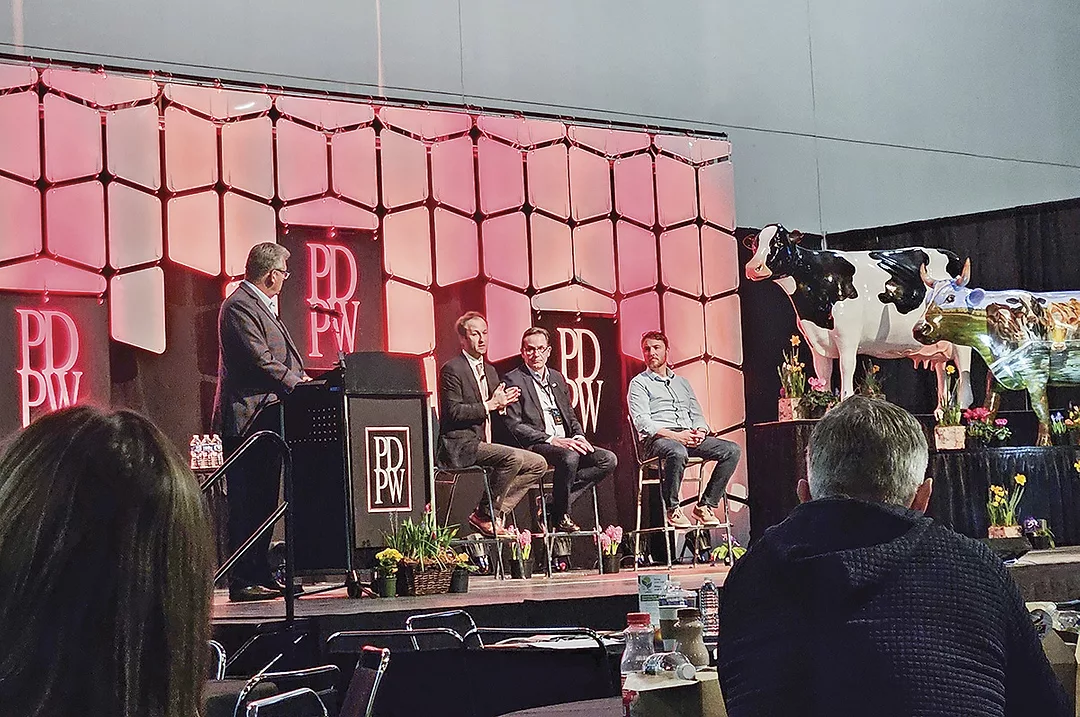
Three experts in the fields of geopolitics, markets and weather joined together in the opening session to help dairy producers see the forces behind the unpredictable parts of agriculture.
Geopolitics
Jacob Shapiro, partner and director of geopolitical analysis for Cognitive Investments, provided a broad overview of what is going on in the world today. He specifically addressed the multipolar world, imperialist U.S. policy, trade issues and inflation.
A multipolar world means there is not one dominant power in the global system. This is different than the last 30 to 35 years when the U.S. dominated everything.
“For most of the countries in the world, their biggest trade partner is not the United States anymore. It is China,” he said.
However, agricultural trade still relies on countries that produce a surplus to export to countries that cannot produce those calories by themselves.
“But it will not work that way in a multipolar world. Because in a multipolar world, if you want to ensure your national security, you do not want to import food from other people. You want to be self-sufficient,” Shapiro said.
The new Trump administration is leaning on imperialist strategies when it comes to foreign policy.
“If you want to understand why we’re seeing so much friction, so much dysfunction, it is because the United States is behaving like it’s the top dog in a world where it isn’t the top dog,” he said.
Shapiro looked at each of our top three trade partners. He noted that in the past 10 years, the U.S. has become more dependent on China than they are on us. China has also been decreasing its dependence on U.S. agriculture.
For Canada and Mexico, Shapiro said the conflict is most likely about the renegotiation of the U.S.-Mexico-Canada agreement (USMCA) and should be resolved in the next 12 to 18 months.
With 10.4% food insecurity in the U.S., Shapiro said dairy’s biggest export market might be right here in the U.S. Per-capita dairy consumption is going up and companies like Coca-Cola with its ultra-filtered milk are teaching us about opportunities in the domestic market.
In the last few years, consumers have shown they can bear inflation on food prices. American consumers are also going to pay for energy moving forward.
“For the first time in 75 years, we are a net energy exporter,” Shapiro said. Sending oil and liquefied natural gas (LNG) abroad allows the U.S. to be more inward-looking when it comes to foreign policy, but no surplus will mean higher prices.
"Now is the time to build or to invest because in a couple years from now, if these trends are going to go the way that I think they’re going to go, it’s going to be a lot harder to do so,” Shapiro said.
Markets
Dan Basse is president of AgResource Company, a domestic and international agricultural research firm in Chicago. He started by stating there is a fence dividing agriculture right now. “I believe it depends on what side of the fence you’re on,” Basse said. “If you’re on the species side of the fence, I don’t think it’s so bad. If you’re on the grain side of the fence, it is partly cloudy.”
Globally, wheat prices are moving up and corn has been rallying a little bit, as both stocks are relatively low. Soybeans have been heading downward because of a strong Brazilian crop and the trade war with China.
Normally, agriculture has contributed positively to the U.S. trade balance, but the last couple of years it has been at a deficit.
Yet, farmer optimism soared with the re-election of President Donald Trump. “All of us in agriculture hope at some point that we get another Phase One agreement,” he said, with a nod to the trade deal Trump signed with China in his first term but President Joe Biden did not keep up.
But with lower consumption and GDP levels, China is no longer a demand driver for agriculture. Basse said he thinks biofuels might be the next opportunity for U.S. agriculture.
On the dairy side, Basse is bullish on U.S. dairy moving forward because other major dairy regions – EU and Oceania – aren’t growing to be able to meet an increasing global demand for dairy.
“If it wasn’t for the tariffs, I think we’d have a very bullish year for milk and for dairy and cattle species in general,” Basse said.
“Without that tariff threat, we had been forecasting that the milk price in the United States this year would reach up to 23 to 25 dollars,” he said. “Because of tariffs, we’ve taken it down 21 to 22.”
He is also really bullish on the cattle market. “We believe we’re going to score new all-time highs in 2025, particularly in the fourth quarter of this year.”
This opportunity for beef stretches well into 2028 and beyond.
Weather
Eric Snodgrass, principal atmospheric scientist for Conduit, said he is keeping an eye on drought building from Mexico, from the Southern Plains and into the Midwest by the middle of summer.
The snow along the Gulf Coast this winter held dry, arctic air over the Upper Midwest, which led to a major snow deficit in the region.
Looking at precipitation rates by climate district, Snodgrass said, “We see significant key regions across the country showing incredibly dry conditions that have to be overcome for me to not worry about drought going forward.”
He forecast regions east of the Mississippi River will have wet times in the spring, but the West should be wondering when the drought will migrate farther north.
Tier 2 launched
In addition to educational sessions and interactive networking opportunities, the annual conference formally announced Tier 2 of PDP’s Your Farm – Your Footprint Initiative. The initiative is a first-of-its-kind, farmer-led sustainability project that empowers dairy producers to know and understand their environmental footprint and implement solutions to shape the future of their farms.
In Tier 2, eligible farms have access to additional cost-share funding for projects that could help reduce emissions, lessen a farm’s carbon footprint and improve sustainability. Information on the entire program is available online or by contacting PDP at (800) 947-7379.
2025-26 board elected
Elected to serve a three-year term on the PDP board were Jordan Matthews, Rosy-Lane Holsteins, Watertown, Wisconsin; David Trimner, Miltrim Farms Inc., Athens, Wisconsin; and Heather Moore, Moore Family Farms, Maquoketa, Iowa.
Other PDP board members include Patty Dolph, Dolph Dairy LLC, Lake Mills, Wisconsin; Jake Hoewisch, Hoewisch Homestead Dairy LLC, Fremont, Wisconsin; Paul Lippert, Grass Ridge Farm, Pittsville, Wisconsin; JJ Pagel, Pagels Ponderosa Dairy LLC, Kewaunee, Wisconsin; Laura Raatz, Wagner Farms, Oconto Falls, Wisconsin; and Brady Weiland, Weiland Dairy LLC, Columbus, Wisconsin.
Kevin Griswold honored
Kevin Griswold was honored as the fifth recipient of the Dean Strauss Leadership Award. Griswold co-owns and operates Tag Lane Dairy in Ixonia, Wisconsin, with his wife, Chris, and other family members.
Griswold was recognized for his years of dedication to the dairy sector in addition to his far-reaching visionary thinking and servant leadership across his community, the dairy industry and beyond.
Griswold served on the PDP board from 2002-08 and as president from 2004 through 2007. He also served as a board member of Dairy’s Foundation.
Griswold has focused on sustainable growth at Tag Lane Dairy over the past three decades, expanding the operation from 100 cows in 1992 to 1,750 cows with facilities focused on animal health and well-being.
The award was established in 2021 in honor of Dean Strauss, a Wisconsin dairy farmer and industry leader who passed away in 2019.
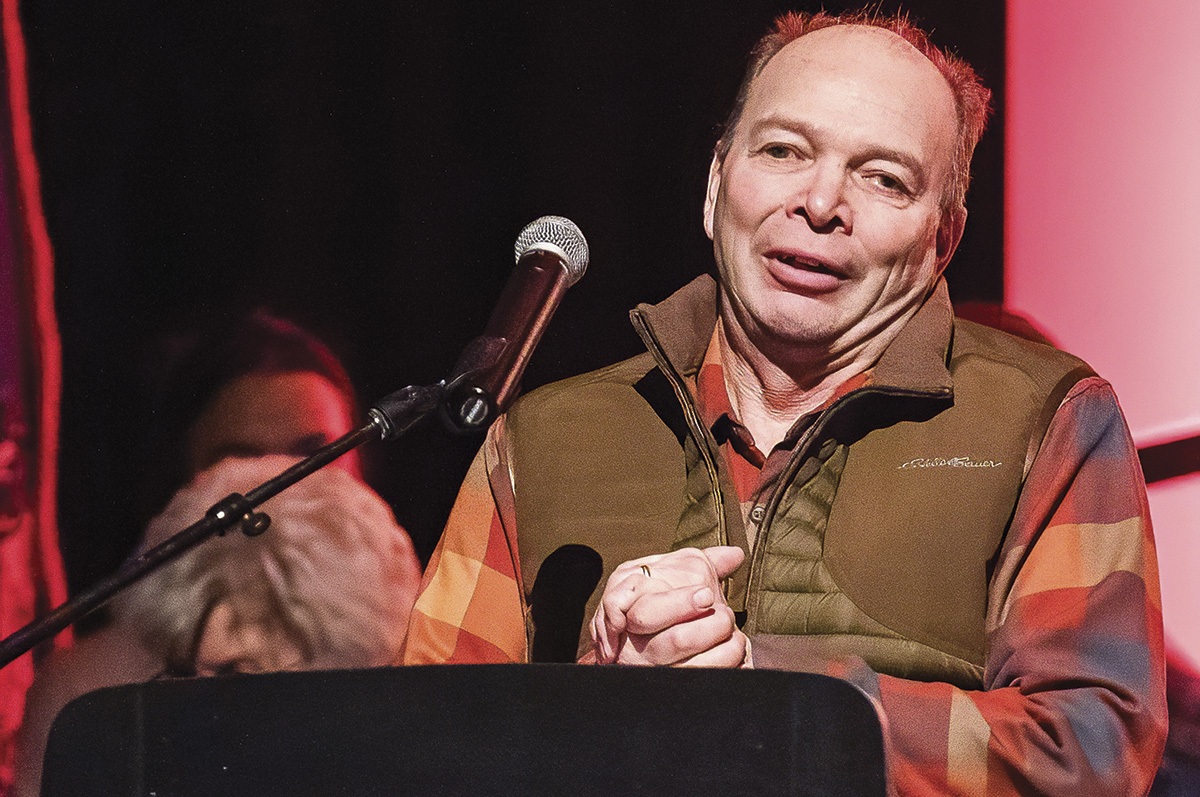
Kevin Griswold is the 2025 Dean Strauss Leadership Award recipient. The award annually recognizes a PDP member who exemplifies visionary thinking and servant leadership in the dairy community and beyond. Courtesy image.
$50,000 raised
Dairy’s Foundation hosted a silent auction and live auction during the conference, raising a total of $50,000. As the only public-held national foundation supporting dairy education and initiatives across the entire dairy industry food chain, Dairy’s Foundation provides funding for programs and awards grants of up to $5,000 twice yearly for initiatives across the country that fulfill one or more of the foundation’s focus areas.
Cornerstone Dairy Academy graduates
Fourteen dairy farmers and industry professionals received recognition for completing all three pillars of leadership training in the Cornerstone Dairy Academy, held in conjunction with the business conference. The 2025 graduates are Stephanie Cash, Kaukauna, Wisconsin; Hector Delgado Mondragon, Fremont, Wisconsin; Dr. Scott Earnest, DVM, Lodi, Wisconsin; Melanie Eck, Johnson Creek, Wisconsin; Abbie Jo Erickson, Mauston, Wisconsin; Michael Grott, Arlington, Wisconsin; Heidi Hall, Monticello, Iowa; Kathryn Hohmann Browning, Cambridge, Wisconsin; Eduardo Juarez Mota, Malone, Wisconsin; Dalton Miller, Pitman, Pennsylvania; Sarah Miller, Pitman, Pennsylvania; Lynae Schott, Sauk City, Wisconsin; Luke Trice, West Grove, Pennsylvania; and Rosalie Zaginaylo, Berwick, Pennsylvania.
Scholarships given
Five students accepted into the 2025 PDP Cornerstone Dairy Academy earned a scholarship to the program from the Wisconsin Rural Opportunities Foundation (WROF). Recipients include Will Cordes, Stratford, Wisconsin; Stacy Eberly, Monroe, Wisconsin; Regan Kramer, Ames, Iowa; Chelsea Scheider, De Pere, Wisconsin; and Max Schenkenberg, Poynette, Wisconsin.
2026 plans
The 2026 PDP Business Conference will take place at the Alliant Energy Center in Madison, Wisconsin, March 4-5.