The 2026 Professional Dairy Producers (PDP) Business Conference attracted dairy producers from 25 states and Canada to Madison, Wisconsin, March 4-5.

With a theme of “Dairy’s Blueprint – Drafting Tomorrow’s Success,” the program featured more than 50 learning sessions led by industry experts, leading researchers, forward-thinking dairy producers, and inspiring keynotes who offered refreshed perspectives and tools to equip attendees for success.
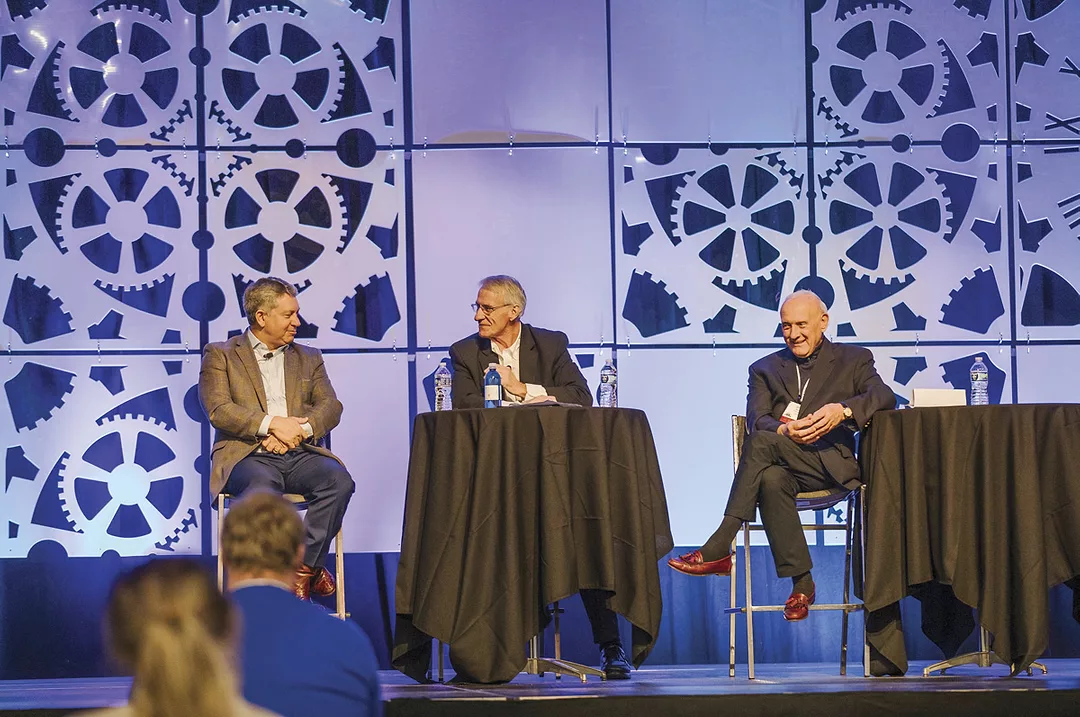
The general session on Positioning for Profitability featured three speakers who keep tabs on factors that influence the financial outcomes of dairy operations. From the U.S. economy and interest rates to international trade and artificial intelligence, the panel shared their insights on what dairy producers can anticipate this year.
The panel was led by Dr. David Kohl, academic Hall of Famer in the College of Agriculture at Virginia Tech. The speakers included Dr. Edmond J. Seifried, professor emeritus of economics and business at Lafayette College, and Gregg Doud, president and CEO of the National Milk Producers Federation.
Economic outlook
Seifried started the discussion with a look at where the U.S. economy is headed, primarily focused on gross domestic product (GDP) as a comprehensive measure of economic activity.
“GDP represents your customers’ ability to buy your products,” he explained. “If it goes up, more than likely your sales are going to go up. If it goes down, the reverse effect.”
A year ago, the GDP was down 0.6%, mostly due to weather and tariffs in the first quarter of 2025. The second and third quarters were better at 3.8% and 4.4%, respectively. Yet 2025 ended with a weak fourth quarter at 1.4% because government spending was down about 5%, and the government is a big part of the GDP, Seifried said.
Five headwinds, or challenges, to watch in 2026, include high interest rates, artificial intelligence (AI)-related layoffs, high public debt, policy uncertainty and geopolitical risk.
Five tailwinds working in favor of the U.S. economy are a stable and abundant energy supply, tax cuts that open up more money for spending, gains in productivity from AI, immense wealth effect from the stock market, and a potential for lower interest rates as inflation moderates.
In adding up the effects of the tailwinds, Seifried estimated potential GDP growth of 5% in the next two years.
“That would mean your income would grow by 5% organically,” he said.
However, whether or not it happens depends on several factors, like the aforementioned headwinds or black swan events.
“Many things could derail it, but for now, I think in the next few years we’re going to have good growth,” Seifried said.
Demand for protein
Doud shared that he recently heard dairy producers can expect to average a $5 per hundredweight (cwt) profit for the second, third and fourth quarters of the year, with $4.5 to $5 of that coming from beef.
“You guys may be in the beef business more than you are in the dairy business,” Doud said.
Whether producing beef or milk, now is the time to be in the protein business.
“Over the next 10 years and beyond, the supply of animal protein in the world – beef, pork, poultry and dairy – comes nowhere near meeting the demand,” he said. “The demand for protein in the world is unbelievable.”
Other dairy regions in the world are expected to struggle long-term in producing more milk, but the U.S. has been positioning itself for growth.
“There’s a reason we have $11 billion in new U.S. dairy processing investment in this country. That is because the whole world realizes, if you’re going to grow more protein, more milk, more dairy cows, the best place on planet Earth to do it is right here,” Doud said.
However, all of U.S. agriculture is going to have to change its business model from being the lowest cost provider. For instance, the U.S. soybean farmer can’t compete with Brazil when it comes to cost of production.
“We’ve got to change the business model to orient ourselves toward protein and the dairy industry is already way ahead of the game,” he said.
In addition, the U.S. needs to have a competitive tax policy, regulatory policy, fiscal policy and monetary policy to sell its products globally.
“With the One Big Beautiful Bill and the tax policy we have in this country now, that is the most important thing you could have possibly done to our country to make us competitive globally by far,” Doud said.
U.S. agriculture still has to worry about debt, monetary policy and the value of the dollar, which was high in 2024 and has since come down to make the U.S. competitive in world markets.
Meanwhile, trade deals have been made with Indonesia, Vietnam, the Philippines and Malaysia. “We have enormous opportunities,” he said.
Indonesia has around 288 million people, and Jakarta is the biggest city in the world with nearly 42 million people.
U.S. dairy is building a relationship with Indonesia, and it has opened new doors. For instance, Indonesia asked how it can get milk into school lunches. With ultraprocessed products and other new technology, the U.S. is better able to grow in that part of the world.
These deals will help as the favorable 25-year run with China seems to be over. “The Chinese economy is in terrible shape,” Doud said, noting the situations in Iran and Venezuela hurt China more than any other country because that is who supplied their oil.
Advice to producers
Doud’s number one charge to U.S. dairy producers is to work on risk management with options like the Dairy-RP and Dairy Margin Coverage (DMC) programs. In addition, it will help to figure out how to cut costs on the input side of the equation since the industry is facing lower milk prices.
“To be perfectly honest, [high milk] prices are going to be hard to come by,” Doud said. Europe, New Zealand and the U.S. were all up in milk production last year, and everyone is figuring out how to sell it.
“We’ve got a strong domestic industry, strong domestic consumption to give us the underlining to do what we need to do in the export market to move our increased production,” Doud said.
In watching interest rates, Seifried said he believes the Federal Reserve will be cautious in lowering interest rates as inflation is still a problem. However, he said they might move a little lower yet this year.
“Now’s the time to start talking with [your banker] about expanding your business, because I think rates are approaching the lowest they are going to get, which would be around 3%. So, it would be good time if you want to buy more land, modernize your operations, now would be a good time to start talking about a new fixed rate,” Seifried said.
Doud agreed. He added how dairies can expect their beef income to remain high for a minimum of three years, and more likely the next four or five years. Not only does growing a herd take time, but the Mexican border closure due to New World screwworm is preventing the stocking of feedyards in Texas.
Profit opportunities may look non-traditional in 2026, yet these many factors at play will help dairies find success this year.
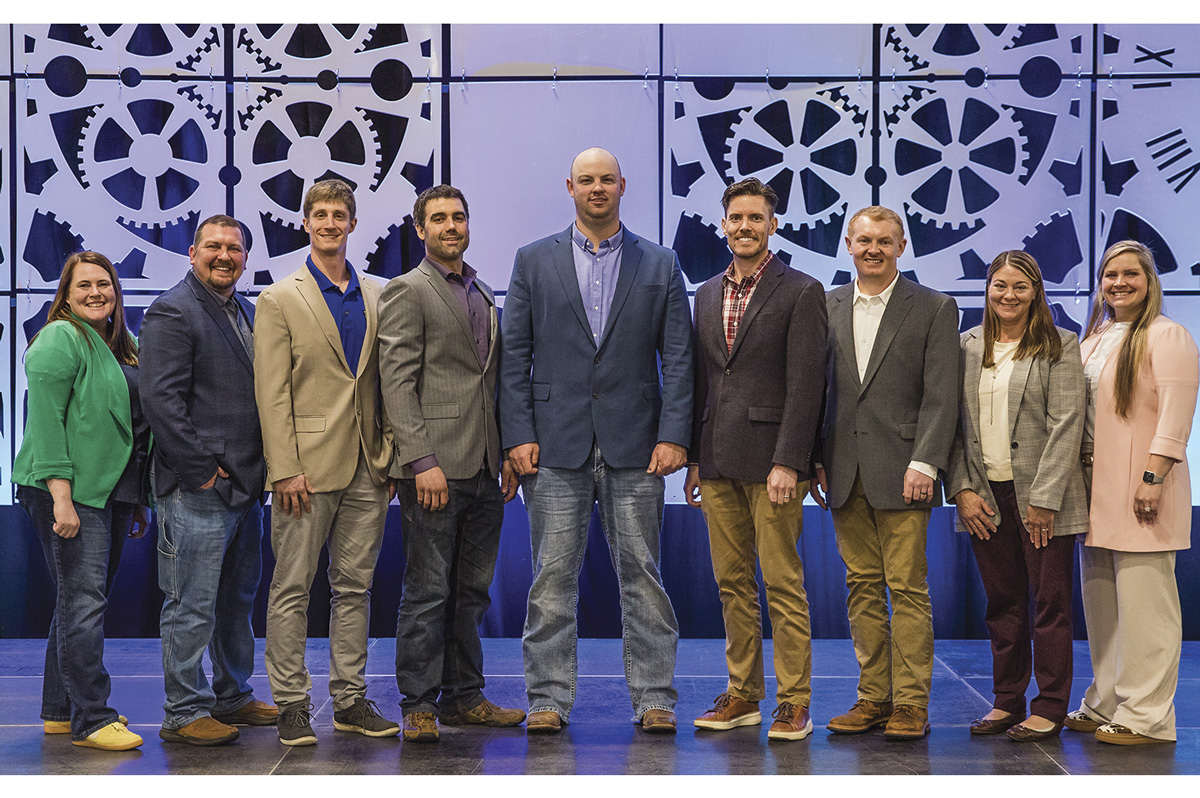
The 2026-27 PDP Board of Directors includes (left to right) Heather Moore, JJ Pagel, David Trimner, Jake Hoewisch, Brady Weiland, Jordan Matthews, Paul Lippert, Patty Dolph and Laura Raatz. Courtesy image.
2026-27 board elected
Members voted to re-elect incumbents Patty Dolph, Dolph Dairy LLC, Lake Mills, Wisconsin; JJ Pagel, Pagels Ponderosa Dairy LLC, Kewaunee, Wisconsin; and Laura Raatz, Wagner Farms, Oconto Falls, Wisconsin.
Other PDP board members include Jake Hoewisch of Fremont, Wisconsin; Paul Lippert, Grass Ridge Farm, Pittsville, Wisconsin; Jordan Matthews, Rosy-Lane Holsteins, Watertown, Wisconsin; Heather Moore, Moore Family Farms, Maquoketa, Iowa; David Trimner, Miltrim Farms, Inc., Athens, Wisconsin; and Brady Weiland, Weiland Dairy LLC, Columbus, Wisconsin.
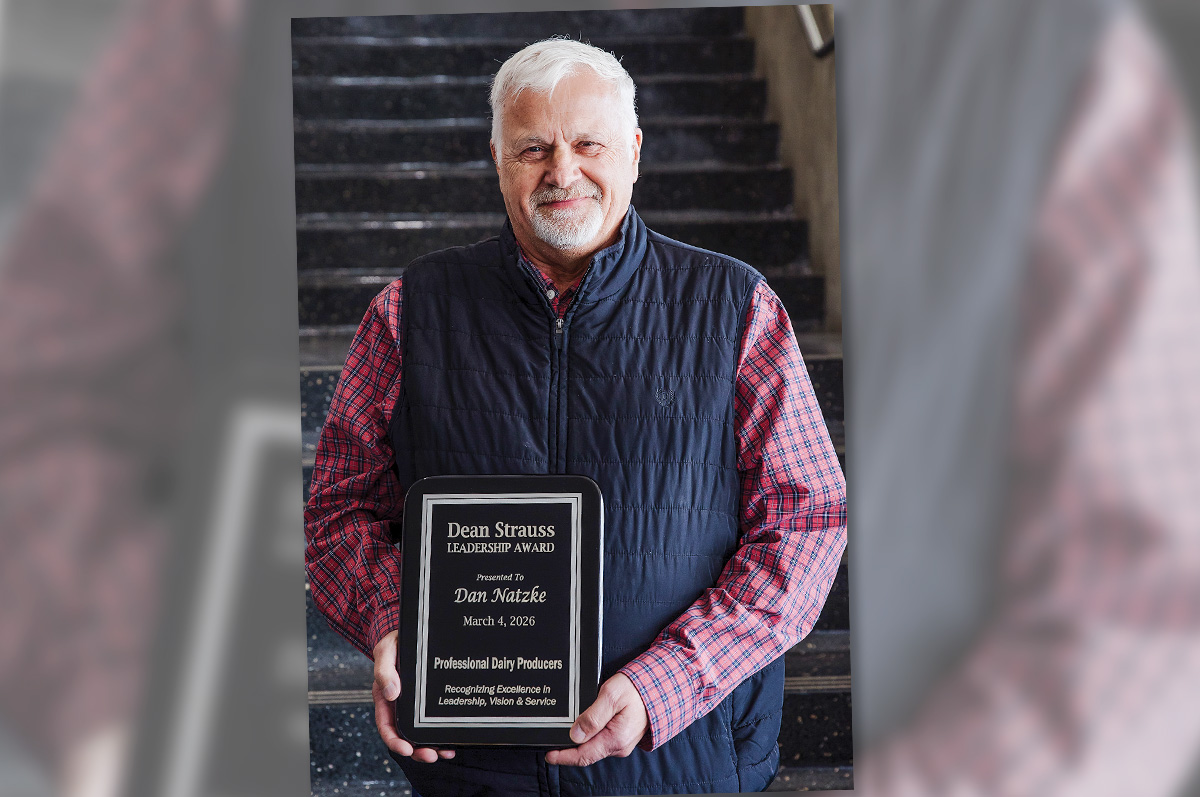
Dan Natzke is the 2026 Dean Strauss Leadership Award recipient. Courtesy image.
Dan Natzke honored
Dan Natzke was awarded with the prestigious Dean Strauss Leadership Award. Natzke owns and manages Wayside Dairy LLC near Greenleaf, Wisconsin, with his son Jeremy Natzke, daughter Jenna Nonemacher and Jesse Dvorachek. Dan is married to his wife of 52 years, Barb Natzke.
Natzke served two three-year terms on the PDP board of directors from 1994 through 2000. He is also a member of the Farm Wisconsin Discovery Center board of directors. He was recognized as a Wisconsin Master Agriculturist in 2018, and Wayside Dairy is a repeat winner of the CentralStar Cooperative’s ReproStar award, which recognizes dairy producers who achieve exceptional reproductive efficiency.
Active in Zion Lutheran Church of Wayside, he has served as church chairman and elder, serves currently on its outreach and mission committee, and has been school board chairman for both Zion Lutheran Elementary School and N.E.W. Lutheran High School in Green Bay, Wisconsin. In 2005, Natzke participated in his first volunteer mission to the Dominican Republic. Since then, he has returned more than a dozen times to lead teams in building churches and schools, digging wells and delivering needed equipment.
The Dean Strauss Leadership Award was established by the PDP Board of Directors in 2021 in honor of Dean Strauss, a Wisconsin dairy farmer and industry leader who unexpectedly passed away in 2019 at the age of 48. Strauss was active in a number of dairy organizations and leadership boards, including PDP’s board, on which he served as president.
Cornerstone Dairy Academy graduates
Upon successfully completing all three pillars of Cornerstone Dairy Academy, 18 dairy farmers and industry professionals were honored as the program’s 2026 graduates. The application-based leadership-development program was held in conjunction with the business conference.
Graduates include: Alyssa Berg, Kewaunee, Wisconsin; Samantha Bowe, Mosinee, Wisconsin; Andrew Connon, West Grove, Pennsylvania; Sarah Eck, Cambridge, Wisconsin; Jose Eduardo Hernandez Rodriguez, Bryant, Wisconsin; Matthew Fischer, Owen, Wisconsin; Kristen Fischer, Prairie du Chien, Wisconsin; Jeronimo Flores Perez, Bryant, Wisconsin; Ulises Garcia, Pine River, Wisconsin; Carlos (Fernando) Gutierrez, Bryant, Wisconsin; Jake Halbersma, Mosinee, Wisconsin; Kirstin Joyal, Williston, Vermont; Kaitlyn Kesler, Hilbert, Wisconsin; Kyle Lerch, Shiocton, Wisconsin; Darian Scheer, Colby, Wisconsin; Shane St. Cyr, Plattsburgh, New York; Joaquin Vazquez, Fond du Lac, Wisconsin; and Ronna Wagner, Saint Johns, Michigan.
Scholarships given
Five students accepted into the Cornerstone Dairy Academy earned a scholarship to the program from the Wisconsin Rural Opportunities Foundation (WROF). Recipients include Kaylee Ferfecki, Cecil, Wisconsin; Matthew Fischer, Owen, Wisconsin; Reagan Kime, Fitchburg, Wisconsin; Jared Manske, New London, Wisconsin; and Danielle Ware-Dreier, Brillion, Wisconsin. All five scholarship recipients grew up on dairy farms and some currently assist in operations on their family farm.
In addition, the inaugural Alan Koepke Memorial Scholarship was presented to Megan Mosgaller of Iron Ridge, Wisconsin, during the opening session of the business conference. Currently a student at University of Wisconsin – River Falls, Mosgaller is pursuing a career as a food animal veterinarian serving producers in the dairy sector. The scholarship honors the life, legacy and values of Alan Koepke, a founding member of PDP and a fervent advocate for agriculture, education and people.
2027 plans
A change of venue is on deck for the 2027 PDP Business Conference. It will take place March 16-17 at the Kalahari Resorts and Conference Center in Wisconsin Dells, Wisconsin.