The impact of heat stress on lactating dairy cows has been covered extensively in research trials and articles in trade magazines. Even with all the available information, the challenges around heat stress still exist, and each summer we see cows struggling to maintain production and reproductive health through high temperatures and humidity across the U.S.

While we know a lot about heat stress, there are still areas of learning to lean into and help support herds throughout the summer heat and humidity.
Understanding cow body temperature dynamics
It doesn’t take much heat and humidity to impact cow performance.
Research out of Germany shows that even one hour experiencing a heat index higher than 73 degrees can drop conception rates. Now multiply that potential impact if cows are under stress for eight hours or more at a time during peak season.
The impact of heat stress is lower earlier in the summer. There are several factors that could cause this effect (Figure 1), but a simple reason could be that it takes concrete longer to warm up in the summer. Barns are cold all winter, so it takes longer for that big slab of concrete to warm up. But when it does finally thaw out, that concrete can hold and generate a significant amount of heat. If you’ve ever been in a city in the summer, you can relate as to how much heat radiates from the streets and buildings.
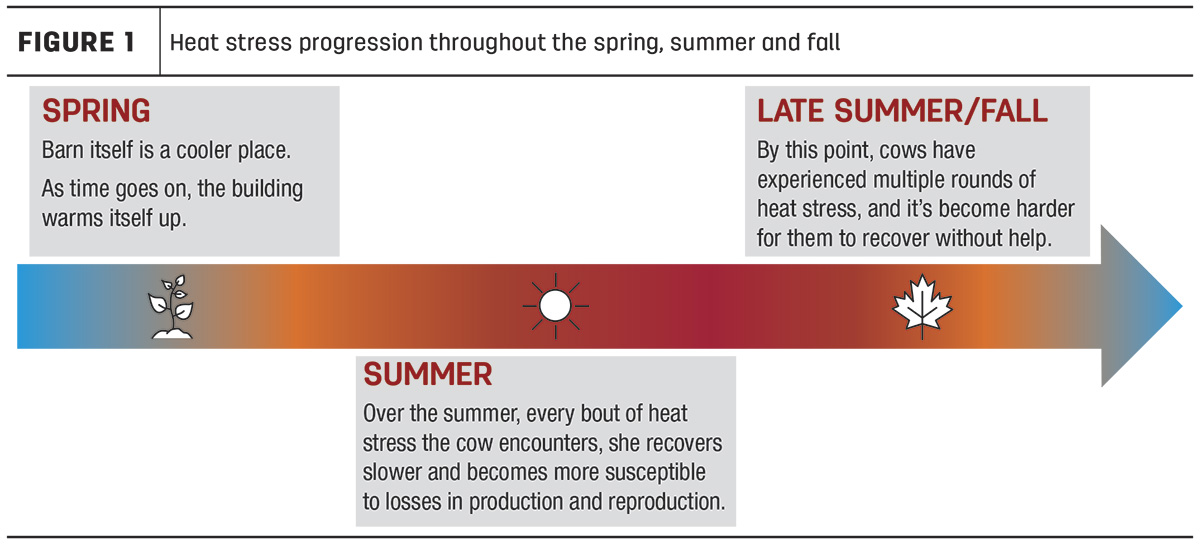
Additionally, a cow’s body temperature lags behind the environmental temperature. While the environmental temperature may peak in late afternoon, a cow’s body temperature continues to rise for several more hours, peaking closer to 9 p.m. It’s imperative to keep cooling mechanisms in place even though the sun goes down.
Be aware of heat stress misconceptions
As warmer temperatures arrive, it’s important to remember that cows feel heat and humidity sooner than we do. As humans, even though each person is different, we generally start to feel heat stress when the temperature reaches around 80ºF. Cows are impacted by much lower temperatures, usually in the upper 60s, due to their heat-generating furnace – the rumen. The energy and heat produced impacts their ability to stay comfortable as temperature and humidity rise.
Additionally, there can be misconceptions about the impact of heat stress in northern climates. We can’t overlook the fact that it gets hot and humid in northern climates, too. For example, in the Sioux Falls, South Dakota area in 2024, cows experienced heat stress conditions 28% of the time from July through the end of September. Any time spent in heat stress can negatively impact an animal’s performance.
Prepare for the heat stress season ahead
With summer approaching, it’s never too early to get prepared to reduce the impact of heat stress on your milking herd. Here are a few management tips to be prepared for the weather ahead.
Check and fix cooling equipment
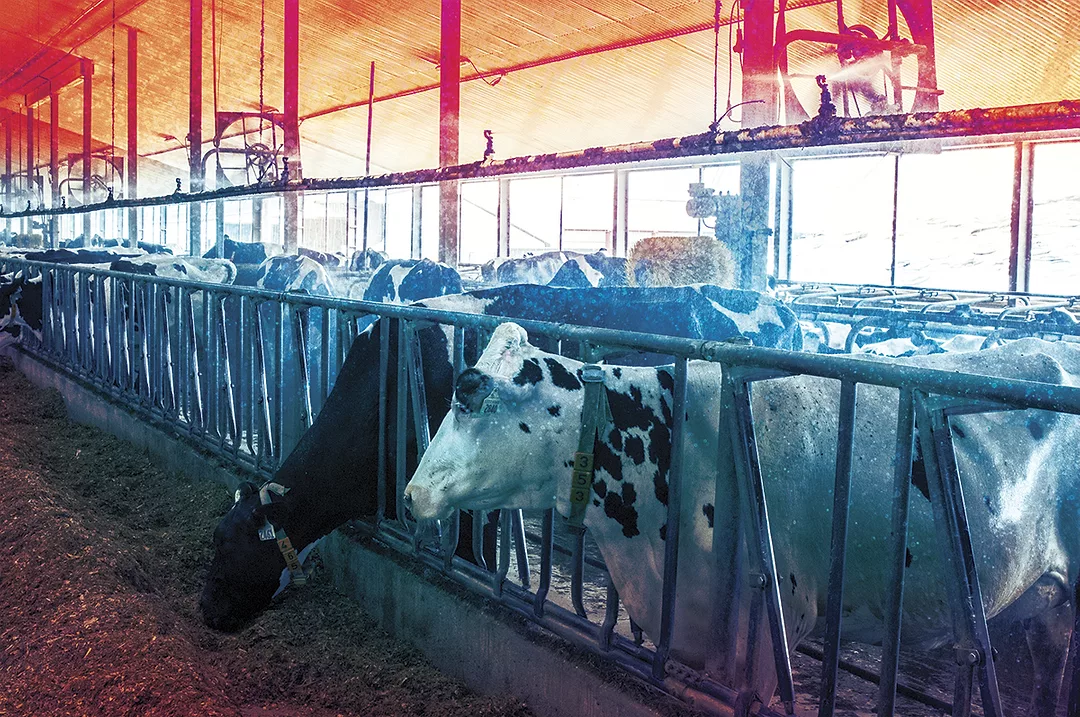
- Take time now to get fans ready, which includes inspecting motors and blades to make sure they are working properly. Take time to clean off the fans and blades as well – it’s amazing how much just cleaning off fans can improve performance and air flow.
- Make sure sprinkler and soaker equipment is clean and working properly. Inspect and replace nozzles that may be clogged. Fix bad connections or faulty feeder lines to make sure there is adequate water supply to the soaker (mister) units.
Implement management and feed strategy changes
- Put added attention on feed management. Feed spoils faster when the temperature rises, so be diligent in keeping storage areas clean as well as feedbunks. Intakes will vary with the temperature changes, so watch feed refusals and adjust rations accordingly. Consider adjusting feeding schedules so feed is delivered earlier in the day when it’s cooler or even at night as they cool down themselves, and push feed up regularly to keep it fresh.
- Hot cows use energy differently. As much as 13% more heat is created through breaking down body fat, so when cows are under heat stress, they switch from mobilizing fat reserves to breaking down glucose found in body tissues. Make the necessary ration adjustments.
Water, water, water
- With evaporative cooling, it takes two to tango. You must have air movement with sprinkler mechanisms. If you have air movement without water, you’re just blowing hot air at your cows. Likewise, if you have sprinklers without air movement, you’re just getting cows wet. Evaporative cooling happens through the combination of significant air movement and water applied through soakers. Having one without the other won’t do the job as well.
- Hydration is critically important for cows during heat and humidity. You don’t want to give cows a reason to not drink water, which can happen if waterers are dirty. Clean them out regularly and make sure all pumps are working to their maximum efficiency so tanks can refill quickly under heavy use.
- Consider adding a water unit in the return lanes. A cow’s greatest need for water comes as they leave the parlor, so having ready access could significantly increase water consumption and reduce competition at pen waterers.
Cellular function plays a key role during heat stress
Let’s look at hydration at the cellular level. When a cell is hydrated, it can better withstand heat and maintain its structure. When a cell gets dehydrated, it loses its ability to maintain temperature control and regular cell function, including the breakdown of proteins. To stay hydrated, cows need to drink ample amounts of water.
At some point as the marathon of heat stress continues, water alone isn’t enough. When the heat and humidity rise and cows get hotter and more stressed, drinking water may not provide the relief from heat stress that they need. Even though cows don’t sweat much, they do lose nutrients – especially potassium – through increased respiration. Those lost elements need to be replaced to keep cows performing during hot weather.
There are opportunities through nutrition support to help cows navigate heat stress more efficiently and recover quicker once heat stress hits. Heat mitigation products that offer a synergistic blend of ingredients, including an osmolyte for cellular hydration, can support cows to keep body temperatures lower during heat stress. Products such as these have been proven to lessen the impact of heat stress on milk production while supporting reproductive health through higher first-service conception rates.
While it’s difficult to completely protect cows from the stress of heat and humidity, we continue to learn more about ways to prevent the severity of heat stress throughout the marathon of the season. There are basic management factors around feeding management, evaporative cooling and other elements that can mitigate heat on the outside of the cow. Additionally, innovative nutrition tools can also support how cows handle heat stress, including ingredients that help them stay hydrated, cool and protected. Prepare now for the season ahead to help your herd lose less to heat stress.