The hospital pen or group is often the most disliked pen on a dairy. These are the cows that have abnormal milk and may or may not be sick. These animals must be isolated and identified so their milk does not enter the milk supply. Usually, just a few cows on the dairy are in this group, but it does require the most labor.

An important thing to keep in mind is that fresh cows are not hospital cows. Too many dairies make the mistake of putting fresh cows in the hospital pen for the first day or two after calving. Unfortunately, these animals are at greater risk of getting infected. Fresh animals should be in their own group and managed like hospital cows, as described below.
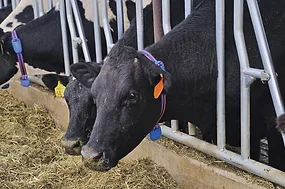
Cows in the hospital group need to be properly identified, whether treated or not, so they are not accidentally milked into the bulk tank. Not all cows in the hospital group are treated with antibiotics or other medicines, but because the milk is abnormal, by law, it cannot be offered for sale. The most common methods of identification are red leg bands or red paint markings on the legs or body of the cows.
A detailed protocol
When cows enter the hospital pen due to abnormal milk, the dairy must have protocols set up to properly identify how these cows are handled. The cow must be either treated with antibiotics or other medications or milked separately until the milk looks normal and receives a negative California Mastitis Test (CMT) result. Treatment protocols are something that only the dairy manager and veterinarian can develop. The best treatment protocols are based on culture results. This allows you to either treat the right bacteria with the right treatment or use only supportive therapy.
Having employees on board
Having a well-trained hospital crew that evaluates these cows every milking is important to determine whether cows are responding or need different therapy. They also need to make the decision as to when a cow can return to the milking herd without risking contamination of the bulk tank with antibiotic residues or increasing the somatic cell count (SCC) in the sold milk.
A handy tool
An important factor often overlooked is how to manage this group of cows when being milked. One of the highest contamination areas for bacteria – especially mycoplasma and prototheca – is in the parlor via a milker’s hands or the milking equipment. The ideal milking protocol in a hospital group contains a step of sanitizing gloves between cows to minimize the spread of organisms from cow to cow.
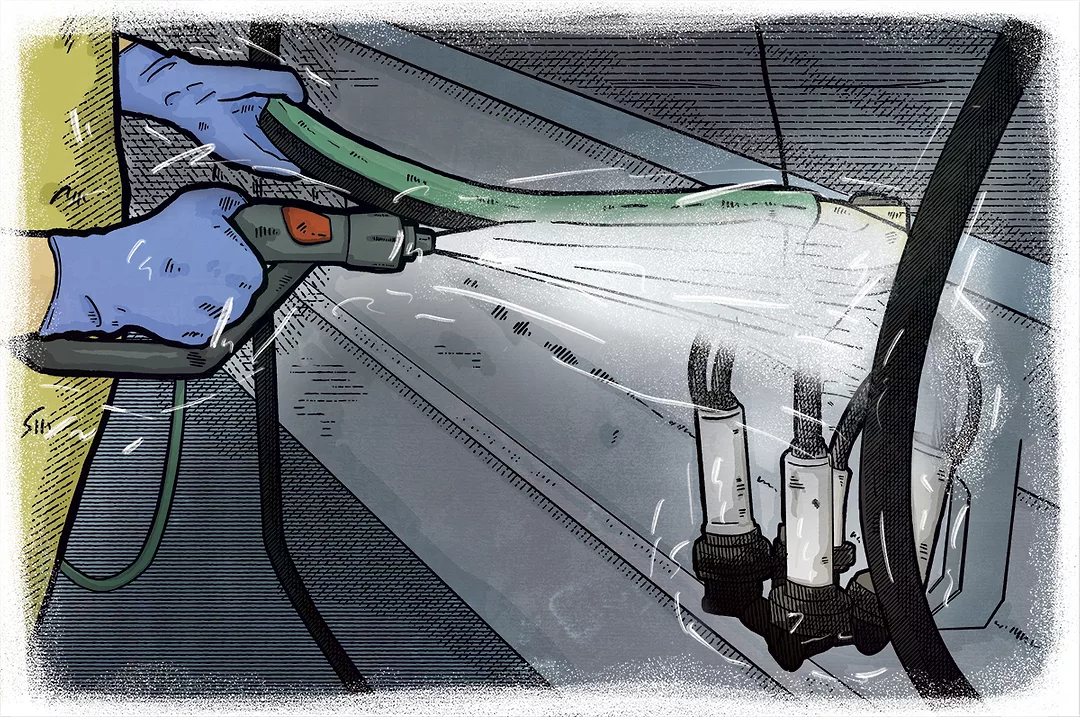
My favorite tool in the hospital pen is a medicated drop water hose – using this can reduce bacteria numbers. This medicated drop hose can be used for rinsing gloves and, more importantly, as a manual way to backflush the milking machine between cows. After each cow is milked, place the medicated drop hose nozzle into one inflation until water comes out of the other three. Rinsing the exterior of each milking unit is an important step, as the exterior can also be contaminated with infected milk.
Investing in a good pump system is well worth the cost. This will allow you to add a sanitizer to the water going to the drop hoses. Not only can the drop hose be used in the hospital pen, but I recommend that only a medicated drop hose be used in all parlors. Dairies doing this have cleaner units and much better milk quality.
At a minimum, the exterior of the milking units should be washed with medicated water after every pen of cows, and when a cow is milked with abnormal milk, that unit needs to be manually backflushed as well. Most of the dairies I consult for actually rinse the milking units after every side of the parlor is milked.
With plain water, you can make mastitis worse because water gives the bacteria a way to move, while medicated water reduces bacteria numbers and keeps equipment cleaner. I prefer using a low-cost sanitizer that suds, so the milkers can see it in the water. There are many good products on the market, such as BacDrop by Ecolabs, Mitricin Plus by GEA, Bac-Flush by IBA and many others. Iodine backflush solution can be used at 75 to 100 parts per million (ppm), but at this time, it is fairly expensive. I do not recommend chlorine because it tends to be harsh on all rubber goods, including the short air tubes, inflations, pulsators and milk hoses.
Utilizing cultures
A great management tool for the hospital pen is to culture all animals going in and all animals leaving. When mycoplasma or prototheca are present, it is surprising how many animals enter the hospital group with negative cultures but leave with positive cultures. There is nothing worse for a dairy than to return infected cows to the milking herd and cause a larger spread throughout the herd. The more caution you apply, the lower the risk will be throughout the dairy.
As discussed in a previous article, many dairies are now using fewer and fewer antibiotics to treat abnormal milk. The best practice is to treat with antibiotics only when a culture dictates, but more importantly, keep all bad milk out of the milk supply.
No matter how well a dairy is managed, there will always be cows that develop abnormal milk. Dairies doing a great job will have less than 0.5% of new cases. The key is to have a plan to handle these cows properly so they can be cleaned up and returned to the milking herd or culled if chronically sick. The better the program for handling these cows, the lower the risk of spreading to the clean cows in the herd.