The May World Agricultural Supply and Demand Estimates report (WASDE) showed the 2025-26 U.S. corn outlook is for record supplies and total use, and higher ending stocks. The corn crop is projected at 15.8 billion bushels, up 6% from a year ago on increases to both area and yield. Planted area of 95.3 million acres, if realized, would be the highest in over a decade. The yield projection of 181 bushels per acre is based on a weather-adjusted trend assuming normal planting progress and summer growing season weather. With smaller beginning stocks partially offsetting the increase in production, total corn supplies are forecast at 17.3 billion bushels. The season-average farm price is projected at $4.20 per bushel, down 15 cents.

Total U.S. corn use for 2025-26 is forecast to rise over 1% relative to a year ago on higher domestic use and exports. Food, seed and industrial use is forecast at 6.9 billion bushels. Corn used for ethanol is unchanged relative to a year ago at 5.5 billion bushels, based on expectations of essentially flat motor gasoline consumption and exports. Feed and residual use is projected higher to 5.9 billion bushels on larger supplies and lower expected prices.
The 2025-26 outlook for U.S. soybeans shows slightly lower supplies, higher crush, reduced exports and lower ending stocks compared with 2024-25. The soybean crop is projected lower at 4.34 billion bushels with trend yield and lower area. With higher beginning stocks but lower imports and production, soybean supplies are down less than 1% from 2024-25. Total U.S. oilseed production is projected at 128.5 million tons, up 0.1 million, as higher peanut, sunflower seed and cottonseed is mostly offset by lower soybean and rapeseed production.
U.S. soybean crush for 2025-26 is projected at 2.49 billion bushels, up 70 million from the 2024-25 forecast with higher soybean meal disappearance and exports. Domestic soybean meal disappearance is forecast to increase 2% on increased pork and poultry production. U.S. soybean meal exports are forecast at 18 million short tons, indicating a 20% share of global trade, compared to the prior five-year average of 19%. The 2025-26 U.S. season-average soybean price is forecast at $10.25 per bushel, compared with $9.95 per bushel in 2024-25.
The 2025-26 U.S. wheat outlook is for increased supplies, modestly higher domestic use, reduced exports and higher stocks. Supplies are projected up 2% from 2024-25 as higher beginning stocks more than offset lower production. All wheat production is projected at 1,921 million bushels, down 3% from last year on lower harvested acreage. The projected 2025-26 season-average farm price is $5.30 per bushel, down 20 cents from last year on higher stocks and lower projected U.S. corn prices.
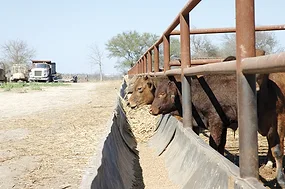
Total U.S. red meat and poultry production for 2026 is forecast lower than in 2025. Beef production is forecast lower on tighter cattle supplies, fewer available fed steers and heifers due to import restrictions on cattle from Mexico and reduced slaughter of cattle.
Total red meat and poultry production forecasts for 2025 are reduced from last month, with beef, broiler, pork and turkey production all forecast lower. The beef production forecast is lowered as higher dressed weights more than offset reduced steer and heifer slaughter due to the suspension of cattle imports from Mexico.
For 2026, beef exports are forecast lower than the current 2025 forecast, as tighter domestic supplies reduce international competitiveness. For 2025, beef exports are reduced from the previous month, as higher-than-expected official reported trade data for the first quarter is more than offset by tighter available supplies for the second half of the year. Cattle prices in 2026 are forecast to be above 2025 on tighter cattle and beef supplies. Cattle price forecasts in 2025 are raised from last month on recent price strength seen through early May and tighter fed cattle supplies expected during the second half of the year.
Find additional information on the USDA WASDE report from May.
Effective May 11, 2025, the USDA announced the suspension of live cattle, horse and bison imports from Mexico due to recent detections of New World screwworm (NWS) in southern Mexico. Forecasts in this report reflect this suspension and, in the absence of an official timeline for reopening U.S. ports of entry for livestock, it is assumed these restrictions will remain in place indefinitely. Subsequent forecasts will reflect officially announced changes in policy when they occur.