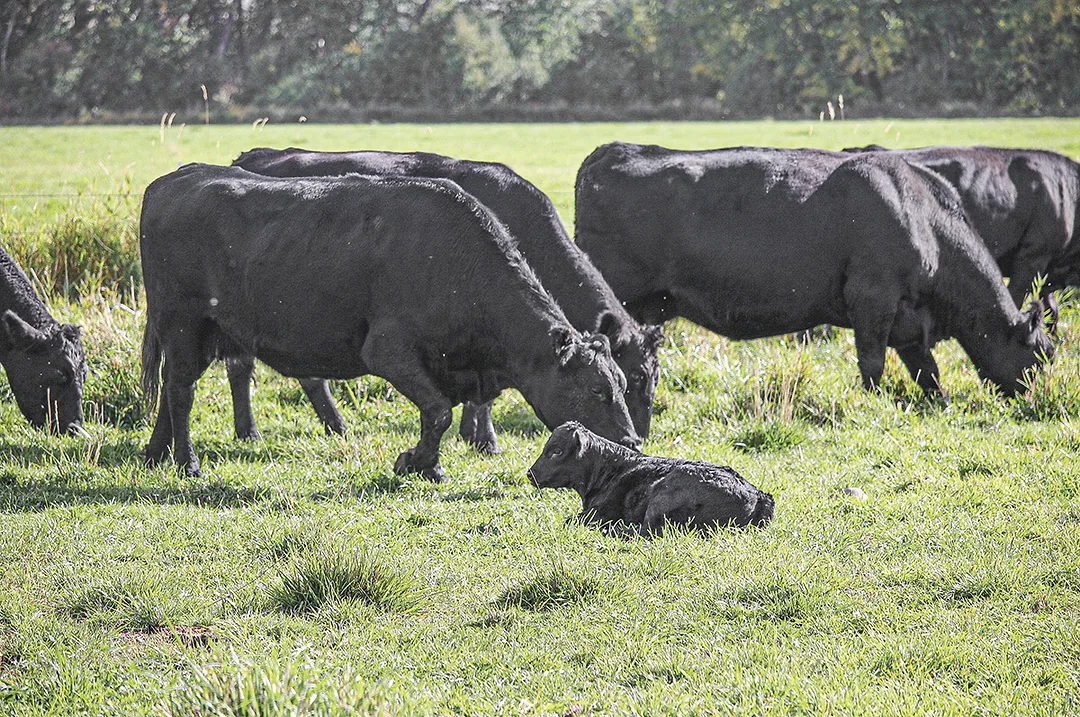
Cool-season grasses are often seen as high-quality forage. They offer an amazing amount of growth in the spring and fall, but that quality comes at a cost. Cool-season grasses tend to slow down their production of vegetative growth and go into a state of semidormancy as the air and soil temperatures increase during the months of July, August and September. This presents a unique challenge for livestock producers that is generally referred to as the “summer slump.”

The most logical solution is to implement warm-season grasses that thrive during the hotter parts of the year. This is a great strategy in the Southern and Eastern parts of the U.S. However, this isn’t a very practical solution in the Pacific Northwest for multiple reasons. The term “warm season” may give the indication that warm-season grasses are not the best adapted to areas that have cold harsh winters. There are few species that can survive consistent temperatures below zero, and those that can are poor producers. This leads to an imbalance of having more feed than mouths in the spring and having more mouths than feed in the summer.
So how did nature deal with this problem 10,000 years ago? Well, the roaming ruminant herds would move down into the low valleys in the winter and wait there where the grass would first begin to grow. Their natural instinct to come out of the colder elevations into the warmest areas was beneficial for survival. It was no coincidence that their first reprieve from the poor winter forages was grass emerging right under their feet. As the spring turned into summer, they slowly moved upward in elevation where the newest grass was. The grass in the low valleys was left to regrow, while the herds chased higher grasses in search of eternal spring growth. By the time they came back down again, the summer slump had passed, and they were back finding a strong fall growth. As livestock managers, your goal should be to move your animals in a way so that the plant maximizes its ability to grow, just as it was designed to do. This means that you will have to move the herd onto new growth, give your pastures a rest, and let the grass regrow as nature would have done.
Contrary to popular belief, grass does not store its winter energy in its roots. Instead, grass stores its sugars in the lowest portions of the stem. This is important to understand as pasture managers because this part of the plant is particularly susceptible to being preyed upon by the livestock we manage. If we graze our grasses down too low during the summer months, we will impede fall regrowth and recovery. If we graze the grass down too low in the fall, we will deplete the battery of our pasture for the following spring. For the same reasons that you can’t draw water from an empty well, you can’t regrow grass if it's been grazed too heavily during the dormant seasons. Leave enough residual grass growth so the plant can come back happy and healthy.
Unlike nature, we are usually restricted to managing our herd in a limited area. So do we always rent ground at higher elevations throughout the year? Not necessarily. You can and should graze at your elevation throughout the year. Just because a plant isn’t currently growing does not mean we can’t graze it. If grass has grown tall in the spring, we can still practice the principles of “take half and leave half” and implementing a rest period. Just know that the rest period is going to take longer than the active growing season.
I would be doing you a grave disservice if I did not introduce you to the superhero of the summer slump: the legume. Legumes are not subject to the summer slump like the traditional cool-season grasses. They also tend to be very high in protein, digestible fiber and total digestible nutrients, which gives them a high-scoring relative feed value. Their high protein content is distributed across the paddock in grazed pastures, reducing the need for nitrogen inputs. Utilizing legumes in a grazing system can easily offset the effects of not having enough growth in the summer months.
If you were an apple grower, would you pick it before it was ripe? Of course not. So why do we always let the cows take the grass before it reaches its maximum potential? Most grasses will go reproductive at least once during the growing season. This means that they send up a seedhead for seed production. Right before they do so, they will send up a special stem called a flag leaf. This is the last leaf to grow before the seedhead and is the indication that it has reached its maximum yield before the quality is pushed into the seeds. It is the optimum balance between growth and quality. There is a temptation for livestock producers to rotate based on a calendar day. For example, a good rancher will say, “Once the cows have taken this grass down halfway, I won’t put them back on it for 30 days.” That is a good start. But a better rancher would say, “I won’t put them back on until the flag leaf has begun to rise.” This will follow the grass’s indication that it has produced all the vegetation it will in this cycle, and it is now ready to be harvested. Following this method will help you determine when you have gotten far enough past the summer slump and feel confident that you are ready to graze again.
Beef producers constantly find themselves behind spring growth and ahead of summer growth. Stocking density is a management procedure used to fit the cow herd size to the amount of grass available instead of trying to make the grass consistently fit your cow herd. By adjusting the stock density, you will consistently harvest grass at the amount it wants to be grazed, and it will thank you by producing greater yields. It is much more cost-effective to manage the land that you already own to maximize yields than it is to buy more ground. This will require that you figure out your current pasture yields and adjust your grazing accordingly. If your pasture has not recovered enough following a period of summer dormancy, you will need to find a way to reduce your stocking density. Manage your grass first, and your cows will be taken care of through increased yields.
Overcoming the summer slump in cool-season grass pastures requires a thoughtful, nature-inspired approach to grazing management. By understanding the growth patterns of cool-season grasses, incorporating resilient legumes, monitoring plant development stages and adjusting stock density to match forage availability, producers can create a more balanced system. Instead of fighting against the natural rhythms of the land, successful pasture management works in harmony with them – maximizing productivity, improving soil health and ensuring both livestock and pastures thrive throughout the entire grazing season.