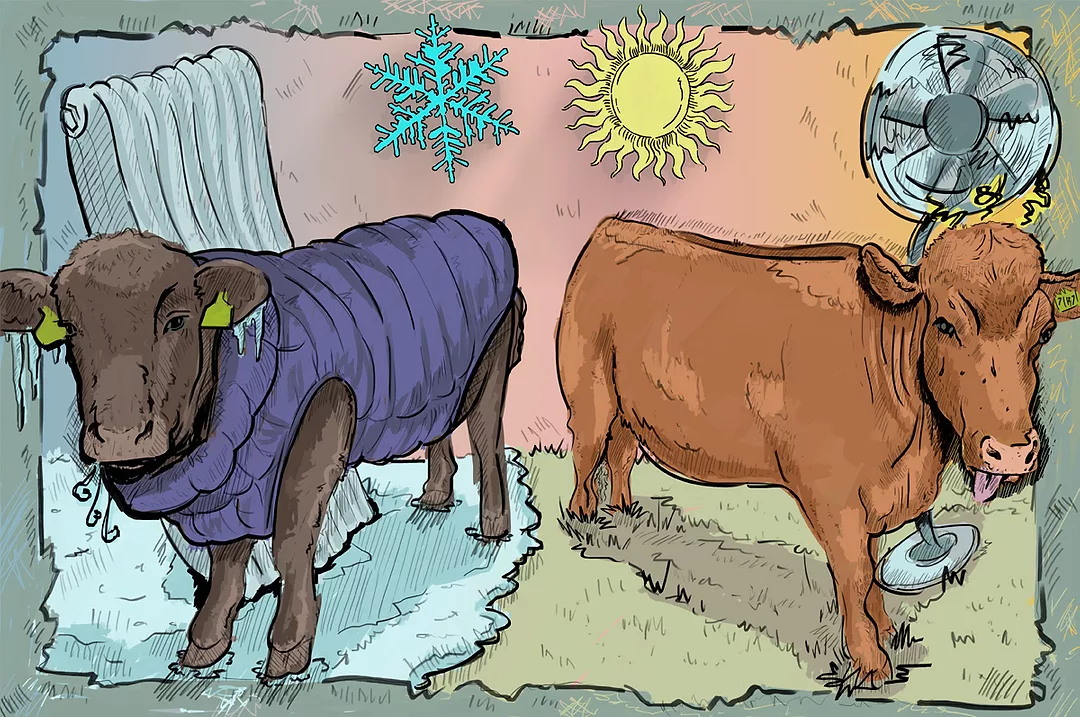
Every cattle operation deals with environmental stress in some form or another multiple times throughout the year. Heat, cold, mud, snow and ice – even extremes such as hurricanes, tornadoes or wildfires – can have profound and ongoing effects on a cattle operation. While there are measures we can take to lessen these effects (shade, shelters, windbreaks, etc.), in many cases we simply cannot provide true protection from extreme environmental conditions or weather effects. That said, every herd will undergo some degree of environmental stress at various times throughout the year. As livestock owners, our job is to lessen these effects as best possible and make good management decisions to ease stress levels, keep animals as comfortable as possible and keep them performing.

As common as these highly stressful events are on cattle, we often fail to recognize the actual physiological effects on the animal. In many cases, we may see the symptoms but don’t know what to do about it. These stress effects can have a variety of wide-ranging or long-term implications on production and profitability.
Understanding stress
At the most basic level, stress is defined as pressure or tension exerted on an object. In living organisms, including humans and cattle, stress is a normal chemical, biological and physiological reaction to challenging or dangerous situations. The body recognizes stress and reacts to it. When the body experiences changes or challenges (stressors), it produces physical and mental responses.
Cattle must endure many stressors in their natural environment. For example, they experience food and water shortages, are in areas where predator or parasite densities are high, engage in conflicts with herd members and face fluctuations in temperature. While it may be possible for producers to anticipate when stressors may occur, predictions of intensity or duration of stress are not possible.
Generally, stress in cattle is not a good thing and is counterproductive to health (depresses the immune system), reproduction (reduces breeding and conceptions, may result in abortions or increased rates of dystocia) and weight gain (reductions in average daily gain and feed efficiency). In worst cases, it can affect all three simultaneously.
What are the effects of heat stress?
Heat stress significantly impacts cattle, leading to various physiological effects that compromise their health and productivity. The summer of 2023 was a good example of this in many parts of the country. Temperatures exceeded 100°F in many areas for weeks on end and did not drop below the 90s at night for much of this time. Interestingly, cattle may begin to show signs of heat stress at temperatures as low as 70°F.
To aggravate this problem, humidity levels increase heat stress levels. Many areas across the country experience high humidity levels that, when combined with ambient temperatures, create a particularly challenging heat stress situation. Combined with wind speed and sunlight, it becomes difficult for cattle to get cool and get beneath the heat stress threshold.
Here are some key effects:
- Increased body temperature: Cattle struggle to regulate their core temperature, leading to overheating. This is related to two significant factors: First, mature cattle are large animals with a lot of surface area in contact with heat. Secondly, as ruminants, a mature animal’s rumen is a large fermentation vat (about 45- to 50-gallon capacity) that generates heat in the digestion of feeds, particularly forages like grass, hay or silage. Some feed types have a higher “heat generation” potential than others. So, in summer, especially when cattle on pasture have limited access to shade, cattle can have difficulty managing body temperatures.
- Reduced feed intake: Heat stress decreases appetite. This lowers nutrient consumption and promotes weight loss. This has great effects on growing cattle, but also on breeding cows who may be bred, nursing a calf or needing to be bred. Nutrient intake reduction negatively affects all these situations.
- Altered metabolic processes: Nutrient partitioning shifts away from growth and productivity, affecting overall performance. In situations as described above (reduced feed intake), the body changes how it prioritizes nutrient use away from productive systems (growth, milk production, breeding) and to more core, survival-related systems. In most cases, reproductive performance will suffer first.
- Weakened immune system: Chronic heat stress makes cattle more susceptible to disease and infection. This is related to the previous two items – nutrient intake and altered metabolic process. Once again, nutrient priority is shifted away from immune support.
- Impaired reproduction: Heat stress negatively affects fertility, reducing conception rates, extending time to rebreeding and calf viability.
- Higher water consumption: Cattle increase water intake by 20% to 30% to help regulate body temperature.
- Respiratory distress: Increased panting and sweating occur as cattle attempt to cool down. This may differ depending on breed type and hair coat.
What are the effects of cold stress?
On the opposite end of the scale, excessive cold may also create significant stress, although it seems cattle are more tolerant of cold than heat, depending on breed type. Fortunately, the heat generated by rumen activity, assuming cows have plenty of high-quality forage, helps keep the animal warm even during extremely low temperatures. Another helpful situation is if cows are in good body condition.
Low temperatures are more challenging for young calves, especially those born in very low temperatures, largely due to the low level of fat stores at or after birth and the lack of a functioning rumen during the first few weeks of life. Cold stress is also made worse by wet conditions – rain or snow, as well as mud. When the hair coat is wet, it is much more difficult for the animal to retain body heat than if it is only cold. Cold stress affects health, metabolism and growth.
Here are some key effects:
- Increased energy requirements: Cattle must expend more energy to maintain body temperature, leading to higher feed consumption. As with heat stress, cold can cause the body to direct nutrients away from performance to survival.
- Reduced weight gain: If energy intake does not meet increased demands, cattle may lose weight or experience slower growth. For cattle that may not be in optimal body condition, cold will make it more difficult for them to add weight and condition. Muddy conditions also reduce weight gains due to the increased physical requirement to simply move around.
- Weakened immune system: Prolonged exposure to cold stress can make cattle more susceptible to diseases.
- Lower reproductive efficiency: Cold stress can negatively affect fertility and calf survival rates.
- Shivering and metabolic changes: Cattle may shiver to generate heat, increasing metabolic activity and energy expenditure.
- Frostbite risk: Extremities such as ears and tails (especially in calves) are vulnerable to frostbite in extreme cold conditions.
- Reduced feed efficiency: Cold stress can alter digestion and nutrient absorption, making feed utilization less efficient.
Reduction of environmental stress
For some operations, this can be a challenge given range conditions, remote pasture locations, etc. Here are a few recommendations for reducing environmental stress:
- Provide plenty of clean, fresh water. This is absolutely critical for both heat and cold. Water is the core nutrient and is critical to body function regardless of conditions.
- Provide adequate shade. Whether in the form of trees, brush or structures of some type, providing a means for cattle to get a break from direct sunlight is helpful in reducing stress.
- Provide windbreaks. In winter, wind reduces the animal’s ability to stay warm. Reducing wind effects significantly improves that ability. This is also useful for keeping calves warm, especially newborn calves. For cows calving during these periods, access to calving shelters is particularly helpful, especially if access to a heat source is possible. These resources can dramatically increase calf survival during these periods.
- Cattle movement. During winter storms, if possible, move cattle to pastures that may have more cover. If cattle are pastured in low areas, make sure they can get to higher ground in the event of excess rainfall and potential flooding.
- Feeding a proper diet. Nutrient requirements change during these periods, as discussed above. During hot periods, providing access to a better-quality forage with lower fiber content can reduce rumen heat production. During cold, using a poorer-quality forage can actually increase heat production, but this needs to be offset by higher protein and energy supplementation. Provide a constant source of well-balanced minerals and vitamin supplement. Additives such as yeast, enzymes, ionophores and others are useful tools during these periods to reduce stress effects, improve nutrient digestibility and availability as well as increasing feed efficiency.
Conclusions
It is important for producers to plan ahead for various possibilities of environmental stress events. Most of these are unavoidable, but steps can be implemented and plans made to minimize these effects. Proper planning and attention to heat and cold are an important part of the overall stress reduction management plan. Development of an environmental stress management plan can be useful for all cattle operations.