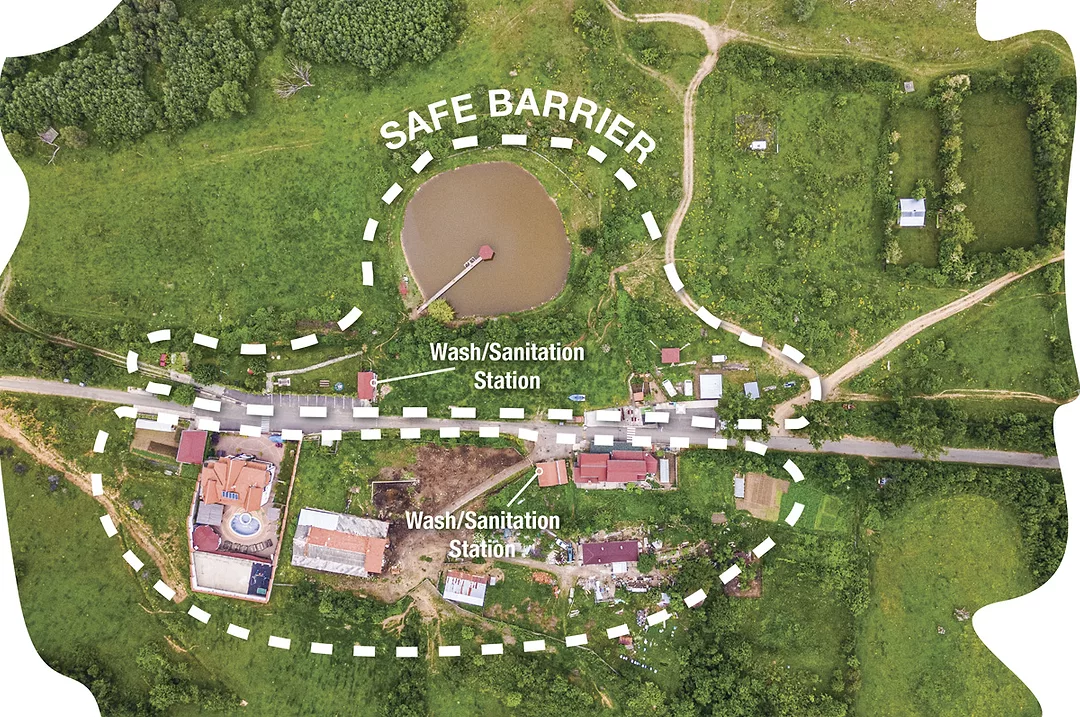
Biosecurity must be seen as more than just a reactive measure – it’s the proactive backbone of a resilient beef operation. Integrating enhanced biosecurity practices into your daily routine not only protects against everyday animal health risks but also positions your operation to participate in the Secure Beef Supply (SBS) Plan during a significant disease outbreak, like foot-and-mouth disease (FMD). By embedding these principles into your daily operations now, you build a system ready for emergencies – while reaping everyday health and economic benefits.


Once you have implemented a day-to-day biosecurity protocol for your operation, it’s a good time to think about establishing a Secure Beef Supply Plan. This is a plan that will only be implemented in the event of a real disease outbreak. The SBS framework emphasizes continuity of business by requiring rigorous, validated biosecurity practices. Having this plan already written down and ready to implement will help your operation be best positioned to protect your livestock and income.
Your resource team
Day-to-day plan: “Build your team before you get to the scene,” says Lisa Pederson, Extension Beef Quality Assurance (BQA) specialist, North Dakota State University Extension. This individual ensures the biosecurity plan is up to date, oversees training and is your point person for compliance and crisis response.
SBS perspective: During an FMD outbreak, having a documented, functioning team structure ready and in place accelerates your emergency response and supports eligibility for movement permits under the guidance of your state.
Building your 'moat'
Day-to-day plan: A clearly defined and enforced line of separation (LOS) is a cornerstone of both daily and enhanced biosecurity. Consider the LOS as your first fenceline and your “moat.”
“Think of your operation as a castle and the LOS as your moat. For routine disease threats, your moat will be close to the operation. As diseases get bigger or require more control, you’ll need to move the moat further back,” says David Wolfgang, DVM, Penn State University Extension veterinarian.
Anything crossing this line, animals, equipment or people, must be documented and controlled. Anything within the line is considered to be clean. Anything outside of the line is considered to be dirty. This is the invisible (but clearly marked) line that separates your cattle and facilities from the outside world. The best LOS are at natural barriers to your property, like the gate or cattle guard at the end of a driveway. Having that LOS already defined will put you a step ahead of the game.
SBS perspective: In an outbreak, movement permits hinge on a validated LOS, disinfection protocols and completed logs. Establishing and practicing these steps now simplifies compliance later. It’s not just animal movements that must be controlled at this LOS, but also visitors, feed deliveries and other items critical to an operation. You may need to get creative to find ways to minimize traffic across the LOS or thoroughly disinfect vehicles, personnel or other equipment that must cross the line. Think about how you will access water for washing/disinfecting as you set up your SBS LOS (which may be different from your “everyday” LOS).
Record-keeping and quarantine protocols
Day-to-day plan: Effective quarantine procedures and detailed health records are mandatory for SBS readiness. Newly introduced or returning animals should be isolated for at least 21 days with zero shared water, feed or nose-to-nose contact. At least 6 feet of space should be between the newly introduced cattle and cattle already present on the premises. Recordkeeping is an essential step in the BQA program for best practices and for daily biosecurity. Producers should already be on their A game when it comes to good record-keeping and quarantine practices; this step in SBS should be the least heavy of the lifts.
SBS perspective: These measures are essential for disease surveillance and improving herd status, which are key prerequisites for movement and market access during a regional or national outbreak of FMD. You may need to prove where your animals have been before the outbreak began to ensure they were not exposed; having that information already compiled may aid you in becoming eligible for movement permits in a shorter time frame.
Herd health plans
Day-to-day plan: Another key aspect of biosecurity is your vaccination and herd health plan. Herd health planning is another key management practice in the BQA program. A good robust herd health plan, including specific vaccination protocols and management of sick animals, should be part of a producer's plan.
SBS perspective: Your herd health status should support the continuity of business if there is an FMD outbreak. Checking for possible disease symptoms is critical to prove an FMD-free status on your operation.
Equipment, vehicles and visitor management
Strict control and documentation of equipment, vehicles and personnel movement is critical to reduce disease transmission risk. It is highly encouraged to not have shared equipment during an FMD outbreak. Any shared equipment or movement of vehicles and personnel must be logged and maintained for traceability purposes.
SBS perspective: For FMD traceability, detailed logs must be kept and provided upon request. Daily diligence will build preparation during an FMD outbreak.
Feed, water and waste management
Day-to-day plan: Feed delivery protocols, water quality monitoring and manure handling are biosecurity basics that must be upscaled under SBS. Using dedicated feed equipment and ensuring clean water access even under crisis conditions will be important. Understanding how feed, water and waste are managed on the farm is important when building an SBS plan.
SBS perspective: Contaminated feed or water can become vectors for disease. Proper infrastructure and separation practices will protect your herd health and facilitate compliance for your SBS plan. Your SBS plan for feed, water and waste management may look vastly different than your plan for daily management. Consider how you will handle incoming traffic that must travel near other farms or ranches, where your new LOS will be and how you will maintain it while ensuring feed and other supplies get to your operation. This may include strategies like altering your nutrition plan to minimize deliveries and stockpiling manure for a time rather than hauling it off.
Grazing public lands and wildlife: The external risks
Operations grazing on public lands or exposed to wildlife face elevated biosecurity challenges. Strong fences, shared plans with neighbors and wildlife-deterrent strategies will reduce disease risk.
“This portion of your plan is the portion that doesn’t allow producers to have total control. Some get tripped up on that; don’t let it. Control what you can control. There are other areas of your operation where you have more power to control,” says Jeff Bissett, DVM, Pennsylvania Department of Agriculture.
SBS perspective: Risk mitigation in uncontrolled environments is crucial to consider. Preemptive planning and collaborative neighbor strategies help improve your biosecurity and SBS compliance. Movement on public lands and movement of disease on wildlife should be considered when creating your SBS plan. It’s likely that you will only be able to control an LOS around your immediate “headquarters.” This will affect animal movements on or off the headquarters or from pasture to pasture.
Whether you run 20 cows or 2,000, integrating Secure Beef Supply principles into daily biosecurity practices fortifies your operation against both routine and catastrophic events. Enhanced biosecurity is not just a theoretical ideal; it's a practical, essential investment in business continuity, animal health and market security.
Your operation’s readiness depends on what you do today. Leverage SBS resources, collaborate with your BQA state coordinator and/or university extension agents and specialists, and take daily steps to turn your operation into a model of biosecurity excellence. Finally, use the SBS resources to create your own plan and ensure your operation is ready in the event of a catastrophic disease outbreak, like FMD.
Visit the websites for more biosecurity and SBS resources or contact your local state BQA coordinator.