Mineral supplementation is a foundational component of beef cattle nutrition. Across grazing systems, trace minerals such as copper, cobalt, manganese, selenium and zinc play essential roles in immune function, reproduction, growth and overall cattle health. Although the importance of a well-developed mineral supplementation program is now well understood, the greatest challenge remains in ensuring that cattle consume it consistently, rather than in formulating the supplement itself.


Most beef producers rely on free-choice mineral supplementation to provide trace minerals to cattle. This approach is practical, widely adopted and generally effective at the herd level. However, research has consistently demonstrated that mineral intake can vary substantially among animals within the same herd. Some cattle regularly visit mineral feeders and consume amounts above target intake, while others consume very little despite having access to the same supplement.
This variability becomes particularly important during critical production events such as breeding, weaning, transportation and preconditioning. During these periods, cattle experience increased physiological demands and often face stressors that can challenge immune function and performance. Therefore, maintaining adequate trace mineral status before and during these critical time points may help support the physiological processes necessary for optimal health and productivity. As a result, interest has grown in supplementation strategies capable of delivering a known quantity of trace minerals at specific points in the production cycle.
One strategy receiving increased attention is the use of pulse-dose trace mineral products, including injectable trace minerals (ITMs), oral drenches, pastes and boluses. Unlike traditional free-choice supplements, these products deliver a measured dose directly to cattle, reducing dependence on voluntary intake and allowing producers to strategically target periods when optimal mineral status may be particularly important.
Research evaluating these technologies has shown that pulse-dose mineral products can effectively improve mineral status. Studies comparing injectable, drench, paste and bolus products have demonstrated that different delivery methods can increase circulating and liver concentrations of trace minerals, although the magnitude and duration of response vary among products. Injectable products often produce rapid increases in mineral status, while bolus products may provide a longer-term response. Oral drenches offer an alternative that can be easily administered during routine cattle-handling events.
Our research group at Oregon State University’s Eastern Oregon Agricultural Research Center (EOARC) recently evaluated whether the timing of a trace mineral drench could influence the performance and mineral status of grazing beef calves. The drench contained copper, cobalt, manganese, selenium, zinc and vitamin E and was administered either during the dam’s breeding season, at weaning or at both time points.
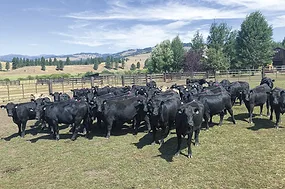
The study was conducted with Angus-Hereford cross calves grazing native rangelands in eastern Oregon, where forage mineral concentrations can often be insufficient to fully meet cattle requirements, especially for copper. In the study, calves were assigned to one of four treatment groups: no drench, drench at the dam’s breeding, drench at weaning, or drench at both breeding and weaning. Calf bodyweight and liver mineral concentrations were monitored throughout the study and during a 45-day preconditioning period after weaning.
Interestingly, we did not observe differences in calf growth performance among treatments. Calves receiving the trace mineral drench performed similarly to calves that did not receive the drench. However, a different picture emerged when mineral status was evaluated. Calves that received the drench during the breeding season of their dams tended to have greater liver copper concentrations at weaning compared with calves assigned to the other treatment groups. This finding suggests that strategic administration of a trace mineral drench may improve copper reserves even when measurable growth responses are not immediately apparent.
These results are consistent with previous research conducted by our group, in which we evaluated the use of ITMs in grazing beef calves and similarly observed improvements in copper status without corresponding increases in growth performance. Together, these findings suggest that strategic trace mineral supplementation can enhance trace mineral reserves even when weight gain responses are not evident. These results are also consistent with a growing body of research showing that improvements in mineral status do not always translate directly into increased weight gain. In fact, trace minerals often influence physiological processes that are less visible than growth, including immune function, antioxidant defenses and the cattle’s ability to respond to stress. This highlights an important concept for producers: The value of a mineral supplementation program should not be judged solely by growth performance.
Trace minerals support numerous biological functions that contribute to long-term productivity, reproductive success and resilience during stressful periods, and rather than replacing traditional mineral programs, pulse-dose products are best viewed as a complementary management tool. Free-choice mineral supplementation remains the primary method for delivering trace minerals in most grazing operations, while pulse-dose products can be used strategically to support mineral status during specific production stages or management events.
Situations where strategic trace mineral administration may be particularly useful include operations grazing mineral-deficient areas, environments where free-choice mineral intake is highly variable and management events such as breeding, weaning, transportation or preconditioning when cattle are already being gathered and processed.
The timing of supplementation is also important. Delivering trace minerals during routine handling events can improve convenience and reduce labor requirements while ensuring cattle receive a known quantity of trace minerals. For many producers, this may represent an opportunity to support mineral status without requiring major changes to existing management practices.
As the beef industry continues to adopt more precision-based management approaches, mineral nutrition will likely become increasingly focused not only on what is supplemented but also when and how it is delivered. Pulse-dose products such as trace mineral drenches provide producers with another option to address nutritional challenges associated with grazing systems and critical production events.
Ultimately, no single supplementation strategy fits every operation. Successful mineral programs should be based on forage resources, regional deficiencies, management objectives and production stage. However, strategic trace mineral supplementation may help bridge gaps that occur when mineral intake is inconsistent or when cattle face periods of elevated nutritional demand.
Finally, the goal remains the same as it has always been: ensuring cattle have adequate mineral status to support health, productivity and long-term performance. Strategic trace mineral administration may simply provide producers with another tool to help achieve that goal.