Taking care of the land doesn’t just happen. It takes patience, planning and a willingness to adapt to change as it happens.

Grazing cattle can be one of the more holistic ways to manage rangeland. While simply turning cattle out on pasture and bringing them back when the grass is gone is one way to manage a pasture, it’s not ideal for long-term growth and sustainability. To manage pastures properly, build long-term growth and enhance pasture productivity, you need a grazing plan.
There are many benefits to building a grazing plan. First, it forces you to think about what you want to achieve with your operation and set goals for creating that success. Often, we don’t take time to think big picture, and building a plan creates a situation that forces ranchers to consider what they want to achieve through the ranching business. Building a grazing plan also helps measure success, starting with a baseline and measuring improvement or setbacks along the way. That measurement plays into another benefit: giving a foundation for making critical decisions.
If you need to decide to reduce herd size due to drought, for example, it’s better to make that decision with data from your own operation than just guessing.
A program for regenerative ranching
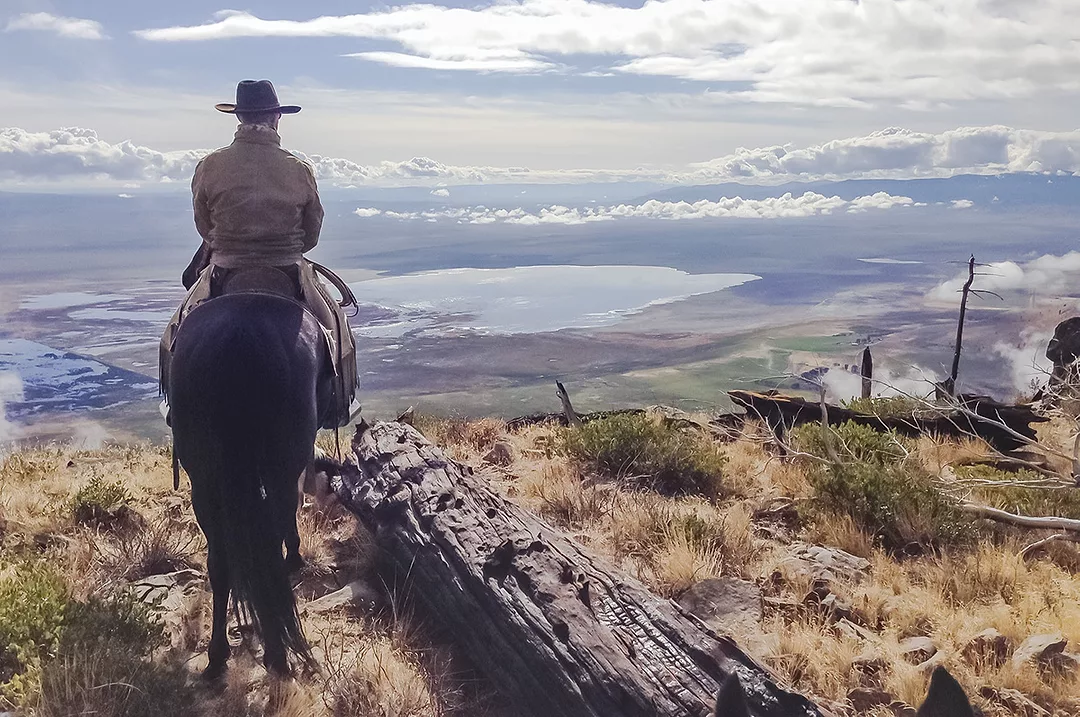
Matt and Colleen Withers and their families manage Withers Ranch, a 7,000-acre, 1,100-head operation near Paisley in south-central Oregon. In 2000, the ranch became part of Country Natural Beef, a cooperative of about 100 ranch families in the Pacific Northwest, encouraged to implement regenerative ranching practices. Withers Ranch has participated in the Grazewell program for the past two years. Grazewell meets ranchers where they are in their regenerative ranching journey and helps them find ways to capture measurements for current practices and try new programs.
As part of the Grazewell program, the Witherses can identify up to five different pastures on their ranch where they want to make improvements. Because they ranch on a diverse landscape, they tried to capture areas that represented different grazing environments. In the end, the five areas were sites that they wanted to improve. Each site is checked at least annually to assess improvements and whether any management practices need to be altered.
“We’ve chosen two or three management actions per site,” says Colleen Withers. “As an example, one of our irrigated meadows is really heavy soil, borderline clay. Water infiltration was not great in this area, so we wanted to improve that aspect. So we decided to aerate the meadow, and so far we’ve seen significant improvement.”
Building a grazing plan
The next step in the process is developing a grazing plan.
“That was too much fun,” Colleen says. The “fun” part, she says, was taking the seven generations’ worth of knowledge about how they graze their landscape and putting that down on paper – or, in this case, into a spreadsheet.
“We wanted to really represent what we do, what our goals are and that it was functional,” Colleen says. “These were real-world applications of what’s going to work in our operation.”
Make it yours
Before starting on your grazing plan, realize that whatever sort of plan you build, it’s going to be unique to your operation. No other ranch is identical to yours. You have unique soil types, topography, water availability and usage, herd sizes and more. So when you go to build your plan, do it for your own operation and don’t worry about what someone else is doing.
Step 1: Don’t just sit down and start writing a plan; do your homework
Data and information are available from a number of sources. Any extension program should have resources available to help you build a grazing plan. Start with your state extension service or extension programs from states that may have similar rangeland situations. Also, check with the USDA for local resources, including your local Natural Resource Conservation Service (NRCS) office. Even though your ranches may not be identical, it’s also a good opportunity to talk with other ranchers who have developed their own grazing programs to get their advice.
As for outside resources to help with her grazing plan, Colleen says she had help from other Country Natural Beef members, online resources and the local soil and water conservation district. The goal was to have a plan that was functional but driven by data.
With information in hand, start building a database of information about your pastures with some or all of the following information:
- Soil types
- Plant species
- Average rainfall
- Water availability
- Fencing structures: Is virtual fencing an option?
- Labor availability
- How many head of livestock will be grazing a pasture at a given time? What is the average animal size?
The Witherses started by mapping out pastures, then they used an analysis program to estimate total forage available per pasture. They used one animal unit, or a 1,000-pound animal, consuming 28 to 30 pounds of forage per day for one month, or a total of about 750 pounds per animal. That information helped them understand stocking densities and the length of time cattle needed to be in specific pastures.
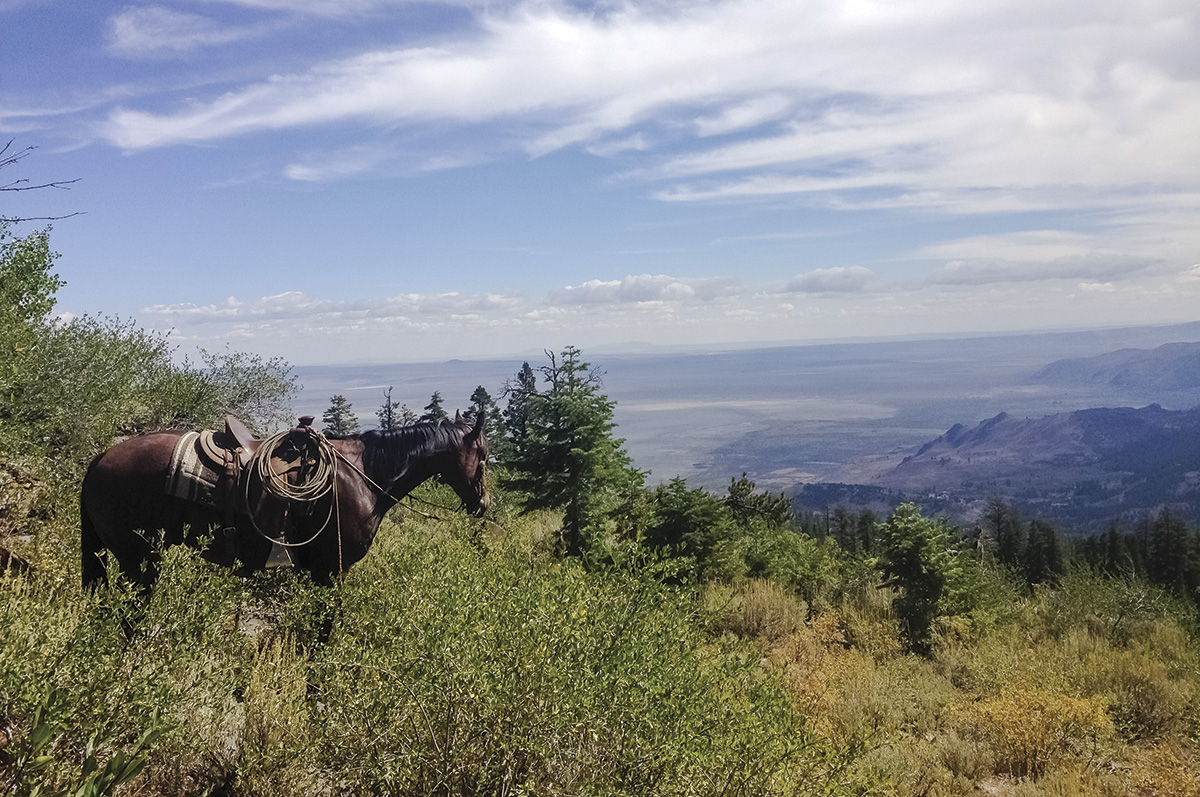
Image courtesy of Withers Ranch.
Step 2: Know what you want to accomplish and how far you must go to get there
You should have a goal in mind for your ranching business – your grazing plan should align with it. Do your goals center on forage growth and utilization? Or is it to improve pasture health and sustainability? How important is animal health and productivity?
Put some numbers to your goals, then assess where your operation is today. That sort of gap analysis will help you determine how far you need to go to reach your goals.
Step 3: Understand the path to success
Think through scenarios. If you have a vision and a goal for what your grazing program should look like, there are a variety of pathways to help you achieve success. Think through what those scenarios could be and identify which ones best suit your system. What happens if you get too much rain? Or not enough? What happens if summers are abnormally hot? Or cool? What happens if the cattle market drops? Or accelerates? These are just a few scenarios to think through. Have a strategy for each of the scenarios so that if they do happen, you’re prepared.
For the Witherses, their program helped them with scenarios, taking a 25-year average and adjusting for moisture levels. At any given time, the Witherses can look at their spreadsheet, which is categorized by pasture, and adjust for current and projected moisture levels to determine stocking densities for a particular period of time.
One “cool” result, as Colleen puts it, happened with a group of first-calf pairs.
Early in the grazing season, the Witherses turn first-calf pairs out on hills behind ranch headquarters. They’re new moms who need quite a bit of forage, and they’ve done that for years and never had too much trouble. But when Colleen analyzed existing forages, the analysis said that while the forage quality is really good, the quantity may not be enough. So they supplemented the pasture and noticed changes in conception rates and overall health.
“It was striking to me that we’ve done this for generations, and with just a little piece of data, we decided to do something different,” Colleen says. “These types of tools in a fast-paced, changing environment are really valuable. There’s just really no excuse anymore to not be using data to make decisions. It just opens up a whole new world of resources, and it’s just another step into that overall resiliency of us as ranchers.”
With success stories like Withers Ranch, it’s hard to imagine why only 10% of ranchers have written grazing plans. Any livestock producer will benefit from written grazing plans and grazing season goal-setting.