Back in November, the USDA and the Department of the Interior announced a partnership promising something many Western cattle producers haven’t heard in years: more opportunity for grazing on public lands, not less.
Now, the details of the Grazing Action Plan are starting to take shape. On March 31, the USDA Forest Service and Bureau of Land Management signed an updated memorandum of understanding (MOU), setting a five-year framework for their goals: reopening vacant allotments, streamlining grazing permits and expanding targeted grazing for wildfire and invasive species management.
For producers, the practical question is simple: What does this actually mean for us?
“My general understanding of the Grazing Action Plan is that the goal would be to open up some of the vacant allotments for cattle producers across BLM and Forest Service managed lands, which I think in theory is a really great idea,” says Melinda Ellison, University of Idaho extension range livestock specialist.
Reopening vacant allotments
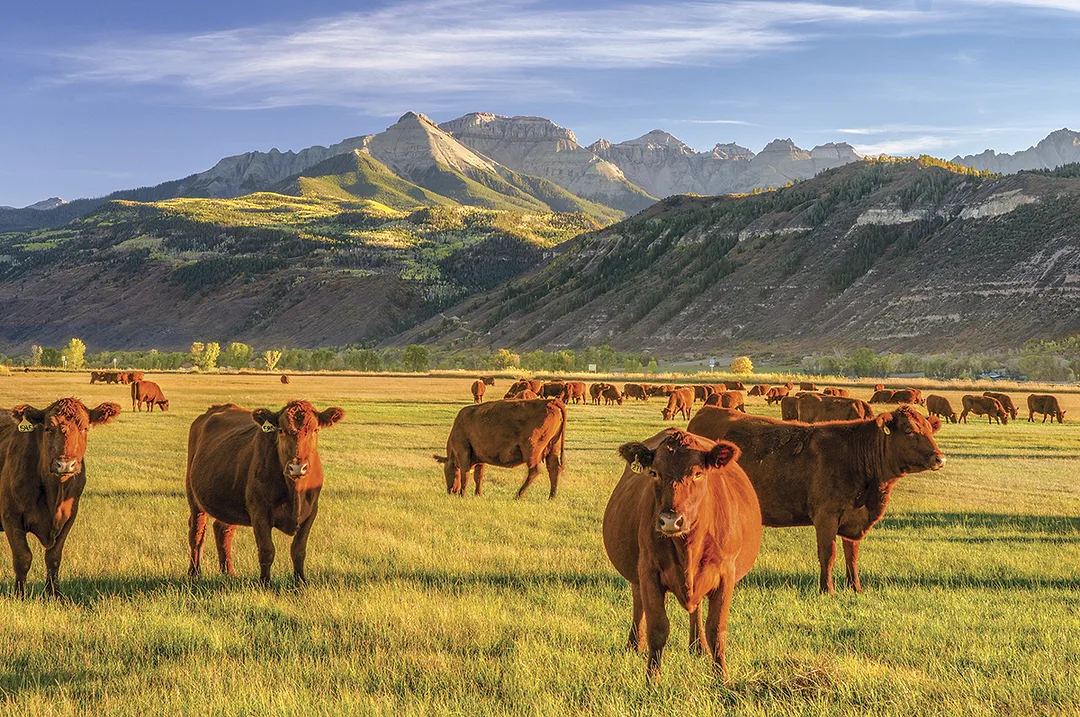
One of the biggest opportunities in the plan is the focus on bringing vacant grazing allotments back into use. The agencies commit to regularly auditing vacant allotments, identifying management strategies and investing in infrastructure and analysis needed to make those allotments available again for long-term stocking.
That matters because a significant portion of federal grazing allotments currently sit unused.
“Any lost grazing allotments have impacted the beef industry significantly because most of the producers in the West rely on public lands,” Ellison says. “So when they are removed from their production system, they are then, in many cases, put out of business.”
For producers facing historically tight forage supplies and elevated land costs, reopening allotments could provide an opportunity to expand at a time when cattle markets are strong.
“We’re in a situation where growing the beef industry is really possible because of the way that the cattle prices are and all of those things that go with it,” Ellison explains. “So I think the timing is great. If it all works the way that it sounds like it might, it could result in real growth in just the inventory of cattle and grazing lands for cattle.”
The MOU states the agencies will seek to avoid permanently reducing animal unit months (AUMs) or vacating allotments whenever possible, instead pursuing mitigation strategies like allotment reconfiguration or expanded management flexibility.
For producers who have watched available grazing lands steadily shrink over the years, that language signals a notable shift in tone from the agencies.
Viewing grazing as a land management tool
The agreement also places livestock grazing squarely within broader public lands management goals, as the agencies committed to maximizing targeted grazing for wildfire fuel reduction and invasive species management. The plan specifically calls for making vacant allotments available ahead of peak wildfire season to help reduce fuel loads.
For producers in the West, where wildfire season is a matter of when, not if, the concept is familiar.
“A moderate graze on grasses prior to wildfire plays a significant role in reducing the heat and severity of the burn,” Ellison says. “Anywhere that you’ve got sagebrush steppe or grasslands or anything like that, if you remove some of that fuel, it decreases the severity of a burn and allows those fires to burn in a way that doesn’t cause long-term damage.”
Still, Ellison emphasized that targeted grazing programs must remain operationally realistic.
“If we’re calling it targeted grazing, we need to make sure we’re allowing the producers to still manage their cattle in a way that’s sustainable for them,” she said. “That will be essential.”
When grazing plans become too rigid, they can be difficult to implement on working ranches where labor or time is in short supply.
“If you make the management really challenging, it’s going to be less ideal for a producer because that just causes a lot of work and anxiety for them,” Ellison shares.
She added that improvements such as additional water developments, adjusted fencing or other infrastructure investments may be necessary if agencies expect producers to implement high-intensity grazing programs.
Overall, though, the broader recognition of ranchers as active land stewards is a piece of the plan Ellison says is long overdue.
“Ranchers always have been the stewards of the land,” Ellison says. “It’s great that now it’s being recognized that they could be more useful to the agencies in that realm.”
Virtual fencing and producer economics
One of the more modern pieces of the plan is the agencies’ support for “voluntary virtual fencing” and other technologies designed to improve grazing flexibility and reduce infrastructure costs.
Virtual fencing has gained attention in recent years as producers look for alternatives to building expensive traditional fences in rough or remote country. The technology can allow operators to shift cattle distribution, protect sensitive areas or manage targeted grazing without permanent physical barriers.
But Ellison said the BLM and Forest Service need to stay aware there is still a large economic cost that comes with implementing virtual fence technology.
“There is still a significant cost associated with it that most producers can’t pencil,” she says.
That makes potential cost-share programs or government support especially important.
“My thought would be, first: Is the BLM or the Forest Service going to help foot that bill in some way?” Ellison says. “Or is it going to be such a significant increase to your production system to have that chunk of land that it’s worth spending the money on a virtual fence?”
She encouraged producers to evaluate a permit’s viability during every situation – both the current profitable cattle cycle and eventual downturns.
“We can’t expect the cattle market to stay as strong as it has forever,” Ellison says. “Make sure you’re planning for the future: years when the market is down in addition to the good market years, especially if you’re committing to implementing virtual fence and/or targeted grazing management.”
Partnering with producers
One aspect of the plan Ellison is anxious to see come to fruition is its promises to streamline permitting and modernize grazing regulations.
The agreement commits the agencies to utilizing tools like categorical exclusions and emergency authorities under the National Environmental Policy Act (NEPA), the U.S. Endangered Species Act (ESA) and the National Historic Preservation Act (NHPA) to speed grazing authorizations.
“Streamlining permit renewal or permit application is a fantastic commitment because that’s something we haven’t seen from the agencies before,” Ellison says.
But ultimately, she says the biggest threat she sees to the plan’s success is the potential to get tied up in litigation. Ellison stressed that her concern is not with producers or agency staff themselves but with the broader legal environment surrounding public lands management.
“We still have FOIA (Freedom of Information Act) and the government-paid litigation processes that challenge progress,” she says. “That’s one of the main issues that needs to be addressed for plans like this to really work well.”
Public lands grazing decisions have frequently faced lawsuits that delay or halt projects and permits, even after agencies complete environmental review processes. Ellison believes those legal challenges could determine whether the Grazing Action Plan achieves its goals or stalls out.
“My advice would be that if you have an opportunity to do something within this realm, definitely take a look at it,” Ellison explains. “But I would certainly be very wary of all the fine print; read your permit top to bottom.”
The plan also calls for ranch immersion programs to help federal employees understand the producer perspective, including participation in collaborative learning roundtables and the creation of grazing permittee wildfire liaison roles during wildfire incidents.
Ellison thinks this could help bridge long-standing gaps between agency personnel and producers.
“To me, that sounds really cool,” she says of the ranch immersion concept. “I think it’s something that could be really beneficial for the relationship-building between the agencies and the ranchers.”
Down the line
For all the policy language and agency coordination involved, Ellison says the true measure of success will come as the plan is actually implemented.
“It’s a great concept. I think what it comes down to is if a year or two from now, we really do have cattle on what were vacant allotments,” she says. “And, it’s not an effective system if we’re seeing complications that are causing producers to have their permits challenged or be removed from an allotment in subsequent years due to litigation.”
She also says she will be interested to see if the streamlined permitting process envisioned in the plan will expand and improve the broader federal grazing system as a whole.
“If you can streamline permitting for something like this,” Ellison says, “could it also move into the existing grazing permits, making permitting and permit renewal that much more streamlined?”
Only time will tell. The plan is promising and, if implemented well, could mean more room for cattle on public lands across the country. But like any policy on paper, its real impact will depend on how it plays out in years to come.