


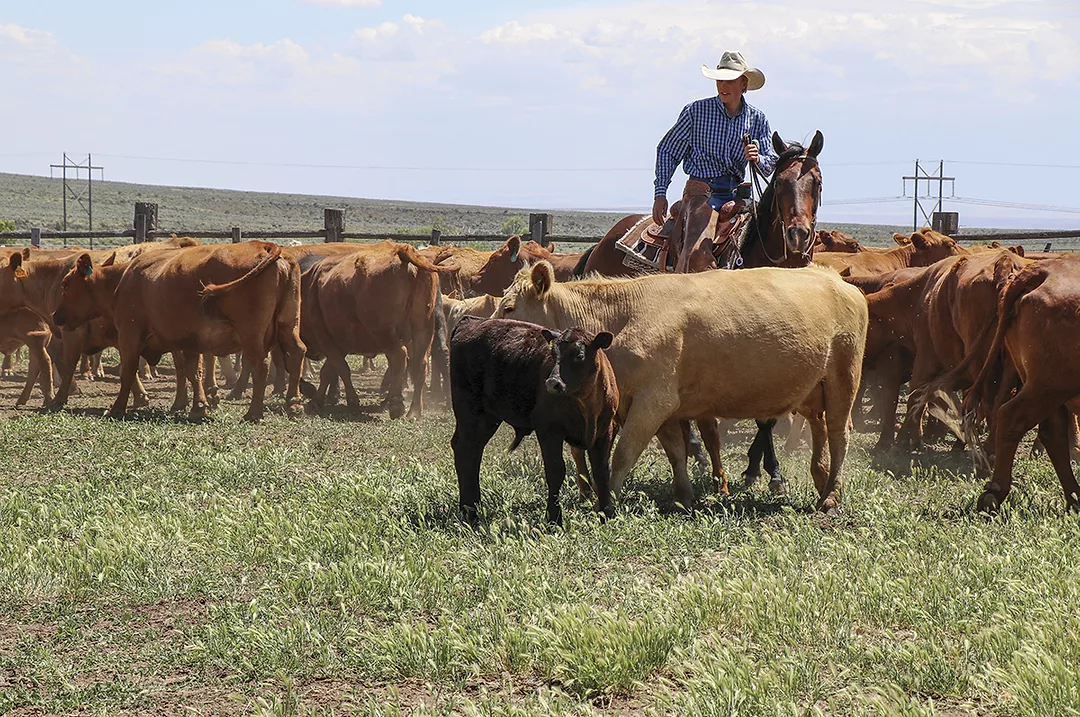
Nothing about ranching is easy – except for, perhaps, the love producers have for the industry and their animals.

From volatile markets and fluctuating weather to new and old herd health challenges and changing federal policies, ranching is a 24/7 job with so many variables that producers can’t control. It can give even the best of us some heartburn.
Growing up on my family’s cow-calf operation in Huron, South Dakota, and now as a food animal veterinarian, I see and live the challenges producers face every day.
My passion is to help each operation reach their full potential. That’s why, in my role as a herd management technical adviser, I work with producers to help increase efficiency – and pounds – so they can more easily weather the daily challenges they can’t control.
After more than 15 years practicing in my large-animal clinic, these come to mind as the top three herd health issues on which producers can take action to add pounds to their calves and efficiency to their operations:
- Improving reproduction
- Focusing on how you give the products, not just what you give
- Treating more than just the disease
Open cows cost money
Reproductive efficiency is the biggest way producers can improve overall efficiency in a cow-calf operation. That’s because cows that calve early in the season are more likely to breed back early and stay in the herd. A longer postpartum period allows those cows to reset before the next breeding season. Early-born calves should weigh more and breed sooner themselves, leading to more pounds on sale day.
Tracking conception rates and calf performance is key to understanding which cows are most productive and enhancing efficiency throughout the operation. Synchronization with artificial insemination or natural service can be a powerful tool to get more cows bred earlier in your breeding season.
Details matter in minimizing cattle stress
Stress is one of the biggest contributors I see related to lack of performance. Producers often worry about whether they’re choosing the right product, but the bigger concern should be if they’re administering that product correctly. If cattle are stressed, they don’t respond to vaccines or convert feed the way they should.
In fact, stressed cattle will hide disease, leading to delayed treatment. If cattle are dehydrated, their immune system can’t mount the needed response to the vaccines producers are administering. Producers should ask themselves if they’re administering vaccines to an animal that is capable of responding to them. Rested, calm animals will have a very different response than animals who are highly stressed due to weaning or transportation.
To help manage that stress, consider low-stress weaning procedures, extra water tanks on arrival or delaying vaccination until cattle are rested and hydrated. Producers should review Beef Quality Assurance guidelines annually. As they’re working cattle, producers should ensure animals are hydrated and processed as easily as possible. To make sure products are working as they should, vaccines should be kept out of direct sunlight and heat, and syringes should always be clean. Change needles often and pay attention to product label directions. After all, overlooking even small details could mean the difference between sick and healthy cattle.
Treat the disease – and the side effects
When an animal is sick, timing is crucial. Producers need to be as quick in their response as possible.
Yet administering antibiotics to fight the disease is only half the battle. Producers may give an antibiotic, but it’s important to remember that most products may have side effects. Similarly, each illness has its own set of symptoms. Treating those side effects or symptoms can aid in treatment response. Consider adding a probiotic and electrolytes in addition to an antibiotic; it may help animals recover that much faster.
Tying it together
We know happy, healthy calves are going to be more efficient. They will gain better and utilize resources the best. These animals will have more energy to put into their growth and production.
But tracking all the necessary information, from reproductive performance to herd health, to ensure peak herd efficiency can be challenging.
As a technical adviser in herd health, that’s where I come in. Offering free, incentive-based programs centered on helping ranchers increase efficiency and ensure longevity, AgSpire’s Ranching for the Future program helps producers focus their efforts on herd health by increasing productivity of the herd and, therefore, efficiency of every cow and calf on the operation.
Our team of technical advisers works with producers to find areas that can be improved, or by focusing on specific areas producers themselves wish to improve. This can be anything from herd synchronization and artificial insemination to improving genetics and strengthening animal health protocols. In my experience, even minimal changes can make a big difference.
For example, one of the producers I’m currently working with increased the average weaning weight of their calves by 50 pounds by synchronizing their herd, using gender-skewed male semen and reducing the number of open cows in the herd.
Focusing on reproductive performance helped this producer increase average pounds produced per cow and kept more of them in the herd. And as reproductive benchmarks were met, not only did my client see more pounds at the sale barn, they also received incentive payments for their program participation as well.
In the end, I want the producers I work with – and the cattle they raise – to reach their full potential. Increasing efficiency of cows allows producers to raise more beef with the herd they have today.
Producers don’t need to double their cow herd to raise more pounds. Effective herd management can help cattle achieve optimal growth, health and productivity. By implementing sound practices, producers can help create the best environment for cattle to thrive.





