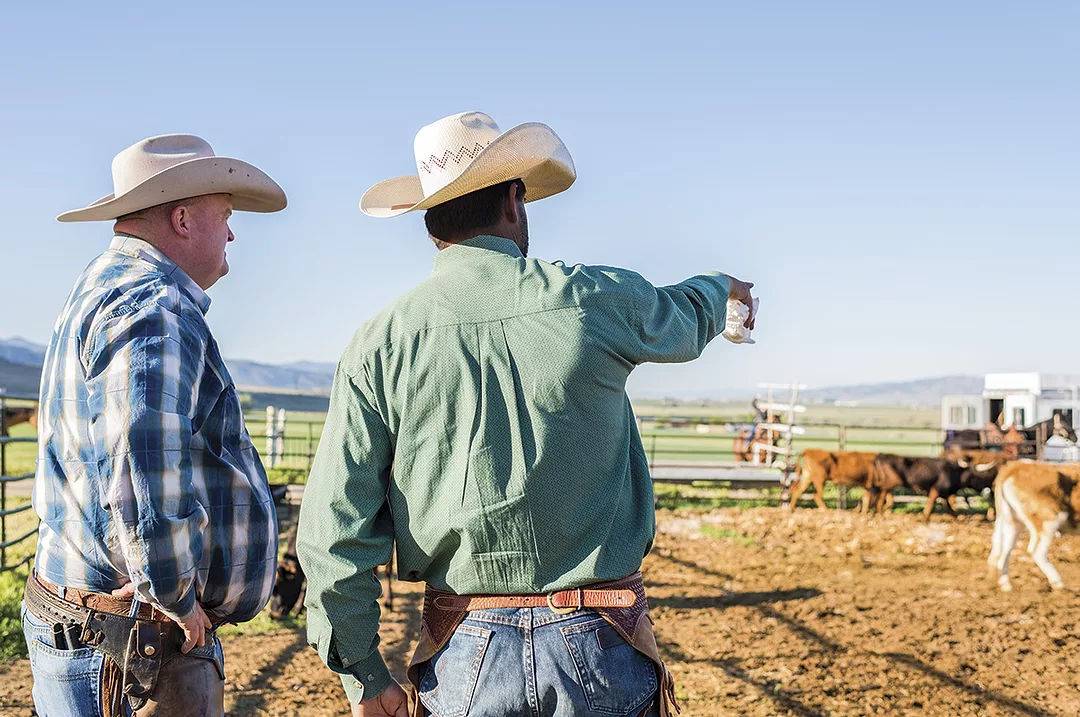
If there’s a phrase that rings true in the ears of any business owner or manager, it’s that “a business is only as good as its people.” And in a world where automation is rapidly transforming many industries, the cattle business remains one of the few that still relies heavily on people. But the landscape is changing, the rural population working in agriculture is declining, and the days of people walking onto your ranch asking for a job are quickly becoming a thing of the past.

Today, the challenge is not just finding workers but finding capable, committed and skilled individuals – and perhaps more critically, keeping them. That’s where investing in your workforce becomes not just a strategy, but a necessity. One of the most effective ways to do that is through intentional talent development.
Talent development as part of a worker retention program
In the cattle industry, we push relentlessly to meet our production goals such as optimal growth rates, improved feed efficiency, higher pregnancy rates and so on. But while we’re laser-focused on these metrics, we often overlook a critical factor in achieving them: the people behind the work.
Let’s be honest, developing talent as part of a worker retention strategy is not optional anymore. It’s essential. You may hear the phrase “talent development” and think it belongs in the playbook of large corporations, but the reality is that it’s just as relevant, and arguably even more urgent, on your ranch or farm.
So what does it look like?
It starts with recognizing that your ability to reach your business goals depends on whether your team understands and aligns with them. Your crew needs to know what success looks like, what you expect and why their role matters. That kind of clarity doesn’t happen by accident; it requires deliberate, effective communication. But here’s where many operations struggle: Language is often the biggest barrier.
It’s no secret that a large share of the livestock industry’s workforce is Hispanic. In beef processing plants, over 40% of the workforce is Hispanic, and in certain hot spots like Kansas, that number climbs to 70%. On-farm labor in states such as Texas and Kansas is similarly composed, with some large feedlots reporting up to 90% of their workforce as Hispanic, many of whom speak limited or no English.
And this is where many cattle operations unknowingly lose ground. You may have capable, dedicated employees, but if they don’t fully understand your goals, your protocols or your expectations, how can they take ownership of your mission? Without shared language, even the most skilled worker can be underutilized.
That’s why talent development must include building communication bridges, starting with language.
Creating a bilingual training program as part of your worker retention plan
Bridging the language gap is one of the most powerful and practical steps you can take to retain and empower your workforce. A bilingual training program isn’t just a communication tool; it’s a talent development strategy, a culture builder and a long-term investment in your people and your business.
So what does a bilingual training program look like in practice?
1. Onboarding with clarity
First impressions matter. New hires should be introduced to your operation with a clear explanation (in their preferred language) of your expectations, your goals and your standard procedures. This sets the tone for trust and professionalism from day one. A bilingual onboarding packet (including a welcome letter, basic HR policies, safety protocols, contact information) goes a long way in showing that you value their contribution.
2. Training materials employees can use
Whether it’s animal handling procedures, feeding protocols, equipment operation or biosecurity measures, training should be clear, visual and language-accessible. That means using bilingual manuals, signage and hands-on demonstrations delivered in both English and Spanish. Videos with subtitles or voiceovers in Spanish can also be an effective and scalable tool.
3. Ongoing safety training
Workplace safety is extremely important and non-negotiable, and misunderstandings due to language gaps can lead to serious injuries or mistakes. A bilingual safety program ensures that all employees are aligned on how to handle livestock, chemicals, machinery and emergencies, protecting both people and animals.
4. Leadership and skill development
Your workplace likely already has employees with leadership potential; they just need the opportunity to grow. Offering bilingual leadership training can help identify crew leads or middle managers who understand the operation and can serve as cultural and linguistic bridges between owners and teams. This not only strengthens your internal chain of command but also builds long-term loyalty.
5. Cultural awareness and two-way communication
A bilingual program should not only help Spanish-speaking workers understand English, but it should also help English-speaking managers better understand and engage with their Hispanic workforce. This can include basic Spanish training for supervisors, cross-cultural communication workshops or regular bilingual meetings where feedback flows in both directions.
If you’re already using some of these strategies in your operation, you’re on the right track. If not, there are simple ways to begin. Some of your current industry partners may already offer bilingual training as part of their added-value services. Talk to your nutritionist, sales representatives, veterinarian or fellow producers. They might be able to connect you with the right resources or point you toward programs that can help you get started.
Final thoughts
In a previous article, I emphasized the importance of the social aspect of sustainability, something I believe is often overlooked. This discussion on workforce development and bilingual training builds directly on that idea. Sustainability isn’t just about natural resources or economics. It’s also about investing in people. The future of your ranch and business depends on how well you support the team that helps you run it.
Start by making communication easier. Translate key materials. Offer training in both English and Spanish. Include your team in your mission statement. These are practical steps that build loyalty, improve performance and move your operation toward long-term success.