The adaptation of technology on farms opens a world of opportunities for dairy producers to improve day-to-day tasks and create a more efficient, economical operation. However, it rarely comes without challenges.

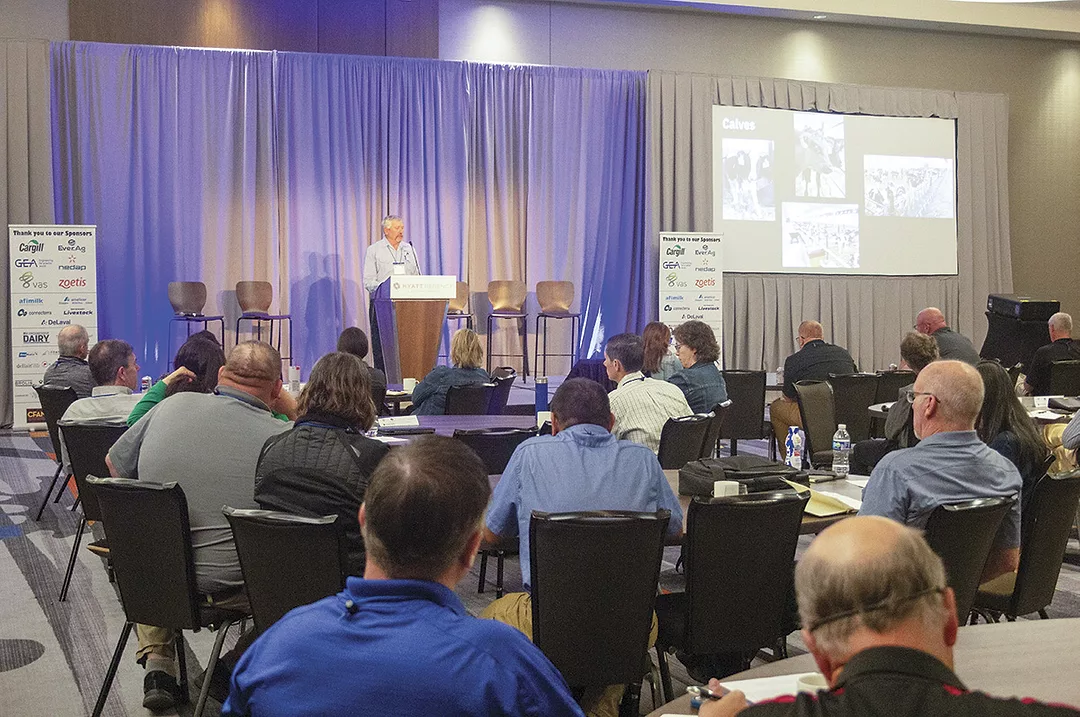
Dairy producers – Jesse Brutscher of DayStar Dairy and Greg Moes of MoDak Dairy Inc. – shared their trials and feats of adapting technology on their respective farms in a panel session during the 2025 Precision Dairy Conference.
What types of resources have been the most impactful for you?
BRUTSCHER: Networking and seeing other farms and reading materials.
MOES: We’ve relied on consultants all our life. We like to have long-term consultants and ones we can trust. We use them as a “What’s happening” in the industry. Our consultants are our connection to the real world; they’re our eyes.
When do you feel like too much technology is too much?
BRUTSCHER: If it’s not increasing efficiency and does not have a return.
MOES: When we have all this information and we don’t know what to do with it. For example, sexed semen. First, we all used it, and then we had to cull heifers – and then something better came along, beef-on-dairy.
Who is using these technologies and making decisions on the farm?
BRUTSCHER: We’re transitioning from my mother and father to my brother and me. It’s between us four right now and delegating information to team members based on how they’re interested in it and being able to make it usable for their responsibilities.
MOES: Data technology is broken up by division – herd health, accounting, feed, field, etc. The accounting system can go into each section and pull the information, if needed.
What would be the most impactful technology to get started?
BRUTSCHER: Taking this data and using (artificial intelligence) to create an action plan, create a dashboard with the data we have.
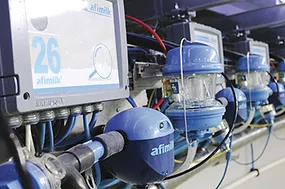
MOES: For us, it would be converting our double-30 parlor to robotic parlors in the existing space. One person to operate the existing parlor; that would be huge and free up a lot of our people.
How do we combat model drift and provide realism to the farms?
BRUTSCHER: A culture of trying on our farm with a small sample size. Sometimes it’s a big return and sometimes we don’t like it, so it goes away.
MOES: Animal care and traceability; you have to do the steps to keep where you’re at. Whatever the need of our industry is, a lot will get thrown at us, but the things that come out on top is what we’ll utilize.