Forget the guinea pig. How about encouraging a classroom in your community to adopt a 1,500-pound dairy cow as their mascot this school year? The Discover Dairy Adopt a Cow program is an exciting, yearlong experience for classrooms across the nation. While the program reached more than 1.7 million elementary to high-school-age students from traditional classroom settings last school year, not all the groups that utilize the program are what you would expect. Over the years, the free program has grown to reach more people and more students, bringing the world of dairy farming and modern agriculture to life.
From students who built a dairy drive from the ground up to address food insecurity and student teachers who are completing placements in elementary classrooms to inmates in Pennsylvania prisons, see how the program is sparking connections across the U.S.
Ohio teacher inspires the teachers of tomorrow
While teaching students is important, educating the future teachers who will one day serve these students is equally meaningful – especially with labor challenges across most of the country. That’s what Dave Harms’ role is all about: He is teaching future teachers (11th and 12th graders) in northwest Ohio.
“I work with students who want to become teachers and offer a full year of college education classes to high school juniors and seniors,” he explains. “We have high schoolers commuting from 16 school districts, and we teach four college classes. They go out to teacher placements, get into the classroom and see different things.”
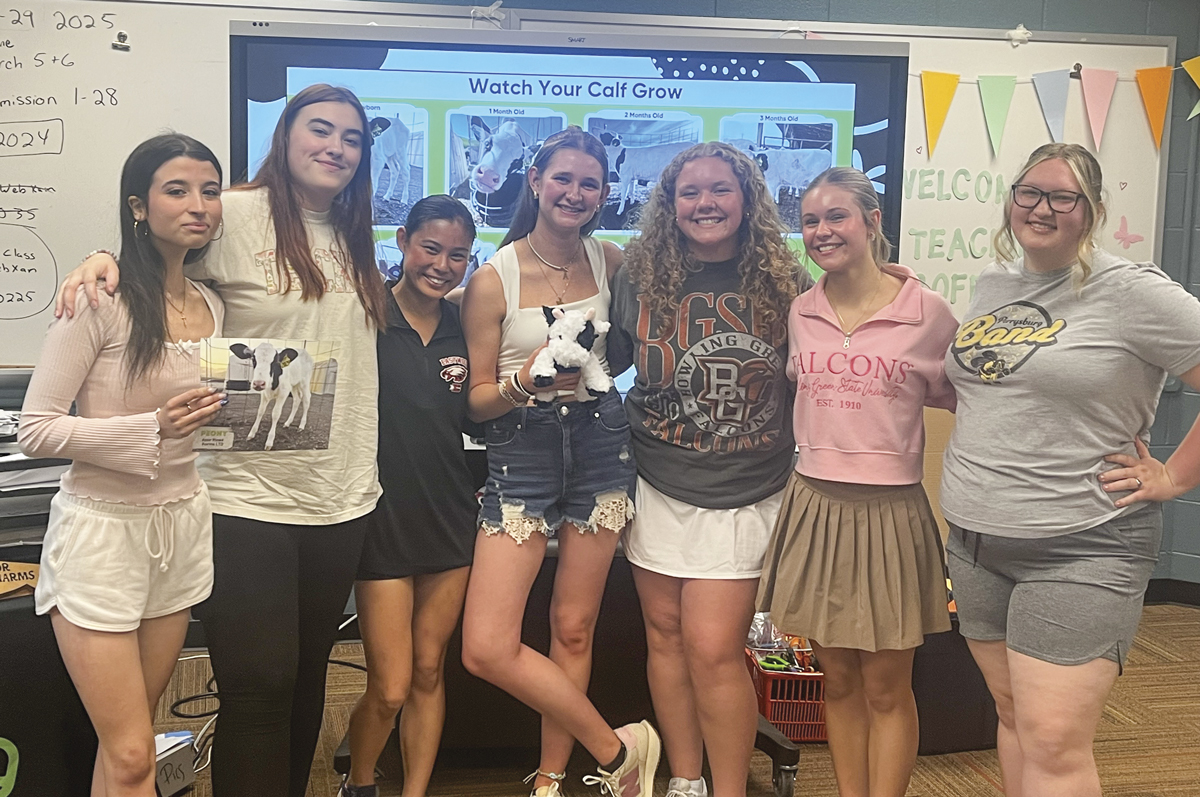
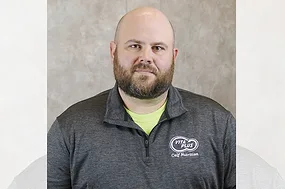
Dave Harms is teaching students in northwest Ohio who are completing student teacher placements. Image courtesy of the Center for Dairy Excellence.
As Harms began interacting with these future teachers, he was looking for activities that would help them with their placements in elementary school settings. That’s how he stumbled across the Adopt a Cow program. Harms' students are highly motivated and passionate about becoming teachers, so the program has given them leadership skills and something concrete they can bring with them into their placements at elementary schools.
“The students have to get [accepted] into college before they can even be in our program, so they’re very serious about being educators,” Harms adds. “The Adopt a Cow program allows them to go directly into the class and tell their mentor teacher, ‘Hey, I’ve got this program. I’ll run it.’ It gives them a leadership role and allows them to help the teacher out too.”
New York teacher guides student-led dairy drive to address food insecurity
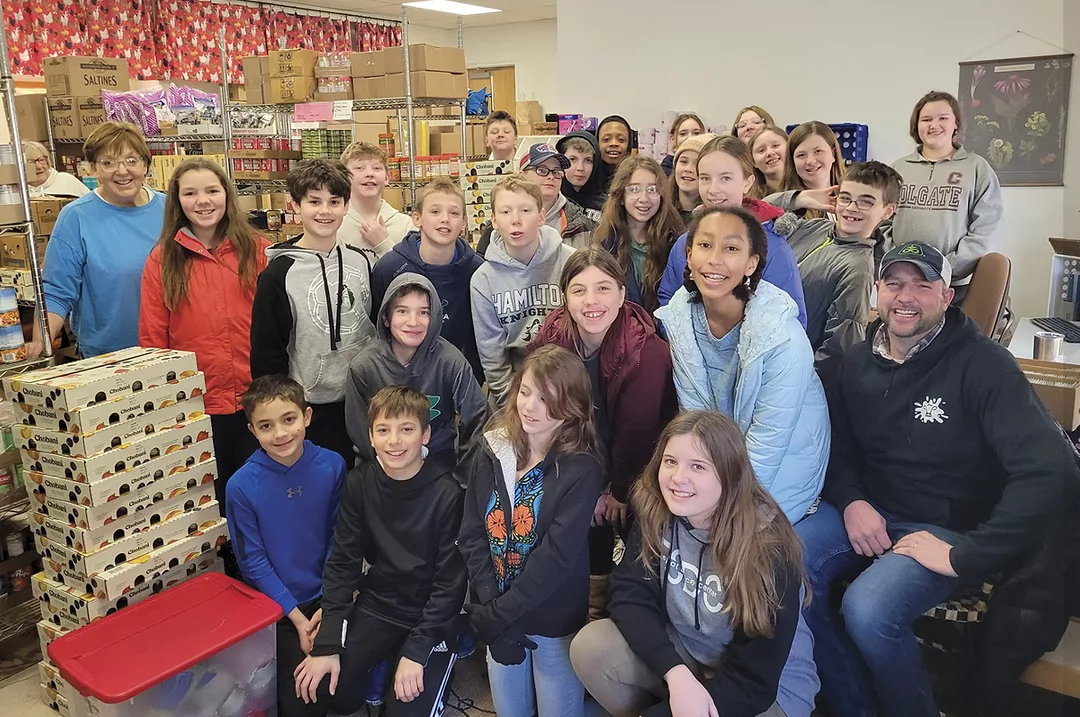
Monica Chamberlain, a sixth-grade teacher from New York, is not only passionate about agriculture, but she works to give her students opportunities to solve real-world problems such as food insecurity. This is what kickstarted the student-led dairy drive in her classroom, where students sell paper cows to raise money to get milk into their local food cupboard.
Students led the process, reaching out to the director of the food cupboard and asking their own questions. Key questions they asked were: What items are frequently donated? What items do the people who use the food cupboard truly need? They learned milk was the most requested item, but it was the least donated because it’s not shelf stable. As they brainstormed how they could raise money to donate milk to the food cupboard, they also found a way to support local farms.
“Students really wanted their money that they were working hard to collect to stay local and support a local farm. They decided to purchase our milk from Collins Creamery, right here in Rome, New York. The farm bottles their own milk and sells everything right on their farm. The kids worked with the farm, came up with a delivery schedule and worked with the food cupboard on how many they should deliver at a time,” Chamberlain shares. “The kids set a goal to get milk in the food cupboard for an entire year. We were two weeks shy, but we raised a ton of money. They were able to get milk not only in our food cupboard for almost the entire year, but they raised so much money that we actually started donating milk to a local assisted living facility for senior members.”
The Adopt a Cow program has been a meaningful connection to the real-world skills her students are gaining through the dairy drive. With the photos and virtual updates provided through the program, Chamberlain’s students are learning about how fast cows grow, career opportunities in agriculture and how milk goes from the farm to the table – or in their case, their local food cupboard.
“The program helps us talk about the milk process and how it goes from cow to carton. We’ve been able to use our calf to make those connections,” Chamberlain adds. “Students love the updates and seeing the pictures. We talk about how one day our calf is going to start producing milk. I love bringing agriculture into my classroom because it is such a great learning tool for so many different elements.”
Texas elementary teacher supports students with agriculture therapy program
Maryssa Adams teaches pre-K through fifth grade in a Title I, urban school district in Texas. After noticing increasing levels of stress, anxiety and behavioral issues in students, her campus decided to create an agriculture therapy program. Discover Dairy’s Adopt a Cow program was the perfect complement to some of the concepts they teach students through the ag therapy program. What was the inspiration behind this type of program?
“It all started with my love for animals and having been privileged enough to experience the healing they bring firsthand. The increasing levels of stress anxiety and behavioral issues in students was also something we just couldn’t ignore,” Chamberlain shares. “Our campus has always been really big about supporting the whole child and emphasizing the importance of social and emotional development. It just seemed like tactile and experiential learning was the way to help kiddos truly thrive.”
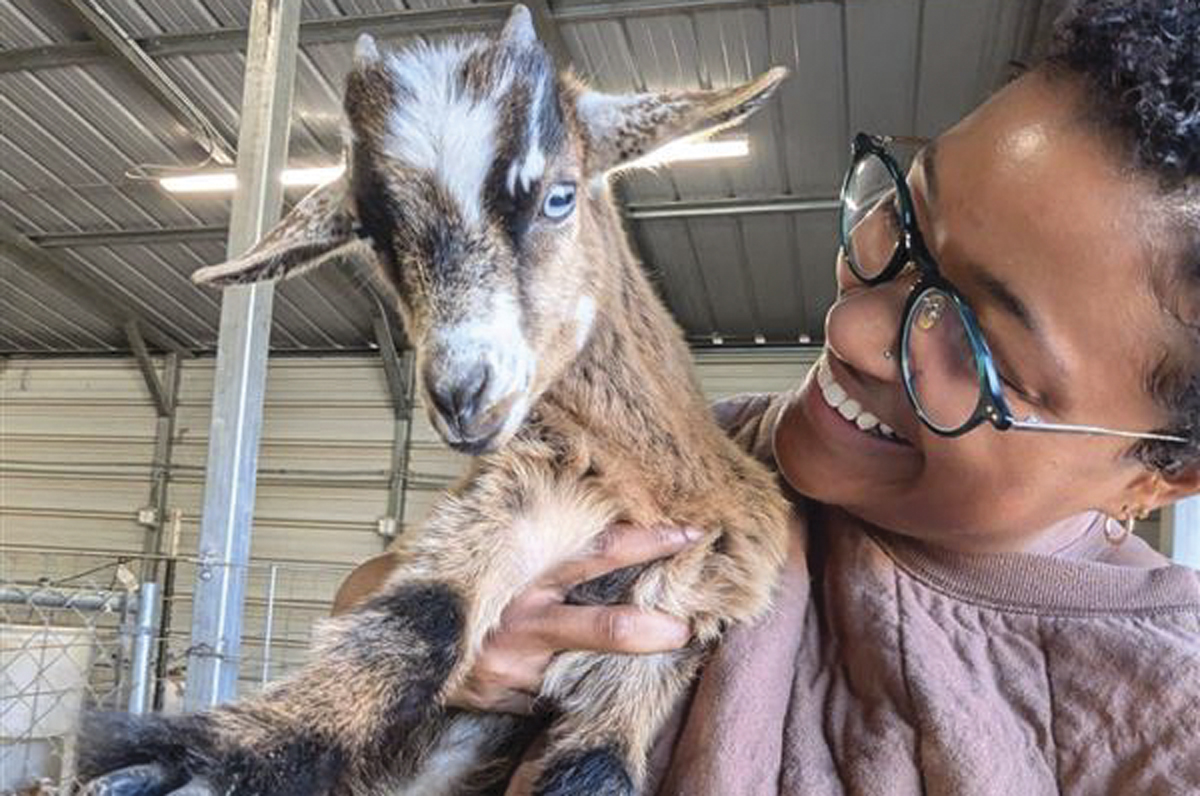
Maryssa Adams and her team created an agricultural therapy program after noticing increasing levels of stress, anxiety and behavioral issues in students – and she incorporated Discover Dairy’s Adopt a Cow program to take it a step further. Image courtesy of the Center for Dairy Excellence.
As she incorporated the program into the work they were already doing in the ag therapy program, students experienced some unique reflections related to personal growth and change.
“We started with a welcome party where students got to meet our adopted cow. The biggest piece was, with each growth update, we connected to how all living things grow and experience change. Seeing our cow grow throughout the year was huge in helping our students reflect on their own personal growth,” Adams says. “Additionally, students began to understand what calves need to thrive, and realized we are not so different when it comes to food, safety, care. This was the first year for us using the program, but it won’t be the last. We loved it.”
Adams hopes the ag therapy program, and the connections she is creating through the program, will help her students feel empowered to contribute solutions in the future.
“Learning where food comes from fosters gratitude for farmers, animals and the natural processes that sustain us. It teaches respect for the hard work and time involved in growing and producing food – not just grabbing it off a shelf,” she adds. “As issues like climate change, food security and sustainability become more critical, students who understand agriculture will be better equipped to contribute solutions.”
Instructor in Pennsylvania prison helps inmates explore future career opportunities
While the Adopt a Cow Program is traditionally utilized in an elementary or middle school setting, an instructor from a Pennsylvania prison has discovered meaningful ways to introduce the program and make agriculture connections with inmates who are taking general education classes.
Daniel Nicklin, an ABE Teacher in the Department of Corrections in Albion, has inmates of all ages – mainly 22 and up – who take classes with him in core subject areas. The Adopt a Cow program has not only given them a way to connect with their families, but it has given them something to look forward to.
“I know many of the students have family/children outside the facility with who they share what they’re learning. They’ve shared the Adopt a Cow website so their family can also view the program,” Nicklin says. “The program has also engaged them to ask questions and have something to look forward to [in my class]. Many of the students are forced to come to school due to the lack of a GED/high school diploma if they didn’t enter into the system with one.”
With many dairy farms experiencing labor challenges, the program is helping the inmates learn about potential, entry-level job opportunities once they are released.
“The program has raised awareness of job opportunities after release, since these guys don’t have a lot of options,” Nicklin says. “I’m not sure how many students are aware of jobs in agriculture, so this has been a great introduction for that. I would like to expand on this topic for next year and see if there is any way to have more agricultural industries involved in our re-entry fair.”
To learn more about how to get involved with the Discover Dairy and Adopt a Cow Programs, contact Brittany Snyder, Dairy Education Programs Manager, or visit our website to learn more.
With less than 2% of the U.S. population directly involved in production agriculture, the Center for Dairy Excellence Foundation of Pennsylvania was created to expose students to agriculture-related careers and inspire the producers, consumers and advocates of tomorrow. This is an overview of the foundation’s recent impact.