
Keeping cows healthy before, during and after calving is critical to reaching higher peak milk. Early-lactation health is strongly linked to peak milk and sets the foundation for each cow’s entire lactation. This explains the constant focus on transition cow health, but what are the early-lactation systems specific to your operation?


How a dairy achieves their next increase in peak milk production is unique to their operation. We have many keys in our proverbial keychains that might unlock the door to greater peak milk, but it is not always easy to know which key to use. By employing modern technologies, data and tracking systems, dairy farms can make more confident decisions about what steps will help achieve higher peak milk.
Efficient systems rely on clear definitions
How is peak milk measured and defined on your farm? Would your herd manager, nutritionist and consultants all agree?
Ideally, peak milk would measure production during the stage of lactation associated with the highest level of milk yield. This is roughly 30 to 90 days in milk (DIM) for mature cows and 60 to 120 DIM for primiparous cows.
Traditionally, peak milk is defined as the highest recorded test-day output during a cow’s lactation, which requires Dairy Herd Information (DHI) test data. The flaw with this definition is that a cow’s highest test day could occur at any point in lactation. If peak milk occurs at 150 DIM, it doesn’t really answer how much milk cows are producing between 30 and 90 DIM. Furthermore, peak milk varies depending on the benchmark: First-lactation animals peak lower than mature cows.
- Track milk metrics separately for lactation groups and account for fluctuations in fresh cow demographics.
- Clearly define what your management team wants to measure and align that with what your herd management software can provide.
Dairy management software systems are more sophisticated and can handle data from multiple sources (daily from the parlor and/or monthly from test day). However, each source has nuances, as the peak milk example illustrates. To effectively monitor peak milk and the factors influencing it, we must understand system capabilities and use the data to its fullest. Parlor systems that capture daily milk weights allow monitoring across DIM intervals, though discrepancies can still exist between parlor weights and DHI test records.
Additionally, activity systems can track eating and rumination time, rumen boluses can measure body temperature and pH, and milking parlor or automated systems can provide milk composition and health-related metrics. Historically, we focused on average activity metrics (e.g., average rumination or activity) across lactation groups. Today, variation in activity metrics appears to be an even more meaningful metric to measure.
- Less variability over time is correlated with better production outcomes.
- Transition cows that have less variation in their activity metrics across the transition period seem to be more resilient in the first 30 DIM.
- Many factors can influence activity variation. Focus on finding management practices that disrupt normal cow behavior. Work to minimize activities like excessive pen moves, sudden forage changes, poor feed management or extended time away from feed due to parlor visits or moves to calving pens.
Grouping and lactation differences
Should they be in the same group and on the same ration?
Nutritional requirements vary dramatically across lactations. In most cases, focusing on dry-cow and fresh-cow groups is especially important for reaching higher peak milk.
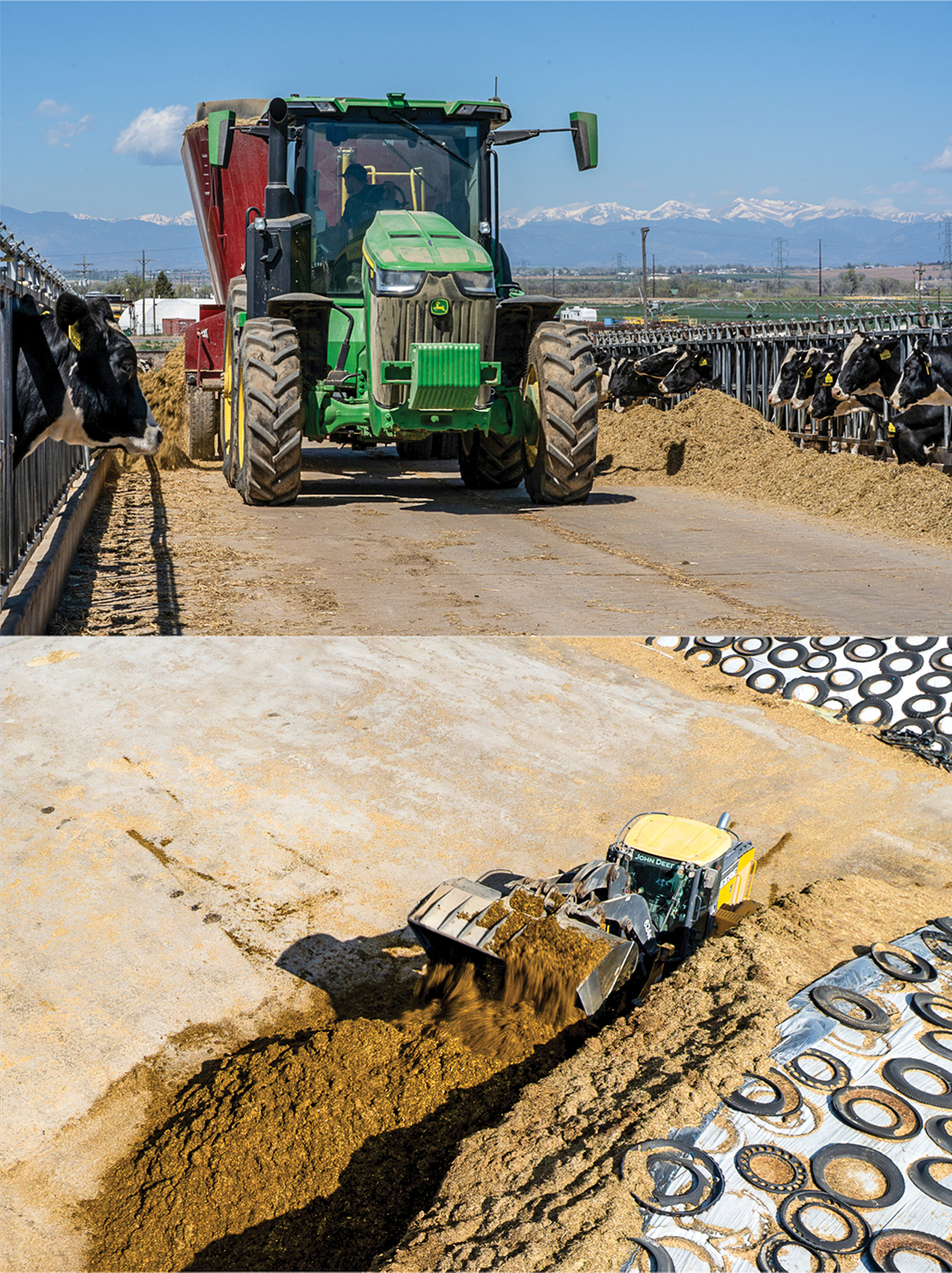
Images courtesy of Cargill.
Fresh cow diets are imperative in our mind. Consider the contrast: a first-lactation heifer at one to five DIM versus a mature third- or fourth-lactation cow at peak production. These two animals are worlds apart in physiology and nutritional needs. The heifer may weigh 1,300 pounds and consume 25 to 35 pounds of dry matter, while the mature cow may weigh 1,500 pounds, produce over 140 pounds of milk and consume more than 70 pounds of dry matter. Covering both sets of needs with the same diet is nearly impossible.
- Many nutrients and additives have a greater impact in fresh-cow diets than in the main milking herd.
- As performance continues to rise across the U.S. dairy industry, grouping cattle and tailoring diets with specific nutrients will have an even greater impact moving forward.
Understanding the demographics within these groups and your herd can also add context to interpreting performance data.
First-calf heifers:
- Take longer to hit peak milk
- Stay more persistent once they peak
Mature cows:
- Peak quickly, often by 30 to 60 DIM
- Decline more rapidly after pregnancy
Feed and nutrient opportunities
How to get the most out of your forage base and regional byproducts?
The higher inclusion rates of corn silage found in diets in the East naturally result in more starch but less sugar and soluble fiber than the alfalfa-based diets in the West (Table 1). Byproduct differences across regions can also provide opportunities to tailor diets to the variable nutrition needs across lactation. Capitalize on the characteristics of those byproducts and your forage base to adjust carbohydrate fractions of transition diets. Then use your monitoring systems to track health and performance changes to find what works best for your grouping strategies.
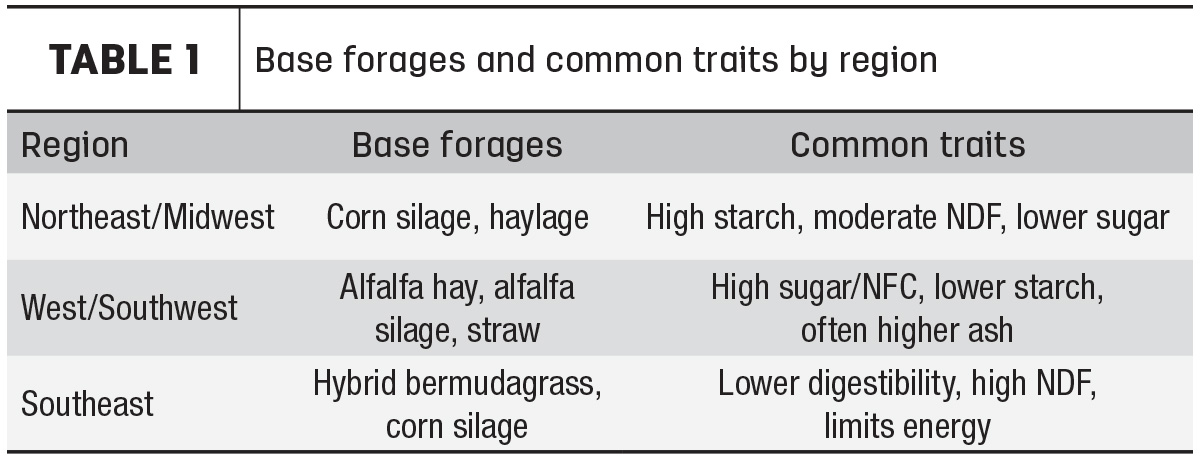
To summarize, forage type and quality drive formulation and form the foundation of the diet. Understand these core conceptsand the nutrients byproduct feeds can contribute to base rations before making additions. Regional variation in forage quality and byproduct availability should also influence grouping strategies. What works in Idaho or California may not work in Indiana or New York and vice versa.
DMI and diet trade-offs
What happens if fat levels in early-lactation diets are too high?
The result can be counterproductive: Cows may consume less total energy, even though the diet appears more energy-dense.
- Excess bypass fat can suppress dry matter intake (DMI), especially in fresh heifers.
- High-fat diets may displace fermentable fiber or starch, leading to reduced microbial protein and lower milk components.
In some cases, protein may be increased to support production. This can help if cows are deficient in metabolizable protein (MP). However, increasing one nutrient often means displacing another. To make room for added protein, nutrients such as sugar, starch or highly digestible fiber may be reduced. Each plays a unique role in rumen fermentation and energy supply, so removing them can compromise both intake and overall diet performance.
Too often, we look for silver bullets to fix or improve transition-cow programs. When a diet is already well balanced, there is rarely much to gain from small tweaks other than adjustments needed for forage or nutrient composition changes. Furthermore, many operations do not monitor DMI in dry- and fresh-cow pens, making it impossible to know whether ration changes are truly helping the herd. A diet may be perfectly balanced, but if cows are not consuming enough – or are sorting out key ingredients – there is more to gain by improving feed management to maximize intake than by altering nutrition.
Performance, whether measured by peak milk or any other metric, reflects the entire management system. Many farms have opportunities to adopt herd management technologies or to rethink how they use the ones already in place. Asking “What can we do to improve milk production?” can feel overwhelming, but there is always a practical first step to take.