Cowboys and farmers tend to emphasize the differences between pasture and range, but when we bring it back to the plant level, there are more similarities than differences. Plants have a drive to reproduce just as animals do. When viewed at the extremes, some plants only get one shot at reproduction, and we call these annuals. Other plants get multiple shots, and we call these perennials. Within the bounds of a growing season, they both behave the same way. Greenup in the spring, vegetative growth, flowering and seed production.

The vegetative growth period is when we get the most vigorous plant growth and the plant materials are most nutritious. Plants are striving for the flowering and seed production stages. How do livestock producers capture the vegetative growth and defer the reproductive stages? In areas of high rainfall or irrigation, rotational grazing allows for livestock to graze the plants, leave, and the cattle can return when the plants have recovered to graze again.
In the arid West, there is rarely sufficient water for plants to be grazed multiple times in a year. However, producers still benefit from monitoring plant growth and stages. Having livestock graze near the end of the vegetative growth stage will provide the largest quantity of high-quality feed. During flowering and seed set, the nutritional quality of plants decreases. When animals are moved to other sections of the range, plants get a chance to regrow, flower and set seed. This allows for healthy plants to return with more vigor the next season. Any seed produced will add to the pasture’s production in subsequent years. Cattle can be moved to higher elevations where the plant growth cycle is behind and plants are still in the vegetative stage.
To accomplish this, it is important that we monitor grazing animals and plants. Watch animals to determine if their needs are being met. Animals maintaining body condition scores or improving are in an adequate plane of nutrition. If body condition scores are decreasing, animals are not receiving enough nutrients.
Pay particular attention to the left side of cattle, particularly the area between the end of ribs and hip points. If the area is full, animals have full rumens; if the area is sunken, they could eat more. Rumens that are consistently not full indicate it is time to move to new pastures.
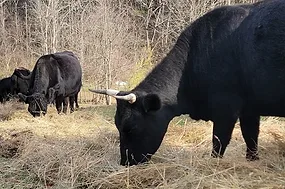
In addition, monitoring plants is a key component to determine when it is time to move livestock. Ideally, all plants should be grazed equally, one bite per plant. Realistically, just like in humans, some things taste better than others. When monitoring plant usage, pay attention to the favored plants. Care should be exercised to limit livestock consumption of favored plants. If allowed, cattle will take the tasty plants to the ground and leave less- desirable plants untouched. We call this overgrazing. If overgrazing occurs season after season, the desirable plants will begin to disappear from the area and less-desirable plants will take over. Increasing the number of livestock on smaller pasture sections is one way of encouraging utilization of less-desirable plants without overgrazing desirable plants.
It is important that livestock be moved before they have removed energy stores from favored plants. In grass plants, the energy is stored in the crown of the plant, the part that is just above the ground. Taller grasses will have reserves that extend higher off the ground than shorter grasses. For example, bluebunch wheatgrass will have its reserves in the 4 inches next to the ground, while Great Basin wild rye has reserves in the bottom 10 to 12 inches. Plants need these reserves to regrow. Annual plants will always make the effort to regrow, as they only have one year to reproduce. However, perennial plants can regrow in the current year, with adequate water, or the following year, in drought conditions.
There are several tools available to help keep animals moving to avoid the overgrazing of favored plants. Stockmanship, electric fences and virtual fences are examples of these tools.
By using stockmanship, cowboys can train cattle to move easily, then stay in the appropriate part of the pasture. This method requires cattle to be trained in stockmanship methods. This system has the benefit of low equipment costs, but labor costs may increase when compared to current practices.
Electric fences using poly-wire and step-in posts can be used to subdivide large pastures when cattle have been trained to respect electric fences. This is more cost-effective than building miles of permanent fencing. Moving the fences can be labor-intensive.
Relatively new to the market is virtual fencing. Cattle are given collars or tags with GPS tracking and means of supplying encouragement to keep animals in the proper area. This system allows for easy movement of cattle. When the producer determines it is time to move the cattle, new GPS coordinates are transmitted to the virtual fence and animals move themselves to the new area. Once in the new pasture, the old pasture is sealed off. This system is the costliest per individual animals. Costs are coming down, but between equipment needed for each adult animal and base stations to relay the signals, the costs can add up quickly.
Producers who have used virtual fences are pleased with the results, but not all land management officials are on board yet. Another pitfall is the loss of expensive equipment when animals get aggressive with each other or removed when animals scratch on posts and trees. Virtual fencing can be limited by terrain. Individual animals need to be in line of sight of base stations to update grazing areas.
If your pasture is half an acre or 500 acres, monitoring grazing animals and plants will promote healthy livestock this year and healthy pastures for years to come. It is worth the time and effort to evaluate both cattle and plants. Both will tell us when it is time to move to greener pastures.
If you need help body scoring livestock or identifying plants, give your local extension office a call. They have the materials to help improve your monitoring efforts.