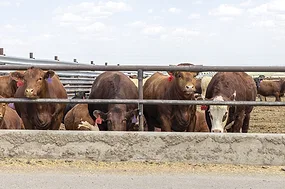
Mexico’s minister of agriculture said today there is no set timeline for reopening access across the U.S. for live cattle shipments due to the continuing fight to control New World screwworm.

Ag Minister Julio Berdegue said in a morning news briefing with Mexican President Claudio Sheinbaum that no opening date was yet attainable after meeting with U.S. Secretary of Agriculture Brooke Rollins, according to reporting by Reuters.
Sterile fly production needs to be increased by up to 20 million more flies each week using modular mobile plants, he said. The U.S. has helped with a $21 million investment to build a sterile fly plant in the state of Chiapas, which borders Guatemala. The plant is expected to produce 100 million flies weekly that, once radiated, can sterilize female flies to stop fly reproduction.
"We will only be able to get it out of the country once we have the additional 100 million flies," Berdegue said.
Hopes had been rising in recent weeks that a timeline for a tighter, more regulated opening for Mexican feeder cattle could be obtained in future months to help offset beef prices. Sheinbaum and Berdegue were hopeful that Mexico’s improving practices would appeal to U.S. ag officials.
Meanwhile, U.S. beef producers and their allied partners still feel Mexico’s cattle imports are the answer to reducing beef prices, rather than President Donald Trump’s plan to import beef from Argentina.
Texas Agriculture Commissioner Sid Miller issued a five-point plan on Oct. 23 to rebuild the U.S. cattle herd and lower prices. The first point was to not rely on Argentina’s beef, and the final point was to allow targeted Mexican cattle imports.
“The quickest way to reduce beef prices and do it within 24 hours is to import feeder cattle instead of boxed beef. Normally, about 15 percent of our feeder cattle come from Mexico, but shipments have been backed up for almost a year, creating shortages,” Miller wrote.
“As we enter the Mexican feeder cattle season [November to February], we can safely reopen ports of entry in a controlled, incremental way without risking the spread of pests like the screwworm fly. A measured, well-thought-out approach to live cattle imports will stabilize supplies while protecting U.S. biosecurity.”