In Montana’s mountain country, where rivers slice through open range and fences rarely last a season, Cory and Jennilee Bird are rewriting what it means to manage cattle in tough terrain.
Their family has been ranching in the Missouri River Valley for more than a century, balancing livestock, land and wildlife across lowland pastures, forest allotments and high-summer range. Today, they run nearly 600 cow-calf pairs across that landscape, which is the same rugged country their grandparents rode before them. For years, that meant maintaining more than a hundred miles of fence and spending long days making sure the herd stayed where it belonged. A single open gate or broken wire could send them miles off course and steal days of precious time.
Now, thanks to new virtual fencing technology, the Birds are managing the same wild country with a sense of control that once felt out of reach while finding more time to spend with their family.
When the Fence Never Lasts
In the foothills of southern Montana, ranching means long days, unpredictable weather and cattle that never seem to stay put. For Cory Bird and his family, keeping nearly 600 cow-calf pairs contained in a patchwork of mountain pastures and forest allotments has always been a challenge.
At the Hahn Ranch near Townsend, the Birds follow a time-tested grazing pattern: lowland pastures in the spring, high mountain grazing in the summer and wintering cattle closer to home. It’s a true family effort with Cory, Jennilee, their kids and extended family all pitching in. But the terrain makes every mile harder. Steep draws, thick brush, rivers that flood out fences and elk herds that plow through wire make containment a never-ending battle.
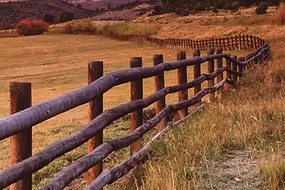
“We maintain 112 miles of fence every year. It’s daunting,” Cory says. “The river takes it out, elk and deer run through it, and ATVs leave gates open. We’ve lost cattle to the railroad, to neighbors’ pastures – you name it. We’d waste 10 days each summer chasing cattle that got out.”
In a region where even steel posts can’t stand up to snowmelt and wildlife, the Birds began wondering if there was another way to manage their herd that didn’t depend on rebuilding the same fence year after year.
The Search for a Better Way
That question led them to a new idea. A Forest Service range specialist, familiar with the Birds’ grazing allotments, introduced Cory to Nofence, a virtual fencing technology already being used on public lands to protect riparian areas and improve rotational grazing.
“I’d never even heard of it,” Cory recalls. “At first I was hesitant. Putting collars on cattle sounded strange. But the more I thought about it, the more I realized it could take a lot of stress off us.”
Cory decided to try it on a small group, specifically, the cows that caused the most headaches. “We had one group that kept crossing the river. I can’t tell you how many wrecks we’ve had there,” he says. “One summer, we took four ATVs and put 36 miles on them just to gather cows that had wandered 8 miles. I thought that if this technology can keep that bunch where they belong, it’s worth a try.”
The pilot started small, but the results were immediate. “This has been the easiest summer with that group of cattle that I can remember,” Cory says. “I don’t have to wonder where they are anymore. I can pull out my phone and know they’re not out on the railroad, not across the river, not in the neighbor’s hayfield. That’s huge.”
Knowing, Not Wondering
For Cory, the biggest benefit isn’t just labor savings. It’s peace of mind.
“I don’t have to wonder where they are anymore,” he says. “That alone changes everything. I can wake up in the morning and know my cattle are where they’re supposed to be.”
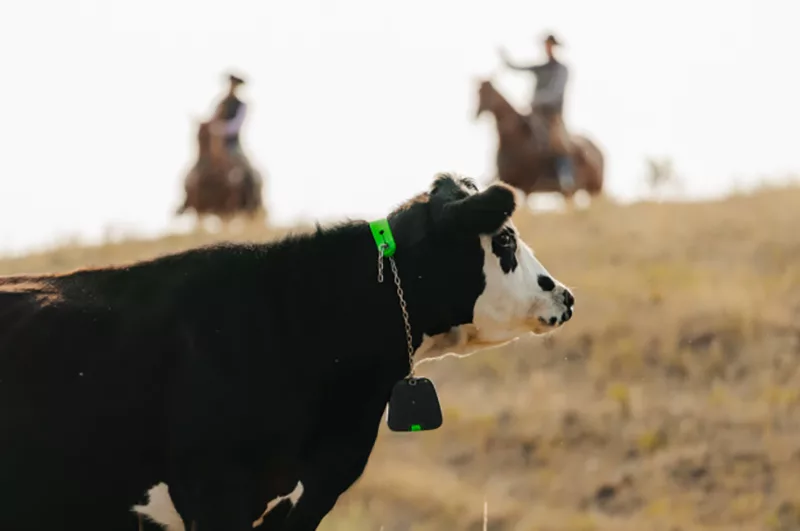
The technology, which uses GPS-enabled collars and an app to create and adjust virtual boundaries, gives Cory the ability to check on his herd with a glance. If cattle cross a digital fenceline, the system alerts him immediately, allowing for quick action.
Instead of searching for hours or days across miles of country, Cory can now pinpoint his herd’s location and make adjustments remotely. “I’ve never herded cows from my phone before,” he laughs. “But one day two cows got out onto an island in the river. I set a new boundary and watched them come back across. That saved us hours of chasing.”
He’s also found new ways to adapt the system to Montana’s variable terrain. “I bought an extra collar that I use to test my fencelines before setting them,” he says. “It lets me fine-tune the map and graze right up to the river’s edge with confidence.”
Collar fitting and GPS accuracy took some trial and error, but once the herd settled in, Cory realized just how powerful the system could be. “This has been the easiest summer with that group that I can remember,” he says. “So I’m hooked.”
Time Back for What Matters
For many ranchers, time is the most precious commodity. Between fixing fence, checking pastures and managing water, it can be hard to carve out moments for anything else. This summer, Cory says, that changed.
“Every time you’ve got a little time to go fishing with the kids or work on another project, something would come up with those cows being out,” he says. “Not this year. Instead of wasting days chasing strays, we’ve had the freedom to actually enjoy summer.”
That freedom has ripple effects across the operation from improved grazing management to reduced fuel costs. With Nofence, the Birds can move cattle to fresh pasture with a few taps on a phone, rather than days of riding and rebuilding. It also allows them to rest sensitive areas or exclude sections temporarily after heavy rain, giving the land a chance to recover naturally.
The benefits aren’t just practical, they’re personal. “When you can come home earlier, spend more time with your family or actually plan a weekend, that means something,” Cory says. “This gives us a little breathing room.”
Looking Ahead
Cory is already planning to expand collars to more of his herd, especially cattle that graze Forest Service allotments where maintaining physical fences has always been difficult.
“We run a lot on government ground, and it’s hard to meet grazing standards when fences are always failing,” he says. “I think collars are the way it’s going to be. The sooner you get into it, the better.”
For him, virtual fencing isn’t just another gadget. It’s a shift in how ranching can work in rough country. “It’s not perfect, but neither is barbed wire when the river takes it out,” Cory says. “This gives us flexibility, saves time and takes the chaos out of ranching. That’s worth a lot.”
Technology and tradition may seem like strange partners in a place where the landscape still looks much as it did a century ago. But for the Birds, the two go hand in hand. By embracing innovation, they’re keeping their family’s legacy alive and proving that in Montana’s mountain country, the future of ranching can still honor its roots.